Blog
300 ng/mL Opiate Screens Miss Oxycodone: A Clinician’s Two Tier Plan


A standard morphine-targeted opiate immunoassay frequently misses oxycodone, because the antibodies binding morphine bind oxycodone poorly at typical cutoffs. If a screening result will influence treatment decisions, discharge, or compliance monitoring, order an oxycodone-specific immunoassay or send the specimen for confirmatory GC-MS or LC-MS/MS testing. Screening strips targeting both morphine-class opiates and oxycodone can be used to address this gap.
TL;DR:
- Standard opiate immunoassays mainly detect morphine and codeine, requiring oxycodone-specific tests to avoid missing recent use.
- Oxycodone often needs a lower cutoff (around 100 ng/mL) in immunoassays for reliable detection compared to morphine’s typical 300 ng/mL, increasing sensitivity.
- Confirmatory chromatography (GC-MS or LC-MS/MS) is essential for definitive identification, especially in forensic or high-stakes clinical situations.
- Oxycodone’s primary metabolites, noroxycodone and oxymorphone, complicate interpretation, requiring matching results with medication history and pharmacogenetic factors.
- Running a two-tier testing process—initial combined screening then confirmatory testing—is recommended for accurate, efficient opioid monitoring.
Table of Contents
- Oxycodone vs Opiates Test: Why Standard Assays Miss It
- Oxycodone Metabolites and How They Complicate Interpretation
- When to Order GC-MS or LC-MS/MS Confirmation
- How Long Oxycodone and Other Opiates Stay Detectable in Urine
- A Two-Tier Screening Algorithm You Can Use Today
- What Rapidtestcup’s Product Line Offers Clinical Workflows
- What Clinicians Get Wrong About Oxycodone Screening
- Screening Tools That Support a Two-Tier Testing Approach
- Sources
- FAQ
Oxycodone vs Opiates Test: Why Standard Assays Miss It
The terms “opiates” and “opioids” get used interchangeably in casual conversation, but they mean different things on a lab requisition. Opiates are natural alkaloids derived from the opium poppy: morphine and codeine. Opioids is the broader category that includes semi-synthetic drugs like oxycodone and hydrocodone, plus fully synthetic ones like fentanyl and methadone. That distinction drives assay design, and it’s the reason so many oxycodone vs opiates test questions land in clinician inboxes.
Most immunoassays labeled simply “opiates” are built around morphine antibodies. Those antibodies recognize morphine’s molecular structure efficiently, and codeine reasonably well since it converts partly to morphine. Oxycodone has a different ring structure. The antibody still binds it, but weakly, so it takes a much higher concentration of oxycodone in urine to trigger the same positive signal that a modest amount of morphine would produce. ACMT’s position statement on urine opioid testing makes this explicit: separate, targeted assays are required to reliably catch non-natural opioids, because morphine-based immunoassays are not built to be universal opioid detectors.
Cutoffs make the gap concrete. A conventional opiate immunoassay commonly runs a screening cutoff around 300 ng/mL calibrated to morphine. Oxycodone-specific immunoassays are typically calibrated with a lower cutoff, often around 100 ng/mL, because the antibody is built around oxycodone’s actual structure rather than treating it as a morphine look-alike. Lowering a cutoff raises sensitivity, meaning more true positives get caught, but it also raises the rate of false positives and confirmatory workload, so labs choose cutoffs based on the population they’re screening.
- Morphine/codeine detect efficiently on standard opiate immunoassays even at modest concentrations.
- Oxycodone requires substantially higher concentrations to cross the same morphine-calibrated threshold, per cross-reactivity data reviewed by Milone.
- Hydrocodone sits in between, with variable cross-reactivity depending on the manufacturer’s antibody.
- Fentanyl, methadone, tramadol, and buprenorphine are essentially invisible to a standard opiate immunoassay and need their own dedicated screens.
Assay cross-reactivity, in short: studies compiled by Milone found that morphine-targeted immunoassays often need oxycodone concentrations many times higher than the morphine cutoff before flagging positive, which is exactly why a combined morphine-plus-oxycodone screening approach performs so much better than either assay alone.
Two quick scenarios show why this matters clinically; understanding the opioid detox process can help clinicians manage patients effectively after positive tests. A patient on chronic oxycodone therapy for post-surgical pain submits a urine sample for routine adherence monitoring. The standard opiate immunoassay comes back negative. Without knowing about cross-reactivity, a clinician might flag this as non-adherence or diversion, when the real issue is that the assay simply wasn’t sensitive enough to the drug actually prescribed. Second scenario: an emergency department orders a basic opiate screen on a patient with altered mental status and a suspected oxycodone overdose. The screen is negative, oxycodone gets ruled out clinically, and the real cause of toxicity goes undiagnosed for hours.
Oxycodone Metabolites and How They Complicate Interpretation
Oxycodone metabolizes primarily into noroxycodone and, through a smaller CYP2D6-dependent pathway, into oxymorphone. Noroxycodone is the dominant metabolite by volume in most patients, but it cross-reacts inconsistently across immunoassay platforms. Oxymorphone, produced in smaller amounts, is pharmacologically active and detectable by many oxycodone-specific and oxymorphone-specific assays.
This creates a real interpretation trap. Oxymorphone is also its own prescribed medication. If a urine screen shows oxymorphone and the patient’s medication list only lists oxycodone, that’s not automatically evidence of a second, undisclosed drug. It’s most likely the expected metabolic byproduct, according to Milone’s review of prescription opioid testing. Rare cases run the other direction too, where oxymorphone use alone shows up without any parent oxycodone signal. Correlating the medication list, dosing timeline, and specific analytes reported is not optional here.
- Noroxycodone: highest concentration metabolite, inconsistent cross-reactivity across immunoassay brands.
- Oxymorphone: active metabolite and a standalone prescription drug, requires clinical context to interpret correctly.
- Hydrocodone traces: manufacturing impurities in some oxycodone formulations can produce unexpected low-level hydrocodone positives on definitive testing, a phenomenon noted in ARUP Consult’s drug testing guidance.
- Confirmatory panels: GC-MS/LC-MS/MS reports typically separate and quantify each analyte individually, resolving most of this ambiguity.
Pro Tip: If a patient prescribed long-acting oxycodone shows unexpectedly low or absent oxycodone on a quantitative confirmation, don’t assume noncompliance outright. Check the dosing schedule against specimen collection time, and consider whether ultra-rapid CYP2D6 metabolism could be clearing the parent drug faster than expected. That’s a case worth a toxicology or pharmacogenetic consult before any adverse action.
When to Order GC-MS or LC-MS/MS Confirmation
Immunoassays screen. Chromatography confirms. That division of labor exists because immunoassays are fast and cheap but prone to cross-reactivity, while GC-MS and LC-MS/MS identify the exact molecule present and quantify it precisely. ACMT is direct on this point: confirmatory testing is the only method that should carry weight in high-consequence clinical or legal decisions.
Order confirmation when any of these apply: the result feeds a forensic or employment case that could be challenged; a screening result conflicts with the patient’s reported medication list; a negative screen doesn’t match clinical presentation (suspected toxicity despite a clean opiate panel); or a positive result will trigger discharge from a pain management program, custody proceedings, or termination. Routine, low-stakes adherence checks with results matching expectations generally don’t need it.
A confirmatory report typically includes the specific analyte identified (oxycodone, noroxycodone, oxymorphone, each separately), a quantitative concentration in ng/mL, and the laboratory’s limit of detection (LOD) and limit of quantitation (LOQ). A result below LOQ but above LOD is usually reported as “detected, below quantifiable limit” rather than a hard number, and that distinction matters when writing the chart note.
When documenting confirmatory findings, avoid overstating what the number means. A concentration tells you the drug was present at time of collection. It does not tell you when the dose was taken, whether the patient was impaired, or how the drug was administered. Phrase notes accordingly: “Confirmatory testing detected oxycodone at [X] ng/mL, consistent with reported prescribed use; timing of ingestion cannot be determined from this result.”
- Identify the trigger: discordant screen, high-stakes decision, or forensic requirement.
- Confirm chain-of-custody documentation is intact before the specimen leaves the collection site.
- Order the specific confirmatory panel (targeted opioid panel, not a generic “confirm everything” order, to control turnaround and cost).
- Review the report for analyte identity, concentration, and LOD/LOQ, not just a positive/negative flag.
- Cross-check reported analytes against the patient’s actual prescribed medications and dosing schedule.
- Document findings in the chart using concentration-and-context language, never a bare impairment claim.
Pro Tip: When ordering confirmation after a discordant screen, request the lab report the full analyte panel rather than a single targeted compound. A broader confirmatory run often catches an unexpected substance that explains the original discrepancy faster than a second round of testing would.
How Long Oxycodone and Other Opiates Stay Detectable in Urine
Most commonly prescribed opioids, oxycodone included, show up on standard urine immunoassays for roughly one to three days after last use, per SAMHSA’s detection window data. That window is a starting point, not a fixed rule, and treating it as universal is where a lot of clinical misjudgments happens.
| Factor | Effect on detection window |
|---|---|
| Immediate-release formulation | Generally aligns with the typical 1 to 3 day window |
| Extended-release formulation | Can extend detectable presence beyond single-dose expectations |
| Chronic, high-dose use | Metabolite accumulation may prolong positivity |
| Reduced renal function | Slower clearance can extend detection |
| CYP2D6 ultra-rapid metabolism | Faster conversion to oxymorphone, potentially shorter parent-drug window |
| Low fluid intake / concentrated urine | Higher analyte concentration, easier detection within the normal window |
Extended-release oxycodone formulations and sustained high-dose regimens can push detectable metabolite presence past what a single-dose pharmacokinetic model would predict, a nuance backed by pharmacokinetic research on oxycodone. Renal impairment slows clearance generally, extending the window for most opioid metabolites. Genetic variation in CYP2D6 activity changes how fast oxycodone converts to oxymorphone, which can shift which analyte dominates the specimen depending on when it’s collected relative to the last dose.
None of this lets a clinician back-calculate exact ingestion timing from a single positive result. A detection window tells you the drug was used sometime in the recent past, not how much, not exactly when, and not whether the patient was impaired at the moment of collection. Treat detection windows as a plausibility check, not a timeline reconstruction tool. Rapidtestcup’s detection windows reference breaks down comparable windows across other commonly screened substances if you’re building a broader monitoring protocol.
A Two-Tier Screening Algorithm You Can Use Today
The practical fix for the oxycodone vs opiates test problem is a reflex-testing structure, not a single universal panel. Three scenarios cover most clinical situations.
Scenario A: Routine opioid adherence monitoring. Run a standard opiate immunoassay alongside an oxycodone-specific immunoassay from the start if the patient’s prescription includes oxycodone. Don’t wait for a negative morphine-class result to trigger a second test; order both up front for anyone prescribed a semi-synthetic opioid.
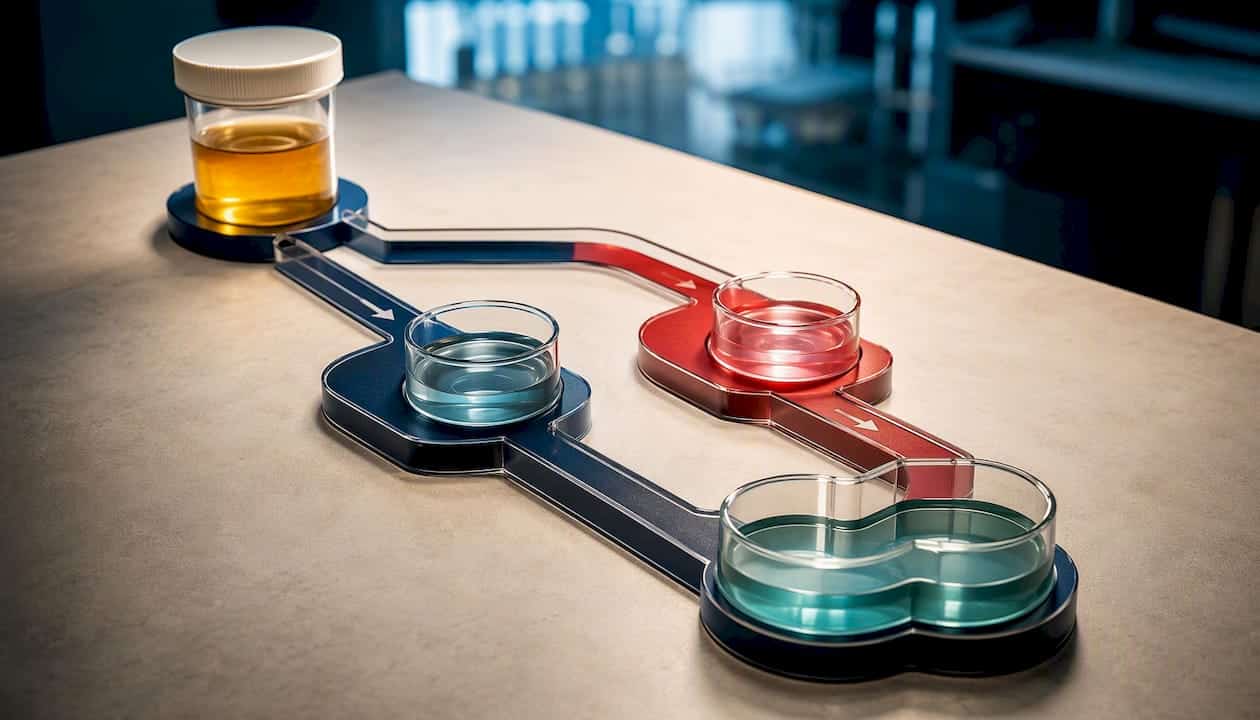
Scenario B: Unexpected toxicity or suspected diversion. If a negative opiate screen doesn’t match the clinical picture, don’t close the case. Order an oxycodone-specific immunoassay or go straight to LC-MS/MS, particularly in acute care settings where a missed diagnosis carries real risk.
Scenario C: Pre-procedural or pre-employment screening. A standard multi-panel screen is usually adequate for baseline purposes, but any positive result that could affect employment or clearance decisions should route to confirmatory testing before action is taken.
- Determine the clinical question: adherence check, toxicity workup, or policy-driven screening.
- Select the initial screen: standard opiate immunoassay plus oxycodone-specific immunoassay when oxycodone is prescribed or suspected.
- Apply reflex rules: negative opiate screen with clinical suspicion of oxycodone use escalates to oxycodone-specific testing or direct confirmation.
- Apply reflex rules for positives: any opiate-only positive that will drive a consequential decision escalates to GC-MS/LC-MS/MS.
- Check specimen validity (creatinine, pH, specific gravity) before interpreting any result as a true negative.
- Document the full testing pathway, not just the final result, in the chart or case file.
- Specimen validity testing catches dilution and substitution that would otherwise produce false negatives.
- Adulterant checks (nitrites, oxidants, pH extremes) should run alongside every panel used for compliance or forensic purposes.
- Multi-panel cups that include built-in adulteration strips reduce the number of separate steps needed at collection.
Pro Tip: In any case involving employment consequences, custody disputes, or diversion suspicion, document chain-of-custody at collection even if you think the result will be routine. Retrofitting documentation after an ambiguous result comes back is far harder than establishing it up front.
What Rapidtestcup’s Product Line Offers Clinical Workflows
Operationalizing a two-tier approach requires having the right assays on hand, not just knowing the theory. Rapidtestcup carries oxycodone-specific test strips built for exactly the cross-reactivity gap described above, alongside morphine-class opiate strips for standard screening. Multi-panel cups combining both categories in a single collection device can cut down on separate strip purchases for practices running routine adherence panels.
- Oxycodone-specific strips for catching what a standard opiate panel misses.
- Multi-panel cups bundling opiate, oxycodone, and adulterant checks into one collection.
- Some multi-panel cups include adulteration strips for specimen validity screening at the point of collection.
- A pain management drug testing guide covering assay selection and monitoring policy for clinical practices.
Every product in this category is a screening tool, not a diagnostic endpoint. Any result feeding a consequential decision still needs confirmatory chromatography, per the GC-MS confirmation standard most labs follow.
What Clinicians Get Wrong About Oxycodone Screening
The biggest mistake I see is treating a negative standard opiate screen as proof of no opioid use. It’s proof of no morphine-class opioid at a detectable concentration, which is a narrower claim than most chart notes imply. The second mistake is the reverse: treating a positive oxycodone confirmation as proof of impairment or misuse, when a concentration number tells you about exposure, not behavior or timing. Third, clinicians sometimes read an oxymorphone result as evidence of an undisclosed drug, when it’s frequently just the expected metabolite of prescribed oxycodone.
Before acting on any result, confirm the assay type actually ordered, cross-check reported analytes against the current medication list, and separate what the test proves from what you’re inferring. If a result still doesn’t add up after that review, that’s the moment for a toxicology consult, not a policy decision made from the screen alone.
— Justin
Screening Tools That Support a Two-Tier Testing Approach
For practices building out routine oxycodone and opiate monitoring, Rapidtestcup’s 18-panel drug test cup bundles opiate detection with fentanyl, ketamine, and adulterant checks in a single collection device, cutting down the separate strips a busy clinic has to stock and manage.
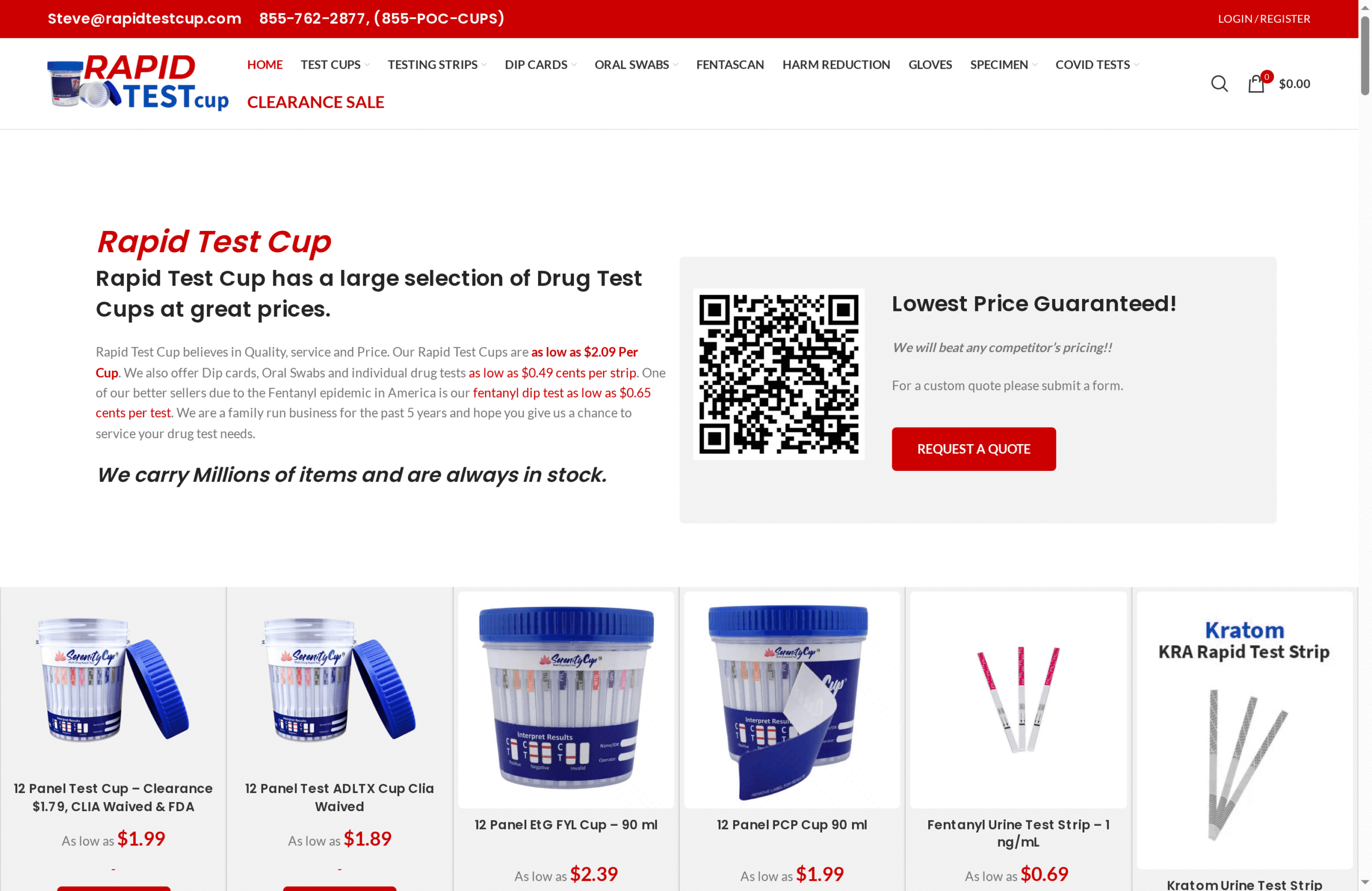
That matters most for practices running high volumes of adherence checks, where ordering separate morphine and oxycodone strips for every patient adds up in both cost and staff time. A combined-panel cup gets you both readings from one collection, with adulterant screening included so specimen validity gets checked automatically rather than as an afterthought. Any positive or clinically discordant result from these cups still needs GC-MS or LC-MS/MS confirmation before it drives a treatment, employment, or custody decision, consistent with CLIA-waived screening standards. Browse the full panel cup lineup to match panel configuration to your practice’s monitoring needs, or request a bulk quote if you’re outfitting multiple collection sites.
Sources
ACMT position statement, Milone’s opioid testing review, SAMHSA detection window infographic, and the combined immunoassay evaluation in the Journal of Analytical Toxicology.
This article is general information, not a substitute for advice from a qualified doctor. Consult a qualified healthcare professional about your own circumstances before acting on anything here.
FAQ
Does oxycodone show up as opiates on a drug test?
Not reliably. Standard morphine-targeted opiate immunoassays often miss oxycodone entirely at typical cutoffs, which is why oxycodone-specific assays exist as a separate screening category.
Can a urine test tell the difference between hydrocodone and oxycodone?
A standard opiate immunoassay generally cannot distinguish them reliably, since cross-reactivity varies by manufacturer. Confirmatory GC-MS or LC-MS/MS testing identifies each drug specifically and separately.
Can a drug test tell the difference between opiates?
Immunoassays alone usually cannot reliably distinguish morphine, codeine, oxycodone, and hydrocodone from each other. Confirmatory chromatography is the method that identifies and quantifies each analyte individually.
Does oxycodone test the same as Percocet?
Percocet contains oxycodone combined with acetaminophen, so a urine test detects the oxycodone component the same way it would detect oxycodone alone. The acetaminophen portion isn’t picked up by opioid immunoassays and requires a separate assay if relevant.