

Blog
Forensic Drug Testing Essentials: 2026 Pro Guide


TL;DR:
- Forensic drug testing relies on validated protocols, specimen integrity controls, and regulatory compliance to produce legally defensible results. Selecting the appropriate biological matrix, implementing a two-tiered testing process, and conducting specimen validity testing are essential for accurate, trustworthy outcomes. Staying updated with evolving regulations and adopting advanced analytical technologies further enhances detection capabilities and result defensibility.
Forensic drug testing essentials are defined as the validated protocols, analytical methods, specimen integrity controls, and regulatory compliance frameworks that produce accurate, legally defensible results. Every confirmed positive in a courtroom, workplace investigation, or clinical case rests on this structured foundation. The field draws on immunoassay screening, GC-MS and LC-MS/MS confirmatory analysis, SAMHSA-certified laboratory standards, and Medical Review Officer (MRO) oversight. Understanding each layer, from specimen collection through final reporting, is what separates defensible forensic toxicology from results that collapse under legal scrutiny.
1. Forensic drug testing essentials start with specimen selection
The biological matrix you collect determines everything downstream: detection window, sensitivity, and admissibility. The four primary matrices in forensic toxicology are urine, oral fluid, blood, and hair, each with distinct advantages depending on the case context.
- Urine is the dominant matrix in federal workplace programs. Detection windows vary from hours to several weeks depending on the drug, the user’s metabolic rate, urine pH, and hydration status. This variability means a single negative urine result does not rule out recent use.
- Oral fluid offers a shorter detection window, typically 24 to 48 hours, making it useful for post-incident testing where recent impairment is the question.
- Blood provides the most direct measure of current impairment but requires clinical collection and degrades rapidly without proper anticoagulants and cold-chain storage.
- Hair extends the detection window to 90 days or more, making it the preferred matrix for historical use patterns rather than acute impairment.
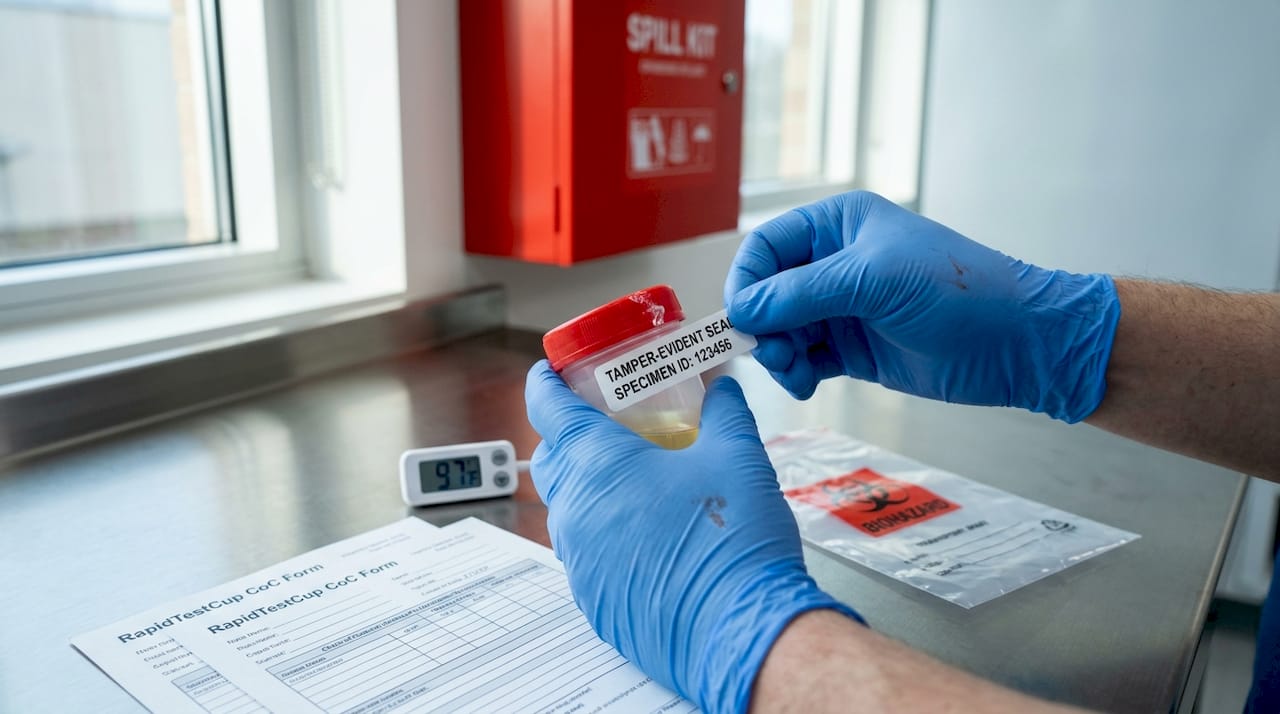
Regardless of matrix, every collection event requires immediate labeling, tamper-evident sealing, and documented transfer. Chain-of-custody procedures are the documented steps that prevent sample identity mix-ups and confirm stability from receipt through disposal. A broken chain is not a procedural inconvenience. It is grounds for result invalidation.
Pro Tip: Collect urine specimens at controlled temperatures between 90°F and 100°F (32°C to 38°C) and verify temperature within four minutes of collection. Out-of-range temperature is the first indicator of substitution or adulteration.
2. Presumptive screening: the first analytical gate
Immunoassay screening is the standard first step in any two-tiered forensic drug testing protocol. These tests use antibody-antigen reactions to detect drug classes rapidly and at low cost, making them practical for high-volume laboratory workflows.
The critical limitation is cross-reactivity. Immunoassays detect drug classes, not specific compounds, and structurally similar substances can trigger false positives. Poppy seeds and dextromethorphan are classic examples of compounds that can produce positive opiate or PCP screens without actual drug use. This is why a presumptive positive is never reported as a confirmed forensic result.
Common federally mandated screening panels include cannabinoids (THC), cocaine metabolites, opioids, amphetamines, phencyclidine (PCP), and expanded panels covering synthetic opioids such as fentanyl. Rapid immunoassay cups from suppliers like Rapidtestcup allow labs and collection sites to run multi-panel screens on a single urine specimen in minutes, which is operationally significant for high-throughput programs.
| Test type | Method | Speed | Specificity | Legal use |
|---|---|---|---|---|
| Presumptive screen | Immunoassay | Minutes | Moderate | Initial detection only |
| Confirmatory test | GC-MS / LC-MS/MS | Hours | High | Legally defensible |
| Validity check | Chemical/physical | Minutes | High | Specimen integrity |
3. Confirmatory testing: where forensic results become defensible
GC-MS and LC-MS/MS provide the specificity and sensitivity that immunoassay screening cannot. These chromatographic-spectrometric methods identify and quantify individual compounds at nanogram-per-milliliter levels, producing data that withstands expert cross-examination. This is the analytical step that converts a presumptive flag into a reportable forensic finding.
GC-MS remains the gold standard for many traditional drug panels because of its established validation record and widespread acceptance in court. LC-MS/MS has expanded the confirmatory toolkit significantly, particularly for polar metabolites, synthetic cannabinoids, and novel psychoactive substances that do not ionize well under GC conditions. Modern forensic labs increasingly run both platforms in parallel to cover the full spectrum of substances encountered in casework.
Method validation for confirmatory testing must quantify limit of detection (LOD), limit of quantification (LOQ), precision, accuracy, and matrix effects. Stability and matrix effects must be rigorously documented as protocol requirements. Results produced without validated methods are indefensible regardless of the instrument used.
Pro Tip: When selecting a confirmatory platform, prioritize labs that publish their LOD and LOQ values for each analyte. A lab that cannot provide these figures on request has not completed proper method validation.
4. Specimen validity testing: the integrity checkpoint
Specimen validity testing (SVT) is a mandatory step in federally regulated programs, not an optional quality measure. SAMHSA and HHS require certified laboratories to apply SVT protocols before any analytical interpretation proceeds. This protects the entire downstream workflow from contaminated or fraudulent specimens.
SVT evaluates three categories of specimen characteristics:
- Physical parameters: Creatinine concentration and specific gravity confirm the specimen is consistent with normal human urine. Creatinine below 2 mg/dL with specific gravity below 1.0010 indicates substitution with a non-human fluid.
- Adulterant detection: Oxidizing agents such as bleach, nitrites, and chromium compounds are screened using colorimetric and electrochemical methods. Each adulterant has a defined cutoff above which the specimen is reported as adulterated.
- pH assessment: Urine pH outside the range of 3.0 to 11.0 indicates adulteration. Values between 3.0 and 4.5 or between 9.0 and 11.0 trigger further investigation.
Specimen validity gating applies decision rules at the earliest workflow stage to reject invalid specimens before confirmatory resources are consumed. This improves lab throughput and prevents wasted analytical capacity on specimens that cannot produce defensible results. For a detailed breakdown of urine-specific validity protocols, the urine specimen validity guide at Rapidtestcup covers the full decision tree.
5. Regulatory and reporting requirements in 2026
Federal workplace drug testing programs operate under the HHS Mandatory Guidelines, which are updated annually and published in the Federal Register. The 2026 Federal Register update specifies required drug panels, biomarker cutoffs, and mandates the use of exact analyte nomenclature in all federally regulated test reports. Labs and MROs that use informal or outdated terminology risk report rejection and compliance violations.
Regulatory best practices for 2026 compliance include:
- Verify your laboratory holds current HHS certification and that certification covers all analytes on your active panels.
- Update reporting templates annually to reflect the current Federal Register nomenclature before the effective date.
- Train MROs on the specific cutoff values and specimen validity criteria published in the current guidelines, not prior-year versions.
- Maintain Instrumented Initial Test Facility (IITF) documentation separately from confirmatory lab records to satisfy audit requirements.
- Document every MRO interview and decision with timestamps, as these records form part of the legal chain of evidence.
Accurate HHS nomenclature use by labs and MROs is a compliance requirement that many programs treat as administrative routine. In litigation, a report using non-standard analyte names can be challenged on the grounds that the reported substance does not match the regulated analyte. The drug testing reporting workflow guide at Rapidtestcup provides a practical framework for labs managing this annual update cycle.
6. Advanced technologies shaping forensic drug testing in 2026
The analytical frontier in forensic toxicology has moved well beyond conventional GC-MS. Several technologies are now entering routine forensic workflows and changing what is detectable, at what concentration, and in what matrix.
Fabric phase sorptive extraction (FPSE) combined with LC-MS/MS is one of the most significant recent advances. A FPSE-LC-MS/MS method achieves low detection limits for ten drugs and metabolites in oral fluid with excellent precision and stability. This matters because oral fluid testing has historically been limited by low analyte concentrations and matrix complexity. FPSE addresses both problems simultaneously.
High-resolution mass spectrometry (HRMS) using instruments such as Orbitrap and quadrupole time-of-flight (QTOF) platforms enables retrospective data mining. A single HRMS run can be re-queried months later for newly scheduled substances without re-analyzing the original specimen. This capability is operationally valuable in cases where novel psychoactive substances emerge after the original analysis.
Ion mobility spectrometry (IMS) is gaining traction as a rapid field-screening tool, particularly for law enforcement applications where laboratory turnaround is not feasible. IMS separates ions by their mobility through a gas, providing a structural fingerprint that complements mass spectrometric data.
Key innovations active in 2026 forensic labs:
- Automated liquid handling systems reduce analyst-to-analyst variability in sample preparation and cut processing time for high-volume urine panels.
- Green chemistry sample prep methods reduce solvent consumption by 60 to 80 percent compared to traditional liquid-liquid extraction, lowering both cost and environmental impact.
- Multiplexed immunoassay platforms allow simultaneous screening of 20 or more analytes on a single microfluidic cartridge, compressing the presumptive screening step significantly.
- Machine learning-assisted data interpretation is being piloted in several reference labs to flag anomalous mass spectra that may indicate novel adulterants or previously uncharacterized metabolites.
For a full breakdown of these 2026 lab innovations, Rapidtestcup has compiled a detailed reference covering platform comparisons and implementation considerations.
Key takeaways
Forensic drug testing requires validated specimen collection, two-tiered analytical methods, mandatory validity testing, and strict annual regulatory compliance to produce results that hold up in any legal or clinical context.
| Point | Details |
|---|---|
| Matrix selection drives detection | Choose urine, oral fluid, blood, or hair based on the detection window and case question, not convenience. |
| Two-tiered testing is non-negotiable | Immunoassay screening flags candidates; GC-MS or LC-MS/MS confirmation produces the only reportable forensic result. |
| Specimen validity gates the workflow | Apply SVT decision rules before confirmatory analysis to reject adulterated or substituted specimens early. |
| Annual regulatory updates require active management | HHS nomenclature and cutoff changes must be implemented before the Federal Register effective date each year. |
| Advanced methods expand detection capability | FPSE-LC-MS/MS and HRMS platforms now enable reliable forensic analysis of oral fluid and novel psychoactive substances. |
What I’ve learned from watching labs skip the basics
After years of working closely with forensic labs and substance testing programs, the pattern I see most often is not a failure of technology. It is a failure of process discipline at the specimen validity stage. Labs invest in LC-MS/MS instrumentation and then run confirmatory analysis on specimens that should have been rejected at the SVT gate. That is wasted capacity and, more critically, it creates a record of analysis on a compromised specimen that opposing counsel will exploit.
The second consistent gap is the annual regulatory update cycle. I have seen programs where MROs are still using prior-year cutoff tables in March, after the new Federal Register guidelines have taken effect. The fix is not complicated. It requires a scheduled internal audit tied to the publication date, not a reactive scramble after a compliance review flags the discrepancy.
My honest recommendation for labs evaluating new technology is to resist the pull toward HRMS and multiplexed platforms until your SVT and chain-of-custody workflows are airtight. A sophisticated instrument running on a broken process produces sophisticated errors. Get the forensic drug testing checklist right first. Then scale the technology.
The two-tiered testing model is not a bureaucratic requirement. It is the architecture that makes forensic results defensible. Every shortcut taken between presumptive screening and confirmed reporting is a liability waiting to surface in court.
— Justin
Professional-grade forensic test kits from Rapidtestcup
Forensic programs need testing products that match the protocols described above: multi-panel coverage, built-in adulterant detection, and CLIA-waived, FDA-approved quality that holds up to regulatory scrutiny.
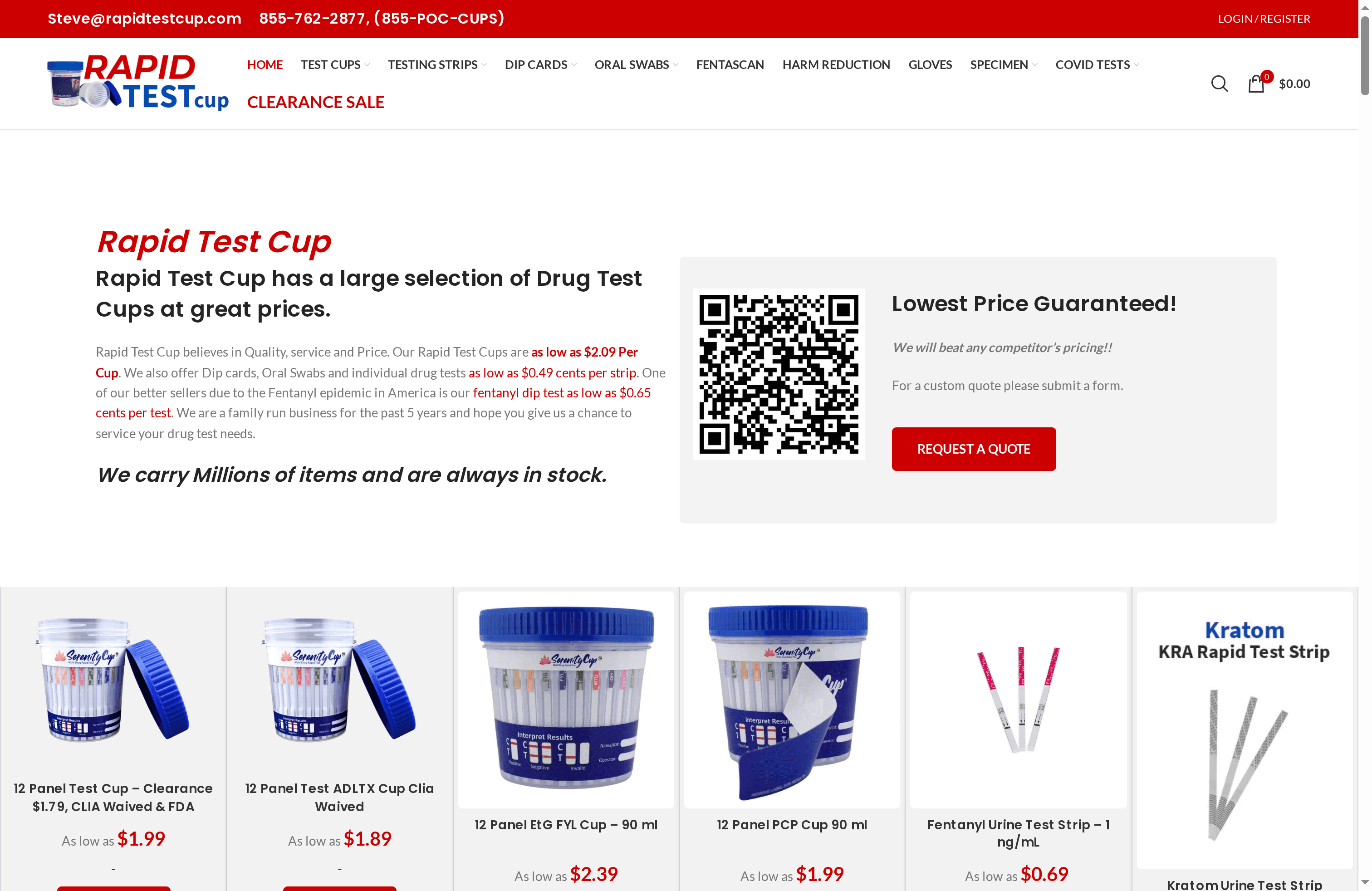
Rapidtestcup stocks the 22-panel test with adulterant detection covering KRA, FYL, Zaza, and Xyl alongside standard panels, making it one of the most complete presumptive screening tools available for forensic and law enforcement applications. The 12-panel ADLTX cup delivers professional-grade urine screening with integrated validity checks in a single collection device. Both products ship fast, support bulk ordering, and are built for the volume demands of active forensic programs.
FAQ
What are the main types of drug tests used in forensic settings?
The four primary types are immunoassay screening, GC-MS confirmation, LC-MS/MS confirmation, and specimen validity testing. Each serves a distinct role, with immunoassay providing rapid presumptive results and chromatographic-spectrometric methods delivering the specificity required for legally defensible reporting.
How does chain of custody affect forensic drug test results?
Chain-of-custody documentation tracks every transfer and handling event from collection through disposal. A gap in this record is sufficient grounds to challenge result admissibility in legal proceedings.
What is specimen validity testing and why is it required?
Specimen validity testing evaluates creatinine, specific gravity, pH, and adulterant markers to confirm a specimen is consistent with authentic human urine. HHS mandates SVT for all federally regulated workplace drug testing programs before any analytical interpretation proceeds.
How often do HHS drug testing guidelines change?
HHS updates the Mandatory Guidelines annually, with changes published in the Federal Register. The 2026 update specifies revised analyte nomenclature and panel requirements that labs and MROs must implement by the stated effective date.
What is the role of a Medical Review Officer in forensic drug testing?
An MRO is a licensed physician trained to review and interpret laboratory drug test results in the context of the donor’s medical history. MROs apply HHS-mandated cutoffs and nomenclature to determine whether a result is reported as positive, negative, or invalid for federal program purposes.