

Blog
Why Test for Synthetic Drugs: Safety and Health Guide


TL;DR:
- Standard drug tests often miss synthetic cannabinoids and opioids because their chemical structures fall outside detection methods. Testing with expanded panels and mass spectrometry is essential to accurately identify synthetic drug use, which poses significant health risks and complicates clinical care. Utilizing appropriate testing methods and understanding their limitations can greatly improve safety, treatment, and harm reduction efforts.
Synthetic drugs are chemically engineered substances designed to mimic the effects of controlled drugs while evading detection by standard testing panels. Testing for synthetic drugs is the only reliable way to identify these substances, because routine urine screens regularly miss synthetic cannabinoids, synthetic opioids, and novel psychoactive substances entirely. Standard immunoassay panels were built around known drug structures, and synthetic compounds are specifically formulated to fall outside those detection windows. The result is a dangerous blind spot in clinical care, workplace safety, and personal harm reduction. Understanding why test for synthetic drugs matters starts with recognizing that a negative result on a basic panel does not mean a person is drug-free.
Why test for synthetic drugs: the core problem with standard panels
Standard urine drug tests rely on immunoassays, which are antibody-based reactions calibrated to detect specific molecular structures. Synthetic drugs, by design, have altered chemical structures that do not trigger those antibodies. Routine urine drug testing frequently misses synthetic cannabinoids, synthetic opioids, and their analogues because the panels are simply not built to recognize them. This is not a flaw in the test quality. It is a fundamental limitation of the technology when applied to substances that did not exist when the panels were designed.
The chemical variability of synthetic drugs compounds the problem. Manufacturers of illicit synthetic substances routinely alter molecular structures to stay ahead of both law enforcement and testing technology. A panel updated to detect one synthetic cannabinoid variant may be blind to the next generation released weeks later. This is why expanded or targeted panels that reflex to chromatographic or mass spectrometric confirmation are now considered the standard of care for suspected synthetic drug exposure.
Detection windows add another layer of complexity. Urine and serum assays have narrow detection windows, and if testing occurs too late after use, even a specialized panel may return a false negative. This means a clinician or safety officer interpreting a negative result must always correlate it with the clinical picture, not treat it as definitive proof of abstinence.
| Testing method | What it detects | Key limitation |
|---|---|---|
| Standard immunoassay | Common drugs (THC, cocaine, opiates) | Misses most synthetic cannabinoids and novel opioids |
| Expanded immunoassay panel | Broader drug classes including some synthetics | Still limited by antibody specificity |
| LC-MS/MS or GC-MS | Wide range of synthetic and novel substances | Higher cost, longer turnaround time |
| Drug checking services (FTIR, fentanyl strips) | Substance composition before consumption | Does not detect post-consumption in body fluids |
Pro Tip: If you are managing a situation involving suspected synthetic drug use and a standard panel returns negative, do not stop there. Request an expanded panel or mass spectrometry confirmation before drawing clinical or safety conclusions.
What health risks come from undetected synthetic drug use?

Undetected synthetic drug use creates a specific category of danger that goes beyond the risks of known substances. Unregulated synthetic drugs carry unknown potency and contamination risks, meaning users have no reliable way to know what they are actually ingesting or at what dose. That uncertainty is what makes synthetic drug identification so critical for anyone involved in care, safety, or harm reduction.
The health consequences of missed detection include:
- Unexpected overdose. Synthetic opioids like fentanyl analogues are active at microgram doses. A person presenting to an emergency department with altered mental status may receive inadequate treatment if clinicians do not know a synthetic opioid is involved.
- Incorrect clinical management. Synthetic cannabinoids produce effects that overlap with psychosis, cardiac arrhythmia, and seizure. Without identification, clinicians may treat symptoms without addressing the underlying cause, prolonging harm.
- Pediatric risk. Children who accidentally ingest synthetic substances present a particularly high-stakes scenario. Drug test results guide imaging avoidance and safety planning in pediatric cases, making accurate identification directly protective.
- Community-level harm. When synthetic drugs circulate undetected in a community, harm reduction programs cannot respond effectively. Outreach workers, counselors, and public health teams need accurate data on what substances are present to allocate resources and warnings appropriately.
- Delayed treatment entry. Individuals in substance use treatment programs who are using synthetic drugs undetected may not receive the correct therapeutic support, undermining recovery outcomes.
The impact of synthetic drugs on individuals and families is amplified precisely because these substances are invisible to the tools most commonly used to detect them. Testing closes that gap.
Who benefits most from synthetic drug testing?
Synthetic drug testing is not a one-size-fits-all intervention. The ADLM updated guidance for emergency department drug testing explicitly states that indiscriminate testing is not recommended. The value of testing is highest in specific, well-defined scenarios. Here are the populations and contexts where screening for synthetic drugs delivers the clearest benefit:
- Emergency department patients with overdose or altered mental status. When a patient arrives unconscious or agitated with no clear cause, toxicology screening guides diagnosis and management. Synthetic opioids and cannabinoids are now common enough that emergency physicians need expanded panels as a default in these cases.
- Pediatric patients. Children cannot reliably report what they ingested. Accurate synthetic drug identification directly shapes treatment decisions and avoids unnecessary procedures.
- Workplace safety programs. Industries with safety-sensitive roles, including transportation, construction, and healthcare, face real liability when employees are impaired by substances that standard panels miss. Expanded testing panels protect both workers and the public.
- Substance use treatment programs. Clinicians designing treatment plans need to know what substances a patient is actually using. A person in treatment for opioid use disorder who is also using synthetic cannabinoids undetected will not receive the full support they need.
- Harm reduction and drug checking services. Organizations working directly with people who use drugs benefit from substance analysis before consumption, using tools like FTIR spectroscopy and fentanyl test strips to identify contaminants and inform safer use decisions.
Understanding emerging synthetic drug trends helps each of these groups stay ahead of the substances most likely to appear in their specific context.
How to test for synthetic drugs: methods that actually work
The technology behind synthetic drug testing has advanced significantly, but no single method covers every scenario. Each approach has a defined role depending on the setting, the substance suspected, and the resources available.
Immunoassays as a first-line screen
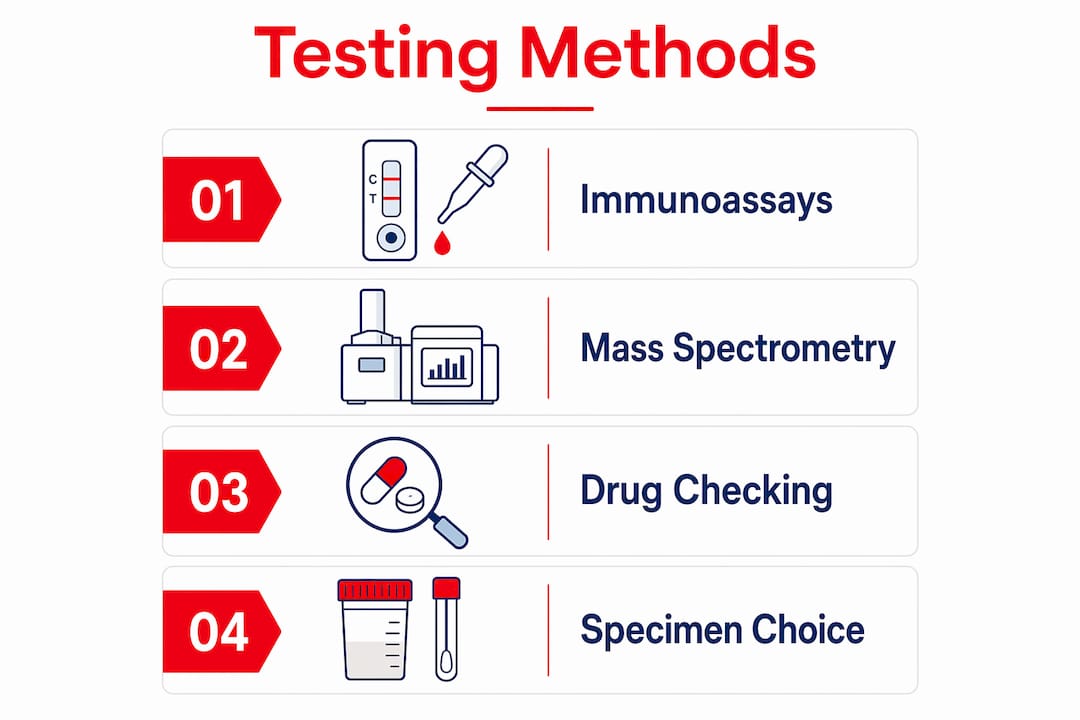
Immunoassays remain the fastest and most affordable option for initial screening. Point-of-care test cups and dip cards from suppliers like Rapidtestcup deliver results in minutes and require no laboratory infrastructure. Their limitation is specificity. An immunoassay designed to detect THC will not reliably detect synthetic cannabinoids like JWH-018 or AB-FUBINACA, because those compounds bind to different receptors and have different molecular structures. For forensic drug testing or clinical confirmation, immunoassays are a starting point, not a conclusion.
Mass spectrometry as the gold standard
Liquid chromatography-tandem mass spectrometry (LC-MS/MS) and gas chromatography-mass spectrometry (GC-MS) are the confirmatory methods of choice for synthetic drug detection. Mass spectrometry detects drugs where immunoassays fail, offering sensitivity and specificity that no antibody-based test can match. The trade-off is cost and turnaround time. These tests require specialized laboratory equipment and trained personnel, making them impractical for rapid point-of-care decisions but indispensable for confirmation and legal defensibility.
Drug checking services for pre-consumption analysis
Drug checking services represent a fundamentally different approach. Rather than testing body fluids after a substance has been consumed, FTIR spectroscopy, fentanyl test strips, and mass spectrometry analyze the substance itself before it is used. This approach is central to harm reduction programs and gives users direct information about what a substance contains, including unexpected adulterants like xylazine or nitazenes. Drug checking does not replace clinical toxicology but fills a gap that urine and blood testing cannot address.
Specimen type and its effect on detection
Urine remains the most common specimen for drug testing because it concentrates metabolites and extends the detection window beyond what blood testing allows. Blood testing reflects more recent exposure but has a narrower window. Hair testing can detect drug use over a period of months but is less useful in acute clinical scenarios. For synthetic drugs specifically, detection windows vary by substance, and the timing of the test relative to exposure is a critical variable that affects interpretation. Understanding drug metabolites and how they behave in different specimen types is foundational to getting accurate results.
Pro Tip: When selecting a test panel for synthetic drug screening, check whether the panel explicitly lists synthetic cannabinoids (K2/Spice variants), fentanyl analogues, and kratom (KRA) as target analytes. A panel that does not name these substances is unlikely to detect them.
Key takeaways
Synthetic drug testing requires specialized methods because standard immunoassay panels are structurally incapable of detecting the chemically engineered compounds that define this drug category.
| Point | Details |
|---|---|
| Standard panels miss synthetics | Immunoassays cannot detect most synthetic cannabinoids and novel opioids by design. |
| Mass spectrometry is the gold standard | LC-MS/MS and GC-MS confirm synthetic drug presence where immunoassays fail. |
| Testing context determines value | Emergency, pediatric, and workplace scenarios gain the most from expanded synthetic drug panels. |
| Detection windows are narrow | Timing of the test relative to exposure directly affects whether a synthetic drug is detected. |
| Drug checking fills a different gap | Pre-consumption substance analysis using FTIR or fentanyl strips protects users that urine testing cannot reach. |
The uncomfortable truth about what a negative test result actually means
I have spent years watching people place enormous trust in a negative drug test result, and that trust is often misplaced when synthetic drugs are involved. A negative result on a standard 10-panel or 12-panel urine test tells you almost nothing about synthetic cannabinoid or synthetic opioid use. It tells you the person did not test positive for the specific substances those antibodies were calibrated to detect. That is a much narrower statement than most people realize.
What I find most concerning is the clinical overconfidence this creates. A physician who sees a negative tox screen on a patient presenting with acute psychosis may rule out drug use and pursue a psychiatric workup, when the actual cause is a synthetic cannabinoid that the panel was never designed to catch. The collaboration between labs and ED clinicians that ADLM now formally recommends is not a bureaucratic suggestion. It is a direct response to real patient harm caused by this exact misinterpretation.
For individuals concerned about their own safety or the safety of someone they care about, the practical implication is straightforward. If you suspect synthetic drug use and a standard test comes back negative, that result does not close the question. It opens it. The right response is to request an expanded panel, consult a toxicologist, or use a drug checking service if pre-consumption analysis is still possible. Testing is a tool for informed decision-making, not a binary verdict. Understanding false positives and false negatives in drug testing is as important as understanding what a positive result means.
— Justin
Reliable synthetic drug test panels from Rapidtestcup
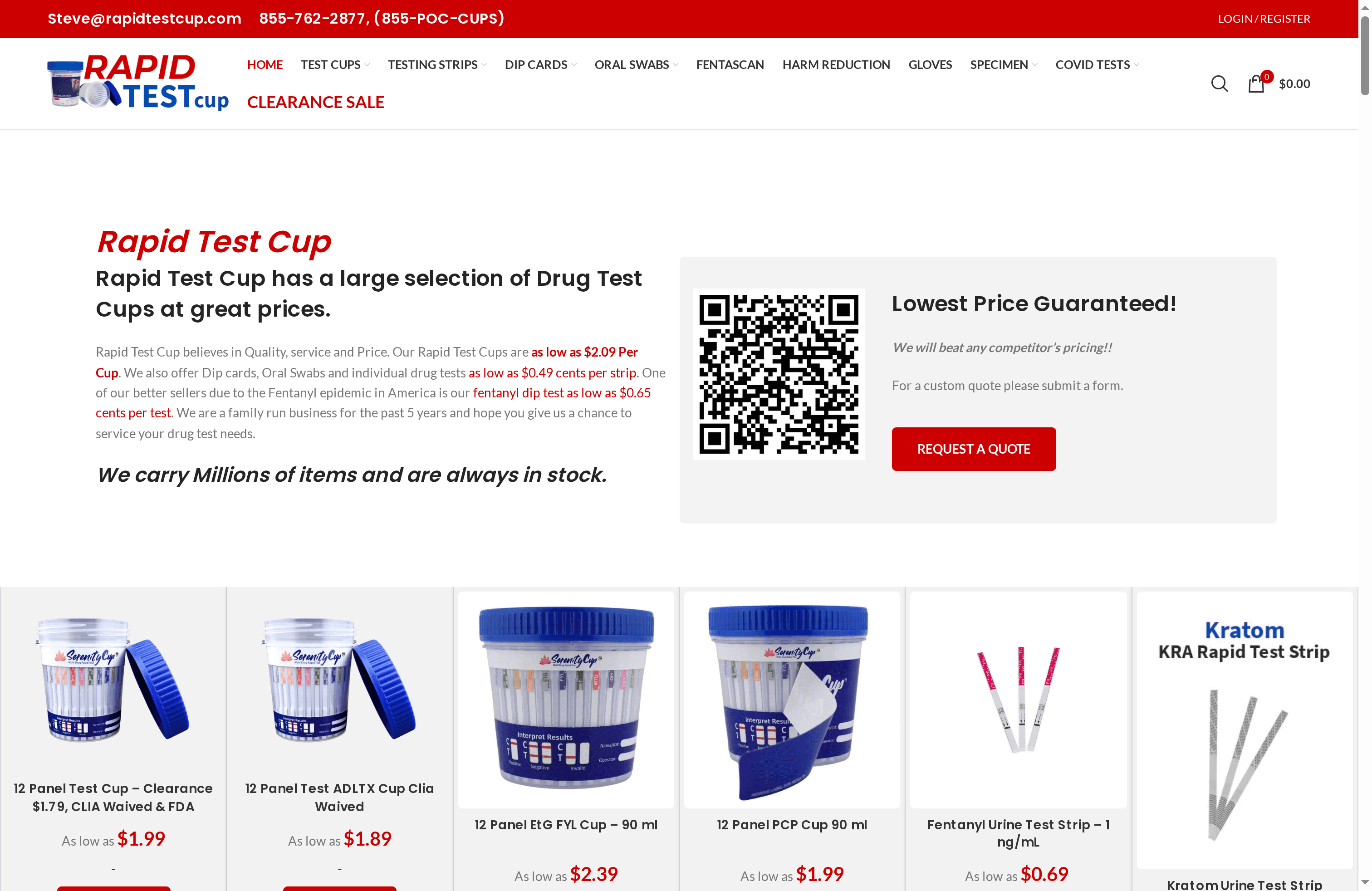
Rapidtestcup offers test panels specifically designed to address the detection gaps that standard screens leave open. The 12-panel ADLTX cup covers fentanyl analogues and kratom alongside standard substances, making it a practical choice for individuals and workplaces that need broader coverage without laboratory infrastructure. For more demanding scenarios, the 15-panel test with adulterants adds ketamine, xylazine detection, and adulterant checks to the panel, giving clinicians and safety officers a more complete picture. All Rapidtestcup products are CLIA waived and FDA-approved, with bulk pricing available for programs that test at scale. If you are serious about detecting synthetic substances, starting with the right panel is the single most important decision you can make.
FAQ
Why do standard drug tests miss synthetic drugs?
Standard immunoassay panels are calibrated to detect specific molecular structures found in traditional drugs. Synthetic drugs are chemically engineered to have different structures, so the antibodies in standard panels do not react to them.
What is the most accurate method for detecting synthetic drugs?
LC-MS/MS (liquid chromatography-tandem mass spectrometry) is the most accurate method for synthetic drug identification. It detects substances that immunoassays miss and provides confirmation suitable for clinical and legal purposes.
When should someone specifically screen for synthetic drugs?
Synthetic drug screening is most critical in emergency department overdose cases, pediatric exposures, workplace safety programs in safety-sensitive industries, and substance use treatment settings where accurate substance identification shapes the treatment plan.
Can a negative urine test rule out synthetic drug use?
No. A negative result on a standard urine panel does not rule out synthetic drug use. Many synthetic cannabinoids and opioid analogues fall outside the detection range of routine panels, and narrow detection windows mean timing also affects the result.
What are drug checking services and how do they differ from urine testing?
Drug checking services analyze a substance before it is consumed, using tools like FTIR spectroscopy and fentanyl test strips to identify what the substance actually contains. Urine testing detects drug metabolites in the body after consumption. The two approaches serve different purposes and are most effective when used together in harm reduction programs.