

Blog
Why drug testing policies matter: key benefits 2026


Workplaces with drug testing policies experience a 51% reduction in workplace accidents compared to those without such programs. Drug testing policies impact safety, compliance, and employee health in profound ways. This guide clarifies why these policies matter and how to apply them effectively across your organization.
Table of Contents
- Understanding The Purpose Of Drug Testing Policies
- Impact Of Drug Testing Policies On Workplace Safety And Productivity
- Legal And Ethical Frameworks Governing Drug Testing
- Common Misconceptions About Drug Testing Policies
- Comparing Drug Testing Methods And Their Policy Implications
- Effective Implementation And Communication Of Drug Testing Policies
- Supporting Employee Health Beyond Testing
- Summary And Next Steps For Employers
- Explore Effective Drug Testing Solutions
Key takeaways
| Point | Details |
|---|---|
| Safety improvement | Drug testing policies reduce workplace accidents by over half and lower absenteeism significantly. |
| Legal compliance | Effective policies require understanding DOT, ADA, and state-specific regulations to protect both employers and employees. |
| Testing methods | Random testing outperforms incident-only testing by 20-40% in deterring drug use. |
| Comprehensive approach | Testing alone isn’t enough; pairing it with education and support programs creates lasting results. |
| Clear communication | Transparent policies improve employee engagement and reduce resistance to testing programs. |
Understanding the purpose of drug testing policies
Drug testing policies are structured programs that establish when, how, and why employers screen employees for substance use. These policies serve three core goals: enhancing workplace safety, ensuring regulatory compliance, and supporting employee health.
The prevalence of workplace drug testing has grown substantially over the past three decades. Workplace drug testing trends show increasing adoption driven by safety priorities and evolving legal requirements. Cannabis accounts for the majority of positive test results, making it a central focus for policy development.
Effective policies align with organizational risk profiles. High-risk industries like transportation, construction, and healthcare often implement more rigorous programs. Drug testing frequency matters for safety outcomes, with regular screening proving more effective than sporadic testing.
Key components of comprehensive policies include:
- Clear definitions of prohibited substances and testing circumstances
- Transparent procedures for sample collection and result handling
- Confidentiality protections and employee rights documentation
- Consequences for positive results and available support resources
Impact of drug testing policies on workplace safety and productivity
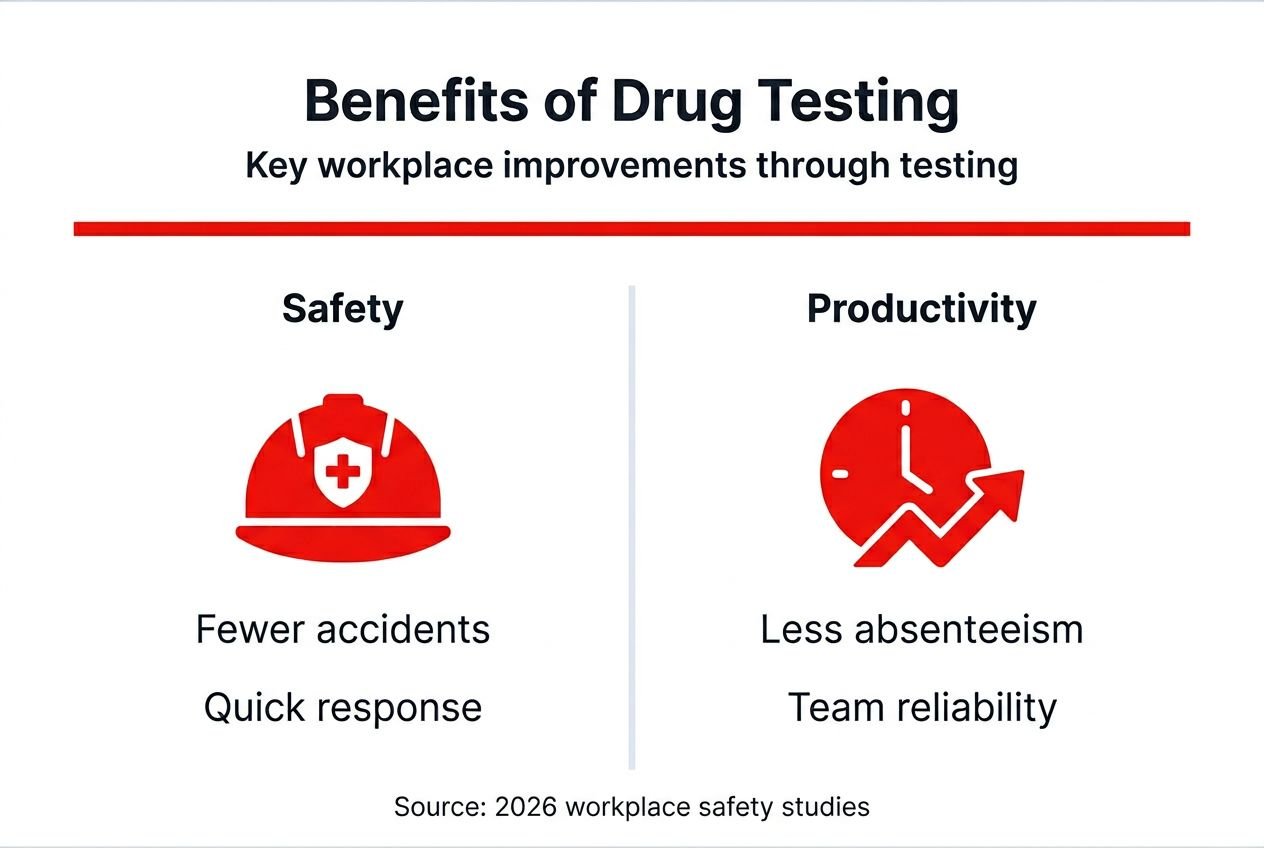
Workplaces with drug testing policies experience a 51% reduction in workplace accidents compared to organizations without testing programs. This dramatic decrease translates directly into fewer injuries, lower insurance premiums, and reduced liability exposure.

Absenteeism drops by 5.1% when drug testing policies are implemented. This improvement means better workforce reliability, fewer disruptions to operations, and enhanced team morale. Employees present more consistently contribute to smoother project timelines and higher quality output.
Financial benefits extend beyond immediate safety improvements. Organizations save substantially on workers’ compensation claims, medical expenses, and lost productivity costs. The workplace drug testing benefits compound over time as safety cultures strengthen.
Productivity gains emerge from multiple factors:
- Fewer work interruptions from accidents and investigations
- Reduced time spent managing substance-related performance issues
- Improved focus and attention among employees
- Enhanced team trust and collaboration in safer environments
The OSHA injury rates study demonstrates that consistent testing programs create sustained safety improvements rather than temporary compliance spikes.
Legal and ethical frameworks governing drug testing
Navigating legal requirements is essential for policy effectiveness. Department of Transportation (DOT) regulations mandate testing for safety-sensitive positions. The Americans with Disabilities Act (ADA) protects employees from discrimination while allowing employers to maintain drug-free workplaces. State laws vary significantly, with some jurisdictions imposing stricter privacy protections or cannabis-related restrictions.
Legal considerations for drug testing require balancing employer safety needs with employee rights. Transparency forms the foundation of ethical testing programs. Policies must be documented, distributed, and consistently applied across all employee levels.
Privacy and drug testing concerns demand strict confidentiality protocols. Test results should be accessible only to designated personnel, stored securely, and shared solely on a need-to-know basis. Ethical programs focus on supporting employees rather than punitive measures alone.
Compliance and drug testing best practices include:
- Written policies reviewed annually for legal updates
- Employee acknowledgment and consent documentation
- Qualified personnel conducting and overseeing testing
- Fair and consistent application regardless of position or tenure
Pro Tip: Consult employment attorneys familiar with your jurisdiction before finalizing policies. Legal landscapes shift rapidly, and expert guidance prevents costly compliance failures. Training staff for drug testing workplace compliance ensures everyone understands their responsibilities.
Common misconceptions about drug testing policies
Many employers believe drug testing alone creates drug-free workplaces. Reality proves more complex. Testing alone doesn’t guarantee drug-free workplaces; education and support programs are equally essential. Comprehensive approaches combining testing, training, and assistance yield superior outcomes.
Another widespread misconception involves privacy violations. While concerns about employee rights are valid, properly designed policies respect privacy while achieving safety goals. Testing protocols can be transparent, dignified, and legally compliant simultaneously.
Some organizations overestimate testing’s deterrent effect without complementary programs. Employees need education about substance risks, company expectations, and available resources. Fear of detection motivates some individuals, but understanding and support create lasting behavioral change.
Key misunderstandings include:
- Assuming all testing methods are equally effective for different scenarios
- Believing legal compliance is simple and uniform across jurisdictions
- Thinking one-time policy implementation suffices without ongoing review
- Expecting testing to replace supervision and performance management
“Drug testing works best as part of a comprehensive workplace health strategy, not as a standalone solution.” NIDA workplace drug testing insights
Holistic programs integrate testing with employee assistance, clear communication, and cultural commitment to wellness.
Comparing drug testing methods and their policy implications
Pre-employment testing screens candidates before hiring, establishing baseline expectations. It identifies substance use issues early but offers limited ongoing deterrence. Once hired, employees may resume use if no further testing occurs.
Random testing delivers significantly stronger deterrence. Random drug testing programs are 20-40% more effective at preventing drug use among employees than testing only after incidents occur. The unpredictability factor motivates continuous compliance rather than temporary abstinence.
Post-incident testing serves investigative and liability purposes. When accidents or safety violations occur, testing helps determine contributing factors. However, reactive approaches alone miss prevention opportunities.
| Testing Method | Primary Purpose | Deterrence Level | Best Use Case |
|---|---|---|---|
| Pre-employment | Screen candidates | Low (one-time) | Initial hiring standards |
| Random | Ongoing deterrence | High (continuous) | Safety-sensitive positions |
| Post-incident | Investigation | Medium (reactive) | Accident analysis |
| Reasonable suspicion | Address concerns | Medium (targeted) | Performance issues |
| Return-to-duty | Verify rehabilitation | Medium (confirmatory) | Post-treatment monitoring |
Choosing appropriate methods depends on:
- Industry risk levels and regulatory requirements
- Budget constraints and testing frequency capabilities
- Workforce size and operational logistics
- State and local legal restrictions
Pro Tip: High-risk sectors benefit from combining pre-employment, random, and post-incident testing. This layered approach maximizes deterrence while addressing multiple policy objectives. The NCBI random testing study confirms multi-method strategies outperform single-approach programs.
Effective implementation and communication of drug testing policies
Successful policy rollout requires systematic planning and transparent execution. Follow these steps:
- Assess legal requirements specific to your jurisdiction, industry, and workforce composition
- Choose testing types aligned with organizational risk profiles and operational realities
- Draft clear, comprehensive policy documents reviewed by legal counsel
- Communicate policies transparently through multiple channels before implementation
- Combine testing with employee support programs like counseling and rehabilitation referrals
- Implement consistently across all employee levels without favoritism
- Monitor effectiveness through safety metrics, compliance rates, and employee feedback
How to conduct workplace drug testing properly involves standardized procedures executed by trained personnel. Collection methods, chain of custody protocols, and result handling require meticulous attention.
Common implementation pitfalls include:
- Inadequate employee communication leading to misunderstanding and resistance
- Inconsistent application creating perceptions of unfairness
- Skipping legal consultation resulting in compliance violations
- Neglecting supervisor training on policy enforcement
Drug screening workflow guide for compliance ensures each testing stage meets professional standards. How to handle positive drug tests with compliance requires documented procedures balancing fairness with organizational safety.
Employee engagement dramatically improves outcomes. Present policies as health and safety initiatives rather than punitive measures. Explain the business case clearly: safer workplaces benefit everyone. Invite questions and address concerns directly.
How to manage drug test results in workplaces demands confidentiality, accuracy, and appropriate follow-up. Results should trigger predetermined responses outlined in policy documents.
Supporting employee health beyond testing
Drug testing identifies substance use but doesn’t address underlying issues. Integration with employee assistance programs (EAPs) is crucial for comprehensive workplace health. Testing alone is a diagnostic tool; support programs provide solutions.
Employee health outcomes improve up to 30% when organizations pair testing with assistance resources. Confidential counseling, rehabilitation referrals, and return-to-work support demonstrate genuine care for employee wellbeing. This approach reduces stigma and encourages individuals to seek help.
Effective support programs include:
- Confidential EAP access for substance abuse counseling
- Clear pathways to treatment without automatic termination
- Return-to-duty protocols supporting successful rehabilitation
- Education about substance risks and available resources
- Ongoing monitoring balancing accountability with compassion
Creating supportive workplace cultures around health transforms testing from punitive to protective. Employees view policies as safety measures rather than threats. This cultural shift improves voluntary compliance and reduces adversarial relationships.
Referral networks connecting employees with qualified treatment providers ensure appropriate care. Partnerships with local rehabilitation facilities, counselors, and medical professionals create seamless support pathways. Organizations committed to employee health see better retention, stronger morale, and enhanced productivity alongside improved safety metrics.
Summary and next steps for employers
Drug testing policies significantly improve workplace safety, with accident reductions exceeding 50% in organizations with comprehensive programs. These policies serve multiple purposes: protecting employees, ensuring regulatory compliance, and supporting individual health.
Legal and ethical frameworks require careful attention. Understanding DOT regulations, ADA provisions, and state-specific laws prevents compliance failures. Ethical implementation prioritizes transparency, fairness, and employee dignity.
Myths and misconceptions undermine effectiveness when unaddressed. Testing works best as part of holistic programs combining screening, education, and support. No single approach guarantees success; comprehensive strategies deliver superior outcomes.
Combining testing methods optimizes results:
- Random testing provides ongoing deterrence
- Pre-employment screening establishes standards
- Post-incident testing supports investigations
- Clear communication reduces resistance
Support programs enhance employee health and policy acceptance. Organizations viewing testing as health initiatives rather than punitive measures build stronger safety cultures and better workplace relationships.
Next steps include consulting employment attorneys, engaging stakeholders in policy development, and selecting appropriate testing methods for your risk profile. Start with clear goals, involve employees transparently, and commit to consistent implementation.
Explore effective drug testing solutions
Implementing comprehensive drug testing policies requires reliable testing products that deliver accurate results efficiently. RapidTestCup offers a complete range of drug testing solutions designed for professional workplace programs.
Choose from multi-panel test cups like the 12 panel ADLTX cup for comprehensive screening, or targeted options like the MET drug test strip for specific substance detection. For maximum coverage, the 22 panel drug test with adulterants provides extensive screening capabilities.
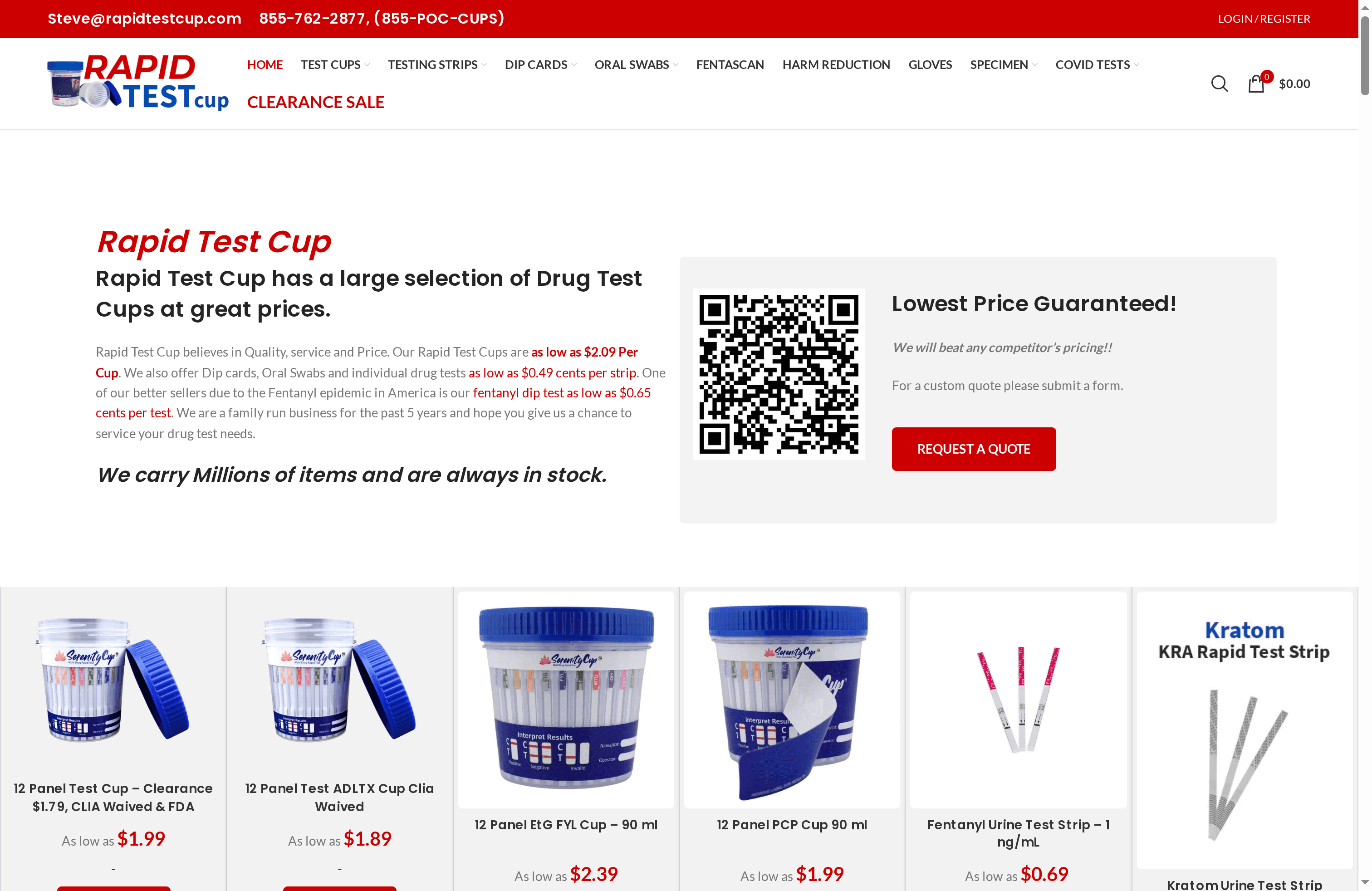
All products meet CLIA waived and FDA approval standards, ensuring compliance with professional testing requirements. Quick shipping and bulk discounts support organizations of all sizes in maintaining effective testing programs.
FAQ
What are the main goals of workplace drug testing policies?
Workplace drug testing policies aim to enhance safety, ensure legal compliance, and support employee health. These goals work together to create safer work environments while respecting employee rights. Effective policies balance organizational needs with individual dignity and legal requirements.
How can employers balance drug testing with employee privacy?
Strict confidentiality protocols, transparent policy communication, and legal compliance help balance privacy with testing needs. Limit result access to designated personnel and store information securely. Present testing as a safety measure rather than surveillance, and ensure consistent application across all employee levels.
Is random drug testing more effective than testing only after incidents?
Yes, random testing is 20-40% more effective at deterring drug use than post-incident testing alone. The unpredictability of random screening motivates continuous compliance rather than temporary abstinence. Combining both methods provides comprehensive coverage addressing prevention and investigation needs. Visit the random testing effectiveness study for detailed research findings.
How should employers respond to positive drug test results?
Follow documented protocols including confirmation testing, maintaining strict confidentiality, and offering employee support resources. Avoid immediate termination; instead, consider rehabilitation options and return-to-duty programs. Handling positive drug tests requires balancing accountability with compassion while protecting workplace safety.