Blog
Screening vs. Confirmation Drug Tests: A Pro Guide


TL;DR:
- Drug screening provides rapid, presumptive testing for substances in biological samples. Confirmation testing uses precise laboratory methods to identify and quantify drugs definitively, ensuring legal and clinical accuracy. Both steps are essential for responsible drug testing practices, particularly in high-stakes settings.
Drug screening is defined as a rapid, preliminary test designed to detect the possible presence of one or more substances in a biological specimen. Confirmation testing is the follow-up process that definitively identifies and quantifies specific drugs or metabolites using advanced laboratory instrumentation. The difference between screening and confirmation is not just technical. It is the line between a presumptive result and a legally defensible one. For professionals in healthcare, law enforcement, and substance abuse treatment, understanding this distinction determines whether a clinical decision or adverse employment action will hold up under scrutiny.
What is the difference between screening and confirmation?
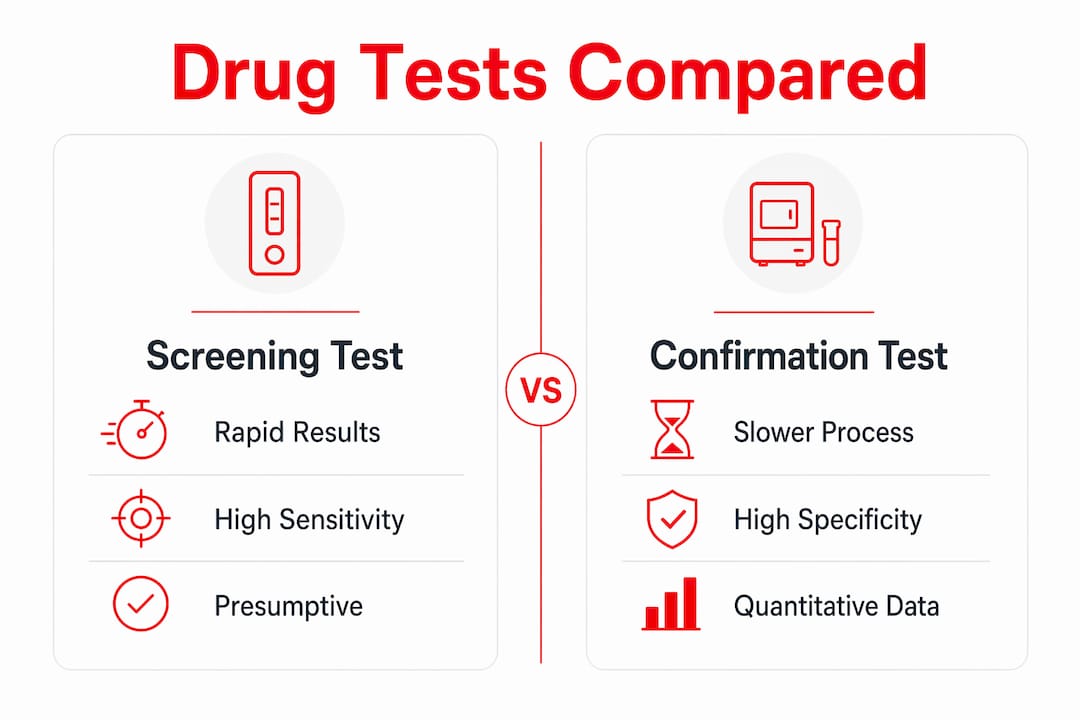
Screening tests and confirmation tests serve fundamentally different purposes in drug detection. Screening prioritizes speed and sensitivity. Confirmation prioritizes specificity and legal defensibility. Both are necessary, and neither replaces the other.
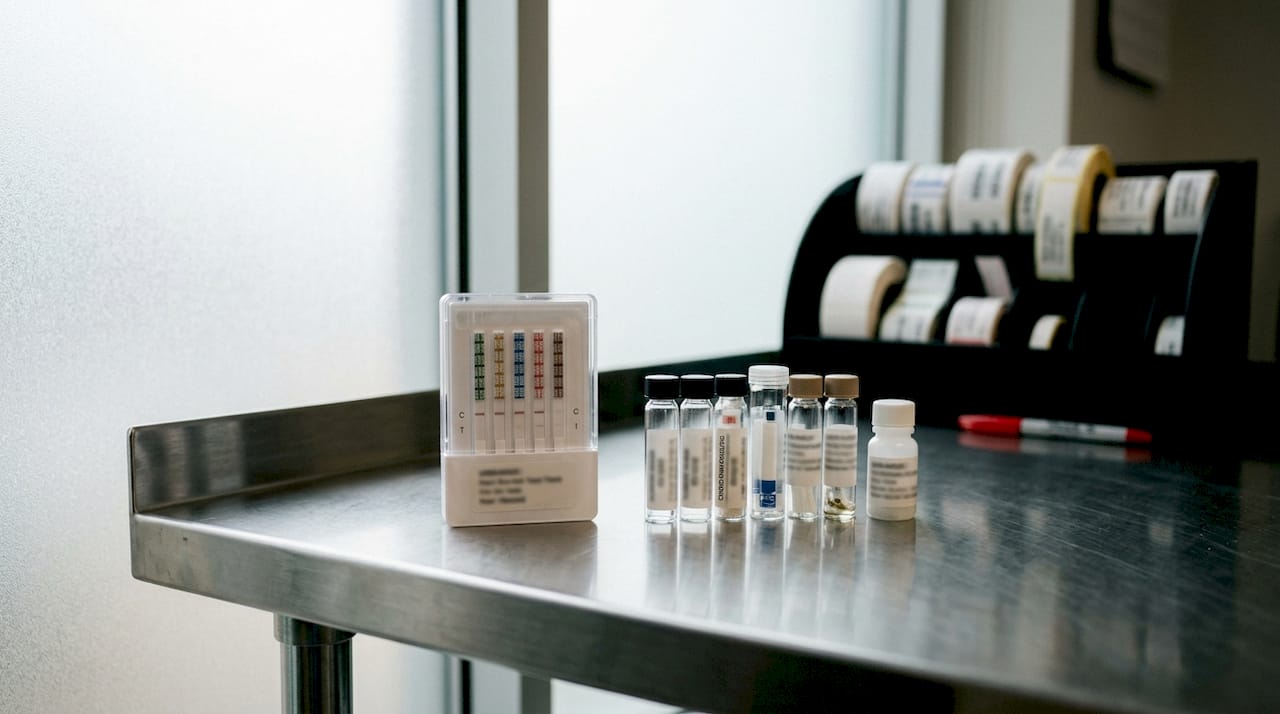
Immunoassay screening is the standard technology behind most rapid drug tests. It works by detecting drug metabolites through antibody reactions, producing a qualitative result: positive, negative, or non-negative. The entire process takes minutes. That speed is the point. Screening is designed to cast a wide net, catching as many potential positives as possible before a more rigorous process takes over.
Confirmation testing uses chromatography and mass spectrometry, specifically gas chromatography/mass spectrometry (GC/MS) or liquid chromatography tandem mass spectrometry (LC/MS/MS). These methods identify the exact chemical structure of a substance and measure its concentration. Confirmatory testing typically takes up to two working days. That delay reflects the complexity of the instrumentation and the precision of the analysis.
The core trade-off is this: screening tests have high sensitivity but lower specificity. Confirmation tests have high specificity and produce quantitative results. One catches; the other confirms.
How do drug screening tests work?
Screening tests are built for volume and speed. A urine immunoassay panel can cover 5, 10, or 18 substances simultaneously, producing results in minutes at the point of collection. That makes them practical for workplace programs, emergency departments, substance abuse clinics, and law enforcement intake.
Screening results are qualitative and presumptive, meaning they indicate the likely presence of a drug class, not a specific compound. A positive screen for amphetamines, for example, does not tell you whether the substance is methamphetamine, MDMA, or a prescription stimulant. It tells you something in that class was detected above the cutoff threshold.
The sensitivity advantage of immunoassay screening comes with a real cost: false positives. Common medications like trazodone can trigger a positive amphetamine screen due to cross-reactivity. Ibuprofen has been linked to false positives for cannabis in some immunoassay formats. Quinolone antibiotics can interfere with opiate panels. These are not rare edge cases. They are documented, predictable limitations of the technology.
Typical substances covered in standard screening panels include:
- Marijuana (THC metabolites)
- Cocaine metabolites (benzoylecgonine)
- Opiates and opioids (morphine, codeine, oxycodone)
- Amphetamines and methamphetamine
- Benzodiazepines
- Phencyclidine (PCP)
- Barbiturates
- Methadone and buprenorphine (on expanded panels)
Pro Tip: When ordering a screening panel for a substance abuse treatment program, specify the cutoff thresholds. Lower cutoffs increase sensitivity but also increase false positive rates. Match the cutoff to your clinical purpose.
How does confirmatory testing differ from screening?
Confirmation testing is not simply a more accurate version of screening. It is a categorically different process using different technology, different analytic logic, and different legal standing. GC/MS and LC/MS/MS identify substances by their precise molecular fingerprint, eliminating the cross-reactivity problem that plagues immunoassay methods.
The key differences in confirmation testing include:
- Technology: Chromatography separates compounds; mass spectrometry identifies them by molecular weight and fragmentation pattern.
- Specificity: Confirmation tests distinguish between structurally similar compounds that immunoassays cannot separate.
- Quantification: Results include a concentration value, not just a positive or negative call.
- Turnaround time: Up to two working days for most specimens.
- Legal standing: A negative confirmation result legally supersedes a non-negative screen.
That last point matters enormously in practice. A negative confirmation test supersedes any non-negative screening result, both clinically and legally. If a patient screens positive for opioids but confirmation returns negative, the screen result is set aside. The confirmation result governs.
Confirmation tests also provide quantitative data. That capability is valuable beyond simple detection. In substance abuse treatment, serial quantitative results can track whether a patient is reducing use, maintaining abstinence, or showing patterns consistent with relapse. Screening cannot do that.
Pro Tip: Request LC/MS/MS over GC/MS when testing for synthetic opioids like fentanyl or novel benzodiazepines. LC/MS/MS handles thermally unstable compounds better and is increasingly the standard for forensic toxicology.
Why is the two-step process essential?
The screen-then-confirm model exists because no single technology optimally delivers both high sensitivity and high specificity at low cost and fast turnaround. Screening handles the first requirement. Confirmation handles the second. Together, they cover what neither can do alone.
Screening tests are designed to detect as many potential positives as possible. In a low-prevalence population, that design produces a higher rate of false positives. A workplace with low actual drug use will see more false positive screens per true positive than a high-prevalence clinical population. Confirmation corrects for that by applying specificity where it counts.
The legal and clinical stakes of skipping confirmation are serious. Consider these scenarios where confirmation is not optional:
- Employment termination: Federal workplace drug testing programs under the Department of Transportation mandate confirmation before any adverse action.
- Treatment denial: Denying medication-assisted treatment based on a non-negative screen without confirmation exposes clinicians to liability.
- Criminal proceedings: Forensic drug evidence requires chain-of-custody documentation and confirmed results to be admissible.
- Child custody decisions: Courts require confirmed toxicology results, not presumptive screens.
- Probation and parole monitoring: Supervisory agencies require confirmed results before reporting violations.
“No definitive adverse action should be taken based solely on a screening test result. Confirmation results are required for legally defensible decisions in clinical, occupational, and forensic contexts. A non-negative screen is a reason to confirm, not a reason to act.”
Taking adverse actions based only on screening results is a documented legal and clinical pitfall. The two-step process is not bureaucratic caution. It is the minimum standard for responsible drug testing practice.
What are the practical challenges of each testing process?
Turnaround time shapes how each test fits into a workflow. Screening results arrive in minutes and can inform immediate clinical decisions, such as whether to administer naloxone or hold a medication. Confirmation results arrive in up to two working days and inform decisions that carry lasting consequences.
Lab communication is a frequently underestimated factor. Mass spectrometry confirmation tests will not detect substances unless the lab is specifically testing for them. Novel psychoactive substances, synthetic cannabinoids, and fentanyl analogs require explicit requests. If your clinical population uses substances not on the standard confirmation panel, those substances will not appear in the results, even if they are present.
The role of the Medical Review Officer (MRO) is central to correct interpretation. An MRO reviews non-negative screens and confirmed results, contacts the donor to assess legitimate medical explanations, and makes the final call on whether a result is reported as positive. Professionals who bypass MRO review in regulated programs create compliance gaps.
The table below summarizes the key operational differences between screening and confirmation:
| Feature | Screening test | Confirmation test |
|---|---|---|
| Technology | Immunoassay | GC/MS or LC/MS/MS |
| Turnaround time | Minutes | Up to 2 working days |
| Result type | Qualitative (positive/negative) | Qualitative and quantitative |
| Specificity | Lower (cross-reactivity risk) | High (molecular identification) |
| Cost | Lower | Higher |
| Legal standing | Presumptive only | Legally defensible |
| False positive risk | Higher | Minimal |
Pro Tip: When a confirmation result comes back negative after a non-negative screen, document the discrepancy and the confirmation result in the patient or employee record. That documentation protects you if the screen result is later cited out of context.
For professionals managing forensic cases, the forensic drug testing methods used in confirmation are also subject to chain-of-custody requirements that screening tests typically do not carry. Treat specimen handling as part of the confirmation process, not separate from it.
Key Takeaways
Screening tests detect; confirmation tests prove. Every high-stakes drug testing decision requires both steps, in that order, with documentation at each stage.
| Point | Details |
|---|---|
| Screening is presumptive | Immunoassay screens produce qualitative results that require confirmation before any adverse action. |
| Confirmation is definitive | GC/MS and LC/MS/MS identify exact substances and concentrations, making results legally defensible. |
| False positives are predictable | Medications like trazodone routinely trigger false positive screens; confirmation eliminates this risk. |
| Lab communication is critical | Novel substances require explicit analyte requests; standard panels will not detect them automatically. |
| The two-step model is the standard | Screen-then-confirm remains the required process for employment, forensic, and clinical drug testing programs. |
Where the two-step model breaks down in practice
The screen-then-confirm model is sound in theory. In practice, I see it fail at the communication layer more than anywhere else. Clinicians order a confirmation test and assume the lab will test for everything relevant. Labs test for what they are asked to test for. That gap produces confirmed negative results for substances that are genuinely present, and no one catches it until a patient relapses or a case falls apart.
The second failure point is premature action. A non-negative screen lands on a desk, and someone makes a decision before the confirmation result arrives. I understand the pressure. Turnaround times are real constraints. But a two-day wait is not an excuse to act on a presumptive result. The legal exposure from a wrongful termination or an unjustified treatment denial far exceeds the inconvenience of waiting.
The third issue is training. Staff who administer screening tests often do not understand what a non-negative result means. They treat it as a confirmed positive. That misunderstanding travels up the chain. By the time a supervisor or clinician sees the result, it has already been framed incorrectly. Investing in training on how to interpret drug test results is not optional for any program that uses drug testing in high-stakes decisions.
The emerging trend toward first-line definitive testing, where LC/MS/MS is used as the initial test rather than a follow-up, is worth watching. First-line definitive testing is emerging for certain clinical cases, but the screen-then-confirm model remains the standard for cost-effective large-scale programs. For most programs, the economics still favor screening first. But for high-risk clinical populations where false positives carry serious consequences, the calculus is shifting.
— Justin
Rapidtestcup screening products for compliant drug testing programs
Professionals who need reliable initial screening tools will find that the quality of the screen directly affects how often confirmation testing is triggered unnecessarily.
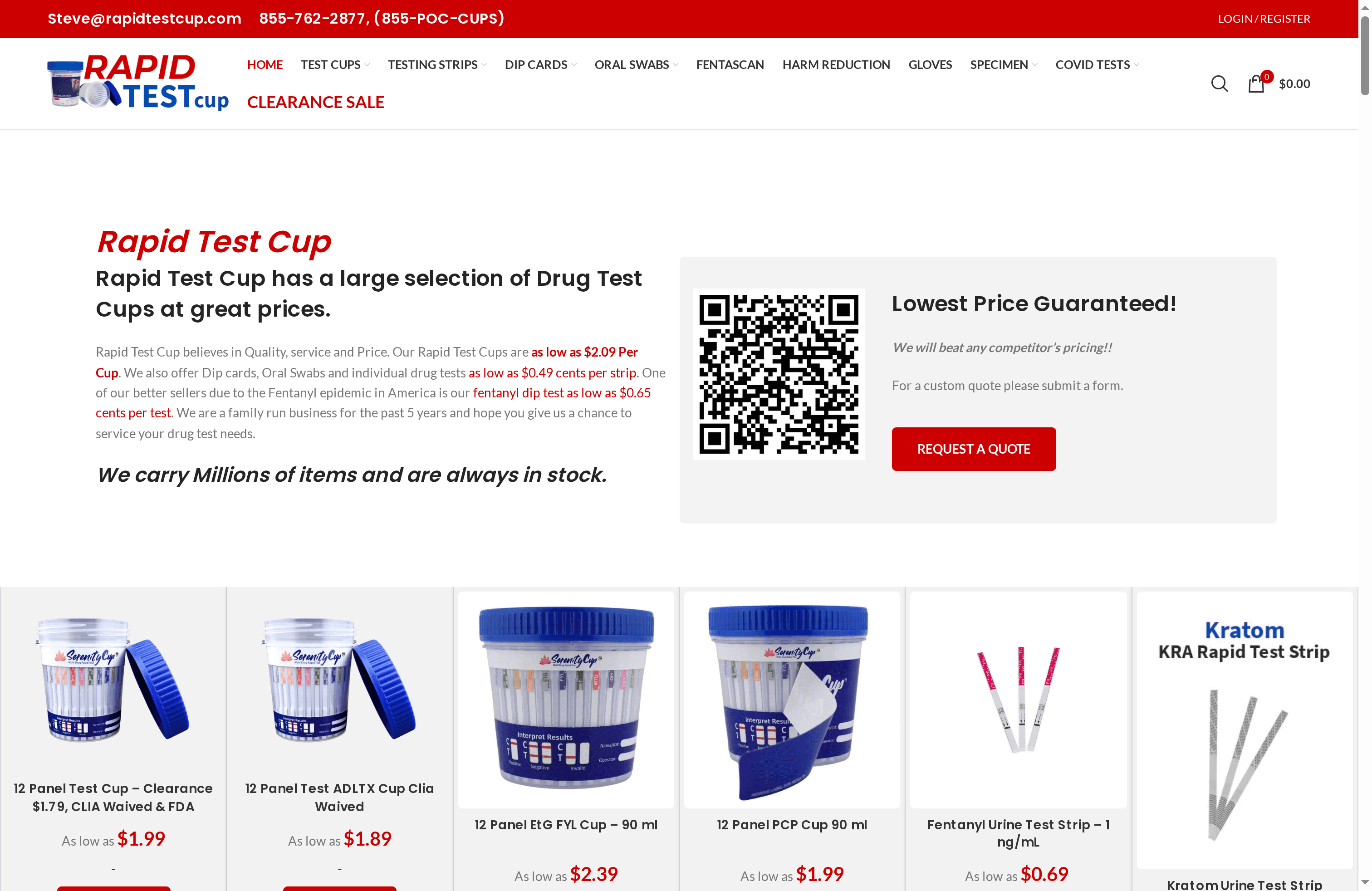
Rapidtestcup carries CLIA waived, FDA-cleared urine drug test cups and dip cards covering standard panels and expanded analytes, including fentanyl, ETG, and K2. The catalog is built for clinical, occupational, and forensic settings where accuracy at the screening stage reduces downstream confirmation costs. Professionals can compare options across panel sizes and cutoff levels on the urine drug test kits page, or use the kit selection guide to match products to program requirements. Bulk pricing and fast shipping are available for high-volume programs.
FAQ
What is the main difference between screening and confirmation?
Screening tests use immunoassay technology to produce rapid, qualitative results that are presumptive. Confirmation tests use GC/MS or LC/MS/MS to definitively identify and quantify specific substances, making results legally and clinically defensible.
Can a positive screen be overturned by a negative confirmation?
Yes. A negative confirmation result legally and clinically supersedes a non-negative screening result. No adverse action should be taken until confirmation is complete.
Why do screening tests produce false positives?
Immunoassay screens detect drug classes through antibody reactions and are prone to cross-reactivity with medications. Trazodone, ibuprofen, and certain antibiotics are documented causes of false positive screens for amphetamines, cannabis, and opiates respectively.
How long does confirmation testing take?
Confirmatory testing typically takes up to two working days due to the complexity of chromatography and mass spectrometry instrumentation required for precise identification.
Do confirmation tests detect all drugs automatically?
No. Labs must be specifically requested to test for novel psychoactive substances and synthetic analogs. Standard confirmation panels will not report substances outside their pre-defined analyte list, even if those substances are present in the specimen.