Blog
Streamline your 2026 drug test compliance process


Employers face significant legal and financial risks when drug testing programs fail to meet federal standards. Noncompliance can result in penalties exceeding $5,800 per violation, lawsuits, and compromised workplace safety. This guide delivers a stepwise approach to mastering the US drug test compliance process in 2026, covering preparation, execution, and verification. You’ll learn how to establish legally sound policies, conduct tests according to strict protocols, and maintain records that withstand audits. Whether you manage DOT-regulated employees or implement voluntary workplace programs, following these procedures protects your organization and ensures every test meets federal requirements.
Table of Contents
- Preparing For US Drug Test Compliance In 2026
- Executing Drug Tests: Step-By-Step Compliance Workflow
- Verifying Results And Maintaining Compliance Records
- Reliable Drug Test Kits And Supplies For Compliance
Key takeaways
| Point | Details |
|---|---|
| Federal compliance essentials | Adherence to HHS and DOT guidelines on testing methods, panels, and procedures is mandatory for regulated employers. |
| Policy and infrastructure | Written policies, certified labs, designated representatives, and strict chain of custody form the compliance foundation. |
| Testing types and timelines | Pre-employment, random, post-accident, reasonable suspicion, return-to-duty, and follow-up tests each follow specific protocols. |
| Confidentiality and protections | ADA, NLRA, and privacy laws require secure handling of results and accommodation of legitimate prescriptions. |
| Record retention and audits | Maintain documentation for required periods and conduct internal audits to identify and correct protocol gaps. |
Preparing for US drug test compliance in 2026
Establishing a compliant drug testing program begins with a comprehensive written policy. Your policy must specify which employees are subject to testing, the circumstances triggering tests, consequences for positive results, and confidentiality protections. Employers must develop written policies, designate DER and MRO, use HHS-certified labs, and ensure confidentiality while complying with ADA and NLRA. This policy becomes your operational blueprint and legal defense if challenges arise.
Designate a Drug and Alcohol Testing Designated Employer Representative (DER) to oversee your program. The DER coordinates testing schedules, receives results from the Medical Review Officer (MRO), and ensures procedural consistency. The MRO, a licensed physician with specialized training, reviews all positive results to verify legitimate prescriptions and rule out false positives. These roles create accountability and prevent compliance gaps.
Select only HHS-certified laboratories for specimen analysis. Certified labs follow strict quality control standards and chain of custody protocols that stand up in legal proceedings. Using non-certified facilities voids your compliance and exposes you to liability. Verify certification status annually and maintain documentation of lab credentials.
Federal guidelines under HHS and DOT specify mandatory testing panels and processes employers must follow. The standard 5-panel test screens for marijuana, cocaine, amphetamines, opiates, and phencyclidine. DOT-regulated employers must use this panel at minimum, though many organizations add additional substances. In 2026, oral fluid testing gained federal approval as an alternative specimen type, though urine remains the DOT standard for most situations.
Protect employee confidentiality throughout the process. Test results must be stored securely with access limited to the DER, MRO, and designated HR personnel. The ADA prohibits discrimination based on lawful prescription medication use, so your policy must accommodate employees who test positive for prescribed controlled substances. The NLRA protects employees’ rights to discuss workplace conditions, including testing policies, so avoid overly broad confidentiality clauses that could violate labor law.
Pro Tip: Document drug testing procedures in a step-by-step manual that collection site staff can reference during each test. This reduces errors and ensures consistency across multiple locations or shifts.
Your preparation checklist should include:
- Written policy distributed to all affected employees
- DER and MRO designations with contact information
- Contracts with HHS-certified laboratories
- Secure record storage system with access controls
- Training materials for supervisors on reasonable suspicion indicators
- Union notification procedures if applicable
Review drug testing compliance overview resources and consult SAMHSA federal employer guidelines to ensure your policy addresses all regulatory requirements before implementation.
Executing drug tests: step-by-step compliance workflow
Proper execution begins the moment you notify an employee of a required test. Drug testing types include pre-employment, random, post-accident, reasonable suspicion, return-to-duty, and follow-up testing with strict timelines and protocols. Each type has specific notification and timing requirements you must follow precisely.
For random testing, use a truly random selection method such as computer-generated lists or third-party administrators. Selections must be unpredictable and unannounced. Once selected, employees proceed immediately to the collection site without opportunity to delay or prepare. Post-accident testing requires even tighter timelines: alcohol tests within 8 hours and drug tests within 32 hours of the incident.
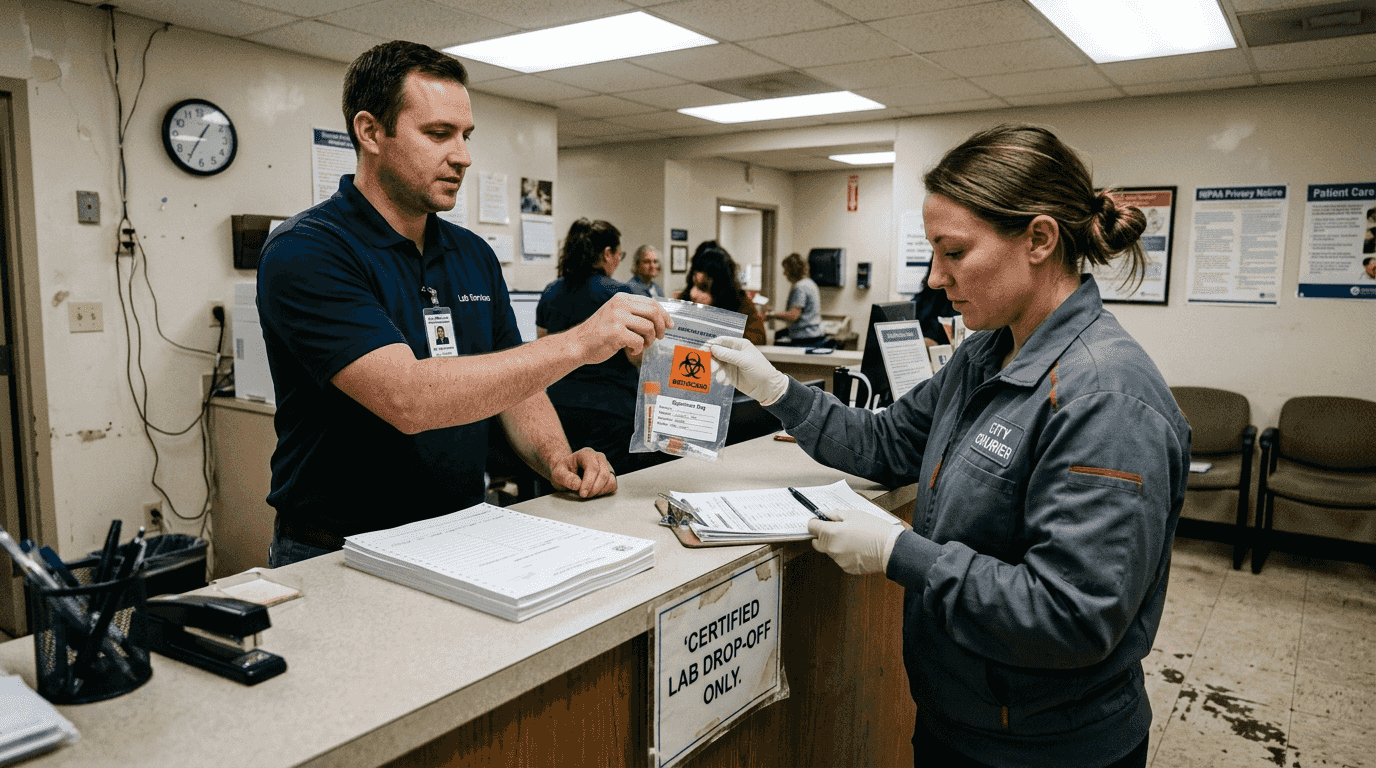
The collection process follows strict chain of custody procedures:
- Verify employee identity using photo identification
- Complete custody and control form with employee and collector signatures
- Provide privacy for specimen collection while preventing adulteration
- Observe specimen temperature and integrity immediately after collection
- Seal specimen container with tamper-evident tape in employee’s presence
- Document each transfer of custody until specimen reaches the laboratory
Collectors must be trained in DOT procedures and maintain a professional, neutral demeanor. Any deviation from protocol can invalidate results and create legal exposure. If an employee refuses to provide a specimen or attempts to adulterate the sample, document the refusal and treat it as a positive test per your policy.
Pro Tip: Maintain a random drug testing workflow checklist at each collection site to ensure collectors follow every step correctly, especially during high-volume testing periods.
Submit specimens to your certified laboratory with complete chain of custody documentation. The lab analyzes samples using immunoassay screening followed by gas chromatography-mass spectrometry (GC-MS) confirmation for any presumptive positives. This two-step process eliminates false positives and provides legally defensible results.
The following table shows standard DOT testing panels and cutoff levels:
| Substance | Initial Test Cutoff | Confirmation Cutoff |
|---|---|---|
| Marijuana (THC) | 50 ng/mL | 15 ng/mL |
| Cocaine | 150 ng/mL | 100 ng/mL |
| Opiates | 2000 ng/mL | 2000 ng/mL |
| Amphetamines | 500 ng/mL | 250 ng/mL |
| Phencyclidine | 25 ng/mL | 25 ng/mL |
When results return positive, the MRO contacts the employee to discuss potential legitimate medical explanations. The employee has 72 hours to provide prescription documentation or medical justification. Only after this review does the MRO report a verified positive to your DER. This step protects employees with valid prescriptions and prevents ADA violations.
For reasonable suspicion testing, document observable signs and symptoms that triggered the test. Supervisors must complete written reports noting specific behaviors, appearance, or speech patterns consistent with impairment. Vague statements like “acting strange” won’t satisfy legal scrutiny. Reference managing positive drug tests guidance for detailed documentation standards.
Unionized workplaces may require advance notification to union representatives before implementing testing programs or conducting certain test types. Review your collective bargaining agreement and consult FMCSA drug testing rules to ensure compliance with both labor law and transportation regulations.
Verifying results and maintaining compliance records
Result verification protects both your organization and employees from errors. The MRO serves as the critical checkpoint, reviewing every positive result before it reaches you. This physician reviews the employee’s medical history, prescription records, and any legitimate explanations for controlled substances in their system. Employers must secure confidentiality, comply with ADA when reviewing prescriptions, and retain records for audits; FMCSA fines up to $5,833 per violation underscore this importance.
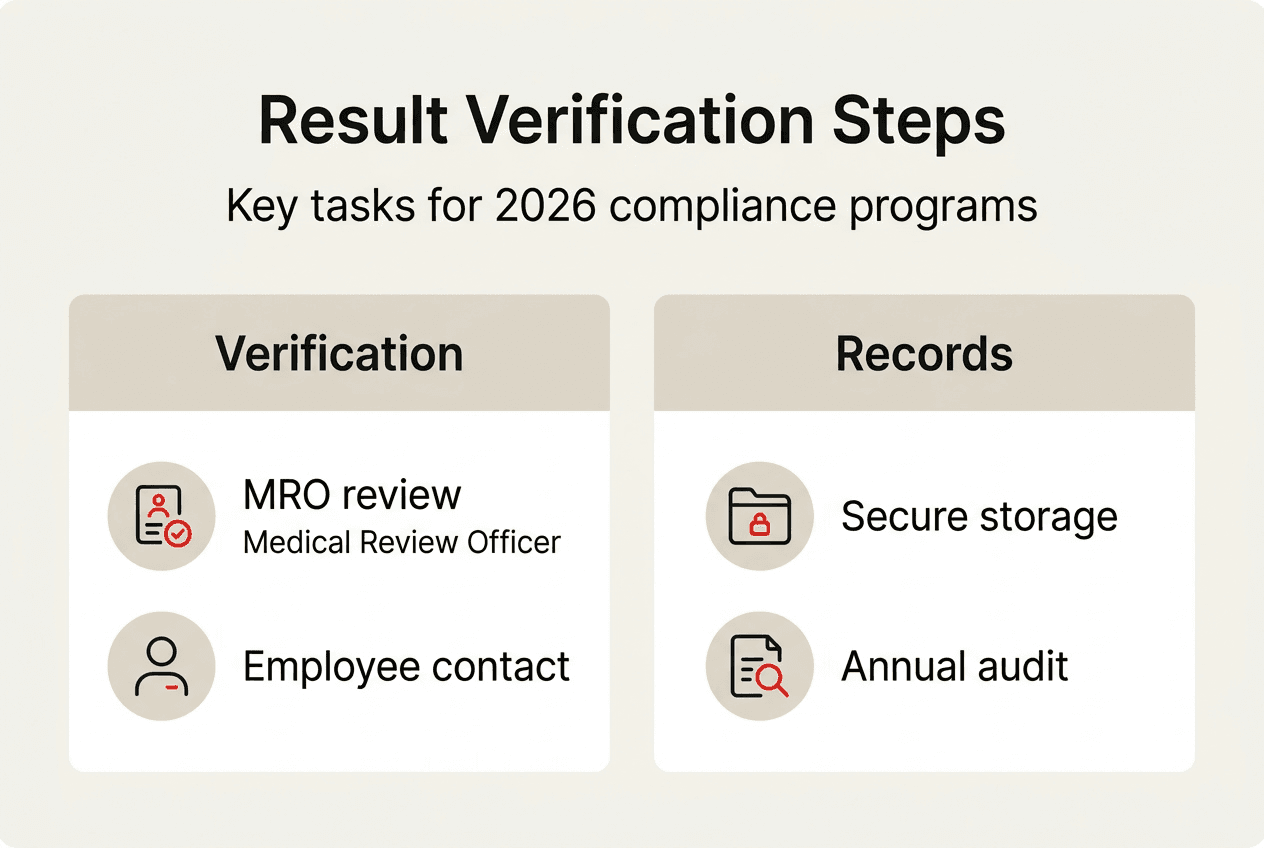
When the MRO verifies a positive result, you receive only the final determination, not detailed medical information. This separation maintains HIPAA compliance and prevents disability discrimination. If an employee has a valid prescription for a controlled substance that affects safety-sensitive functions, engage in an interactive ADA accommodation process rather than automatic termination.
Maintain separate, secure files for drug testing records. These files must be kept apart from standard personnel files and accessible only to authorized individuals. Store records for the periods specified by regulation: DOT employers must retain negative results for one year, positive results for five years, and refusals permanently. Non-DOT employers should follow similar retention schedules to demonstrate consistent policy application.
Your record retention system should include:
- Chain of custody forms with all signatures and transfer documentation
- Laboratory reports showing both screening and confirmation results
- MRO verification statements and employee contact attempts
- Training records for DER, supervisors, and collection site personnel
- Random selection records showing methodology and pool composition
- Reasonable suspicion documentation with specific behavioral observations
Conduct annual internal audits of your testing program. Review a sample of tests from each category to verify proper procedures, complete documentation, and timely result reporting. Audits identify training gaps, procedural drift, and documentation weaknesses before they become compliance violations.
The following comparison shows record retention requirements:
| Record Type | DOT Requirement | Best Practice |
|---|---|---|
| Negative results | 1 year | 2 years |
| Positive results | 5 years | 5 years |
| Refusals | Permanent | Permanent |
| Training records | 2 years | 3 years |
Understand the financial consequences of noncompliance. FMCSA penalties reach $5,833 per violation, and multiple violations compound quickly during audits. Beyond fines, noncompliant programs expose you to wrongful termination lawsuits, discrimination claims, and loss of operating authority for transportation companies. One procedural error can invalidate your entire testing program and void the employment actions you took based on results.
Protect drug test record privacy by implementing role-based access controls in your record system. Only the DER should have full access to results. HR personnel need access only when taking employment action. Supervisors should never see medical details, only fitness-for-duty determinations.
Establish a clear process to manage drug test results from receipt through final disposition. This process should specify who receives results, how quickly you must act, what documentation is required, and how to handle employee appeals or requests for retesting. Consistency in result management demonstrates fair treatment and reduces legal risk.
For pre-employment testing, understand that DOT pre-employment testing rules require negative results before an employee performs safety-sensitive functions. You cannot allow new hires to begin work while awaiting results, even in urgent staffing situations. Plan hiring timelines to accommodate the 24 to 48 hour result turnaround.
Reliable drug test kits and supplies for compliance
Maintaining compliance requires dependable testing supplies that meet federal standards. RapidTestCup provides CLIA-waived, FDA-approved drug test cups and strips designed for workplace programs. The 12 panel adltx cup includes built-in adulterant detection to identify specimen tampering, while maintaining the chain of custody integrity you need for legal defensibility.
For targeted substance screening, the MET drug test strip delivers rapid results with the accuracy certified labs require for confirmation testing. These supplies integrate seamlessly into your compliance workflow, reducing errors and accelerating result turnaround. When you combine quality test kits with proper procedures, you create a program that protects your workplace while respecting employee rights. Review the forensic drug testing checklist to ensure your supplies and processes align with current standards.
Frequently asked questions
What is the typical timeframe for post-accident drug testing under DOT regulations?
Post-accident drug testing must occur within 32 hours for drugs and 8 hours for alcohol after an incident. This tight timeline ensures detection of substances that may have contributed to the accident. If you cannot complete testing within these windows due to employee hospitalization or unavailability, document your attempts and the reasons for delay.
How can employers ensure confidentiality and legal compliance when handling drug test results?
Maintain confidential records in secure files separate from personnel records, accessible only to the DER, MRO, and designated HR staff. Comply with ADA requirements by allowing the MRO to verify legitimate prescriptions before reporting positives, preventing discrimination against employees with disabilities. Review privacy in drug testing protocols and implement role-based access controls. Never share medical details with supervisors or coworkers, and manage drug test results through a documented process that protects employee rights.
What drug testing types are mandatory under federal and DOT guidelines?
Mandatory test types include pre-employment, random, post-accident, reasonable suspicion, return-to-duty, and follow-up testing. Each type follows specific procedures and timing requirements detailed in DOT 49 CFR Part 40 and HHS Mandatory Guidelines. Pre-employment testing occurs before safety-sensitive work begins, while random testing uses unpredictable selection throughout employment. Post-accident testing happens after qualifying incidents, and reasonable suspicion testing requires documented behavioral observations. Consult DOT drug testing types resources for complete protocol details.
What role does the Medical Review Officer play in the compliance process?
The MRO reviews all positive drug test results before they reach you, verifying whether legitimate medical explanations exist for controlled substances detected in specimens. This licensed physician contacts employees to discuss prescriptions, medical conditions, or other factors that might explain positive results. The MRO’s review prevents wrongful terminations based on valid medication use and ensures ADA compliance by separating medical information from employment decisions.
How often should employers conduct internal audits of their drug testing programs?
Conduct comprehensive internal audits annually at minimum, with quarterly spot checks of high-volume testing sites. Audits should review chain of custody documentation, random selection methodology, training records, and result reporting timelines. Sample tests from each category to verify collectors follow proper procedures and documentation is complete. Address any gaps immediately through retraining or process updates to maintain continuous compliance.