Blog
What Is an FDA Approved Test? A Clear Guide


TL;DR:
- An FDA-approved test has been evaluated and confirmed safe and effective for a specific use.
- FDA approval is based on a benefit-risk analysis that requires proof of accuracy and clinical validity.
An FDA approved test is defined as a diagnostic or medical test the Food and Drug Administration has scientifically evaluated and confirmed to be safe and effective for a specific intended use. The formal industry term is “FDA-cleared” or “FDA-approved in vitro diagnostic” (IVD), depending on the regulatory pathway used. Understanding what is an FDA approved test matters because the label signals that FDA review confirms both analytical validity (does the test measure what it claims?) and clinical validity (does the result predict the health outcome it targets?). Laboratories, clinics, law enforcement agencies, and substance abuse programs all rely on this distinction to select tests that meet regulatory and legal standards.
What is an FDA approved test, and how does the review process work?
FDA approval means the agency has completed a benefit-risk analysis and determined the test’s benefits outweigh its risks for a defined population and use case. That sounds simple, but the process behind it is layered. The FDA evaluates two core dimensions: analytical validity (accuracy, precision, and reproducibility of results) and clinical validity (whether the test correctly identifies the condition it targets in real patients). Both must be demonstrated before the agency grants any form of marketing authorization.
The review process differs by test type and risk level. Three main pathways exist:
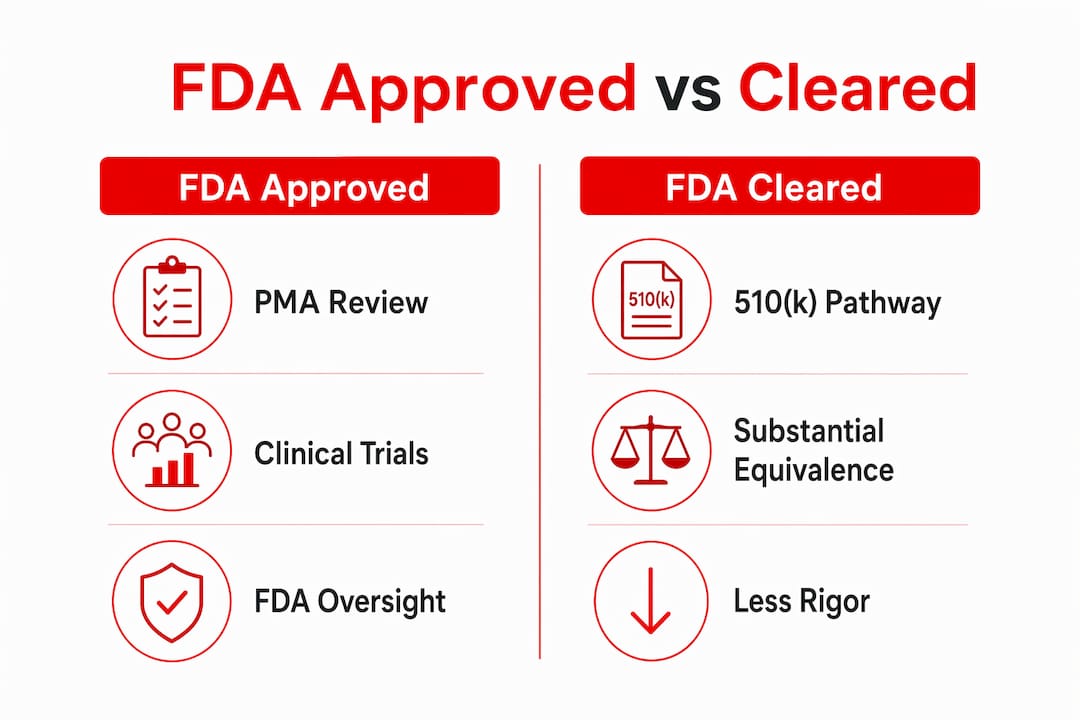
- Premarket Approval (PMA): The highest standard. Required for high-risk devices and tests with no existing equivalent. Manufacturers must submit clinical trial data proving safety and effectiveness independently.
- 510(k) Clearance: Used for moderate-risk tests. The manufacturer demonstrates the test is substantially equivalent to a legally marketed predicate device. No independent clinical trial is required, but analytical performance data must be submitted.
- Emergency Use Authorization (EUA): A temporary pathway deployed during public health emergencies, such as the COVID-19 pandemic. EUA products are not fully approved but meet a lower evidence threshold given the urgency of the situation.
The COVID-19 pandemic made EUA familiar to millions of people. Dozens of rapid antigen tests received EUA status in 2020 and 2021, allowing fast deployment. Once the emergency ended, manufacturers had to pursue standard clearance or approval to keep selling those tests commercially.
Pro Tip: When evaluating a test for professional use, check whether it holds PMA approval, 510(k) clearance, or only an EUA. EUA status alone does not meet the standard for routine clinical or workplace testing programs.
How do FDA-approved tests differ from cleared tests and LDTs?
The terms “FDA approved” and “FDA cleared” are not interchangeable, though they are frequently treated as synonyms. FDA approval (via PMA) requires independent clinical evidence. FDA clearance (via 510(k)) requires proof of substantial equivalence to an existing product. Both statuses mean the test has passed FDA premarket review and is authorized for commercial use. The practical difference is the depth of evidence required.

Laboratory Developed Tests (LDTs) occupy a separate category entirely. An LDT is designed and used within a single lab and typically does not undergo FDA premarket review. Instead, LDTs fall under the Clinical Laboratory Improvement Amendments (CLIA), which regulate lab quality, personnel, and processes. CLIA certification confirms the lab operates correctly. It does not confirm the test device itself has been evaluated by the FDA.
A common misconception is that CLIA certification equals FDA approval. It does not. CLIA regulates labs; FDA regulates tests. A test’s overall reliability depends on both: an FDA-reviewed device and a CLIA-certified lab performing the analysis. When only one of those elements is present, the result carries less regulatory weight.
Pro Tip: Always ask two questions when vetting a test for organizational use: Is the test device FDA-cleared or approved? Is the lab performing the test CLIA-certified? Both answers need to be “yes” for full regulatory confidence.
The table below summarizes the key distinctions:
| Test Type | FDA Premarket Review | Regulatory Body | Evidence Required |
|---|---|---|---|
| FDA-approved (PMA) | Yes | FDA | Independent clinical trial data |
| FDA-cleared (510(k)) | Yes | FDA | Substantial equivalence to predicate |
| EUA authorized | Limited | FDA | Emergency-level safety and effectiveness |
| Laboratory Developed Test (LDT) | No | CLIA | Internal lab validation only |
Understanding lab-based test distinctions is especially useful for organizations that source tests from multiple suppliers or use both point-of-care and send-out laboratory testing.
What standards govern the safety and performance of FDA-approved tests?
FDA-approved tests must meet specific technical standards that vary by intended use. For biological and sterile medical tests, endotoxin and pyrogen limits are a core safety requirement. The FDA’s 2026 guidance updates reinforce standards like USP <85>, which governs the Limulus Amebocyte Lysate (LAL) assay used to detect bacterial endotoxins. Devices that contact cerebrospinal fluid must meet a strict endotoxin threshold of 0.06 EU/mL. That limit exists because even trace contamination in a high-risk anatomical site can cause severe patient harm.
Endotoxin testing methods have evolved. LAL assays are now validated to replace traditional animal-based pyrogen tests, which is both a scientific improvement and an ethical one. The FDA supports New Approach Methodologies (NAMs) as flexible validation frameworks that encourage innovation without sacrificing safety standards.
FDA guidance documents play a central role in shaping how manufacturers develop and validate tests. These documents represent the agency’s current thinking on best practices and are not legally binding. That distinction matters. A manufacturer can deviate from a guidance document, but must justify the deviation with scientific evidence. In practice, most manufacturers follow guidance closely because it reduces regulatory friction during review.
| Standard or Requirement | Application | Threshold or Requirement |
|---|---|---|
| USP <85> LAL Assay | Endotoxin testing for sterile devices | Validated method required |
| CSF-contacting device limit | Devices touching cerebrospinal fluid | 0.06 EU/mL maximum |
| CLIA compliance | Lab operations quality | Personnel, process, and proficiency standards |
| 510(k) substantial equivalence | Moderate-risk test clearance | Analytical performance data required |
Staying current with quality control workflows helps labs align with these evolving FDA requirements before they become enforcement priorities.
How does FDA approval affect practical use, coverage, and trust?
FDA approval status shapes how a test can be used, but it does not guarantee everything organizations often assume it does. Three practical realities stand out.
FDA authorization does not guarantee insurance coverage. Payers use separate criteria focused on medical necessity, not regulatory status. A test can be fully FDA-cleared and still be denied reimbursement by a health insurer. Organizations and providers must verify coverage independently, separate from the FDA authorization check.
Intended use defines the boundaries of valid application. The FDA’s authorization for a specific test is tied to a defined population, specimen type, and clinical scenario. The StatID PRO COVID-19/Flu A&B lateral flow immunoassay, for example, is cleared specifically for patients aged 2+ within five days of symptom onset. Using that test outside those parameters means operating outside the scope of FDA authorization, which affects both result reliability and legal defensibility.
FDA approval builds consumer and organizational trust, but only when the scope is understood. The label “FDA approved” signals that a rigorous review occurred. It does not signal universal applicability. FDA authorization does not imply a test is suitable for all uses, all populations, or all specimen types. Organizations that treat FDA approval as a blanket endorsement risk misapplying tests and generating unreliable results.
Key practical considerations for organizations selecting FDA-approved tests:
- Confirm the test’s intended use matches your specific testing population and specimen type.
- Verify CLIA certification for any lab performing the test.
- Check insurance coverage separately from FDA status.
- Review the FDA’s authorization scope, not just the label.
- Understand whether the product holds PMA approval, 510(k) clearance, or EUA status, since each carries different evidentiary weight.
The advantages of FDA approved drug test kits go beyond the label. They include standardized performance benchmarks, documented accuracy data, and a clear chain of regulatory accountability.
Key Takeaways
FDA-approved tests require documented scientific evidence of safety and effectiveness for a specific intended use, and that scope defines every legitimate application of the test.
| Point | Details |
|---|---|
| Approval vs. clearance | PMA approval requires clinical trial data; 510(k) clearance requires substantial equivalence to an existing product. |
| LDTs are not FDA-reviewed | Laboratory Developed Tests fall under CLIA, not FDA premarket review, which limits their regulatory standing. |
| Intended use is binding | FDA authorization applies only to the defined population, specimen, and clinical scenario stated in the submission. |
| Coverage is separate | FDA clearance does not guarantee insurance reimbursement; payers apply their own medical necessity criteria. |
| CLIA and FDA work together | Full test reliability requires both an FDA-reviewed device and a CLIA-certified lab performing the analysis. |
The part of FDA approval most organizations get wrong
The most persistent mistake I see organizations make is treating “FDA approved” as a single, uniform status. It is not. A test with 510(k) clearance and a test with PMA approval are both technically “FDA authorized,” but the evidence behind them is fundamentally different. PMA approval required someone to run clinical trials. 510(k) clearance required someone to find a comparable product that already existed. Those are not equivalent levels of scrutiny, and the distinction matters when you are selecting tests for high-stakes environments like substance abuse programs, forensic investigations, or clinical diagnostics.
The second mistake is conflating CLIA certification with FDA approval. I have seen procurement teams check one box and assume they checked both. A CLIA-certified lab can run an LDT that has never been reviewed by the FDA. That does not make the test invalid, but it does mean the test’s performance rests entirely on the lab’s internal validation, not on an independent federal review. For organizations where legal defensibility matters, that gap is significant.
The third issue is the insurance assumption. Organizations often select an FDA-cleared test expecting reimbursement, then discover the payer has its own criteria entirely. Verifying coverage before deploying a test at scale saves real money and prevents operational disruption.
FDA approval is a meaningful signal. It is not a complete answer. The organizations that use approved tests most effectively are the ones that read the fine print on intended use, understand the pathway behind the authorization, and verify every downstream assumption independently.
— Justin
FDA-cleared drug testing products at Rapidtestcup
Rapidtestcup carries a full catalog of FDA-cleared drug testing products built for professional and organizational use. From multi-panel drug testing cups designed for labs and clinics to specialty strips for fentanyl, ETG, and cotinine detection, every product meets CLIA waived and FDA clearance standards.
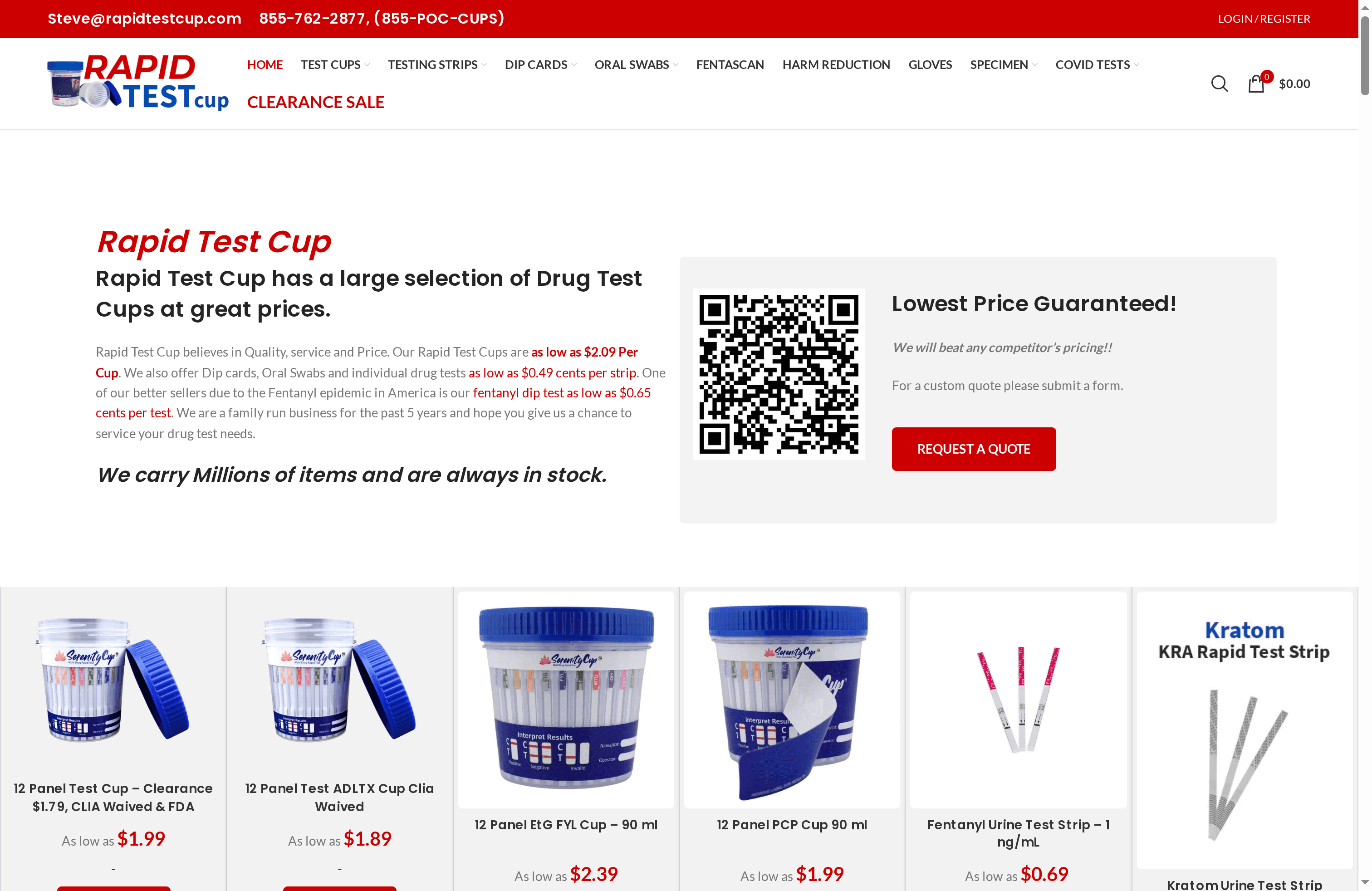
Whether you run a substance abuse program, a forensic lab, or a workplace testing operation, Rapidtestcup’s catalog covers the panel configurations and specimen types your program requires. Products ship fast, bulk pricing is available, and the 12-panel ADLTX cup is one of the most requested options for organizations that need reliable, defensible results at scale. Browse the full selection and request a custom quote directly on the site.
FAQ
What is an FDA approved test in simple terms?
An FDA approved test is a diagnostic or medical test the FDA has reviewed and confirmed to be safe and effective for a specific, defined use. The agency evaluates both accuracy and clinical relevance before granting authorization.
What is the difference between FDA approved and FDA cleared?
FDA approval (PMA) requires independent clinical trial data proving safety and effectiveness. FDA clearance (510(k)) requires proof that the test is substantially equivalent to an already-authorized product, with less clinical evidence required.
Are laboratory developed tests (LDTs) FDA approved?
LDTs are not subject to FDA premarket review and are not FDA approved or cleared. They are regulated under CLIA, which governs lab operations but does not evaluate the test device itself.
Does FDA approval mean a test is covered by insurance?
No. Insurance coverage depends on payer criteria for medical necessity, which are separate from FDA authorization status. A fully FDA-cleared test can still be denied reimbursement.
Can an FDA-approved test be used for any patient or specimen?
No. FDA authorization is tied to a specific intended use, including the patient population, specimen type, and clinical scenario. Using a test outside those parameters means operating beyond the scope of its FDA authorization.