Blog
What Is Saliva Drug Testing and Why Labs Rely On It


Finding a reliable method to detect recent drug use is a constant challenge for coordinators in North American laboratories. Accuracy and efficiency matter when quick results are needed for compliance or forensic investigations. With advanced saliva diagnostic tools, professionals benefit from a non-invasive and cost-effective collection process that yields rapid screening results. This overview breaks down current saliva drug testing methods so you can select the best solution for legal, clinical, and workplace needs.
Table of Contents
- Defining Saliva Drug Testing Methods
- How Saliva Drug Tests Are Performed
- Detection Windows And Tested Substances
- Regulations, Compliance, And Forensic Use
- Saliva Tests Versus Other Drug Test Types
Key Takeaways
| Point | Details |
|---|---|
| Non-Invasive Testing | Saliva drug testing is a non-invasive, rapid, and cost-effective method for detecting recent substance use. |
| Detection Windows | Different substances have varying detection windows, making saliva tests suitable for timely monitoring of drug use. |
| Regulatory Compliance | Forensic saliva testing requires strict adherence to regulations, ensuring sample integrity and legal admissibility. |
| Comparison to Other Tests | Saliva tests offer advantages over urine and blood tests, including easier administration and quicker results related to recent use. |
Defining Saliva Drug Testing Methods
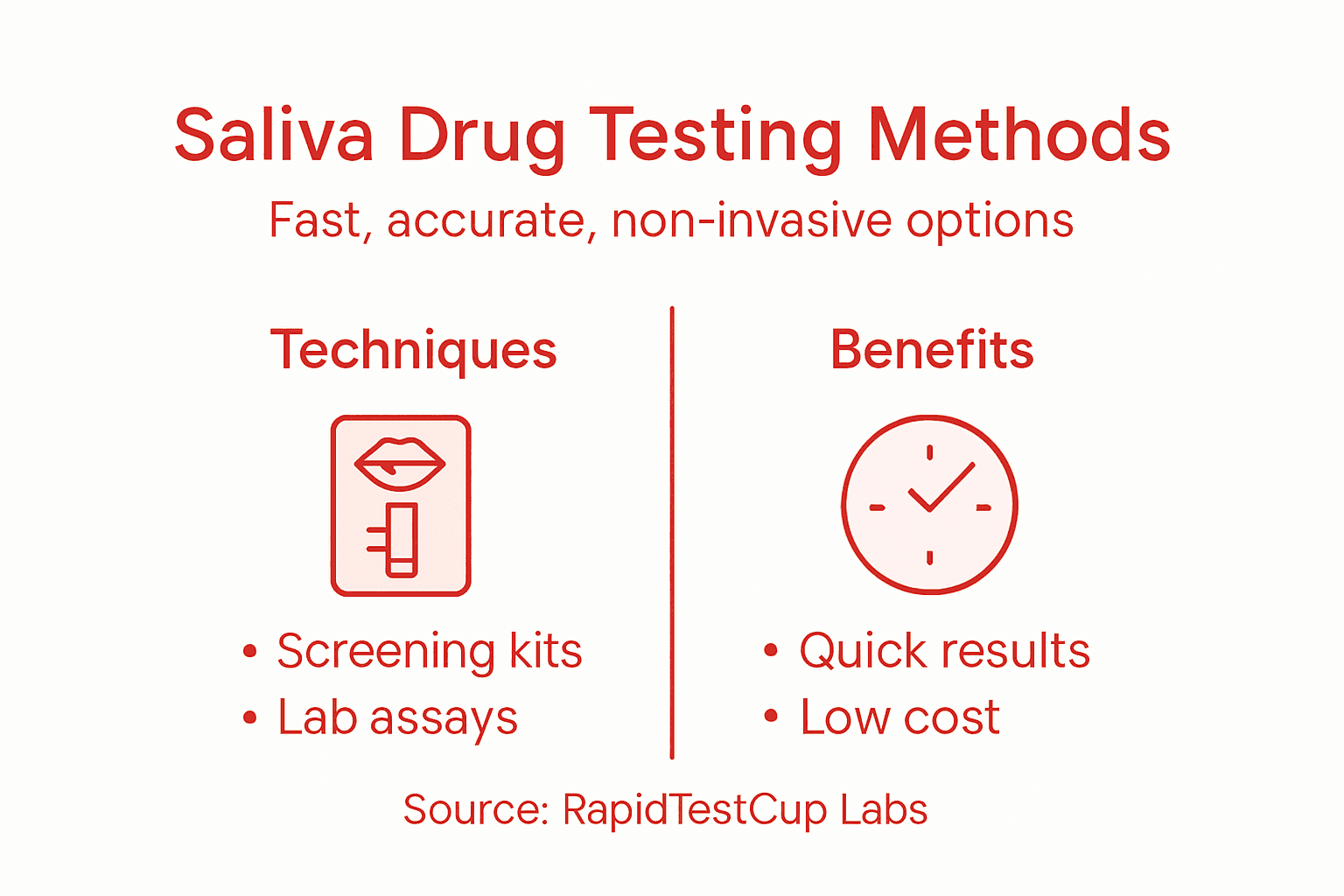
Saliva drug testing is a sophisticated diagnostic method that utilizes human saliva as a non-invasive biological sample to detect the presence of various substances. These saliva diagnostic tools offer significant advantages in drug screening scenarios across medical, forensic, and workplace environments.
The fundamental process involves collecting oral fluid samples and analyzing them for specific drug metabolites. Key characteristics of saliva drug testing include:
- Non-invasive collection method
- Rapid screening capabilities
- Cost-effective compared to blood tests
- Minimal patient discomfort
- Ability to detect recent drug use
Modern saliva testing techniques employ advanced technologies to identify a wide range of substances with remarkable precision. Biomarker detection occurs through sophisticated analytical methods that can pinpoint traces of drugs within minutes after collection.
Researchers have developed multiple approaches to saliva drug screening, each with unique strengths. Saliva testing methods now enable professionals to monitor medication levels and detect substance usage across various clinical and forensic contexts.
Pro tip: Always verify the specific detection window and sensitivity of your chosen saliva drug testing method to ensure accurate results.
How Saliva Drug Tests Are Performed
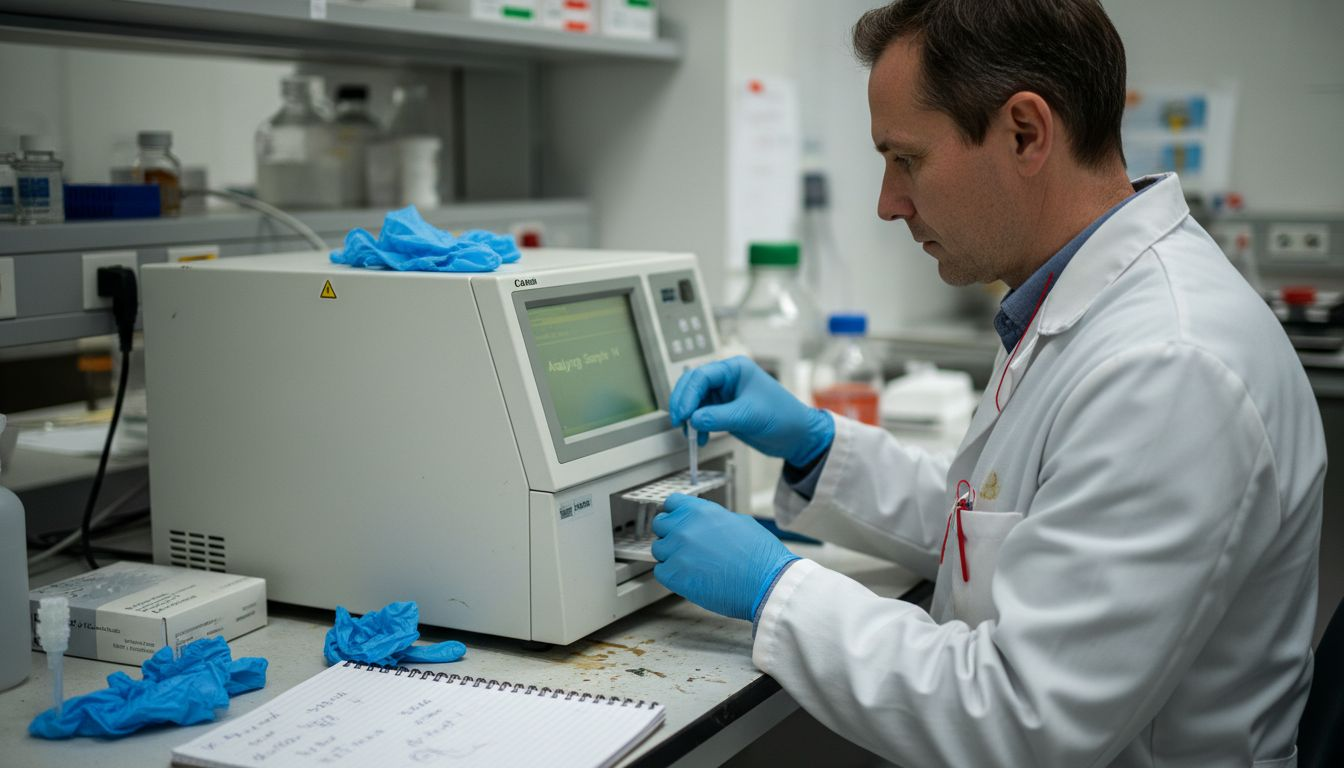
Saliva drug testing involves a precise, systematic approach to collecting and analyzing biological samples for detecting drug metabolites. Molecular diagnostic techniques enable laboratories to perform accurate and rapid screenings with minimal patient discomfort.
The sample collection process typically follows these critical steps:
- Prepare the testing environment
- Instruct the subject on proper collection procedure
- Use sterile collection device (oral swab or collection cup)
- Collect oral fluid sample
- Seal and label specimen
- Transport to laboratory for analysis
Specifically, oral fluid collection requires careful technique to ensure maximum accuracy. Saliva collection procedures emphasize maintaining a dry oral mucosa and potentially stimulating saliva production to obtain sufficient sample volume.
Advanced laboratory techniques then analyze the collected sample using sophisticated biochemical assays. These methods can detect multiple drug classes with high sensitivity, typically identifying recent substance use within a 24-48 hour window.
Pro tip: Always ensure proper training for personnel performing saliva drug test collection to maintain sample integrity and testing accuracy.
Detection Windows and Tested Substances
Saliva diagnostic techniques offer unique insights into recent drug use through precise detection windows and comprehensive substance identification. These advanced testing methods provide laboratories with a powerful tool for rapid and accurate screening.
The typical detection windows for various substances range significantly:
- Cannabis: 24-72 hours after use
- Cocaine: 24-48 hours
- Amphetamines: 24-36 hours
- Opioids: 24-48 hours
- Benzodiazepines: 24-72 hours
- Alcohol: 12-24 hours
Modern saliva drug tests can detect both prescription and illicit substances with remarkable precision. These tests are particularly effective because they identify parent drugs in addition to metabolites, providing a more immediate and accurate representation of recent substance consumption.
Here is a summary of common substances detected in saliva drug tests and their typical detection periods:
| Substance | Detection Window | Notes on Reliability |
|---|---|---|
| Cannabis | 24-72 hours | Best for recent use |
| Cocaine | 24-48 hours | Highly specific metabolite detection |
| Amphetamines | 24-36 hours | Sensitive to immediate intake |
| Opioids | 24-48 hours | Parent drug detectable |
| Benzodiazepines | 24-72 hours | Useful for recent use |
| Alcohol | 12-24 hours | Fast elimination rate |
Forensic and clinical laboratories increasingly rely on these methods due to their non-invasive nature and ability to capture recent drug use quickly. Substance detection technologies continue to evolve, offering increasingly sensitive and reliable screening options across various professional contexts.
Pro tip: Always calibrate testing equipment and verify detection window parameters for each specific substance to maintain maximum testing accuracy.
Regulations, Compliance, and Forensic Use
Forensic saliva testing protocols play a critical role in criminal investigations and legal proceedings, providing scientifically validated methods for evidence collection and analysis. These sophisticated techniques ensure rigorous standards are met in forensic and legal contexts.
Key compliance requirements for forensic saliva testing include:
- Maintaining strict chain of custody
- Ensuring sample integrity
- Documenting collection procedures
- Validating detection methodologies
- Adhering to legal admissibility standards
- Implementing quality control measures
Forensic laboratories must follow extensive regulatory frameworks that govern the collection, processing, and analysis of biological samples. Saliva detection technologies continue to evolve, providing increasingly precise methods for identifying and analyzing biological evidence.
The legal landscape demands meticulous attention to detail, with forensic experts required to demonstrate not just the presence of biological material, but also its direct relationship to potential criminal activities. Advanced testing methods now offer unprecedented levels of specificity and reliability in forensic investigations.
Pro tip: Develop comprehensive documentation protocols that track every step of sample collection and analysis to maintain legal defensibility and scientific credibility.
Saliva Tests Versus Other Drug Test Types
Oral fluid screening methods offer unique advantages over traditional drug testing approaches, providing rapid and non-invasive detection of recent substance use across various professional contexts.
Key comparative characteristics of drug testing methods include:
-
Urine Tests:
- Longer detection windows
- More invasive collection process
- Higher potential for sample tampering
- Less precise recent use indication
-
Blood Tests:
- Most accurate substance concentration measurement
- Highly invasive
- Expensive
- Requires professional medical personnel
-
Saliva Tests:
- Quick collection process
- Minimal invasiveness
- Detect recent drug use
- Cost-effective
- Easy to administer
Diagnostic testing technologies continue to demonstrate that saliva testing provides the most practical balance between accuracy, convenience, and patient comfort for many screening scenarios.
This table compares the practical aspects of saliva, urine, and blood drug testing methods:
| Testing Method | Comfort Level | Cost Effectiveness | Detection Focus | Laboratory Needs |
|---|---|---|---|---|
| Saliva | Very high | High | Recent use | Minimal equipment |
| Urine | Moderate | Moderate | Extended use history | Simple instruments |
| Blood | Low | Low | Precise substance levels | Skilled personnel only |
The primary distinction lies in detection specificity. While blood tests provide comprehensive substance metabolite analysis and urine tests offer extended detection periods, saliva tests excel at identifying recent drug use with minimal intrusion.
Pro tip: Select drug testing methods based on specific context, prioritizing the balance between detection accuracy and practical implementation requirements.
Enhance Your Saliva Drug Testing with Trusted Supplies from RapidTestCup
Saliva drug testing offers unmatched benefits such as quick, non-invasive sample collection and accurate detection windows for recent substance use. However, ensuring reliable results depends heavily on using high-quality, FDA-approved testing kits and proper collection accessories that meet strict laboratory and forensic standards. Professionals often face challenges like maintaining sample integrity, adhering to regulatory compliance, and achieving fast turnaround times while controlling costs.
At RapidTestCup, we understand these critical needs. Our extensive selection of CLIA waived saliva drug testing products and specimen collection supplies empowers laboratories, clinics, and law enforcement to implement precise and efficient testing protocols with confidence. Benefit from our affordable pricing, bulk discounts, and expedited shipping to keep your operations compliant and effective. Explore our range designed specifically for forensic and clinical applications to streamline your sample collection and detection process.
Experience the advantages of expertly crafted saliva drug test kits and collections tools that align with advanced molecular diagnostic methods. Visit RapidTestCup today and equip your team with the trusted solutions necessary for accurate and rapid saliva drug testing. Don’t compromise on quality when the accuracy of your results matters most.
Frequently Asked Questions
What is saliva drug testing?
Saliva drug testing is a non-invasive method that uses human saliva to detect the presence of various substances, including drugs and medications. It provides rapid results and is often used in medical, forensic, and workplace settings.
How is a saliva drug test performed?
A saliva drug test involves several steps including preparing the environment, instructing the subject on the collection procedure, using a sterile device to collect the sample, and finally sealing and labeling the specimen for laboratory analysis.
What substances can be detected with saliva drug tests?
Saliva drug tests can detect a variety of substances including cannabis, cocaine, amphetamines, opioids, benzodiazepines, and alcohol, typically within a detection window of 12 to 72 hours after use.
How does saliva testing compare to urine and blood drug tests?
Saliva testing offers a quick and non-invasive method to detect recent drug use, while urine tests provide longer detection windows and blood tests offer precise concentration measurements but are more invasive and costly. Saliva tests strike a balance between accuracy and convenience.