

Blog
Urine 1–4 Days: Tramadol Drug Testing for Clinicians and Employers


Tramadol will not show up on a standard SAMHSA 5-panel or 10-panel workplace drug test because those panels are not built to catch it. It only appears when a lab runs an expanded or tramadol-specific panel, and a presumptive positive on that panel still needs confirmation by LC-MS/MS or GC-MS before anyone treats it as fact. Detection windows depend heavily on the specimen: urine typically holds traces for one to four days, blood and saliva clear faster, and hair or nails can carry evidence for months.
TL;DR:
- Standard drug tests like SAMHSA’s 5- and 10-panel do not detect tramadol unless specifically expanded to include it.
- Tramadol detection in urine generally lasts one to four days, but blood and saliva detect it for only up to 48 hours, while hair can show evidence for months.
- Confirmatory tests using LC-MS/MS or GC-MS are essential to verify positive results due to potential cross-reactivity and false positives from substances like fexofenadine.
- When testing for tramadol, specify the panel and confirm it includes the analyte code for accurate results, especially in clinical or legal situations.
- On-site screening options include tramadol test strips and multi-panel cups with TRA, but laboratory confirmation remains the definitive step for high-stakes decisions.
Table of Contents
- Does tramadol appear on routine drug test panels or only specialized ones?
- Detection windows by specimen: urine, blood, saliva, hair, and nails
- How tramadol testing works: screening versus confirmation
- Factors that change detection and interpretation
- If a test is positive or disputed: what to do next
- Our take on responsible tramadol screening
- Choosing the right tramadol testing supplies for your setting
- FAQ
- Sources
Does tramadol appear on routine drug test panels or only specialized ones?
Standard SAMHSA 5-panel and 10-panel screens were designed around a specific set of substances: morphine-type opiates, cocaine, THC, amphetamines, and PCP. Tramadol is a synthetic opioid with a different chemical structure, so it does not trigger the antibodies used in those classic opiate immunoassays, and most routine workplace or pre-employment tests will not flag it at all, as noted in guidance on tramadol detection windows.
Clinicians, pain management programs, courts, and some employers ask for tramadol specifically when there’s a reason to look for it: monitoring a patient on a prescribed opioid regimen, verifying compliance in a custody or probation case, or investigating suspected misuse. Labs accommodate this through expanded or pain-management panels that add tramadol as a separate analyte rather than assuming it.
If you need tramadol included in your results, don’t assume a generic test covers it. Instead:
- Ask the lab or testing provider which specific panel is being ordered and whether tramadol (often listed as “TRA”) is part of it.
- Request an expanded or pain-management panel if tramadol monitoring is the actual goal.
- Confirm with the ordering physician or program administrator that the right analyte codes are included before the sample is collected.
Testing supplies such as 18-panel cups that list TRA in their analyte panel are built for exactly this situation, where a generic opiate screen would miss it.
Detection windows by specimen: urine, blood, saliva, hair, and nails
How long tramadol stays detectable depends almost entirely on which specimen is tested, according to detection window summaries from The Recovery Village. Urine is the most commonly tested specimen and generally shows tramadol for one to four days after a dose, though regular or heavy use can push that window longer since metabolites accumulate in fat and tissue before clearing. Assay sensitivity matters here too: a test calibrated to a low cutoff will catch trace amounts that a less sensitive one misses.
Blood testing has a narrower purpose. It usually turns positive within 12 to 24 hours of use and is most relevant for acute intoxication cases or forensic timelines where investigators need to know what was in someone’s system at a specific moment, not what happened days earlier.
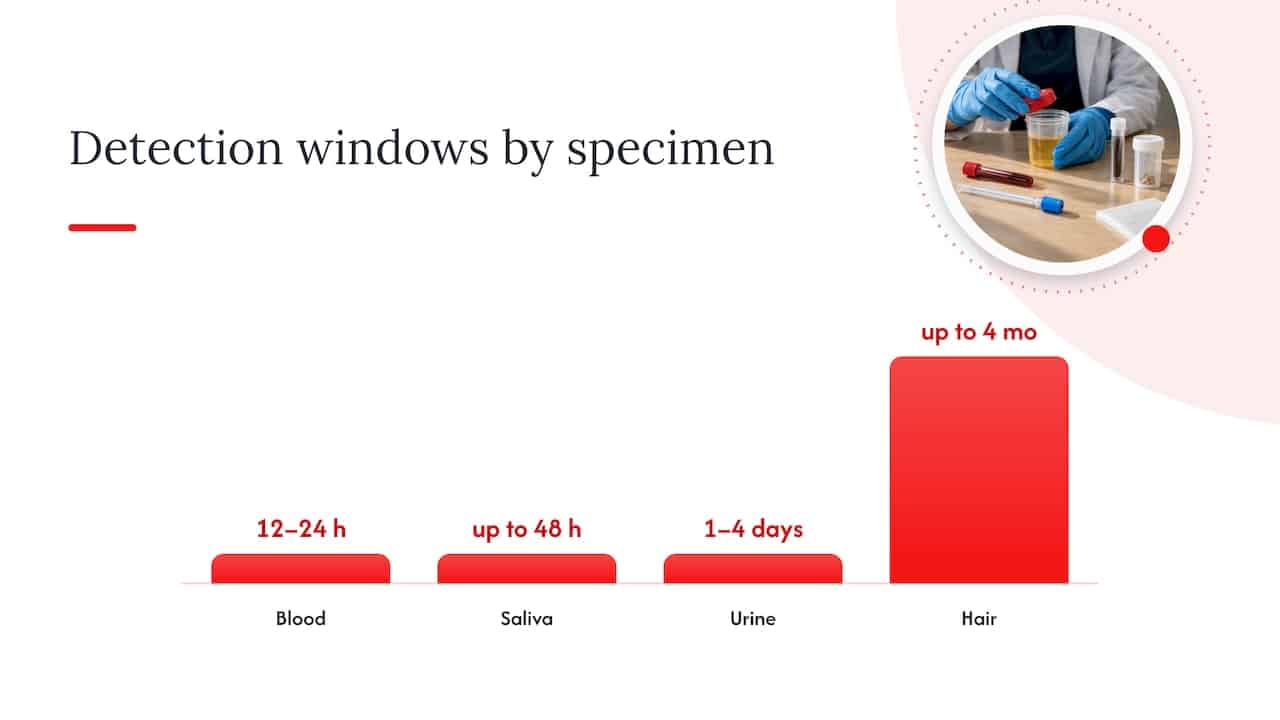
Oral fluid, or saliva testing, sits in between: it typically detects tramadol for up to about 48 hours, making it a reasonable option when a workplace or clinical setting wants same-day or next-day confirmation of recent use.
Hair and fingernail testing operate on a completely different timescale. A controlled study found tramadol in hair segments as long as four months after a single dose, and segmental analysis can help estimate roughly when exposure occurred. But hair testing is sensitive to melanin content, meaning darker hair can retain more drug residue than lighter hair even with identical exposure, and external contamination from surfaces or products can confuse results if the lab doesn’t wash and validate the sample properly.
| Specimen | Typical detection window |
|---|---|
| Blood | About 12 to 24 hours |
| Saliva | Up to about 48 hours |
| Urine | About 1 to 4 days |
| Hair | Up to several months |
Pro Tip: If timing matters for a legal or medical decision, specify the specimen type up front. Urine tells you about the last few days; hair tells you about the last few months, not the last few hours.
How tramadol testing works: screening versus confirmation
Drug testing almost always runs on a two-step model: a fast, cheap immunoassay screen followed by a slower, more specific confirmatory test when the screen comes back positive. Immunoassay screening devices rely on antibodies that react to a target drug or its close relatives, and not every screening kit includes antibodies tuned for tramadol specifically.
Some tramadol-specific immunoassays have gone through formal review for this purpose. The FDA 510(k) clearance for an Immunalysis tramadol urine EIA (K141803) documents a 200 ng/mL cutoff and states plainly that the assay provides only preliminary results, with GC-MS or LC-MS/MS confirmation recommended for anything that matters legally or clinically.
A 200 ng/mL cutoff is the calibration point documented in that FDA submission, though other labs and literature reference different thresholds, including lower limits around 25 ng/mL for metabolite reporting in some confirmatory methods. These differences exist because manufacturers calibrate assays for different sensitivities and intended uses, so the number that matters is whichever one your specific lab is actually using.
Confirmatory testing closes the gap that screening leaves open:
- Immunoassays are fast and inexpensive but presumptive, meaning a positive result is a flag, not a verdict.
- LC-MS/MS and GC-MS identify the exact compound and its metabolites, provide quantitative concentrations, and are the standard for legal, employment, or clinical decisions.
- SAMHSA’s clinical guidance reinforces that screening positives should always be confirmed with a different, more specific method before anyone acts on them.
Cross-reactivity is the reason this matters so much: a screen can flag tramadol when the real cause is a different substance entirely, which is exactly what confirmation is built to catch.
Factors that change detection and interpretation
A positive or negative result is never just about whether someone took tramadol. Several biological and technical variables shift the picture.
- Genetic variation in the CYP2D6 enzyme changes how much O-desmethyltramadol a person’s body produces, so two people on identical doses can show very different parent-to-metabolite ratios.
- Dose size, frequency, how recently the last dose was taken, hydration level, and urine concentration all affect whether a test catches enough drug to cross the cutoff.
- Documented interferents matter: a case report series found that fexofenadine, a common antihistamine, produced repeated false-positive tramadol immunoassay results in two patients, with results reverting to negative once they stopped taking it.
- Specimen handling problems, including improper storage, adulteration, or broken chain-of-custody documentation, can invalidate a result regardless of what the actual drug level was.
Any one of these factors can turn a routine test into a confusing one, which is why a single screening result rarely tells the whole story on its own.
If a test is positive or disputed: what to do next
A presumptive positive is a starting point, not a conclusion. Here’s the practical sequence for resolving one:
- Order confirmatory LC-MS/MS or GC-MS testing on a retained aliquot of the same sample to get quantitative data on tramadol and its metabolites, including O-desmethyltramadol and N-desmethyltramadol.
- Request the lab’s method details: which assay was used, what cutoff applied, which instrument ran the confirmation, and whether the initial result came from an immunoassay.
- Loop in a Medical Review Officer or treating clinician to review prescriptions and over-the-counter medications for a legitimate explanation before assuming misuse.
- If the result is still disputed, ask about split-sample testing and make sure chain-of-custody documentation is intact, then follow whatever employer or legal appeal process applies.
Recognizing the signs of a false positive before escalating a dispute saves time for everyone involved.
Pro Tip: Always ask for the specific cutoff and method name in writing. “Positive” means nothing without knowing what threshold and technology produced it.
Our take on responsible tramadol screening
We sell tramadol-capable screening products because presumptive, point-of-care testing has real value in clinical and workplace settings, not because a quick cup or strip should be the final word. Our CLIA-waived and FDA-cleared options are built for accurate initial screening, with documentation that supports compliance. When the stakes are high, lab confirmation by LC-MS/MS or GC-MS is still the step that actually settles the question.
— Justin
Choosing the right tramadol testing supplies for your setting
For on-site preliminary screening, tramadol-specific test strips or multi-panel cups that list TRA among their analytes give you a fast first read without sending a sample anywhere. For situations where a result needs to hold up legally or clinically, sterile urine specimen cups with proper chain-of-custody documentation are what you need for the sample headed to a reference lab.
We maintain inventory and offer quick shipping options, so a program that needs tramadol-inclusive screening can receive supplies promptly.
- On-site screening: tramadol test strips or an 18-panel cup with TRA included.
- Lab-bound samples: sterile specimen cups with documented chain of custody.
- Mixed programs: stock both, since presumptive screening and confirmatory referral solve different problems.
| Use case | Recommended product type |
|---|---|
| Quick on-site tramadol screen | Tramadol test strips |
| Multi-drug panel including tramadol | 18-panel cup with TRA |
| Sample collection for lab confirmation | Urine specimen cups |
Browse our full shop to find the panel configuration that matches your program, or reach out for a custom quote on bulk orders.
FAQ
Does tramadol have opiate in it?
Tramadol is a synthetic opioid, not a natural opiate derived from the poppy plant, which is why it does not trigger standard opiate immunoassays built for morphine-type drugs. It still acts on opioid receptors and requires its own antibody-specific assay to detect.
Why am I testing positive for tramadol?
A positive result usually means tramadol or a related compound was present, but it can also result from cross-reactivity with other substances. A documented example involves fexofenadine, a common antihistamine, which has caused repeated false-positive tramadol results in reported cases until confirmatory testing cleared it up.
How long does it take tramadol to get into your urine?
Tramadol and its metabolites typically appear in urine within hours of taking a dose and remain detectable for about one to four days afterward. Heavier or more frequent use can extend that window since metabolites take longer to fully clear.
Can tramadol give you a false positive?
Yes, documented cases show certain medications, including the antihistamine fexofenadine, have caused false-positive tramadol screens on immunoassay tests. This is exactly why confirmatory testing with LC-MS/MS or GC-MS is recommended before treating any screening result as definitive.
Sources
- Clinical Drug Testing in Primary Care | SAMHSA
- 510(k) SUBSTANTIAL EQUIVALENCE DETERMINATION DECISION SUMMARY ASSAY ONLY TEMPLATE (K141803)
- False positive tramadol urine testing in patients taking fexofenadine: a tale of two cases | Case Reports in Psychiatry
- How long does tramadol stay in your system? | The Recovery Village