

Blog
How Testing Accessories Ensure Accuracy in Drug Screening


TL;DR:
- Combining accessories like temperature strips and adulteration tests ensures sample integrity and reduces tampering.
- Accessories are essential system components that verify specimen authenticity beyond the drug panel alone.
- Proper use and regular updating of accessories improve drug screening accuracy and validity.
Roughly 12% of labs detect synthetic urine annually, yet most facilities still lean on the test cup alone to protect result integrity. That number reveals a gap that no single product can close by itself. The real line of defense in professional drug screening is not just what panel you choose; it is the full stack of accessories you deploy around it. Temperature strips, adulteration checks, properly labeled specimen cups, and chain-of-custody controls each play a distinct role. This guide walks through every major accessory category, explains where errors actually originate, and shows how layering these tools produces results you can stand behind.
Table of Contents
- Why testing accessories matter in modern drug screening
- Key types of drug testing accessories and their functions
- Mitigating errors: False positives, negatives, and limitations of screening methods
- Advanced safeguards: Direct observation, new trends, and best practices
- A hard look: What most labs miss about testing accessories
- Find reliable drug testing accessories for your facility
- Frequently asked questions
Key Takeaways
| Point | Details |
|---|---|
| Accessories guard sample integrity | Temperature strips and adulteration checks are first defenses against tampering or fake samples. |
| Each accessory serves a unique function | From confirming sample freshness to spotting dilution, accessories target specific weaknesses in the testing process. |
| No tool is foolproof alone | Layered use of accessories, policies, and confirmatory testing provides the most reliable results. |
| Evidence-based choices reduce errors | Rigorously selected accessories sharply lower the risk of false positives or negatives in your program. |
Why testing accessories matter in modern drug screening
Most labs treat the drug test cup as the primary safeguard and everything else as optional add-ons. That mindset is costly. A test cup is designed to detect drug metabolites, not to verify that the sample in front of it is genuine human urine collected minutes ago. Without the supporting accessories, you are running chemistry on an unknown substance and calling it a drug screen.
The advantage of urine drug tests over other specimen types is their non-invasive collection and fast turnaround. But that convenience also makes urine the most commonly tampered specimen type in workplace and clinical settings. Donors substitute synthetic urine, dilute samples with water, or add household chemicals to interfere with immunoassay chemistry. Each of these tactics targets a specific weakness in the screening process.
This is precisely why accessories exist. They close the gaps that the immunoassay panel leaves open.
“Testing accessories are not supplementary equipment. They are the verification layer that gives the immunoassay result its evidentiary weight.”
Here is what a complete accessory setup looks like in practice:
- Temperature strips attached to the specimen cup confirm the sample is within the physiologically normal range of 90 to 100°F (32 to 38°C), ruling out pre-mixed or refrigerated substitutes
- Adulteration test strips check for oxidizing agents, surfactants, glutaraldehyde, and other common adulterants added to the sample before or during collection
- Tamper-evident seals on specimen cups and bags prevent post-collection interference and support chain-of-custody documentation
- Disposable gloves for collection staff reduce cross-contamination risk and support hygiene compliance
- Pre-labeled specimen cups with donor ID fields reduce clerical mix-ups that can invalidate otherwise valid results
- Biohazard bags and absorbent pads for transport maintain sample integrity until the cup reaches the testing area
Each of these items addresses a specific failure mode. Together, they form a system rather than a checklist. The urine testing benefits for labs and clinics are well established, but those benefits only materialize when proper collection protocols are supported by the right tools at every step.
Key types of drug testing accessories and their functions
Understanding each accessory category by function makes it much easier to audit your current setup and identify weak points. Below is a breakdown of the primary categories and what each one actually protects against.
| Accessory | Primary function | Error or tampering it prevents |
|---|---|---|
| Temperature strip | Verifies specimen heat at collection | Synthetic urine, refrigerated substitutes |
| Adulteration strip | Checks chemical markers (pH, creatinine, oxidants) | Dilution, chemical additives, bleach |
| Tamper-evident seal | Locks cup or bag after collection | Post-collection interference |
| Specimen cup with temp strip | Combined collection and heat verification | Substitution, cold sample submission |
| Disposable gloves | Staff hygiene during handling | Cross-contamination |
| Chain-of-custody form | Documents sample transfer at each step | Legal/evidentiary challenges |
| Biohazard transport bag | Containment during lab transit | Leakage, environmental contamination |
| Absorbent pad | Secondary containment inside transport bag | Sample loss from leaks |
The most critical pair on that list is temperature strips and adulteration strips, and here is why they work together rather than as alternatives. Adulteration checks including creatinine, specific gravity, and pH detect dilution or chemical additives, while temperature strips catch fake urine that was never in a human body. A donor using synthetic urine and a donor drinking excessive water to dilute a real sample require two different detection strategies. Running only one leaves a wide-open lane.
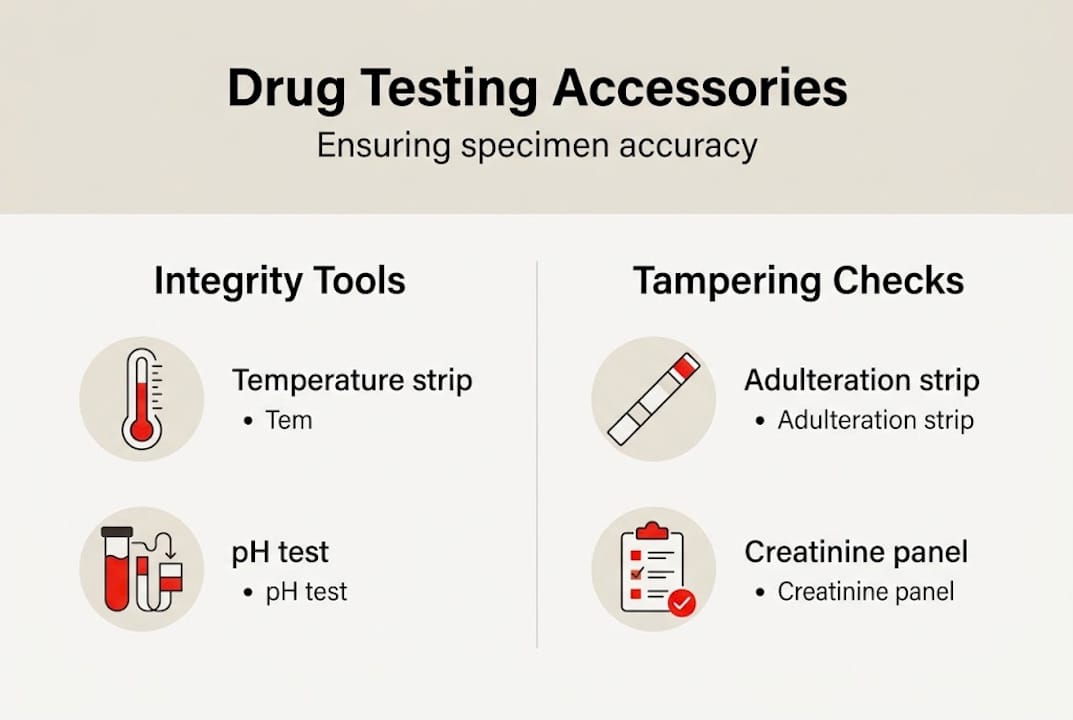
You can explore a full breakdown of adulterant detection methods to understand which specific markers your current cups check and which ones may be absent from your workflow.
Let us get specific on a few of the subtler accessories. Creatinine is a metabolic waste product. Normal urine has creatinine concentrations between 20 and 300 mg/dL. A reading below 2 mg/dL indicates the sample is not biologically consistent with human urine at all. A reading between 2 and 20 mg/dL strongly suggests dilution. Neither outcome is neutral for your program. Specific gravity tells a similar story through a different chemical mechanism, making the two markers useful redundant checks.
For urine test procedures, the sequence of accessory use matters as much as which accessories you own. The temperature strip must be read within four minutes of collection. Adulteration results should be reviewed before the immunoassay panel results are recorded. That order prevents a collector from anchoring on a panel result before they have confirmed the sample is even valid.
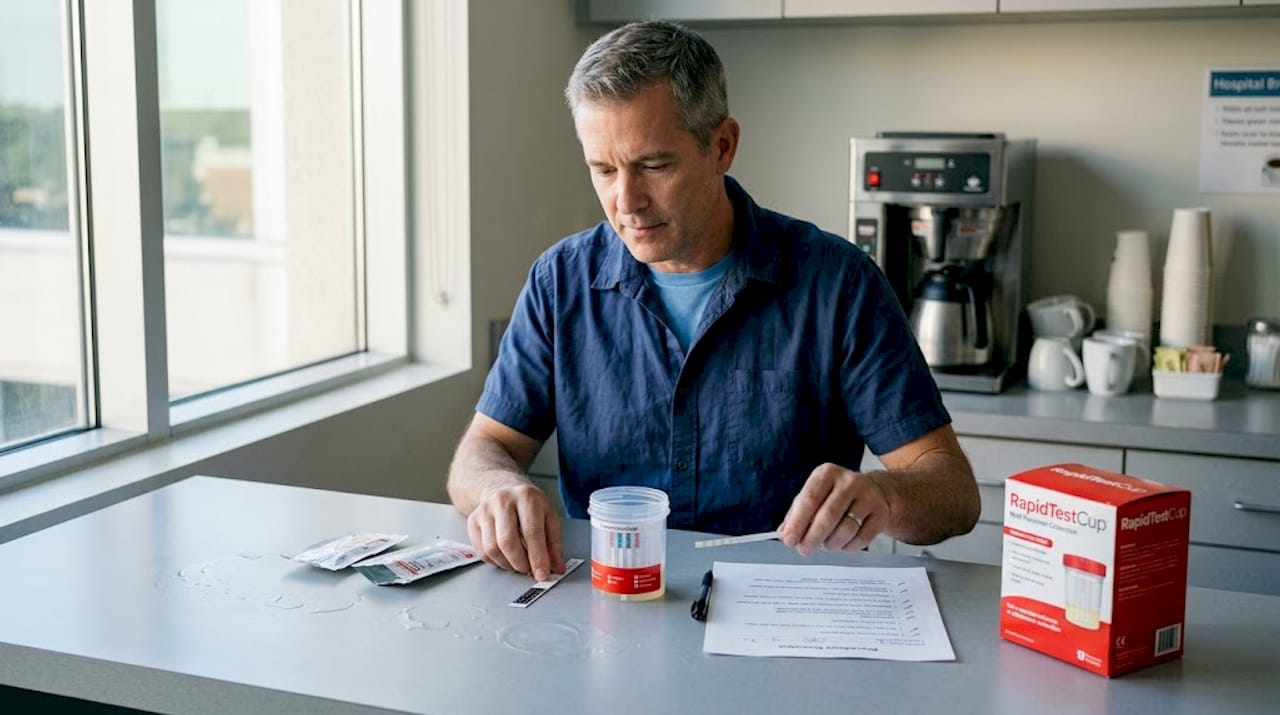
Pro Tip: If a specimen reads out-of-range on temperature but normal on all adulteration markers, do not assume the temperature strip malfunctioned. Require recollection. The combination of a cold or warm sample with clean chemistry is itself a red flag worth investigating.
Mitigating errors: False positives, negatives, and limitations of screening methods
Every professional working with point-of-care drug tests needs to understand one foundational fact: immunoassays are screening tools, not diagnostic conclusions. They work by detecting antibody reactions to drug metabolites above a set threshold. This design produces fast results at low cost, which is why immunoassay-based cups dominate workplace and clinical screening. But the method carries inherent accuracy limitations that accessories help manage.
Immunoassays can miss up to 66% of findings compared to confirmatory mass spectrometry, and cross-reactivity with legal medications or dietary compounds can produce false positives in other cases. Labs relying on point-of-care screening without confirmatory follow-up for positives, or without accessory-based sample validation, are operating with a significantly inflated error margin.
The key error types that accessories help reduce include:
- Cold or synthetic sample false negatives caught by temperature strips before the immunoassay is even read
- Diluted sample false negatives caught by creatinine and specific gravity adulteration checks
- Oxidant-adulterated sample distortions flagged by oxidant-specific adulteration strips before the panel result is recorded
- Chain-of-custody breaks that create legal exposure, caught by intact tamper-evident seals documented at each transfer
- Cross-contamination false positives reduced by proper glove protocols and separate collection containers for each donor
Understanding immunoassay limitations is not about distrust of the technology. It is about deploying that technology within the correct system. A well-functioning immunoassay cup running on a validated, temperature-confirmed, non-adulterated sample is a highly reliable screening instrument. The same cup running on an unverified sample is guesswork in a laboratory coat.
For clinical accuracy best practices, the standard of care requires that any positive immunoassay result receives confirmatory testing through gas chromatography mass spectrometry or liquid chromatography mass spectrometry before a Medical Review Officer makes a final determination. Accessories do not replace that confirmatory step. What they do is reduce the proportion of samples that arrive at the confirmation lab in a compromised state, which directly improves the efficiency and reliability of the overall workflow.
According to immunoassay accuracy data, benzodiazepines show a particularly high false negative rate, with up to 40% false negatives for benzos in standard immunoassay screening. This is a critical data point for substance abuse programs and pain management clinics where benzodiazepine monitoring is central to the clinical protocol. Pairing immunoassay results with complete adulteration confirmation and proper sample documentation does not fix the sensitivity ceiling for benzos, but it does ensure that the samples being tested are legitimate specimens rather than substitutes. You can review a detailed lab accuracy guide for a deeper look at managing these margin-of-error challenges across your panel.
Advanced safeguards: Direct observation, new trends, and best practices
Once your baseline accessory stack is in place and your team understands why each element exists, the next tier of protection involves policy-level decisions and emerging tools that are changing what professional drug screening looks like in practice.
Direct observation collection is the most aggressive structural safeguard available. It means a trained collector watches the specimen being voided, eliminating the opportunity to substitute synthetic urine or add adulterants at the moment of collection. Direct observation prevents tampering in high-risk settings but is more invasive for donors and carries its own procedural requirements. Most federally mandated testing programs, including Department of Transportation programs, reserve it for specific circumstances such as returning duty after a positive test, direct observation-indicated by prior tampering history, or when the collector observes behaviors indicating substitution.
| Collection type | Tampering risk | Donor experience | Use case |
|---|---|---|---|
| Unobserved with accessories | Moderate (mitigated by temp and adulteration strips) | Non-invasive | Routine workplace or clinical screening |
| Unobserved without accessories | High | Non-invasive | Not recommended for any professional setting |
| Observed with accessories | Very low | More invasive | High-risk, post-violation, court-ordered |
| Fully observed (no accessories) | Low to moderate | Very invasive | Rarely used; accessory backup still preferred |
On the technology front, digital temperature logging is beginning to appear in higher-throughput collection sites. These systems record a time-stamped temperature reading at the moment of collection and store it as part of the chain-of-custody record. For programs subject to legal scrutiny, this is a significant improvement over a manual temperature strip reading that a collector notes in handwriting. The audit trail is clean, timestamped, and harder to challenge.
Automation aids, including specimen labeling printers integrated with laboratory information systems, are also reducing the human error that contributes to sample mix-ups. When donor ID, collection date and time, and collector badge number print directly onto the specimen label from a digital intake form, transcription errors drop sharply.
Pro Tip: Combine at least three independent accessory checks on every sample: temperature confirmation, adulteration panel, and tamper-evident seal integrity. A single failed check should trigger recollection, not a note in the file. Three-point verification is a much stronger protocol than any single safeguard, and it creates a documented defense if results are ever legally challenged.
For a deeper background on the sophistication of current evasion methods, reviewing understanding synthetic urine helps explain why temperature and adulteration checks are not optional in 2026. Some commercial synthetic urine products include heat activator powder, creatinine, and pH buffers specifically designed to pass the most common accessory checks. That arms race is real, and it only moves in one direction. Labs that rely on older accessory protocols without periodic updates are falling behind.
The guidance on interpreting drug test results covers how to read accessory results alongside panel results in context, which is where most collection staff need training investment.
A hard look: What most labs miss about testing accessories
Here is a perspective most lab managers do not hear at conferences: accessories can create false confidence if they are treated as a checklist rather than a system. A collector who reads the temperature strip, checks the adulteration panel, and applies the tamper seal but does none of it with genuine attention is not running a more secure program. They are running a documented one. Those are not the same thing.
The drug testing industry has a habit of chasing product solutions to what are often protocol and training problems. Adding a more sophisticated adulteration strip to a collection site where collectors do not understand what the readings mean does not improve accuracy. It generates more data that no one acts on.
Staying current with best accuracy practices means revisiting your accessory lineup not annually but when evasion methods evolve, when you see an increase in questionable samples, or when staff turnover resets your training baseline. Accessories are the foundation. Trained, attentive collectors using them deliberately are the structure built on top of it.
Find reliable drug testing accessories for your facility
If this guide made one thing clear, it is that the accuracy of your drug testing program depends on more than the cup itself.
At rapidtestcup.com, you will find a full lineup of professional accessories designed to work together. The 12 Panel ADLTX Cup integrates adulteration detection directly into the collection cup, removing the need for a separate strip step. For facilities that want standalone options, our adulterant detection solutions cover every major adulterant marker. And for temperature-verified collection, the cups with temperature strips provide instant visual confirmation right at the collection point. All products are CLIA waived and FDA cleared for professional use.
Frequently asked questions
What accessories help prevent fake or substituted urine samples?
Temperature strips and adulteration test strips quickly flag fake urine or tampering by checking specimen heat and key chemical markers. A valid specimen should read 90 to 100°F at collection and show normal creatinine and specific gravity levels.
How accurate are immunoassay drug tests compared to laboratory confirmatory tests?
Immunoassays are fast but can miss up to 66% of findings compared to mass spectrometry confirmatory tests, making confirmatory follow-up essential for any positive result used in a consequential decision.
When should direct observation of specimen collection be used?
Direct observation is recommended for high-risk or repeat-tampering cases, return-to-duty situations, and court-ordered testing, though it is more invasive for donors and requires trained collectors.
Why test for creatinine, pH, and specific gravity in drug testing?
These chemical markers detect whether urine samples are diluted or chemically altered. Adulteration checks for creatinine and specific gravity expose sample manipulation that a standard immunoassay panel would otherwise miss entirely.