Blog
What Is a Preliminary Drug Test Result? Explained


TL;DR:
- A preliminary drug test result indicates a substance was detected above a cutoff level but is not final or confirmed. Such a result is a presumptive positive from a rapid immunoassay and requires confirmatory testing via GC-MS or LC-MS before any employment or legal decision is made. The confirmation process involves detailed analysis, review by a Medical Review Officer, and typically takes one week or more to finalize.
A preliminary drug test result is an initial screening finding that indicates a substance or its metabolite was detected above a defined cutoff level, but it is not a final or confirmed result. The industry term for this is a presumptive positive, and understanding the difference between that and a confirmed positive is the single most important thing you can take away from this article. Preliminary screening uses immunoassay methods that are fast and cost-effective but less chemically specific than laboratory confirmation. These tests appear in employment pre-hire screenings, federal workplace programs, legal proceedings, and clinical substance evaluations. Until a confirmatory test validates the finding, no employment or legal decision should rest on a preliminary result alone.
What is a preliminary drug test result and how does it work?
A preliminary drug test result comes from an immunoassay screen, which is the first analytical step in any standard drug testing protocol. Immunoassays work by detecting antibody reactions to drug classes rather than identifying individual molecules. That distinction matters more than most people realize.
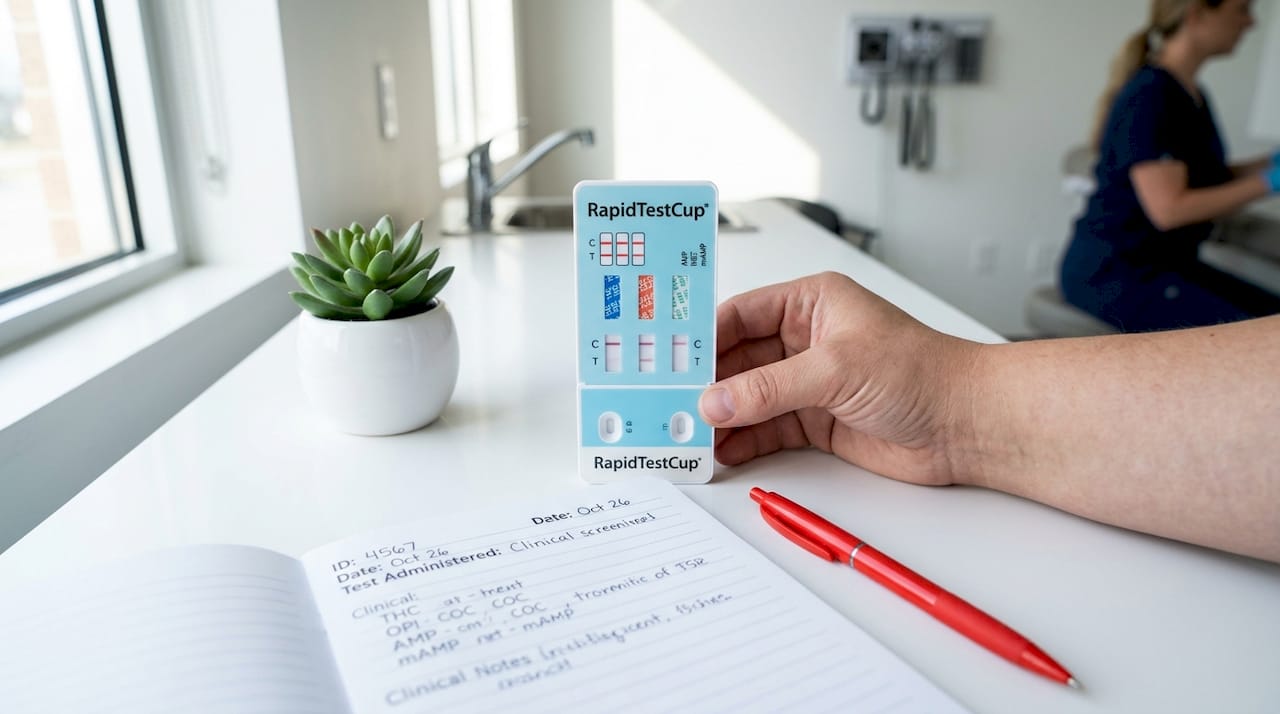
Point-of-care rapid test cups, like those used in clinics and workplace settings, return results in minutes. Lab-based immunoassays take one to two days but run on automated analyzers with tighter quality controls. Both are still considered screening methods, not confirmatory ones. The SAMHSA federal workplace program requires that initial tests at Instrumented Initial Test Facilities (IITFs) forward any suspected positives to HHS-certified labs for confirmation before a result is reported.
Common specimen types used in preliminary screening:
- Urine (most common, widest detection window)
- Oral fluid or saliva (shorter detection window, harder to adulterate)
- Blood (rare in workplace settings, more common in forensic or clinical contexts)
- Hair (longest detection window, typically 90 days)
Substances typically targeted in a standard preliminary screen:
- THC (cannabis metabolites)
- Amphetamines and methamphetamine
- Cocaine metabolites (benzoylecgonine)
- Opiates and semi-synthetic opioids
- Phencyclidine (PCP)
- Benzodiazepines, barbiturates, and methadone (in expanded panels)
Each substance has a defined cutoff concentration. A result only registers as a preliminary positive if the detected level meets or exceeds that threshold. Detection windows vary by drug, metabolite half-life, and individual metabolism, which is why timing between use and testing affects outcomes significantly.
Pro Tip: If you are using an 18-panel or multi-panel test cup, check which specific cutoff levels apply to each drug class. A result that reads negative on one panel configuration may read positive on another with a lower cutoff for the same substance.
How to interpret a positive or negative preliminary result
A preliminary positive result means the immunoassay detected a substance at or above the cutoff. It does not prove impairment, active use, or a substance use disorder. This is the most misunderstood aspect of understanding drug test outcomes in workplace and legal settings.
False positives occur because immunoassays detect entire drug classes, not individual compounds. An amphetamine screen, for example, cannot distinguish between illicit methamphetamine and a prescribed medication like Adderall or pseudoephedrine found in cold medicine. The antibody reacts to structural similarities, not to the specific molecule you actually consumed.
A preliminary positive is a signal, not a verdict. Treating it as a final result before confirmation is a procedural error with real consequences for the person being tested.
Common causes of false positives in preliminary screening:
- Over-the-counter cold medications containing pseudoephedrine or dextromethorphan
- Prescription stimulants (Adderall, Ritalin) triggering amphetamine screens
- Certain antidepressants (bupropion, trazodone) cross-reacting with amphetamine or PCP panels
- Poppy seed consumption producing opiate screen reactions
- Hemp-derived CBD products containing trace THC metabolites
A negative preliminary result carries its own limitations. A negative result means no substance was detected above the cutoff at the time of collection. It does not guarantee the person has not used drugs. Detection windows, hydration levels, metabolic rate, and assay sensitivity all influence whether a substance appears. Someone who used a substance outside the detection window will test negative even if use occurred.
The practical takeaway for interpreting preliminary results: treat a positive as a reason to proceed to confirmation, and treat a negative as a snapshot in time rather than a clean bill of health.
What happens after a preliminary positive: the confirmation process
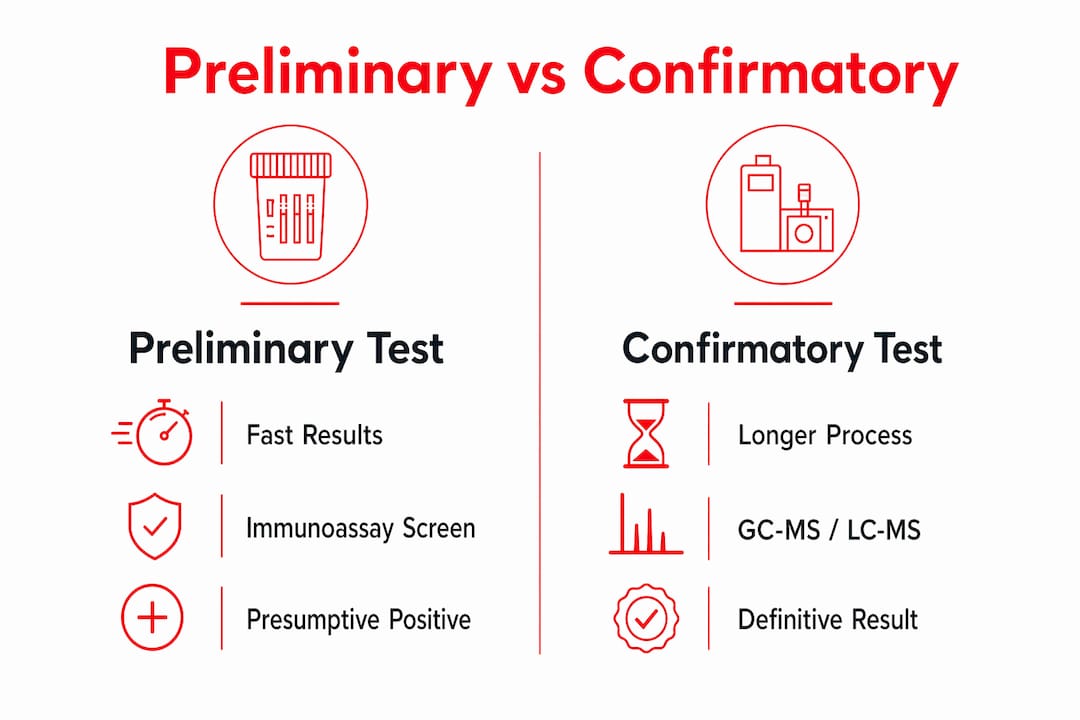
Confirmation testing is the step that transforms a presumptive positive into a legally and medically defensible result. The two standard methods are Gas Chromatography-Mass Spectrometry (GC-MS) and Liquid Chromatography-Mass Spectrometry (LC-MS). Both identify exact substances and quantify their concentration rather than detecting broad drug classes.
The confirmation process follows a defined sequence:
- The preliminary positive specimen is flagged and retained under chain-of-custody protocols.
- The specimen is forwarded to an HHS-certified laboratory (in federal testing) or a CLIA-certified lab (in most clinical and employment settings).
- GC-MS or LC-MS analysis is run on the same specimen, targeting the specific compound rather than the drug class.
- Results are reviewed by a Medical Review Officer (MRO).
- The MRO contacts the donor to verify any legitimate medical explanation, such as a valid prescription.
- The MRO reports a final result to the employer or requesting party.
Confirmation testing adds approximately two to five business days to the process after the initial screen. Combined with collection and transport time, the total time from specimen collection to a verified final result is often one week or more.
Preliminary vs. confirmatory testing: a direct comparison
| Feature | Preliminary (Immunoassay) | Confirmatory (GC-MS / LC-MS) |
|---|---|---|
| Speed | Minutes to 1-2 days | 2-5 additional business days |
| Specificity | Drug class detection | Exact compound identification |
| False positive risk | Higher | Minimal |
| Legal/employment use | Screening only | Basis for final decisions |
| Cost | Lower | Higher |
The Medical Review Officer is a licensed physician trained specifically in drug testing regulations. Their role is to prevent wrongful positives by reviewing prescriptions and medical history before any result reaches an employer. If you have a valid prescription for a detected substance, the MRO process is where that information protects you.
Pro Tip: Request the MRO’s contact information from your testing facility before your test. If you take any prescription medications, have your prescribing physician’s contact and your prescription documentation ready. The MRO will reach out to you directly if a non-negative result requires review.
Common concerns about preliminary drug test results
The period between a preliminary positive and a confirmed result is stressful, especially when employment or legal standing is at stake. Knowing what to expect and what you can do reduces that uncertainty considerably.
How to dispute a presumptive positive:
- Gather all current prescriptions and over-the-counter medications you were taking at the time of the test.
- Document the dosage, timing, and prescribing physician for each medication.
- Contact the MRO directly. You have the right to provide a medical explanation before a result is finalized.
- Request a split specimen test if one was collected. Federal DOT testing requires split specimens, allowing a second portion of the original sample to be tested at a different certified lab.
- Keep records of the chain-of-custody form you signed at collection.
Timeline expectations vary by setting. Workplace pre-employment tests typically resolve within five to seven business days from collection. Legal or forensic testing may take longer due to additional documentation requirements. Specimen validity testing runs alongside the initial screen to detect adulteration or substitution, which can add a review step if validity markers are flagged.
The consequences of a preliminary positive depend entirely on context. In federal DOT-regulated employment, a non-negative screen triggers immediate removal from safety-sensitive duties pending confirmation. In non-regulated private employment, policies vary by employer. In legal settings, a preliminary positive alone is generally insufficient for prosecution. The difference between presumptive and confirmed results is legally significant in every jurisdiction.
If you test positive preliminarily but hold a valid prescription for the detected substance, the MRO review process is specifically designed to resolve that situation in your favor. The system accounts for legitimate medical use. What it cannot account for is a situation where you provide no documentation.
Key takeaways
A preliminary drug test result is a presumptive finding only, and no employment or legal decision is valid until a confirmatory GC-MS or LC-MS test verifies the result through a Medical Review Officer.
| Point | Details |
|---|---|
| Preliminary means presumptive | A positive screen indicates detection above cutoff, not confirmed drug use. |
| False positives are real | Cross-reactivity with prescriptions and OTC medications can trigger a non-negative screen. |
| Confirmation is required | GC-MS or LC-MS testing adds 2-5 business days and identifies the exact compound. |
| MRO review protects you | A Medical Review Officer verifies prescriptions before reporting results to employers. |
| Negative results have limits | A negative screen reflects detection at a point in time, not a guarantee of no drug use. |
Why the presumptive vs. confirmed distinction matters more than people think
After years of working in this space, the single most consistent mistake I see is people treating a preliminary positive as a final answer. Employers panic. Employees panic. And decisions get made before the science has actually finished its job.
The immunoassay screen is a filter, not a verdict. It is designed to be sensitive, which means it catches more than it should rather than less. That is a deliberate design choice because the cost of a false negative in a safety-sensitive role is higher than the cost of a false positive that gets resolved through confirmation. But that logic only holds if the confirmation step actually happens.
What I find genuinely underappreciated is the MRO function. Most people going through a workplace drug test have never heard of a Medical Review Officer until they get a call from one. That call is not an accusation. It is a structured opportunity to provide context. I have seen cases where a single prescription document resolved what looked like a clear positive for opioids. The system works when people engage with it rather than assume the worst.
My honest advice: if you are facing a preliminary positive, do not resign, do not argue with HR, and do not assume the result is final. Document everything, contact the MRO, and wait for the confirmation. Patience and paperwork are your two most effective tools at that stage.
— Justin
Accurate testing starts with the right equipment
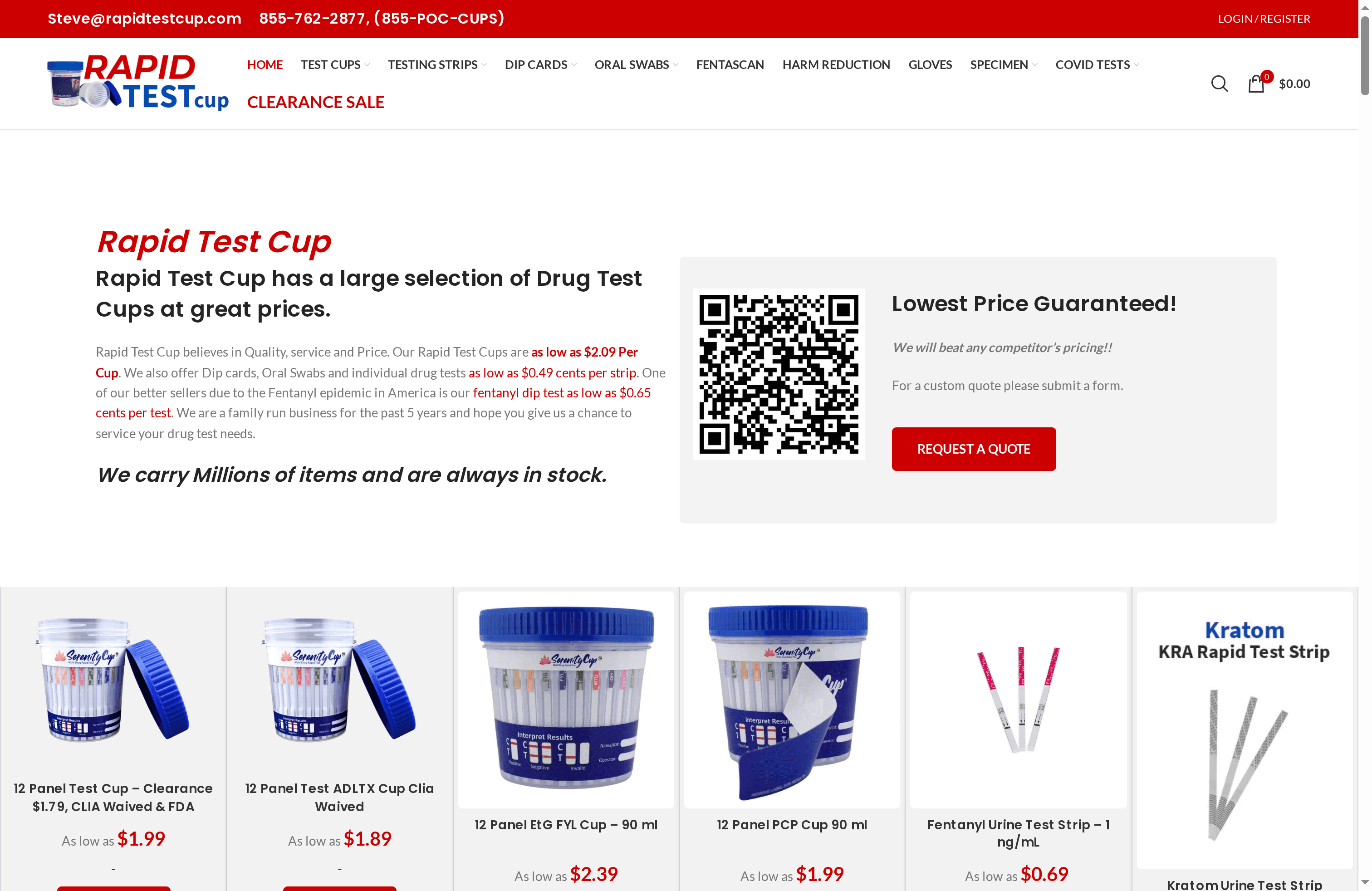
If you are running a clinic, substance abuse program, or workplace testing operation, the quality of your preliminary screening directly affects how often you send specimens to confirmation. Rapidtestcup carries CLIA waived, FDA-approved test cups across multiple panel configurations, including the 12-panel drug test cup currently on clearance sale, and the 18-panel cup with adulterant detection for high-accuracy professional screening. Both options ship fast and are built to reduce cross-reactivity errors at the point of collection, which keeps your confirmation rate where it should be.
FAQ
What does a preliminary positive drug test mean?
A preliminary positive, also called a presumptive positive, means the initial immunoassay screen detected a substance at or above the defined cutoff level. It is not a confirmed result and requires GC-MS or LC-MS confirmation before any employment or legal action is valid.
How long does it take to get a confirmed drug test result?
Initial screening returns results in minutes to two days depending on the method. Confirmation testing adds two to five business days, making the total time from collection to a verified final result approximately one week or more.
Can a prescription medication cause a preliminary positive?
Yes. Immunoassay screens detect drug classes and cross-react with prescriptions and over-the-counter medications. A Medical Review Officer reviews these cases and can reclassify a positive as negative if a valid prescription explains the result.
What is the difference between preliminary and confirmatory drug tests?
Preliminary tests use immunoassay technology to screen for drug classes quickly and affordably. Confirmatory tests use GC-MS or LC-MS to identify the exact compound and concentration, providing the specificity required for legal and employment decisions.
Can you dispute a preliminary positive drug test result?
Yes. You can provide prescription documentation and medical history to the Medical Review Officer before a result is finalized. Disputing a presumptive positive requires documentation of prescriptions, dosage, and timing, since cross-reactivity varies by drug class.