Blog
Privacy Rights in Drug Testing: What You Need to Know


TL;DR:
- Privacy rights in drug testing are protected by constitutional, federal, and state laws that control data collection, access, and usage. Public employees have stronger Fourth Amendment protections, while private-sector employees rely on state laws and statutes like the ADA; employees in safety-sensitive roles under DOT regulations have specific rights, including timely retest options. During specimen collection, privacy is safeguarded by strict protocols, requiring justification for direct observation and allowing employees to challenge unapproved procedures or wrongful disclosures.
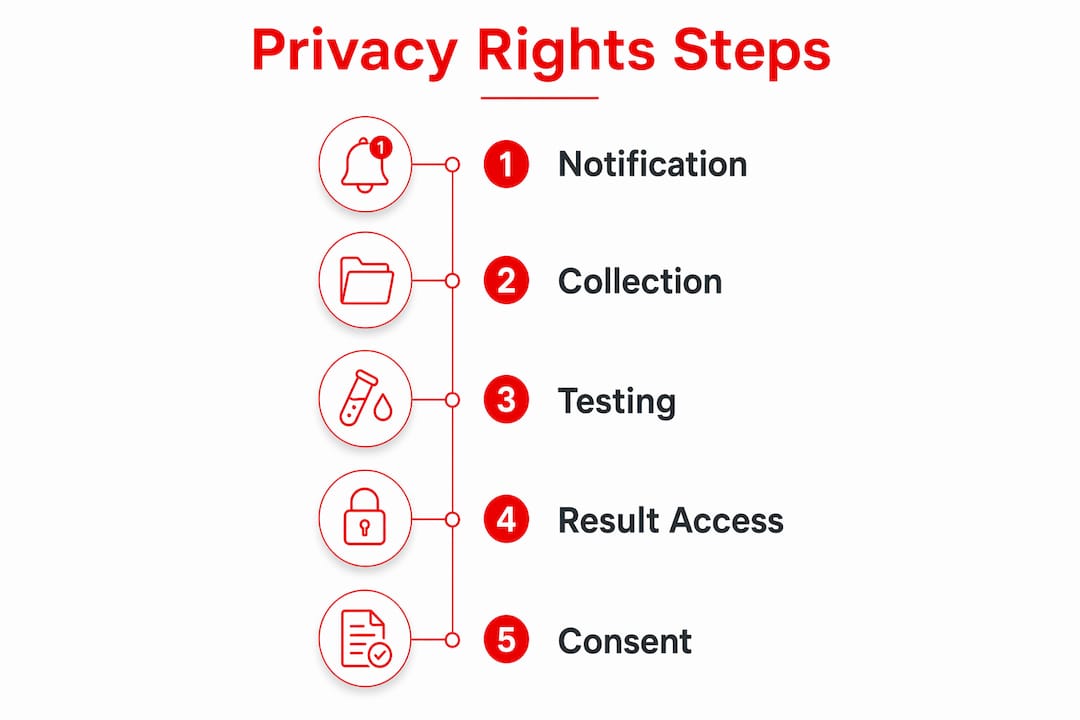
Privacy rights in drug testing are defined as the legal protections that govern what personal information can be collected from your body, how that information is used, and who is permitted to see the results. These protections draw from constitutional law, federal statutes, and state regulations that together set boundaries on employer and government authority. The Fourth Amendment, the Americans with Disabilities Act, and HIPAA each play distinct roles depending on the testing context. Whether you are facing a pre-employment screen, a random test in a safety-sensitive role, or a clinical assessment, understanding your rights is the first step toward protecting them.
What privacy rights in drug testing actually protect you from
Drug testing is legally classified as a search under the Fourth Amendment, which prohibits unreasonable searches and seizures by government actors. This constitutional protection applies directly to public sector employees, meaning federal, state, and local government workers have the strongest legal footing when challenging a drug test. Private sector employees receive less direct constitutional protection, but federal statutes and state laws fill many of those gaps.
The legal framework differs significantly between sectors:
- Public employees can challenge drug tests that lack individualized suspicion or fail to meet the “special needs” doctrine established by the Supreme Court in cases like Skinner v. Railway Labor Executives’ Association and National Treasury Employees Union v. Von Raab.
- Private employees rely primarily on state privacy laws, collective bargaining agreements, and federal statutes like the ADA and the Rehabilitation Act.
- Federal DOT-regulated workers in safety-sensitive roles (truck drivers, pilots, pipeline workers) operate under a separate, highly specific regulatory framework administered by the Department of Transportation.
The DOT framework includes one of the most concrete privacy protections in drug testing law. Employees have a federally protected right to request a split-specimen retest within 72 hours of being notified by the Medical Review Officer (MRO). That 72-hour window starts the moment the MRO contacts the employee directly, not when the employer receives the result. This distinction matters enormously in practice, because missing that deadline forfeits the retest right entirely.
Pro Tip: If you are a DOT-regulated employee and receive a verified positive result, ask the MRO to confirm the identity of the second certified lab at the time of notification. Federal rules require the MRO to provide this information, and it is your starting point for exercising your retest rights.
State laws add another layer. California, for example, requires employers to provide advance notice of testing policies. Montana restricts random testing to safety-sensitive positions. These state-level rules reflect a broader recognition that drug testing laws and privacy protections cannot be reduced to a single national standard.
What happens during collection and where privacy concerns arise
The specimen collection process is where privacy rights become most tangible and most contested. Most urine collections follow a standard protocol: you provide a sample in a private restroom stall while a collector waits outside and listens for normal sounds. Direct observation, meaning a collector watching you produce the specimen, is a significant escalation with specific legal requirements.
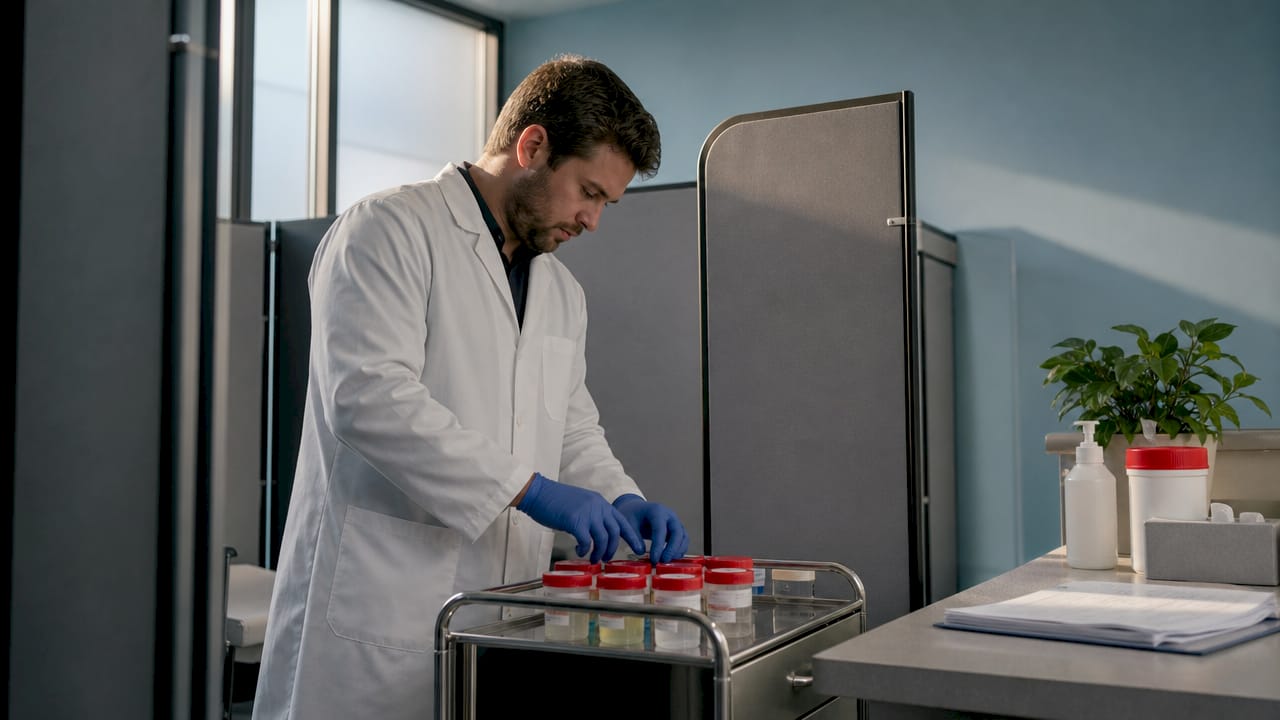
Courts have consistently held that direct viewing without justification is an unreasonable invasion of privacy. Observed collections are typically reserved for situations involving suspected tampering, a previous invalid specimen, or specific regulatory mandates. If you are told your collection will be directly observed, you have the right to ask why. Employees should verify whether observation was properly authorized before complying.
Here is how collection privacy protections typically break down by procedure:
- Standard unobserved collection: Collector waits outside the stall. This is the default for most workplace programs and carries the lowest privacy intrusion.
- Monitored collection: Collector is present in the room but does not directly observe. Courts generally find this reasonable when monitors only listen.
- Directly observed collection: Collector watches specimen production. Requires documented justification and is legally vulnerable to challenge without it.
- Oral fluid collection: Saliva sample collected by swab. Less physically intrusive than urine, though federal regulations require at least two HHS-certified oral fluid labs to be operational before employers can use this method under DOT rules.
Pro Tip: Before your collection appointment, ask the testing facility for a copy of their collection procedures. Legitimate programs will provide this. If the facility refuses, document the refusal and contact your HR department or legal counsel.
Jurisdiction also shapes collection rules. Some states require employers to use certified collection sites, specify chain-of-custody documentation standards, or limit the circumstances under which random testing is permitted. Reviewing your workplace drug testing privacy rights at the state level before a test is not paranoia. It is preparation.
Who can access your drug test results and how confidentiality works
The answer to who sees your results depends entirely on who ordered the test and for what purpose. This distinction is widely misunderstood, and the confusion creates real privacy risks.
| Test Type | HIPAA Coverage | Who Controls Access |
|---|---|---|
| Clinical diagnostic test ordered by a physician | Yes, covered as PHI | Patient, treating providers, covered entities |
| Employer-mandated pre-employment screen | No, treated as employment record | Employer, MRO, designated HR representative |
| DOT-regulated safety-sensitive test | No, governed by DOT rules | MRO, employer’s Designated Employer Representative |
| Court-ordered or probation test | No, governed by court order | Court, probation officer, program administrator |
Employer-mandated drug testing records fall outside HIPAA’s scope and are classified as employment records, not protected health information. This means your employer is not legally required by HIPAA to keep your results confidential, though most responsible programs do so anyway. The MRO, the certified laboratory, and the employer’s designated representative are the typical access points.
HIPAA’s applicability depends on who ordered the test and its purpose. A urine screen ordered by your primary care physician as part of a health assessment is protected health information. The same test ordered by your employer as a condition of employment is not. Knowing which category your test falls into tells you immediately which legal framework governs your results.
Best practice programs limit access on a strict need-to-know basis. Confidentiality best practices reduce privacy risks beyond what HIPAA technically requires, and employers who share results beyond the designated representative expose themselves to discrimination claims and reputational damage.
How consent and data use rules shape your legal rights
Consent for drug testing in employment is rarely optional in the traditional sense. Most employers require signed authorization as a condition of hire or continued employment. But consent frameworks still carry legal weight because they define the scope of what the employer is authorized to collect and use.
The ADA draws a clear line that many employers cross without realizing it. The ADA prohibits adverse action against employees taking legally prescribed medication, recognizing a fundamental distinction between illegal drug use and lawful medical treatment. An employee on prescribed opioids for a documented condition who tests positive cannot be automatically terminated without triggering ADA scrutiny. This protection shifts the privacy and disciplinary calculus significantly, and it requires employers to engage in an individualized assessment rather than applying a blanket zero-tolerance policy.
Key consent and data-use protections to know:
- Employers can test for drugs but cannot use test results to discriminate based on disability status or lawful medication use.
- Results should be used only for the stated purpose of the testing program. Using a pre-employment screen result to deny a promotion years later is a misuse of data.
- Employees have the right to disclose a prescription to the MRO before a result is reported. The MRO is required to consider that disclosure before verifying a positive.
- ADA guidelines clarify that negative employment actions are prohibited for employees lawfully taking prescribed medications, which means the MRO review process is a critical privacy safeguard, not a formality.
A 2026 British Columbia privacy adjudicator decision illustrates how over-collection of data creates legal liability. The adjudicator found an employer unauthorized to collect excessive personal information related to a refusal-to-test incident, ruling that data collection must be limited to what is strictly necessary. This data minimization principle is gaining traction across North American jurisdictions and reflects a growing consensus that consent must be specific, not blanket.
What practical steps protect your privacy rights during drug testing
Knowing your rights in the abstract is useful. Knowing exactly what to do before, during, and after a test is what actually protects you.
- Before the test: Request a written copy of the employer’s drug testing policy. Confirm which substances are being tested, what type of specimen is required, and whether the collection will be observed. Ask who will have access to your results and in what circumstances.
- If you take prescription medications: Inform the MRO confidentially before your result is reported. Provide documentation from your prescribing physician. This disclosure is protected and cannot be shared with your employer by the MRO without your consent.
- If you test positive under DOT rules: The 72-hour retest deadline starts when the MRO notifies you, not when your employer is informed. Request the split specimen retest immediately and confirm the identity of the second certified lab.
- If observation is ordered: Ask for written documentation of the justification. Direct observation collection is reserved for specific circumstances, and you are entitled to know why it was ordered.
- If you believe your rights were violated: Document every interaction with dates, names, and what was said. File a complaint with the relevant agency: the DOT for regulated programs, the EEOC for ADA violations, or your state labor board for state law violations.
Pro Tip: Keep a personal log of every drug test you undergo, including the date, the collection site, the observer’s name if applicable, and the MRO’s contact information. This record is your primary evidence if a dispute arises later.
For guidance on how results should be managed after collection, Rapidtestcup’s resource on managing drug test results covers the legal considerations employers face when handling positive results involving prescribed medications.
Key takeaways
Privacy rights in drug testing are enforced through a layered system of constitutional protections, federal statutes, and state laws that together define what employers can collect, who can see it, and how it must be handled.
| Point | Details |
|---|---|
| Fourth Amendment scope | Constitutional protection applies directly to public employees; private employees rely on state laws and federal statutes. |
| DOT retest rights | The 72-hour split-specimen retest window starts at MRO notification, not employer notification. Missing it forfeits the right. |
| HIPAA does not cover employer tests | Employer-mandated drug test results are employment records, not protected health information, so HIPAA confidentiality rules do not apply. |
| ADA prescription protection | Employees taking legally prescribed medications cannot face adverse action based solely on a positive test result. |
| Data minimization matters | Employers must collect only the information necessary for the stated testing purpose, a standard reinforced by recent adjudicator decisions. |
The part most people miss until it’s too late
I have spent years reviewing drug testing policies and the disputes that follow them, and the pattern is consistent. Most people who lose privacy-related challenges to drug testing do not lose because the law failed them. They lose because they did not know the law existed until after the deadline passed or the result was already shared.
The 72-hour retest window is the clearest example. It is a genuinely powerful protection, and it is forfeited constantly because employees assume the clock starts when their employer tells them about the result. It does not. The MRO’s call starts the timer, and by the time an employee consults a lawyer, the window is often closed.
The ADA prescription protection is another area where informed employees fare dramatically better than uninformed ones. The MRO review process exists precisely to catch legitimate medical explanations before a result is reported as positive. But that process only works if you disclose your prescription proactively. Waiting until after the result is verified is too late in most cases.
What I find most concerning in 2026 is the expansion of oral fluid testing and the regulatory lag around it. The privacy implications of saliva collection are genuinely different from urine collection, and the certification requirements for oral fluid labs reflect how seriously regulators take accuracy in this space. Employees and employers alike are navigating a testing method that is less intrusive physically but still evolving legally.
The practical takeaway is this: treat every drug test as a legal event, not an administrative inconvenience. Know your collection rights before you walk into the facility. Know your retest rights before the MRO calls. Know your ADA rights before you sign any disclosure. The protections exist. Using them requires preparation.
— Justin
Test with confidence using Rapidtestcup’s privacy-conscious kits
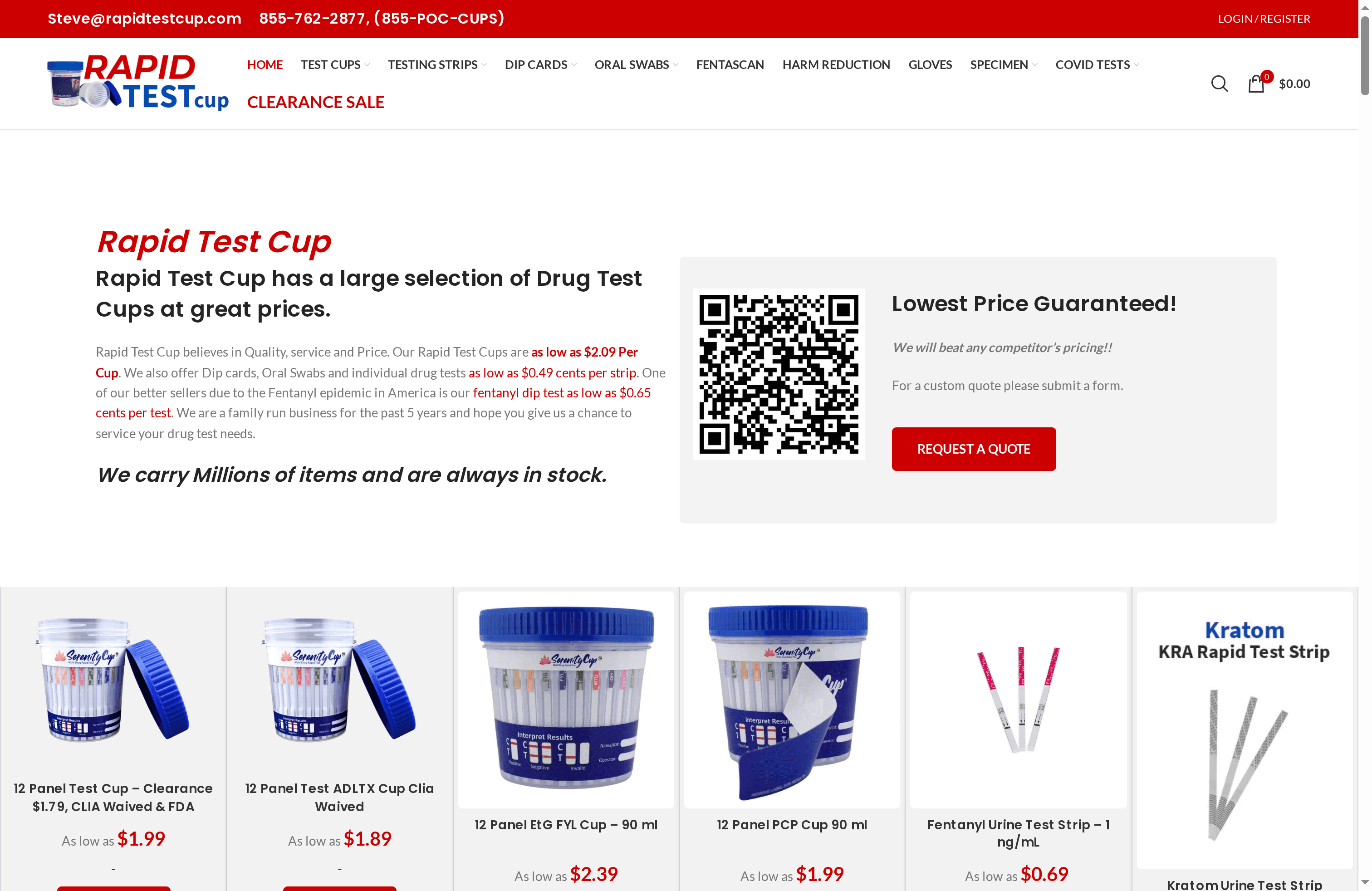
Choosing the right drug testing kit matters as much as understanding your rights. Rapidtestcup offers FDA-approved, CLIA-waived testing products designed for accurate, confidential results across professional, clinical, and personal use cases. Whether you are a compliance officer selecting kits for a regulated workplace program or an individual seeking a reliable at-home option, the product catalog covers urine test cups, dip cards, and specimen collection supplies with full chain-of-custody support. Browse the top urine drug test kits comparison to find the right panel and format for your specific needs, or use the drug test kit selection guide to match accuracy requirements with your testing context.
FAQ
What does the Fourth Amendment protect in drug testing?
The Fourth Amendment protects public employees from unreasonable government searches, which courts have ruled includes drug testing. Private employees do not receive direct constitutional protection but may be covered by state privacy laws and federal statutes.
Does HIPAA protect my workplace drug test results?
No. Employer-mandated drug test results are classified as employment records, not protected health information, so HIPAA does not apply. Confidentiality is governed instead by employer policy, state law, and DOT regulations where applicable.
Can I be fired for a positive test if I have a valid prescription?
The ADA prohibits adverse employment action against employees taking legally prescribed medications. You should disclose your prescription to the MRO before the result is verified, and the MRO is required to consider that information before reporting a positive.
How long do I have to request a split-specimen retest under DOT rules?
You have 72 hours from the moment the MRO notifies you of a verified positive result. The clock does not start when your employer receives the result. Missing this deadline forfeits your retest right entirely.
When is direct observation during specimen collection legally justified?
Direct observation is legally reserved for cases involving suspected tampering, a prior invalid specimen, or specific regulatory requirements. Courts frequently rule that direct viewing without documented justification is an unreasonable privacy invasion.