

Blog
What Is a Urine Control? Testing and Health Explained


TL;DR:
- Urine control in laboratory testing involves verified specimens with known analyte concentrations to ensure test accuracy. In medical contexts, urine control refers to the body’s voluntary ability to store and release urine, with dysfunction indicating potential health issues. Both types of control are vital for accurate diagnosis, reliable drug testing, and effective clinical decision-making.
Urine control is defined as either the body’s voluntary ability to store and release urine, or a prepared reference sample used in laboratory testing to verify that a urine drug test or clinical assay is performing correctly. These two meanings appear in completely different contexts, yet both directly affect how health professionals interpret results. The Merck Manuals describe bladder control as a coordinated neural and muscular function, while Cleveland Clinic Labs and the NIDDK address each concept from clinical and physiological angles respectively. Knowing which definition applies to your situation prevents costly misunderstandings in both medical care and drug testing workflows.
What is a urine control in the human body?
Bladder control is governed by a coordinated system involving the kidneys, ureters, bladder, urethra, and urinary sphincter. The kidneys filter blood and send urine through the ureters into the bladder, where it is stored until voluntary release. The bladder wall contains the detrusor muscle, which stretches as urine accumulates and contracts during urination.
The neural signaling process works in a specific sequence. As the bladder fills, stretch receptors send signals up the spinal cord to the brain. The brain then decides whether conditions are appropriate for urination. When they are, it sends signals back down to relax the urinary sphincter and contract the detrusor muscle simultaneously. This two-way communication is what makes urination voluntary rather than automatic.
Nerve damage from conditions like multiple sclerosis or spinal cord injury disrupts this communication pathway. When the brain cannot receive or send signals properly, the bladder may contract without warning. This is called reflex incontinence, and it is one of several types of bladder control problems that affect millions of adults.
Urinary incontinence is not always age-related, and it takes several distinct forms including stress leakage during physical activity, urgency incontinence, and overflow incontinence. Each type has a different cause and requires a different treatment approach. Recognizing the type is the first step toward effective management.
Pro Tip: If you experience sudden urges or leakage more than twice a week, track the frequency and triggers in a simple log before your next medical appointment. This data gives your provider a clearer picture than memory alone.
How do lab urine controls work in drug testing?
In laboratory settings, a urine control sample is a prepared specimen with known concentrations of specific analytes. Labs run these control samples alongside donor specimens to confirm that the test reagents and equipment are functioning within acceptable parameters. Controls with known analyte concentrations verify test accuracy and reliability before results are reported.
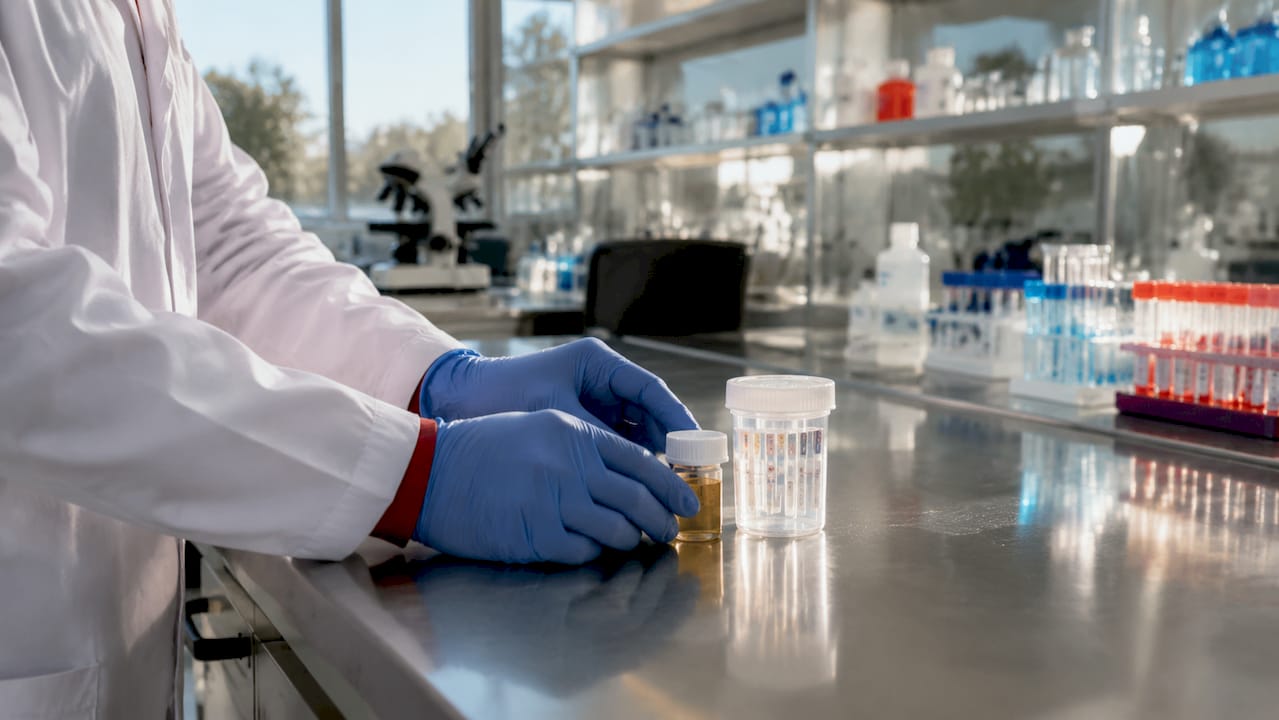
This process is a core part of quality assurance in any certified testing workflow. Without a verified control run, a lab cannot confidently report whether a positive or negative result reflects the donor’s actual specimen or a reagent failure. The stakes are high in drug testing because results affect employment, legal proceedings, and clinical treatment decisions.
Specimen validity testing is a related but separate function. It checks whether the donor’s urine is genuine and unaltered. The key parameters tested include:
- Creatinine: Normal range is 20–300 mg/dL. A result below 2 mg/dL indicates substitution.
- Specific gravity: Acceptable range is 1.003–1.020. Values outside this range suggest dilution or substitution.
- pH: A value below 4 or at or above 11 signals adulteration.
- Oxidants and nitrites: Presence of these chemicals indicates the specimen has been chemically altered.
These specimen validity parameters come directly from Cleveland Clinic Labs protocols and are standard across federally regulated drug testing programs. A specimen that fails validity testing is flagged before drug analyte results are even reviewed.
| Parameter | Normal Range | Flag Condition |
|---|---|---|
| Creatinine | 20–300 mg/dL | Below 2 mg/dL = substituted |
| Specific Gravity | 1.003–1.020 | Outside range = diluted or substituted |
| pH | 4.5–8.5 | Below 4 or at/above 11 = adulterated |
| Nitrites | Not detected | Detected = adulterated |
| Oxidants | Not detected | Detected = adulterated |
Point-of-care urine drug screening (POCT UDS) delivers sensitivity of 98% and specificity above 90%, but confirmatory testing is still required for unexpected results. That figure shows how reliable modern immunoassay strips are, yet it also confirms that no single test is infallible without quality controls in place.
Physiological vs. lab urine control: key differences
The two meanings of urine control share a subject but serve entirely different purposes. Physiological urine control is a health function. Lab urine control is a quality assurance tool. Conflating them creates real problems in clinical communication, particularly when a patient or technician uses the phrase without specifying which context they mean.
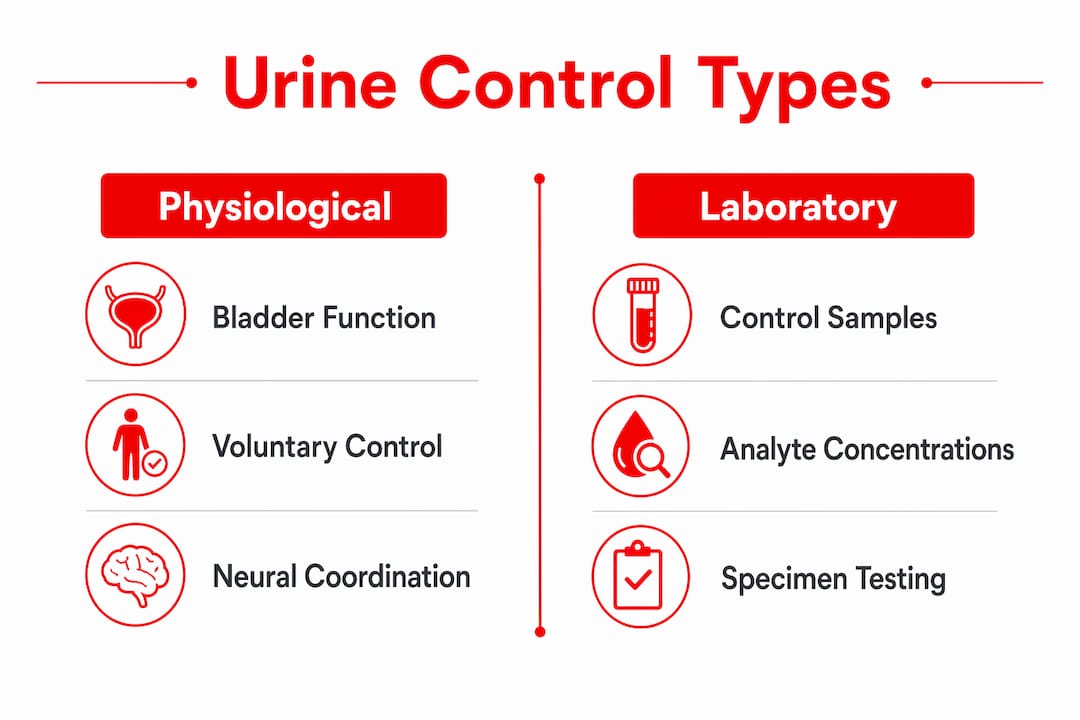
Distinguishing these two concepts is not just a semantic exercise. A clinician discussing a patient’s “urine control issues” is describing a symptom. A lab technician discussing “urine controls” is describing a procedural step. Both conversations affect clinical decisions, but in completely different ways.
| Aspect | Physiological Urine Control | Lab Urine Control |
|---|---|---|
| Definition | Voluntary bladder storage and release | Prepared specimen with known analytes |
| Purpose | Health function | Test accuracy verification |
| Problems | Incontinence, nerve damage | False positives, false negatives |
| Managed by | Urologist, neurologist | Lab technician, quality manager |
| Relevant setting | Clinical care, urology | Drug testing lab, toxicology |
The two concepts do intersect in one important place: clinical diagnosis. When a patient provides a urine specimen for drug testing or clinical analysis, the lab’s urine control process directly affects whether that patient’s results are accurate. Bladder control problems are often symptoms of underlying conditions, not standalone diseases. A misread lab result caused by poor quality controls could delay the correct diagnosis.
Pro Tip: When reviewing a lab report, look for a notation confirming that controls passed before your results were finalized. Most accredited labs include this in the report header or footnotes.
Why urine control knowledge matters in practice
Understanding both forms of urine control has direct, practical consequences for patients, lab professionals, and testing program managers. Here are the four situations where this knowledge makes the biggest difference:
-
Early detection of bladder dysfunction. Recognizing that leakage or urgency signals a disruption in neural-muscular coordination helps patients seek care sooner. Incontinence impacts quality of life significantly, yet many people delay treatment for years because they assume it is a normal part of aging.
-
Preventing false positives in drug testing. Quality control samples reduce false positives and false negatives in labs, which protects both the testing program and the individual being tested. A false positive in an employment drug test can end a career. Running verified controls is the procedural safeguard against that outcome.
-
Specimen integrity verification. Labs use specimen validity testing to catch diluted, substituted, or adulterated samples before reporting results. This step is non-negotiable in federally mandated testing programs and strongly recommended in all clinical toxicology workflows.
-
Accurate clinical decision-making. When a physician orders a urine toxicology panel, the results inform prescribing decisions, treatment adjustments, and legal documentation. A lab running proper urine controls gives that physician results they can act on with confidence. A lab skipping controls introduces uncertainty that can cascade into patient harm.
The quality assurance role in clinics extends beyond just drug testing. Any urine-based diagnostic panel, from kidney function markers to infection screening, benefits from the same control-based verification approach. Labs that treat controls as optional rather than mandatory introduce systemic risk into every result they report.
Key takeaways
Urine control in laboratory testing requires verified control samples to produce results that clinicians and program managers can trust.
| Point | Details |
|---|---|
| Two distinct meanings | Urine control refers to bladder function in physiology and reference specimens in lab testing. |
| Lab controls verify accuracy | Known-concentration samples confirm that reagents and equipment perform correctly before results are reported. |
| Specimen validity is separate | Creatinine, pH, specific gravity, and oxidants detect diluted or adulterated donor specimens. |
| Bladder dysfunction signals disease | Incontinence and urgency are symptoms of underlying conditions, not standalone diagnoses. |
| Both concepts affect diagnosis | Poor lab controls and untreated bladder dysfunction both lead to inaccurate clinical outcomes. |
The confusion is more costly than most people realize
I have spent years reviewing drug testing workflows and talking with lab managers who treat urine controls as a checkbox rather than a safeguard. The pattern I keep seeing is the same: a program cuts corners on quality controls to save time, a false positive slips through, and suddenly there is a legal dispute that costs ten times what the controls would have.
The physiological side of this topic gets underestimated too. Patients who describe “urine control problems” to a general practitioner often get a referral to a urologist and nothing else. What they actually need is a workup for the underlying cause, whether that is a neurological condition, a structural issue, or a medication side effect. The Merck Manuals and NIDDK both frame bladder control problems as symptoms, not diseases. That framing matters enormously for how aggressively a clinician pursues the root cause.
What I find most useful is treating both meanings of urine control as quality problems. In the body, poor urine control signals that something in the neural or muscular system is not working correctly. In the lab, poor urine controls signal that the testing process cannot be trusted. Both require investigation, not just management of the surface symptom.
If you are a lab manager, the drug test quality control workflow you implement today determines the defensibility of every result you report tomorrow. If you are a patient, the symptoms you dismiss as embarrassing might be the clearest signal your body sends before a serious condition becomes harder to treat.
— Justin
Reliable urine testing products from Rapidtestcup
Getting urine control right in a lab setting starts with having the right testing products. Rapidtestcup supplies CLIA waived, FDA-approved drug test cups, urine test strips, and specimen collection supplies to laboratories, clinics, substance abuse programs, and law enforcement agencies.
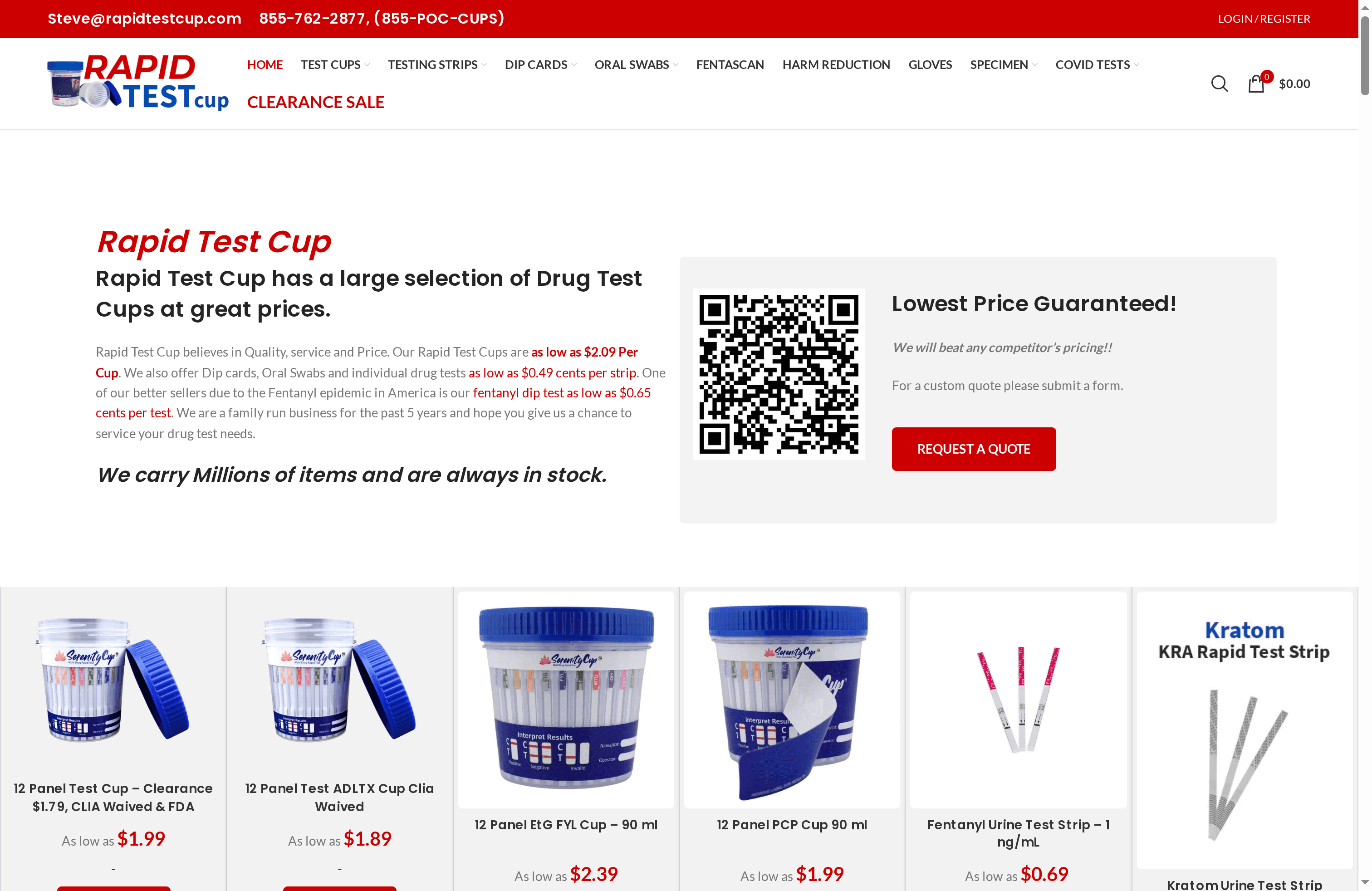
The catalog includes 12-panel drug test cups with built-in adulterant detection, multi-panel configurations for expanded screening, and specimen cups designed for proper collection and chain of custody. For labs building or auditing their quality control workflows in 2026, the top drug testing products guide covers the highest-performing options across panel types and testing environments. Bulk pricing and fast shipping make Rapidtestcup a practical choice for programs that need consistent supply without delays.
FAQ
What is a urine control in drug testing?
A urine control in drug testing is a prepared specimen with known analyte concentrations, run alongside donor samples to confirm that the test is performing accurately. It is a quality assurance tool, not a donor specimen.
What does urine control mean in a medical context?
In a medical context, urine control refers to the body’s ability to voluntarily store and release urine through coordinated bladder, sphincter, and nervous system function. Loss of this ability is called urinary incontinence.
How does specimen validity testing relate to urine controls?
Specimen validity testing checks whether a donor’s urine is genuine by measuring creatinine, specific gravity, pH, and the presence of oxidants or nitrites. It is a separate step from running quality control samples but is part of the same overall testing workflow.
What creatinine level indicates a substituted specimen?
A creatinine level below 2 mg/dL indicates a substituted specimen, according to Cleveland Clinic Labs protocols. Normal creatinine in urine ranges from 20–300 mg/dL.
Can urine drug tests produce false positives without proper controls?
Point-of-care urine drug screening reaches specificity above 90%, but without verified control samples, labs cannot confirm whether a positive result reflects the donor’s specimen or a reagent error. Confirmatory testing is required for any unexpected result.