Blog
Drug Testing Intake Process: A Step-by-Step Guide


TL;DR:
- The drug testing intake process involves careful preparation, documentation, and adherence to procedural steps to ensure legal compliance. Properly completing the chain-of-custody form, bringing valid ID, and following collection instructions help prevent result delays or invalid specimens. Understanding how results are interpreted and exercising rights, like requesting retests, protects individuals and maintains the integrity of workplace testing programs.
The intake process for drug testing is a standardized sequence of steps designed to collect specimens accurately, maintain legal compliance, and protect everyone’s privacy. Whether you are a job candidate facing a pre-employment drug test or an HR professional managing a workplace screening program, knowing exactly what happens from check-in to result delivery removes uncertainty and prevents costly errors. Medical Review Officers (MROs), chain-of-custody forms, and certified collection sites are the three pillars that hold the entire process together.
What are the requirements for drug testing intake?
Preparation is the single biggest factor separating a smooth intake from a delayed or invalid one. Most employers require candidates to complete testing within 24–72 hours of notification, so you have very little time to gather what you need.
Documents and items to bring
Collection sites will turn you away without the right paperwork. Valid government-issued photo ID is required at every certified collection site, and it is the first line of defense for chain-of-custody integrity. Beyond ID, you typically need:
- A signed authorization or consent form from your employer or referring organization
- Any prescription medication information you currently take (not for the employer, but for MRO verification)
- The collection site address and your appointment confirmation
- Your employer’s account number or donor pass if one was issued
Physical preparation guidelines
| Requirement | Guideline | Why It Matters |
|---|---|---|
| Hydration | Drink normal amounts of water | Prevents dilute specimen flags |
| Medications | List all current prescriptions | Allows MRO to verify legitimate use |
| Timing | Arrive within the notification window | Avoids policy violations |
| Clothing | Wear simple, easy-to-manage clothing | Speeds up the collection process |
| Food | Eat normally beforehand | Reduces lightheadedness during collection |
Pro Tip: Drink water as you normally would on any given day. Overhydration before a urine test causes dilute specimens that get flagged for retest, which delays your results and raises unnecessary suspicion.
What are the step-by-step procedures during drug testing intake?
The drug screening process follows a strict sequence. Skipping or rushing any step creates legal exposure for employers and can invalidate your specimen entirely.
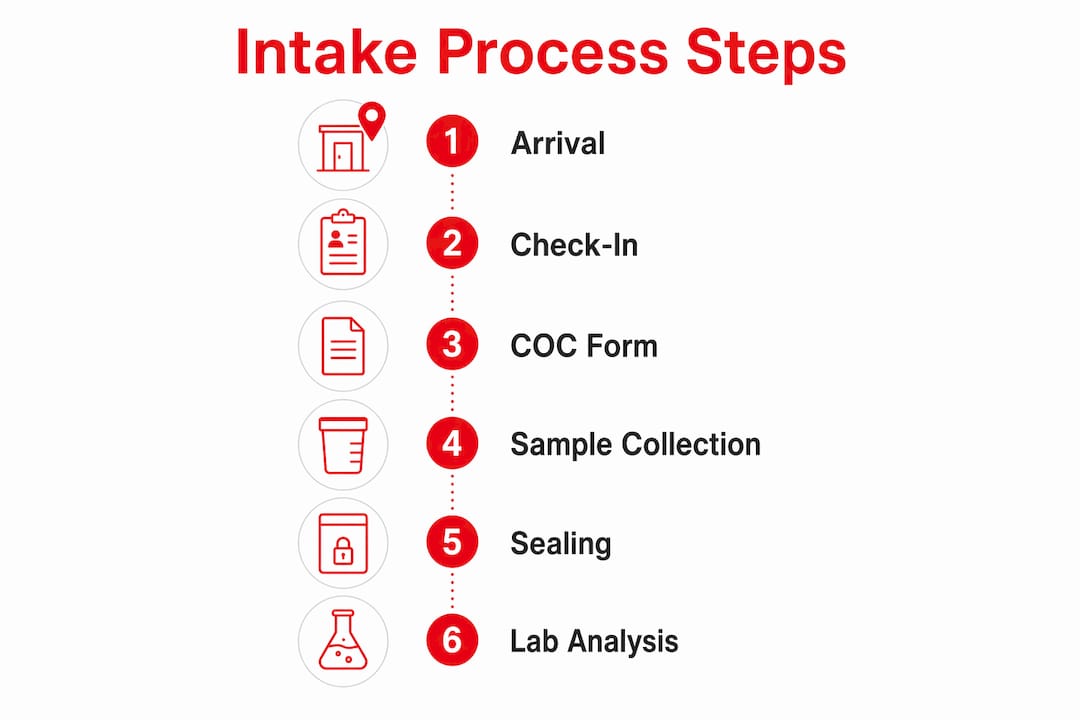
Step 1: arrival and check-in
You arrive at the collection site, present your photo ID, and the collector verifies your identity against the authorization form. Most collections are completed in under 30 minutes when the donor arrives prepared. The collector logs your arrival time and assigns a unique specimen ID number that follows your sample through the entire process.

Step 2: chain-of-custody form completion
The collector prepares a chain-of-custody (COC) form before any sample is taken. This document tracks the specimen from your hands to the laboratory. Signing the COC form confirms that the specimen is yours and that the information on the form is accurate. It does not constitute consent to testing, which you provided earlier through your authorization form.
Step 3: sample collection
The collector directs you to the collection area. For urine tests, you provide a specimen in a private restroom. The collector checks the temperature strip on the cup immediately after collection to confirm the sample is within the valid range of 90–100°F. Saliva tests are conducted in the open collection area, and blood draws happen in a clinical setting with a phlebotomist.
Here is how the three primary collection methods compare:
| Method | Collection Time | Supervision Level | Detection Window |
|---|---|---|---|
| Urine | 2–5 minutes | Indirect (private restroom) | 1–30 days depending on substance |
| Oral fluid (saliva) | 2–5 minutes | Direct observation | 24–48 hours for most substances |
| Blood | 5–10 minutes | Direct (clinical draw) | Hours to a few days |
Step 4: specimen sealing and documentation
The collector seals the specimen in a tamper-evident container in your presence. You initial the tamper-evident seal. The collector completes the COC form, you sign it, and the collector signs it. Both parties receive copies. This step is non-negotiable for legal defensibility in any workplace or forensic context.
Step 5: laboratory analysis
The specimen ships to a certified laboratory. Labs run an initial immunoassay screen on every sample. Non-negative immunoassay results trigger confirmatory testing using GC/MS (gas chromatography-mass spectrometry) or LC-MS/MS before any positive result is reported. This two-step process prevents false positives from reaching employers or courts.
Pro Tip: Follow every instruction the collector gives you without question. Refusing a step, leaving the collection area unexpectedly, or failing to provide an adequate sample volume can be recorded as a refusal, which carries the same consequence as a positive result under most workplace drug testing policies.
How do you understand and manage drug test results?
Result interpretation is where many people get confused. Knowing what each outcome means lets you respond correctly and quickly.
Negative results are typically reported within 24–48 hours. Positive results that require MRO review take 3–5 business days. The four result categories you may receive are:
- Negative: No substances detected above the cutoff threshold. The process is complete.
- Positive: A substance was detected and confirmed. The MRO contacts you before reporting to the employer.
- Dilute: The specimen had abnormally low creatinine or specific gravity, often from excess fluid intake. Most employers require a retest.
- Invalid or substituted: The specimen did not meet biological parameters. This is treated as a refusal in most programs.
The role of the medical review officer
The MRO is a licensed physician who reviews all non-negative results before they reach your employer. Prescription medications are verified by the MRO, not disclosed directly to the employer, which keeps your medical information protected under HIPAA. If you take a legitimate prescription that could trigger a positive, the MRO calls you privately to confirm it before the result is finalized.
Your rights after a positive result
Company policies and local law shape outcomes after a positive result, but most programs allow you to request a split specimen retest at a different certified laboratory. You typically have 72 hours to make that request after notification. Knowing this right before you go into testing, not after, is the difference between protecting yourself and missing your window.
For HR teams, learning how to manage drug test results with proper documentation and employee communication is just as important as the collection itself.
What are the most common mistakes during the intake process?
Most delays and invalid results trace back to a short list of preventable errors. Recognizing them before you walk into a collection site saves time and protects your outcome.
- Overhydration: Drinking excessive water in the hours before a urine test produces a dilute specimen. The lab flags it, and you repeat the entire process.
- Failing to disclose prescriptions: If you take a medication that could show up on a screen and you do not mention it to the MRO when contacted, the result stands as a positive. Dishonesty about substance use can lead to immediate job offer cancellation or program removal.
- Arriving without proper ID: No valid government-issued ID means no collection. The site cannot proceed, and you may miss your notification window.
- Signing the COC form incorrectly: Errors on the chain-of-custody form can compromise the legal standing of your specimen. Read every field before signing.
- Ignoring scheduling deadlines: Most programs require testing within 24–72 hours of notification. Missing that window is treated as a refusal in many employer policies.
Pro Tip: Write down every prescription and over-the-counter supplement you take before your appointment. If the MRO calls you, you will have accurate information ready. Vague answers slow down the review and can create doubt where none should exist.
Key takeaways
A successful drug testing intake depends on preparation, accurate documentation, and understanding each procedural step before you arrive at the collection site.
| Point | Details |
|---|---|
| Bring required documents | Valid photo ID and a signed authorization form are required at every certified collection site. |
| Hydrate normally | Drinking excessive water before a urine test causes dilute specimens that trigger mandatory retests. |
| Understand the COC form | Signing the chain-of-custody form confirms specimen accuracy, not consent to testing. |
| Know your result types | Negative, positive, dilute, and invalid each carry different follow-up requirements and timelines. |
| Exercise your retest right | Most programs allow a split specimen retest request within 72 hours of a positive notification. |
What i’ve learned after years of watching this process go wrong
The drug testing intake process looks simple on paper. In practice, the mistakes I see most often have nothing to do with the test itself. They come from people walking in unprepared, not knowing what the COC form actually means, or panicking when the MRO calls them.
The biggest misconception I encounter is that the MRO is working against you. The MRO’s entire job is to give you a fair hearing before anything reaches your employer. That phone call is your opportunity, not a threat. People who understand that go into it calmly, provide their prescription information clearly, and walk away with a legitimate negative result. People who ignore the call or give incomplete answers lose that window entirely.
The second thing I would tell anyone going through this process: the chain-of-custody form is not a formality. Every signature, every initial on that tamper-evident seal, is a legal record. I have seen results challenged in court because a collector skipped a step. I have also seen candidates lose job offers because they refused to initial the seal, thinking it was optional. Read the form. Ask questions if something is unclear. The collector is required to explain it to you.
For HR professionals building or auditing a program, the intake stage is where your legal considerations for drug testing either hold up or fall apart. Invest in training your collectors and standardizing your COC documentation. A defensible result starts at check-in, not at the laboratory.
— Justin
The right tools make every intake faster and more reliable
Running a tight drug testing intake program requires products that perform consistently from the first specimen to the last. Whether you manage a clinic, a substance abuse program, or a corporate HR department, the quality of your collection supplies directly affects the accuracy and legal standing of your results.
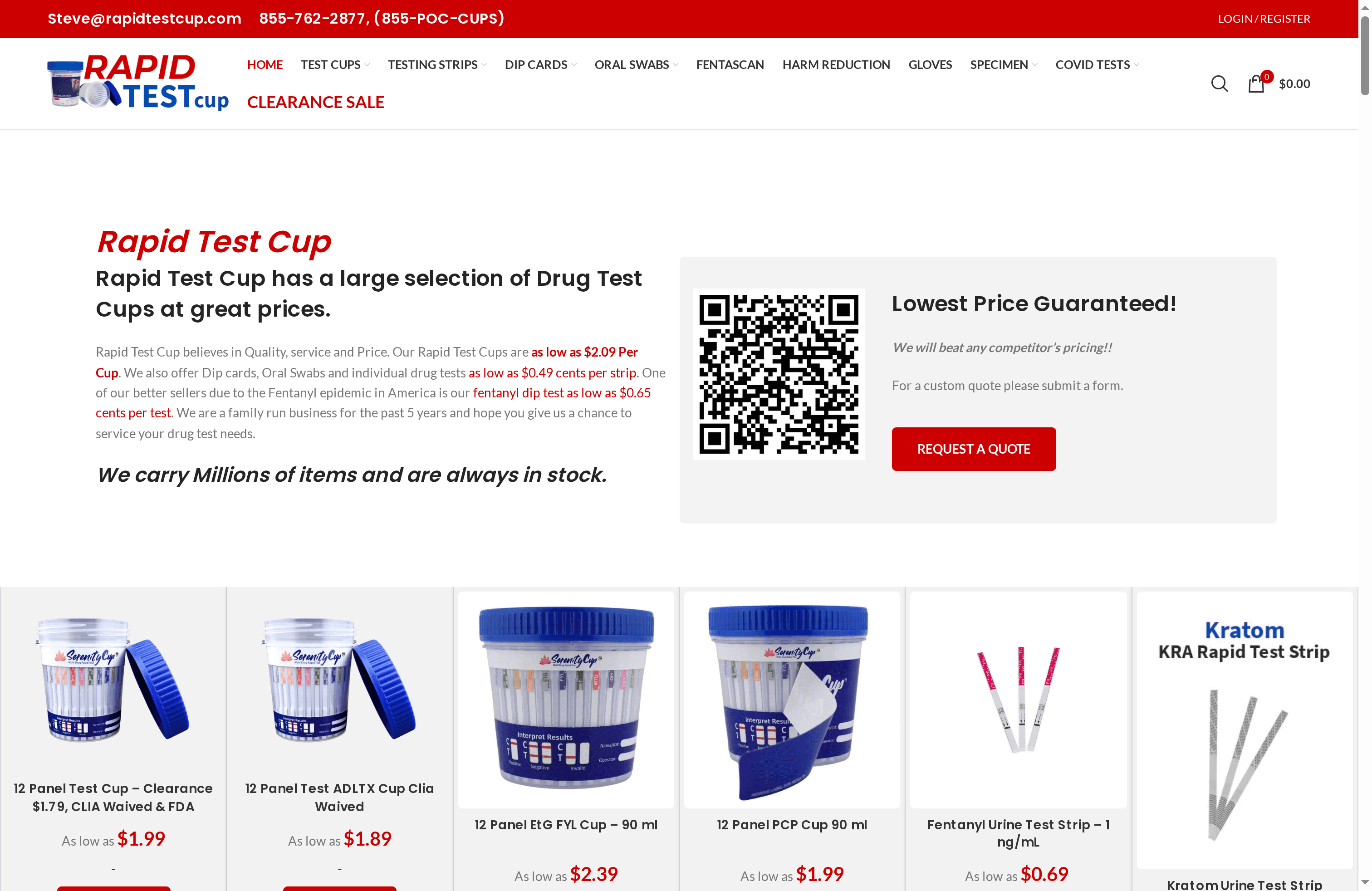
Rapidtestcup carries FDA-approved, CLIA waived testing products built for professional use, including multi-panel cups, dip cards, urine test strips, and specimen collection accessories. The top drug testing products for labs cover everything from standard 12-panel screens to advanced 22-panel cups with adulterant detection. Bulk pricing and fast shipping mean your program never stalls waiting on supplies. Browse the full catalog at Rapidtestcup to find the right fit for your intake workflow.
FAQ
What documents do i need for a drug test intake?
You need a valid government-issued photo ID and a signed authorization form from the requesting organization. Some sites also require a donor pass or employer account number.
How long does the drug testing intake process take?
The collection itself takes under 30 minutes when you arrive prepared. Results for negative tests are typically reported within 24–48 hours, while positive results requiring MRO review take 3–5 business days.
What is a chain-of-custody form in drug testing?
A chain-of-custody form is a legal document that tracks your specimen from collection through laboratory analysis. Your signature on it confirms the specimen is yours and the information is accurate, not that you consented to testing.
What happens if my drug test result is dilute?
A dilute result means your specimen had abnormally low concentration levels, usually from drinking too much water before the test. Most employers require you to retest, often under direct observation.
Can i dispute a positive drug test result?
Yes. Most programs allow you to request a split specimen retest at a separate certified laboratory, typically within 72 hours of receiving notification of a positive result.