Blog
How to Handle Positive Test Results: A Clear Guide


TL;DR:
- A positive test result indicates reactive findings that require professional confirmation before making any final decisions. Confirmatory lab tests within 24 hours are essential to verify initial screening results and prevent unnecessary panic or legal issues. Acting promptly and calmly, while understanding your rights and seeking professional advice, ensures proper health management and legal protection.
A positive test result is defined as a reactive finding that requires professional confirmation before any diagnosis or action is final. Knowing how to handle positive test results calmly and correctly protects your health, your legal standing, and your peace of mind. The CDC recommends confirmatory lab testing within 24 hours after a reactive screening result. That window matters because initial screening tests, including home drug test kits, carry a real risk of false positives. Acting on an unconfirmed result can lead to unnecessary panic, wrong treatment, or serious legal consequences.
Why confirmatory testing is crucial after a positive result
Initial screening tests are designed for speed, not certainty. Test sensitivity and specificity vary by product, and factors like timing, sample collection technique, and cross-reactivity with other substances can all produce a false positive. A false positive means the test flags a substance that is not actually present at a clinically significant level. That is not a rare edge case. It is a documented limitation of every rapid screening method.
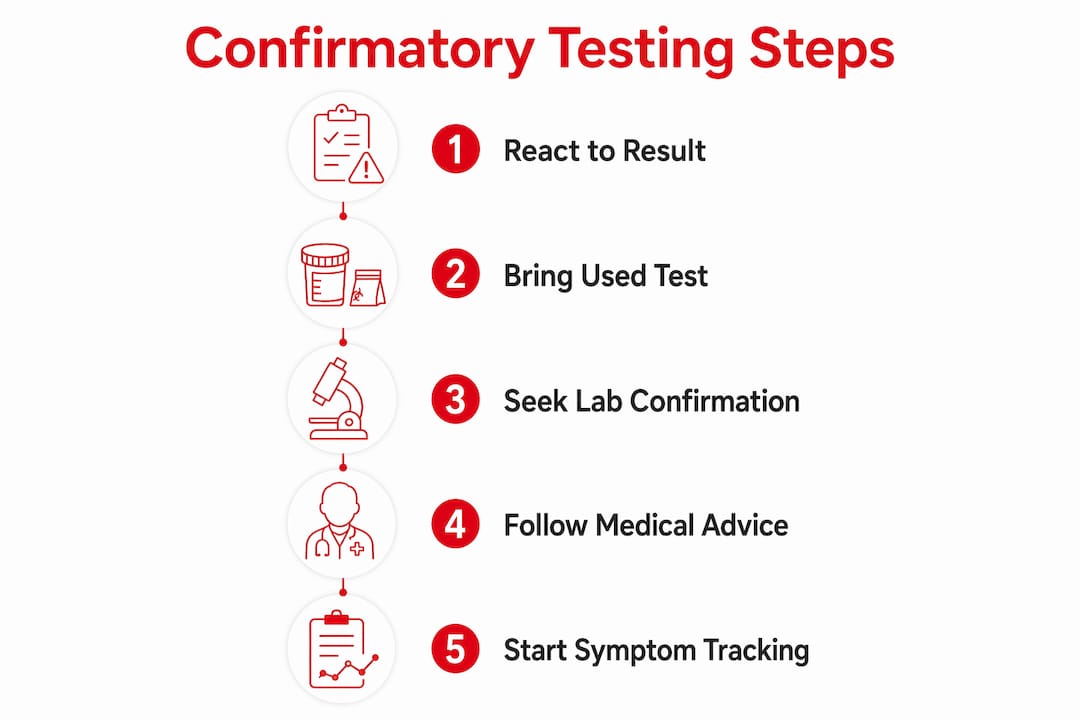
Laboratory confirmation uses entirely different methods than the initial screen. Confirmatory lab tests apply higher specificity and sensitivity standards, typically using gas chromatography-mass spectrometry (GC-MS) or high-performance liquid chromatography (HPLC). These methods identify the exact substance and its concentration, not just a reactive signal. The result is a finding that holds up medically and legally.
Acting on a positive screening result without confirmation creates real risks:
- Premature treatment decisions based on an inaccurate result can cause harm.
- Legal or employment consequences triggered by an unconfirmed test may be contested but are difficult to reverse quickly.
- Emotional distress compounds when a person acts as though a diagnosis is final before it is confirmed.
- Repeated home testing delays the definitive lab visit and rarely resolves the uncertainty.
Pro Tip: If you receive a reactive result from a home drug test or rapid screening kit, bring the used test, its packaging, and the lot number to your confirmatory lab appointment. This information helps clinicians assess whether the initial result was likely accurate.
What to do immediately after a positive test result
The first 24 hours after a reactive result are the most important. Clear steps reduce confusion and protect everyone involved.
-
Contact a healthcare provider or clinic within 24 hours. Do not wait for symptoms to develop or worsen. Call your primary care physician, a local clinic, or a telehealth service. Explain that you received a reactive screening result and need confirmatory testing.
-
Pause activities that could put others at risk. CDC guidelines advise pausing sexual activity for at least 7 days after treatment begins for STIs. For drug test results in workplace or school contexts, pause safety-sensitive duties until the result is confirmed or cleared.
-
Gather your test documentation. Bring the original test kit, the result, and any instructions to your appointment. If the test was administered by an employer or school, request a copy of the chain-of-custody documentation.
-
Plan for confirmatory test logistics. Confirmatory lab tests may require a scheduled appointment. Ask the clinic what preparation is needed, such as fasting or avoiding certain medications beforehand.
-
Consider who else needs to know. For drug test results in employment or legal settings, you may have the right to disclose the result only to specific parties. For health-related results, partner notification services exist that allow confidential reporting without direct personal contact.
-
Write down your questions before the appointment. Clinicians move quickly. A written list of concerns ensures you leave with the information you need.
What you should avoid in this period is equally clear:
- Do not repeat the same home test multiple times hoping for a different result. Repeat home testing delays definitive care and rarely changes the outcome.
- Do not search for reassurance on social media or unverified websites. Misinformation about test accuracy is widespread.
- Do not make permanent decisions, whether personal, legal, or medical, until the confirmatory result is in hand.
How do you cope with the emotional impact of a positive result?
Fear is the most common immediate response to a positive test result. That reaction is normal and does not mean you are handling the situation poorly. Clinical protocols emphasize that a positive result is a prompt for care, not a moral judgment. Treating it as information rather than a verdict changes how you respond.
Practical coping strategies include:
- Talk to someone you trust. A family member, close friend, or counselor can provide perspective and reduce the isolation that often follows a reactive result.
- Contact a mental health professional. Anxiety after a positive test is common enough that many clinics offer same-day counseling referrals alongside medical appointments.
- Use verified health resources. The CDC, the Substance Abuse and Mental Health Services Administration (SAMHSA), and your state health department publish clear, accurate guidance for most test scenarios.
- Avoid the cycle of repeated testing. The biggest obstacle after a reactive result is fear-driven inaction. Seeking professional confirmation breaks that cycle faster than any number of home tests.
Pro Tip: Parents of minors who receive a positive drug test result should approach the conversation with curiosity before judgment. Ask what is going on in your child’s life before discussing consequences. That approach produces more honest answers and better outcomes.
For parents specifically, a positive result on a minor’s drug test carries its own emotional weight. The instinct to act immediately is understandable. The better move is to confirm the result first, then have a structured conversation with your child’s pediatrician or a licensed counselor who specializes in adolescent substance use.
What are the legal and health implications of a positive test?
Positive drug test results carry different consequences depending on the context. Understanding those contexts prevents overreaction and protects your rights.
In employment settings, a confirmed positive drug test can trigger suspension, termination, or mandatory referral to an employee assistance program (EAP). Most employers are required to follow a Medical Review Officer (MRO) process before any adverse action is taken. The MRO reviews the result and contacts the employee to discuss legitimate medical explanations, such as a valid prescription. Knowing how to manage drug test results in the workplace protects you during this process.
In school settings, positive results for minors are typically handled under the school’s student conduct policy. Parents have the right to request a confirmatory test and to have a counselor or advocate present during any disciplinary meeting.
In legal contexts, a positive drug test result used as evidence must meet chain-of-custody standards. If it does not, the result may be challengeable. Consult an attorney before making any statements if a positive result is part of a legal proceeding.
Key rights and resources to know:
- Confidentiality protections under HIPAA apply to medical test results. Employers generally cannot access your medical records without consent.
- SAMHSA’s National Helpline (1-800-662-4357) provides free, confidential referrals for substance use treatment and support.
- Legal aid organizations in most states offer free consultations for individuals facing adverse employment or legal action tied to a drug test result.
- School counselors and student advocacy offices can represent minors in disciplinary proceedings.
How should you monitor symptoms and plan for follow-up care?
Ongoing care after a positive result depends on what the confirmatory test finds. If the confirmatory test is negative, no further action is typically needed beyond understanding why the initial screen was reactive. If the confirmatory test is positive, a treatment plan begins.

| Care Step | Action Required | Timeline |
|---|---|---|
| Symptom tracking | Log daily changes in a written or digital journal | Starting day one |
| Treatment adherence | Follow the prescribed plan without skipping doses | Per clinician guidance |
| Follow-up appointment | Schedule within the timeframe your provider specifies | Typically 2–4 weeks |
| Retest scheduling | Confirm resolution or check for reinfection | As recommended |
| Communication with provider | Report any new or worsening symptoms immediately | Ongoing |
Regular symptom tracking and treatment adherence are standard public health practices for effective management after a confirmed positive result. Skipping doses or missing follow-up appointments is the most common reason treatment fails. Set phone reminders for every dose and every appointment. Bring your symptom log to each visit so your provider has accurate data.
Learning to interpret lab drug test results accurately also helps you ask better questions at follow-up appointments and understand what the numbers actually mean for your health.
Key Takeaways
Dealing with positive results effectively requires immediate confirmatory testing, calm emotional management, and clear knowledge of your legal rights before taking any permanent action.
| Point | Details |
|---|---|
| Confirm before acting | A reactive screening result is not a final diagnosis; lab confirmation is required. |
| Act within 24 hours | Contact a healthcare provider or clinic the same day you receive a reactive result. |
| Avoid repeat home testing | Repeating the same home test delays definitive care and does not resolve uncertainty. |
| Know your legal rights | MRO review, HIPAA protections, and chain-of-custody standards protect you in employment and legal contexts. |
| Track and follow through | Symptom logs and treatment adherence are the two factors most directly tied to successful outcomes. |
Facing a positive result with confidence
The most damaging thing I have seen people do after a reactive test result is nothing. They freeze. They repeat the home test four times. They spend three days reading forums instead of calling a clinic. That delay does not protect them. It just extends the period of uncertainty while the window for early, effective care narrows.
A positive result is information. It is not a sentence. The clinical system exists precisely to handle this situation, and it handles it well when you engage with it promptly. I have seen parents who were certain their child’s positive drug test meant the worst, only to find the confirmatory lab result was negative due to a cross-reactive supplement. I have also seen adults who delayed confirmation for weeks out of fear, making their situation significantly harder to manage. The outcome in both cases was shaped entirely by how quickly the person moved from reactive to confirmed.
The practical advice I give everyone in this situation is the same: treat the reactive result as a referral, not a verdict. Your job in the next 24 hours is to get to a professional who can confirm or clear the result. Everything else, the emotional processing, the legal questions, the conversations with family, follows from that one step. Do not skip it.
— Justin
Reliable drug test kits for accurate screening and follow-up
When a positive result raises questions, the quality of the initial test matters. Rapidtestcup offers a full range of CLIA waived, FDA-approved drug testing products designed for accurate, reliable screening in personal, professional, and clinical settings.
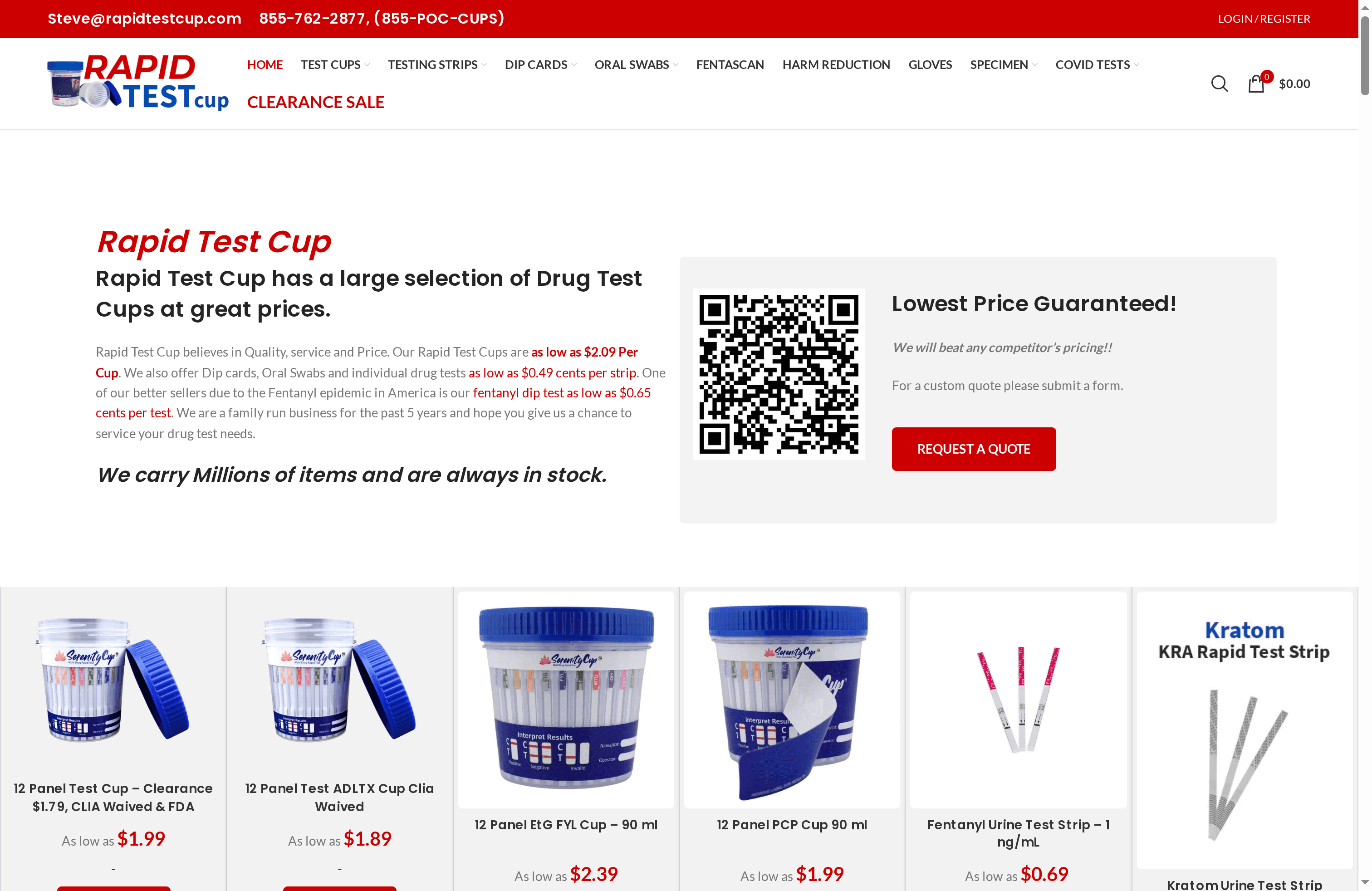
Whether you need a urine drug test kit for personal use or a multi-panel solution for a workplace or school program, Rapidtestcup’s catalog covers single-substance strips through 18-panel cups with adulterant detection. Choosing the right test from the start reduces the chance of a misleading result and makes the confirmatory process faster. Use Rapidtestcup’s drug test kit selection guide to find the right product for your specific situation.
FAQ
What does a positive drug test result actually mean?
A positive screening result means the test detected a substance above its cutoff threshold. It is not a confirmed diagnosis until a laboratory confirmatory test, typically using GC-MS or HPLC, verifies the finding.
How soon should I get a confirmatory test after a positive result?
The CDC recommends confirmatory testing within 24 hours of a reactive result. Acting within that window gives you the fastest path to accurate information and appropriate care.
Can a positive drug test result be wrong?
Yes. Timing, sample collection errors, and cross-reactivity with other substances all cause false positives. This is why laboratory confirmation is required before any medical or legal action is taken.
What are my rights if an employer acts on a positive drug test?
Most employers must complete a Medical Review Officer process before taking adverse action. You have the right to provide a medical explanation, such as a valid prescription, and to request a confirmatory test of the same sample.
Where can parents find support after a child’s positive drug test?
SAMHSA’s National Helpline (1-800-662-4357) provides free, confidential referrals for adolescent substance use counseling. A pediatrician or licensed adolescent counselor is the best first call for both confirmation and family guidance.