Blog
Best Specimen Collection Kits for Clinical and Forensic Use


For professional and forensic buyers, the best specimen collection kits share three non-negotiable traits: closed-system transfer, validated preservative ratios, and tamper-evident chain-of-custody packaging. Prioritize these three kit categories now:
- Closed-system urine collection kits (vacuum-evacuated tubes with integrated transfer lids) for clinical labs and occupational testing
- Validated oral-fluid swab kits with molecular-validated stabilizers for forensic and workplace drug screening
- Purpose-built blood microcollection kits for lab analysis or forensic toxicology
Before placing any order, confirm three trust signals: CLIA-waived or FDA-cleared labeling, closed-system or vacuum-tube transfer, and tamper-evident packaging with chain-of-custody documentation. If a vendor cannot produce all three, request a different product line or move on.
Pro Tip: Order a sample lot of 10–25 units and run them through your lab’s acceptance criteria before committing to bulk quantities. A kit that fails your analyzer’s volume or preservative requirements costs far more to replace than a trial order.
Key Takeaways
Closed-system collection, validated preservative ratios, and tamper-evident chain-of-custody packaging are the three non-negotiable features that separate professional-grade specimen collection kits from consumer-grade alternatives.
| Point | Details |
|---|---|
| Closed-system first | Require vacuum-evacuated or closed-transfer kits to prevent contamination and maintain preservative ratios. |
| Validate before bulk ordering | Trial 10–25 units through your lab’s acceptance criteria before committing to large quantities. |
| Match kit type to setting | Forensic, clinical, POC, and mail-in testing each require different kit architectures and regulatory status. |
| Require regulatory documentation | Confirm CLIA-waived or FDA-cleared status, COA per lot, and lot traceability before purchasing. |
| Rapidtestcup for bulk supply | Rapidtestcup stocks vacuum urine kits, multi-panel forensic cups, and specimen supplies with bulk pricing and COA support. |
Table of Contents
- What are the best specimen collection kits for your setting?
- Which kit types match your use case and sample type?
- How do you protect specimen integrity from collection to the lab?
- What U.S. regulatory signals should you require from vendors?
- Procurement checklist: pricing, bulk ordering, and vendor support
- Why Rapidtestcup recommends closed-system and forensic-ready kits
- Rapidtestcup specimen collection supplies: ready to order
- Sources
What are the best specimen collection kits for your setting?
Choosing the right kit starts with one question: what happens to the specimen after collection? The answer determines every other spec.
1. Define your intended use and setting first.
Clinical labs, forensic custody chains, point-of-care (POC) programs, and direct-to-patient mail-in testing each require different kit architectures. A CLIA-waived rapid cup that works perfectly in an occupational health clinic is not appropriate for a forensic arrest scenario requiring court-admissible documentation.
2. Confirm sample type compatibility.
Urine, oral fluid, blood, and swab specimens each have distinct collection requirements. Verify that the kit’s collection device, preservative, and transport container are validated for your specific matrix.
3. Check preservative type and volume ratios.
Incorrect urine-to-preservative ratios can invalidate culture results and molecular assays. Require manufacturer documentation of validated volume ranges for every preservative tube in the kit.
4. Require closed-system transfer.
Closed-system collection kits reduce specimen exposure and contamination and help maintain correct preservative ratios during transport. Open-pour transfers from consumer-grade cups introduce contamination risk that can invalidate downstream culture and molecular assays.
5. Verify CLIA/FDA regulatory status.
For POC use, CLIA-waived labeling is required. For forensic or clinical lab use, confirm FDA 510(k) clearance or PMA approval where applicable.
6. Confirm analyzer and platform compatibility.
Ask the vendor which laboratory analyzers the kit has been validated against. A kit validated only for one platform may not transfer cleanly to your instrument.
7. Review shelf life and storage requirements.
Some kits require refrigerated storage; others are ambient-stable. Confirm shelf life at your facility’s storage temperature before ordering.
8. Ask about lot traceability and certificate of analysis (COA).
Every lot should ship with a COA. Lot traceability is a minimum requirement for forensic admissibility and lab accreditation.
Research on home self-testing kits found mixed performance across 20 evaluated tests, including some that did not meet manufacturers’ accuracy claims. That finding applies directly to procurement: never select a kit for clinical decisions based on marketing copy alone. Require validation data.
Pro Tip: Ask vendors for sample performance data from a third-party lab, not just internal QC reports. Independent validation carries more weight in forensic proceedings and accreditation reviews.
Key procurement questions to send vendors before ordering:
- What third-party validation data exists for this kit?
- What is the lot-to-lot variability in preservative fill volume?
- What are the bulk pricing tiers and minimum order quantities?
- What is the standard lead time, and do you stock or drop-ship?
- What post-sale technical support is available (training, MSDS, disposal guidance)?
Which kit types match your use case and sample type?
The types of specimen collection that matter most for professional buyers fall into four families, each suited to a distinct setting.
Clinical lab (urine culture and urinalysis): Vacuum-evacuated urine collection kits with integrated transfer lids and preservative tubes are the standard. Multi-tube configurations (2-tube or 3-tube) allow simultaneous urinalysis and culture/sensitivity testing from a single collection event. The closed transfer mechanism prevents contamination and maintains the urine-to-preservative ratio the assay requires.
Forensic and workplace drug testing: Tamper-evident urine cups with integrated adulteration detection strips, chain-of-custody documentation, and temperature strips are the baseline. Oral-fluid swab kits with validated stabilizers extend coverage to situations where observed urine collection is impractical. For forensic use, every kit must include a chain-of-custody form and tamper-evident seal.
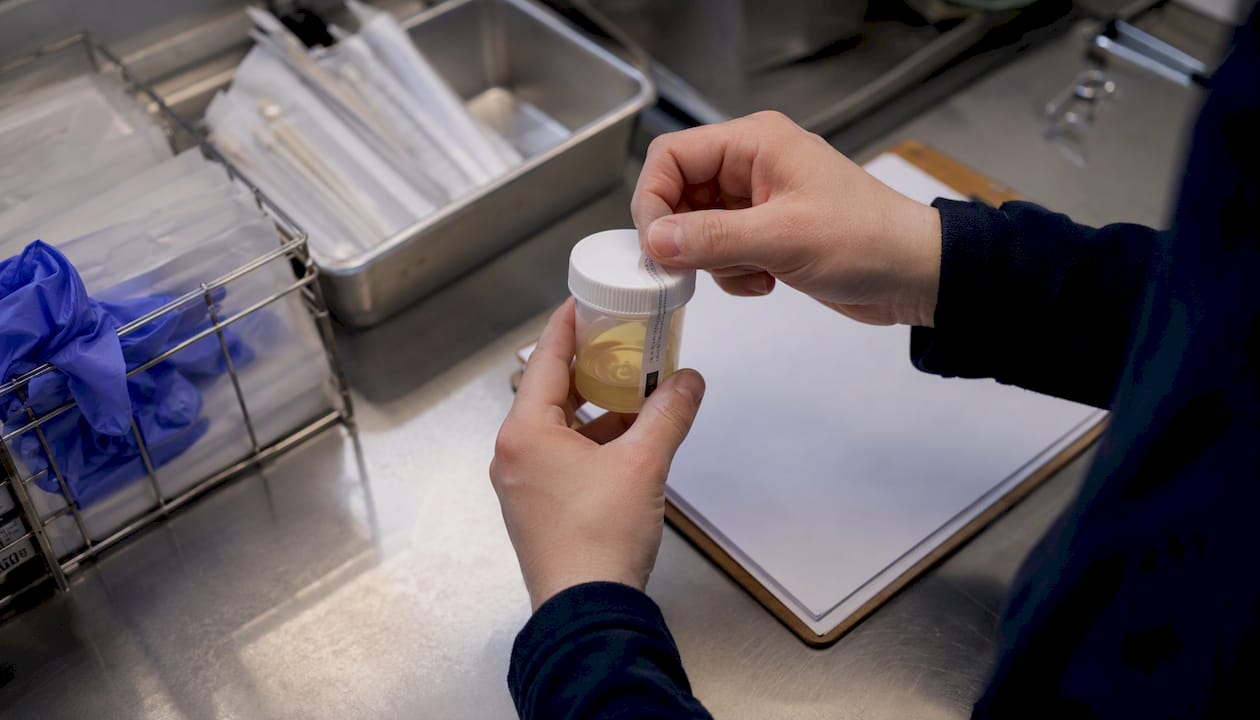
Point-of-care (POC): CLIA-waived rapid test cups or strip combos allow on-site results without sending specimens to a reference lab. These kits combine collection and screening in one device, reducing handling steps and pre-analytical error.
Direct-to-patient / mail-in testing: Volumetric first-void urine devices validated for molecular STI testing include prefilled stabilizing solutions that allow ambient transport for several days without temperature control, provided the device carries FDA 510(k) clearance for that indication.
| Kit Family | Intended Use | Sample Type | Containment | Regulatory Status | Adulteration Features | Cost Shape | Storage/Transport |
|---|---|---|---|---|---|---|---|
| Closed-system vacuum urine kit | Clinical lab, urinalysis/culture | Urine | Closed transfer, preservative tubes | FDA-cleared | Not standard | Moderate per kit | Ambient or refrigerated per tube type |
| Tamper-evident urine cup | Forensic, workplace drug testing | Urine | Tamper seal, temp strip | CLIA-waived (POC) | Integrated strips | Low–moderate | Ambient |
| Oral-fluid swab kit | Forensic, workplace | Oral fluid | Sealed swab tube | CLIA-waived or lab-use | Limited | Moderate | Ambient, per stabilizer |
| Blood microcollection kit | Forensic toxicology, clinical lab | Blood | Closed microtainer | FDA-cleared | Not standard | Higher per kit | Refrigerated |
| First-void volumetric urine device | Direct-to-patient, STI molecular | Urine | Prefilled stabilizer, sealed | FDA 510(k) cleared | Not standard | Higher per kit | Ambient (limited days) |
Common use-case scenarios:
- Forensic arrest: Tamper-evident urine cup with integrated adulteration strips, temperature indicator, and chain-of-custody form. See Rapidtestcup’s forensic drug testing methods resource for documentation requirements.
- Clinic STI screening: First-void volumetric urine device with validated stabilizer, or swab-based transport media validated for the target pathogen.
- Occupational health testing: CLIA-waived multi-panel urine cup with adulteration detection; bulk pricing matters here because volume is high.
- Decentralized/mail-in testing: Ambient-stable first-void device with prefilled stabilizer and clear patient instructions; confirm the device is validated for your molecular platform.
Pro Tip: For immigration medical exam laboratory testing, specimen handling requirements are defined by the exam protocol. Review the laboratory testing requirements for those workflows before selecting a transport kit.
How do you protect specimen integrity from collection to the lab?
Closed-system design and validated stabilizers matter more than packaging aesthetics because they directly determine whether the specimen your lab receives matches what was collected. A visually appealing kit with an open-pour transfer step can introduce contamination that invalidates the result entirely.
Evacuated, closed-system transfer devices reduce contamination risk and maintain sample stability by eliminating the open-air transfer step. For urine culture specifically, incorrect preservative ratios caused by overfilling or underfilling a tube can produce false-positive bacterial growth or suppress true positives.
Handling and transport best practices:
- Label specimens at the point of collection, not at the processing bench.
- Log lot number, collection time, and collector ID on the chain-of-custody form before the specimen leaves the collection area.
- Follow the manufacturer’s ambient transport window; do not assume all kits are equivalent.
- Use temperature monitoring tools and documented SOPs to protect integrity and meet lab acceptance criteria. Specimen temperature monitoring reduces rejection rates caused by improper transport conditions.
- For refrigerated specimens, use validated cold-chain packaging; do not rely on standard shipping envelopes.
| Kit Type | Ambient Transport Window | Stabilized Storage | Temperature Range |
|---|---|---|---|
| Closed-system vacuum urine (preservative tube) | Per tube type (confirm with COA) | Per manufacturer spec | Ambient or 2–8°C |
| Oral-fluid swab with validated stabilizer | Per manufacturer spec | Per manufacturer spec | Ambient (2°C–25°C typical) |
| First-void volumetric urine (stabilizer included) | Several days ambient | Extended per manufacturer | Ambient (validated range) |
| Blood microcollection | Short (hours, ambient) | Days refrigerated | 2–8°C |
Pro Tip: Build a one-page SOP for each kit type you use, covering collection steps, labeling, transport conditions, and rejection criteria. Collectors who follow a written SOP produce fewer pre-analytical errors than those relying on memory.
What U.S. regulatory signals should you require from vendors?
Start with CLIA and FDA status, then layer in third-party validation relevant to your use case.
For POC testing, CLIA-waived labeling is the minimum. For clinical lab or forensic use, require FDA 510(k) clearance or PMA approval where applicable. Neither label is interchangeable: a CLIA-waived kit cleared for POC screening is not automatically validated for forensic chain-of-custody use.
Trust-signal checklist for RFPs and purchase orders:
- CLIA-waived certificate (for POC use) or FDA 510(k)/PMA documentation (for lab/forensic use)
- Certificate of Analysis (COA) for each lot
- Lot traceability documentation
- Third-party or independent lab validation data
- Chain-of-custody readiness statement (for forensic use)
- Tamper-evident packaging certification
- Shelf-life and storage validation data
Pro Tip: Copy this checklist into your vendor RFP template. Any vendor who cannot supply all items for their product category is not ready for professional or forensic procurement.
Procurement checklist: pricing, bulk ordering, and vendor support
Budget across three tiers before you commit: a trial/sample lot to validate with your lab, an operational per-kit cost for ongoing use, and a stockpile quantity for supply continuity.
Ordering considerations:
- Per-kit costs vary by kit type and panel count; multi-panel forensic cups with adulteration detection typically cost more per unit than basic urine cups.
- Bulk discount thresholds commonly start at case quantities; ask for the price break schedule in writing.
- Confirm minimum order quantities (MOQs) before requesting a quote; some forensic kits carry higher MOQs than standard POC cups.
- Ask whether the vendor stocks product domestically or drop-ships from a distributor; domestic stock means shorter lead times.
- Confirm technical support availability: training materials, MSDS sheets, and disposal guidance should be included or available on request.
Procurement questions to email vendors:
- What are your price tiers at 100, 500, 1,000, and 5,000 units?
- What is your standard lead time from order to delivery?
- Do you provide COAs with each shipment?
- What is your return or replacement policy for defective lots?
- Do you offer technical support for analyzer compatibility questions?
- Can you provide disposal guidance and MSDS documentation?
Kitted specimen collection products that bundle collection devices, packaging, instructions, and compliant labeling reduce pre-analytical errors and cut time spent sourcing individual components separately.
Why Rapidtestcup recommends closed-system and forensic-ready kits
The kit categories covered in this guide reflect what professional buyers actually need when results carry legal, clinical, or occupational consequences. Closed-system collection, validated stabilizers, and forensic chain-of-custody controls are not premium add-ons; they are the baseline for defensible results. Rapidtestcup’s product categories are built around that baseline: vacuum urine collection kits, tamper-evident multi-panel drug test cups with integrated adulteration detection, oral swabs, and supporting specimen collection supplies, all available with bulk pricing and COA documentation. The specimen collection tools guide covers the full range of available categories for clinical and forensic workflows.
Rapidtestcup specimen collection supplies: ready to order
Rapidtestcup stocks the kit categories this guide recommends, at pricing that works for both trial orders and high-volume programs. Sterile vacuum urine cups and vacutainer-style urine kits cover closed-system clinical and occupational needs. For forensic and workplace programs, the 18-panel drug test cup with adulterant detection delivers multi-panel screening with integrated adulteration controls in one cup. Bulk pricing, COAs, and technical support are available on request.
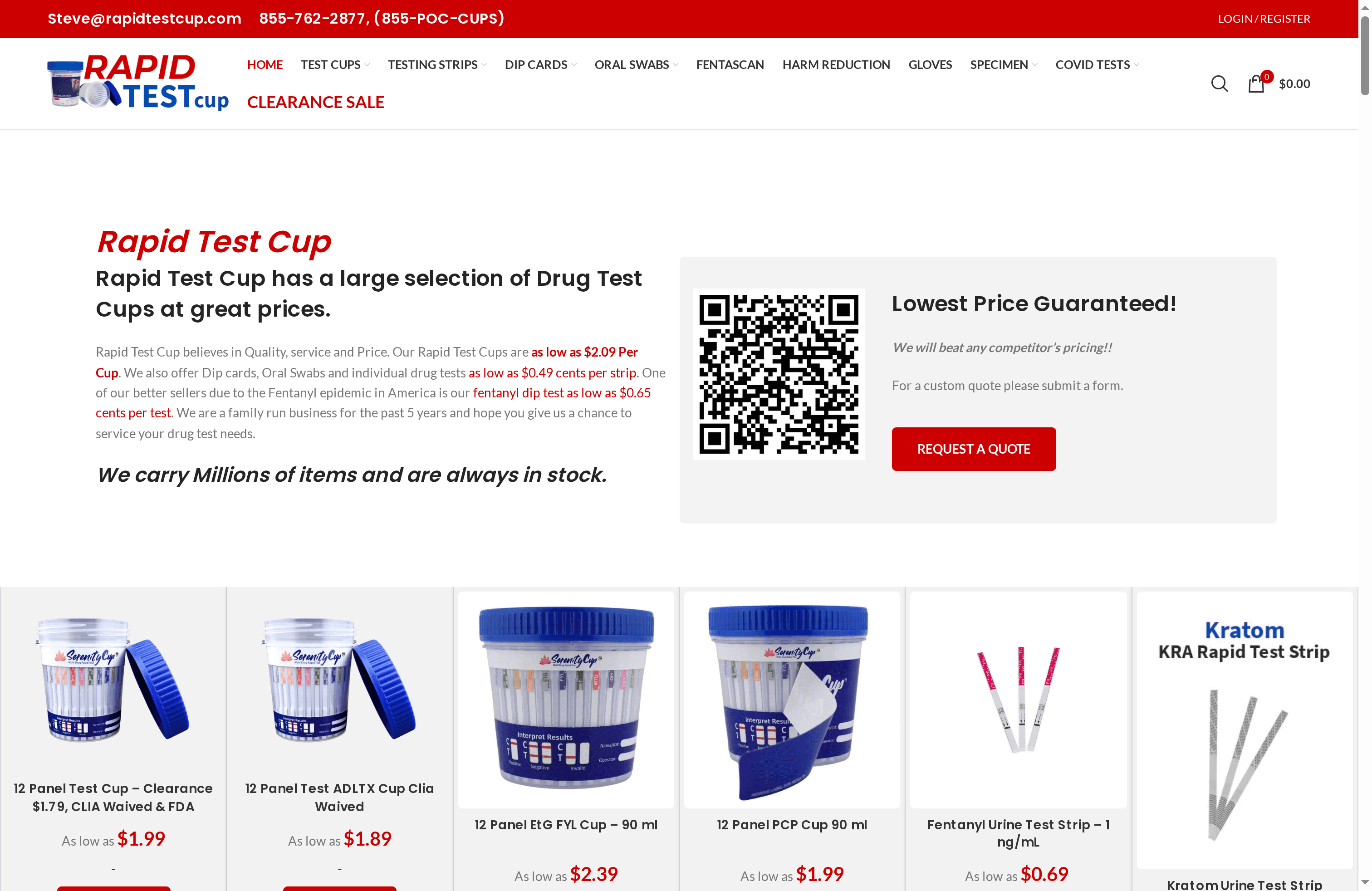
Contact Rapidtestcup to request a sample lot, get a bulk quote, or ask a compatibility question before your next order.
Sources
- Urinalysis / urine culture collection update (Northwell Physicians)
- Home self-testing kits: helpful or harmful? (BJGP)