Blog
Two Chamber Drug Test Cup: What It Means and How to Use One


A “two chamber drug test cup” is not one standard product. Buyers use the phrase for three different things: a cup that holds the urine in two separate compartments (a split specimen), a cup with a built-in test chamber plus a collection chamber, or a two-panel test that screens for just two drugs. This guide separates them, shows how to read a cup result, and explains when a preliminary positive needs a laboratory.
TL;DR
- “Two chamber” can mean a split-specimen container, an integrated collect-and-test cup, or (mistakenly) a two-panel test. Check the product page for which one you are buying.
- Every instant urine cup is a screen. A positive is preliminary and should be confirmed by a lab method such as GC/MS or LC/MS.
- Read the result inside the window on the package insert, and check the control line before you read anything else.
- Regulated workplace and DOT testing uses a lab-bound split specimen with Bottle A and Bottle B and a chain-of-custody form, not an on-site cup alone.
- Choose the panel by the drugs you need to find, not by the number on the box.
Table of Contents
- What “two chamber” actually means
- How an integrated drug test cup works
- How to use a cup and read the result
- Why a positive needs confirmation
- Split specimens and chain of custody
- Choosing the right panel
- Our perspective
- Order cups for your program
- FAQ
- Sources
What “two chamber” actually means
The phrase has no formal definition in FDA device listings, so sellers and buyers fill it in themselves. Here are the three meanings you will run into.
| What people mean | What it is | Typical use |
|---|---|---|
| Split-specimen container | One cup or container that divides the urine into two sealed portions, one for testing and one kept for retesting | Forensic and formal collections |
| Integrated collect-and-test cup | A cup where the collection chamber and the test strips sit in one sealed device | Workplace, clinic, treatment and home screening |
| Two-panel test | A test that looks for only two drugs, for example THC and one other | Narrow, targeted screens |
The split design is real. A published U.S. patent describes a multi-chambered urine container with an inner and outer wall, so that a cap seals the specimen into separate concentric chambers and a second portion is preserved for later testing. That idea is what most people have in mind when they say “two chamber.”
The second meaning is the cup most buyers end up using. The urine goes into the cup, you close it, and the test strips inside react to the sample. You do not pour urine onto a separate device.
The third meaning is a mix-up of words. A chamber is part of the container. A panel is one drug (or drug class) the test looks for. A 5-panel cup screens for five targets, a 15-panel cup for fifteen, and neither tells you how many compartments the cup has.
How an integrated drug test cup works
Most point-of-care urine cups are lateral flow immunoassays. FDA review documents for one multi-drug cup describe the tests as competitive binding, lateral flow immunochromatographic assays that detect multiple targets in human urine at set cutoff concentrations.
In plain terms:
- Urine moves along a strip for each drug.
- If a drug is present above its cutoff, it occupies the binding sites and the test line for that drug does not form.
- If the drug is absent or below the cutoff, the line forms.
- A separate control line shows the test ran correctly.
That is why one faint line can still count. A visible line in the test area, even a light one, means the sample is negative for that drug at that cutoff. A missing line in the test area means a presumptive positive.
Cutoff levels
A cutoff is the concentration at which the test flips from negative to positive. The same FDA documentation lists cutoffs for one cup, including marijuana at 50 ng/mL, cocaine at 300 ng/mL, morphine at 300 ng/mL, oxycodone at 100 ng/mL, and amphetamine and methamphetamine at 1000 ng/mL. Other manufacturers can use different cutoffs, so read the insert for the cup in your hand.
A cutoff also sets the detection window, meaning how long after use a drug can still register. Our guide to substance detection windows walks through how that varies by substance.
How to use a cup and read the result
Follow the insert that comes with your cup. The steps below are the general sequence for an integrated click-top style cup.
- Check the package. Confirm the expiration date and that the pouch is sealed. Bring the cup to room temperature if it was stored cold.
- Prepare the donor and the area. Have the donor wash their hands and keep belongings out of the collection area, so the specimen cannot be diluted or swapped.
- Collect the urine. Have the donor fill the cup to the fill line marked on it. Close the lid firmly.
- Check the temperature strip, if the cup has one. Read it within the time on the insert. Adulterant strips, where included, are read the same way.
- Start the timer. Most cups state a reading window of about five minutes, with results valid up to a limit given on the insert. Do not read results after the window closes, because lines can change.
- Read the control line first. If the control line is missing, the test is invalid. Discard it and retest with a new cup.
- Read each drug strip. A line in the test area means negative for that drug. No line means a presumptive positive.
- Record it. Write down the lot number, the time and the result for every strip.
What an invalid result means
An invalid result means the test did not run properly. Typical causes are too little urine, a cup read too early, or a defective device. It says nothing about the donor. Retest with a fresh cup and a new sample.
Why a positive needs confirmation
Instant cups are designed for screening. The FDA review for the cup above states that the test provides only preliminary results and that a more specific method such as GC/MS or LC/MS is needed to confirm.
Clinical sources say the same thing. A physician-organization article on point-of-care testing notes that immunoassay results are always considered presumptive. A large laboratory’s policy document separates presumptive testing, which reports positive or negative, from definitive testing, which names specific substances and reports concentrations.
For home users, FDA says that if a test suggests drugs may be present, you should send the urine to a laboratory to confirm, because foods, supplements, beverages or medicines can affect results.

Medications and false positives
Certain prescription drugs can trigger a positive. The FDA documentation for the cup above notes that buprenorphine, nortriptyline, oxazepam, secobarbital, propoxyphene and oxycodone can produce positives at or above prescribed doses, and that the test does not distinguish prescribed use from abuse. If a donor takes any prescription, record it and pass it to the reviewing clinician or medical review officer. Do not treat a screen as a verdict.
A negative is not proof of no use
FDA also points out that a negative home result cannot guarantee that a person did not use drugs. The wrong panel, or a sample collected too early or too late, can miss a drug. That is a reason to pick the panel carefully.
Split specimens and chain of custody
If you ask for “two chambers” because you need a retestable sample, you are describing a regulated collection, and it works differently from an on-site screen.
For federal programs, each specimen is collected as a split. HHS guidance explains that urine is poured from the collection container into two bottles labeled A (primary) and B (split), sealed with tamper-evident seals, and tracked on the Federal Custody and Control Form.
The volumes are set. SAMHSA’s collection manual says the collector must pour at least 30 mL into Bottle A and at least 15 mL into Bottle B in the donor’s presence. For DOT-regulated testing, collectors should ship sealed specimens and the form to the HHS-certified lab within 24 hours or the next business day.

For non-regulated programs such as sober living houses and treatment programs, the practice is usually an on-site screen followed by lab confirmation of non-negatives. If you want a picture of how a residence sets those rules, read this example of sober living drug testing policies. Large lab providers describe the same flow: non-negative specimens go to the lab for confirmation, negatives are reported.
Whether a screen alone is enough for your situation depends on your policy and any applicable federal, state or contract rules. When in doubt, ask your program’s medical review officer or counsel before you act on a result.
Choosing the right panel
Once you know that “chamber” and “panel” are different, panel choice is the decision that matters. Match the cup to the substances you actually need to find.
- Standard screening. Our 5-panel rapid drug test cup covers the common illicit drugs and suits a broad first screen.
- Wider coverage with newer targets. Cups such as the 15 panel cup with ETG, fentanyl and tramadol add alcohol metabolite, fentanyl and tramadol, with adulterant checks.
- Maximum coverage. The 18 panel cup with kratom, K2, tramadol, ETG and fentanyl is built for programs that need a broad screen in one cup.
A lab-side view is worth keeping in mind: a narrow, risk-based profile can be better than ordering everything. One laboratory document says a profile responds to the clinical risks of a particular patient, while a panel may encourage unnecessary testing. Pick the drugs that match your risk, then buy the cup that covers them.
If you are weighing cups against other formats, see our cup vs dip card comparison and our urine drug test cup comparison.
Our perspective
Most of the questions we get about “two chamber” cups are really two questions: how do I get a clean, tamper-resistant collection, and how do I get a result I can act on?
Our answer is to start with the panel. Decide which substances matter for your program, then pick an integrated, click-top cup that covers them, with adulterant checks where sample integrity matters. We stock CLIA waived, FDA-cleared options in a range of panel sizes, and we price them to make bulk ordering practical for clinics, treatment centers, employers and labs.
Then build the workflow around it. Screen on site, read inside the window, record the lot and the time, and send non-negative samples to a lab for confirmation. That gives you speed on the day and certainty when it counts.
Justin
Order cups for your program
We are a family business, and we offer same-day shipping, bulk discounts and custom quotes on drug test cups, dip cards, strips and oral swabs. Browse every panel size in our drug test shop, or ask for a quote if you are ordering for a clinic, lab or workplace program.
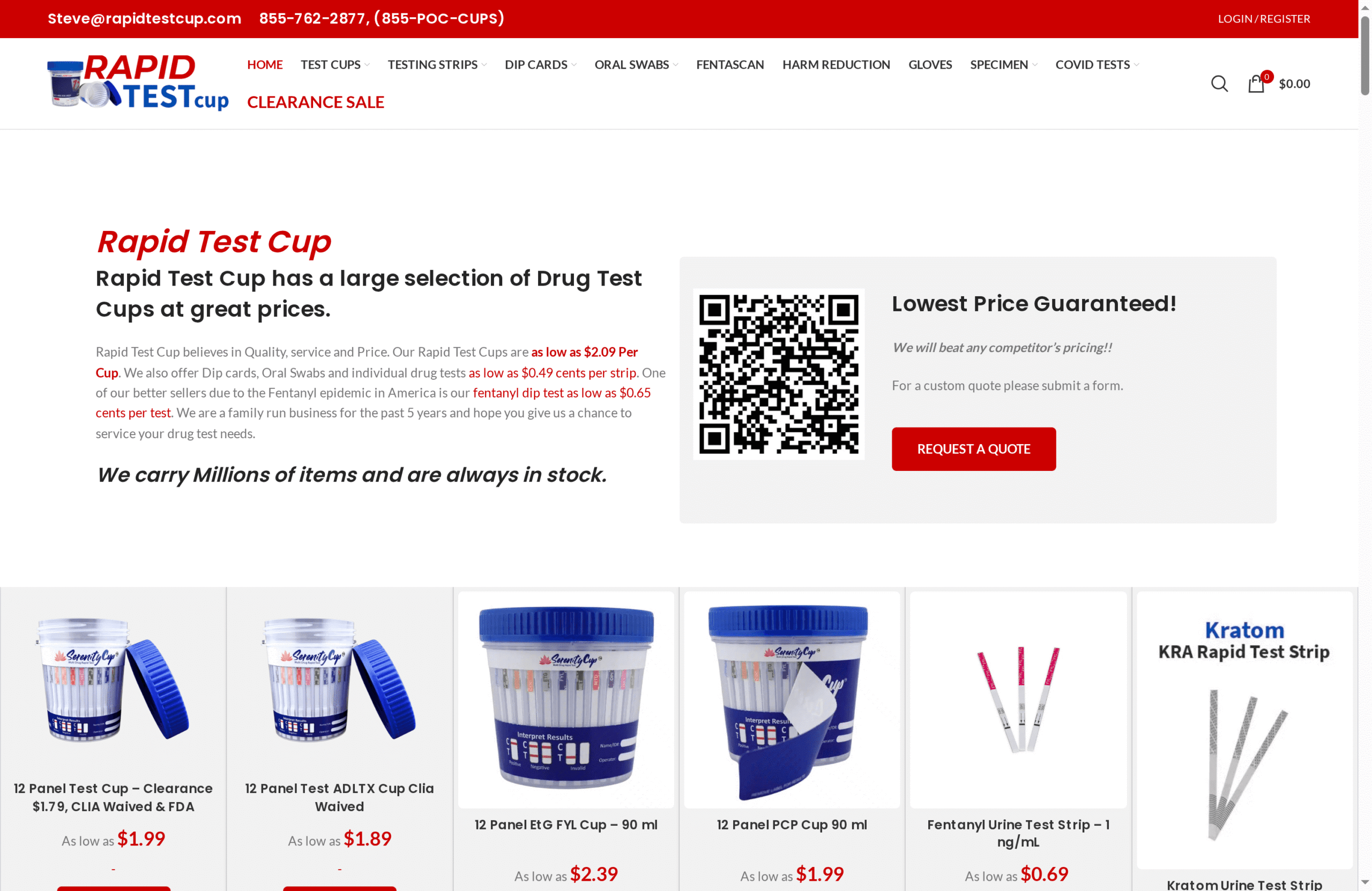
If you are not sure which panel fits, start with the 5-panel cup for a general screen, or the 15-panel and 18-panel cups when your program also needs to look for fentanyl, alcohol metabolite or newer substances.
FAQ
What is a two chamber drug test cup?
There is no single definition. It usually means either a split-specimen container that keeps a second portion sealed for retesting, or an integrated cup with a collection chamber and built-in test strips. Check the product page to see which design you are buying.
Is a two chamber cup the same as a 2 panel drug test?
No. Chambers are compartments in the container, and panels are the drugs the test looks for. A 2 panel test screens for two drugs, while a cup of any panel size can have one chamber or more.
How long do I wait to read a drug test cup?
Read it inside the window printed on your cup’s insert, commonly around five minutes, and do not read it after the stated limit. Check the control line first. If it is missing, the result is invalid and you should retest with a new cup.
Do I need a lab test after a positive cup result?
Yes, treat it as preliminary. FDA and clinical sources say a positive on an instant test should be confirmed by a laboratory using a method like GC/MS or LC/MS, particularly because medications and foods can affect results.
Sources
- FDA 510(k) substantial equivalence determination for a multi-drug test cup
- FDA: Drugs of Abuse Home Use Test
- ACOFP: Urine Drug Screening, Point of Care Testing
- Quest Diagnostics: Urine Drug Testing
- Quest Diagnostics: Drug Testing Solutions At-A-Glance
- HHS Medical Review Officer Guidance Manual for Federal Workplace Drug Testing Programs
- SAMHSA Urine Collection Site Manual, 2022
- U.S. DOT: Back to Basics for Urine Collectors
- U.S. patent: Multi-chambered urine specimen container