

Blog
Drug Test Cup Technology: Ensuring Accurate Results


Cutting-edge drug test cup technology now detects up to 17 substances in a single screening, setting a new benchmark for forensic accuracy in Canadian, American, and European labs. Global lab technicians depend on these advancements to tackle evolving substance abuse trends while meeting demanding compliance standards. This guide highlights key innovations, panel options, and operational benefits to help forensic professionals worldwide make informed decisions for more reliable and efficient drug testing.
Table of Contents
- Defining Drug Test Cup Technology Today
- Types and Panel Options for Substance Detection
- How Modern Drug Test Cups Operate
- Essential Features for Forensic Applications
- Compliance, Risks, and Common Testing Challenges
Key Takeaways
| Point | Details |
|---|---|
| Modern Drug Test Cups Enhance Screening | Contemporary drug test cup technology enables rapid, multi-panel screenings for up to 17 substances, improving accuracy in detection. |
| Variety of Panel Configurations | Drug test cups come in various configurations suitable for different environments, highlighting the need to select panels based on specific institutional requirements. |
| Forensic Reliability is Crucial | Forensic applications demand tests with high specificity and robust validation protocols to ensure accurate results and legal admissibility. |
| Compliance and Risk Management Are Key | Effective drug testing requires stringent compliance with regulatory standards to mitigate risks associated with errors in the testing process. |
Defining Drug Test Cup Technology Today
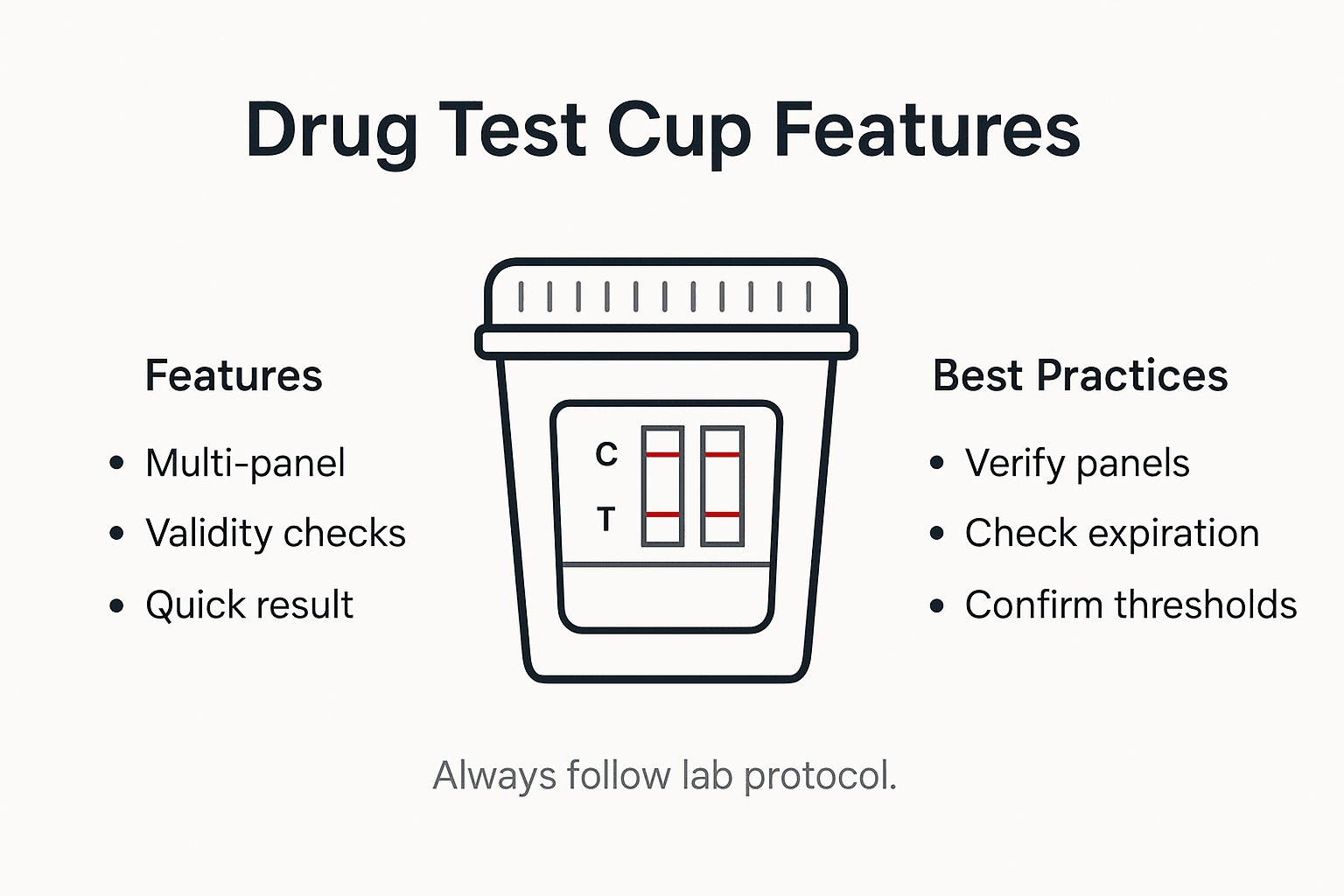
Modern drug test cup technology represents a sophisticated evolution in substance screening methodologies, transforming how forensic laboratories and medical professionals detect drug use. These advanced point-of-care devices have revolutionized rapid urine screening through multi-panel lateral flow immunoassay systems capable of identifying up to 17 different substances simultaneously.
The core innovation of contemporary drug test cups lies in their integrated design, which combines specimen collection and analytical capabilities into a single, streamlined device. Modern testing systems now incorporate built-in validity checks and ergonomic improvements that minimize human error and enhance result accuracy. These technological advancements address critical challenges in forensic and clinical settings by providing rapid, reliable qualitative results within minutes.
Key technological features of current drug test cup systems include:
- Multi-panel detection capabilities
- Automated result interpretation
- Expanded substance detection panels
- Precise cutoff concentrations for clinical and forensic applications
- Built-in specimen validity verification
Pro tip: Always verify the specific panel configuration and detection thresholds of your drug test cups to ensure they meet your precise screening requirements.
Types and Panel Options for Substance Detection
Drug test cup technologies offer an extensive range of panel configurations designed to meet diverse screening requirements across forensic, clinical, and workplace environments. Comparative analyses by international drug monitoring organizations reveal significant variations in panel design and substance detection capabilities, emphasizing the importance of selecting panels that align with specific institutional needs.
The most common drug test panel configurations range from basic 5-panel screenings to comprehensive 16-panel assessments. These panels typically categorize substances into distinct detection groups:
- Standard panels covering core substances like marijuana, cocaine, opiates
- Extended panels including synthetic drugs
- Specialized panels targeting emerging substance trends
- Forensic-grade panels with enhanced sensitivity and specificity
Key considerations for selecting appropriate drug test panels include regional substance abuse patterns, institutional screening objectives, and regulatory compliance requirements. Modern drug test cups now incorporate advanced detection technologies that provide nuanced insights into substance use, moving beyond simple positive or negative result frameworks.
Here is a summary highlighting how various drug test panel types align with different screening environments:
| Panel Type | Typical Use Case | Substances Detected |
|---|---|---|
| Basic 5-Panel | Workplace screening | Marijuana, cocaine, opiates |
| Extended 10-Panel | Clinical assessments | Adds amphetamines, benzodiazepines |
| Comprehensive 16-Panel | Forensic investigations | Includes synthetics, designer drugs |
| Specialized Panels | Emerging trends | Synthetic cannabinoids, opioids |
Pro tip: Regularly review and update your drug test panel configurations to ensure they reflect current substance abuse trends and maintain optimal detection capabilities.
How Modern Drug Test Cups Operate
Modern drug test cups represent a sophisticated technological approach to substance screening, utilizing advanced lateral flow chromatographic immunoassay principles that transform traditional drug detection methods. These innovative devices integrate sample collection and analysis into a single, streamlined process that minimizes human error and reduces potential contamination risks.
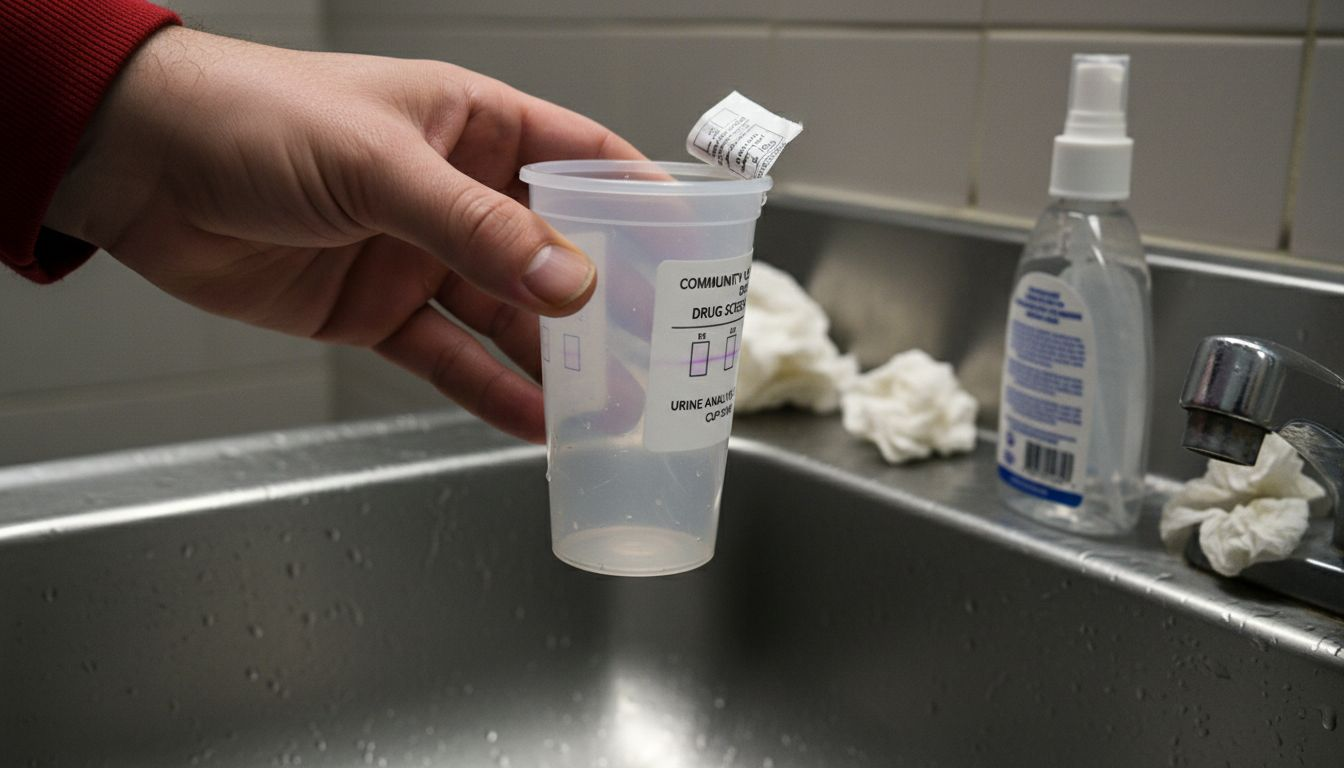
The operational mechanism of drug test cups follows a precise scientific workflow. When a urine sample is collected, it is introduced directly into the cup, where capillary action enables the liquid to migrate through specialized test strips. These strips contain specific antibodies designed to react with targeted drug metabolites, producing visible color-coded lines that indicate the presence or absence of substances. Typically, results become interpretable within approximately 5 minutes, with clear visual indicators distinguishing between negative, positive, and invalid test outcomes.
Key operational features of modern drug test cups include:
- Integrated collection and testing container
- Simultaneous multi-panel drug screening
- Built-in validity controls
- Minimal user intervention requirements
- Standardized result interpretation zones
Pro tip: Always check the expiration date and storage conditions of drug test cups to ensure optimal sensitivity and accuracy of results.
Essential Features for Forensic Applications
Forensic drug testing demands precision, reliability, and adaptability, with technological innovations continuously expanding detection capabilities. Recent advancements now integrate sophisticated biosensor technologies and algorithmic data processing to address complex forensic screening requirements, enabling more comprehensive and nuanced substance identification strategies.
The essential features for forensic drug test applications encompass several critical dimensions. Advanced drug test cups must demonstrate exceptional specificity in detecting both traditional and emerging substances, including synthetic cannabinoids, designer opioids, and rapidly evolving recreational drugs. This requires multi-layered detection mechanisms that can distinguish between structurally similar molecular compounds while maintaining forensically admissible result standards.
Key forensic-grade features include:
- Non-destructive sample analysis capabilities
- Advanced algorithmic result interpretation
- Rapid screening for emerging substance classes
- Environmentally sustainable testing methodologies
- Robust chain of custody documentation support
- Enhanced automation to minimize human intervention
Pro tip: Implement a comprehensive validation protocol that cross-references initial drug test cup results with confirmatory laboratory testing to ensure maximum forensic reliability.
Compliance, Risks, and Common Testing Challenges
Drug testing compliance demands meticulous attention to procedural standards, with comprehensive documentation protocols forming the foundation of legally defensible screening processes. Laboratory and forensic professionals must navigate a complex landscape of regulatory requirements, ensuring each step of the testing process maintains scientific integrity and legal admissibility.
The most critical risks in drug testing revolve around potential procedural vulnerabilities. Pre-analytical errors, sample adulteration, inconsistent chain-of-custody documentation, and inadequate confirmation testing can fundamentally compromise test results. These risks extend beyond mere technical failures—they represent potential legal and professional liabilities that can undermine entire testing programs.
The following table contrasts common drug testing risks with best-practice management strategies:
| Testing Risk | Potential Consequence | Effective Mitigation Strategy |
|---|---|---|
| Sample adulteration | False negative results | Use specimen validity checks |
| Chain-of-custody error | Legal results invalidated | Implement robust documentation protocol |
| Pre-analytical error | Compromised test accuracy | Train staff in proper collection steps |
| Lack of confirmation | Incorrect result reporting | Conduct dual-phase confirmation tests |
Key compliance and risk management strategies include:
- Implementing standardized specimen collection procedures
- Establishing secure sample storage protocols
- Developing comprehensive chain-of-custody documentation
- Conducting dual-phase confirmation testing
- Training personnel in forensic testing standards
- Maintaining strict confidentiality measures
Pro tip: Develop a rigorous internal audit system that regularly reviews and validates your drug testing protocols to proactively identify and mitigate potential compliance vulnerabilities.
Elevate Your Drug Testing Accuracy with Advanced Cup Technology
Ensuring reliable results and compliance in drug screening is a critical challenge highlighted throughout the article. Pain points like minimizing human error, addressing sample adulteration, and achieving multi-panel detection with built-in validity checks demand trusted solutions. At RapidTestCup.com, you can explore a wide range of FDA-approved, CLIA waived drug test cups designed to meet the exact standards forensic and clinical professionals require. Our products help you stay on top of evolving substance trends with comprehensive panels and easy-to-read results that reduce guesswork and risk.
Take control of your screening process today. Visit RapidTestCup to browse expert-reviewed drug test cups complete with specimen collection kits and adulteration detection. Start achieving accurate, compliant, and rapid drug tests now to protect your workplace or practice. Don’t wait until inaccurate results compromise your efforts. Act now to access quality products, quick shipping, and personalized service that help you fulfill your critical drug testing goals.
Frequently Asked Questions
What are the key features of modern drug test cups?
Modern drug test cups feature multi-panel detection capabilities, automated result interpretation, built-in validity checks, and ergonomic design to enhance accuracy and reduce human error.
How do drug test cups operate to provide results?
Drug test cups operate using lateral flow chromatographic immunoassay principles, where a urine sample is collected and introduced into the cup. Capillary action guides the sample through test strips that react with drug metabolites, providing results in approximately 5 minutes.
What are the different types of drug test panels available?
Drug test panels range from basic 5-panel screenings to comprehensive 16-panel tests, targeting various substances, including marijuana, cocaine, opiates, synthetic drugs, and emerging trends to fit diverse screening needs.
How can compliance issues impact drug testing accuracy?
Compliance issues can lead to procedural errors, sample adulteration, or inconsistent documentation, potentially compromising test results. Adhering to standardized protocols, maintaining chain-of-custody, and conducting confirmatory testing are essential for ensuring accuracy.