

Blog
Drug metabolites: The key to accurate drug testing

TL;DR:
- Relying solely on parent drug detection creates blind spots in drug testing because metabolites provide more reliable and longer detection windows. Understanding drug metabolism via liver enzymes is essential for accurate results, especially when using advanced mass spectrometry methods like LC-MS/MS and HRMS. Proper confirmation protocols and awareness of false positives, individual genetic variation, and matrix selection improve test validity and legal defensibility.
Relying solely on parent drug detection is one of the most common blind spots in professional drug testing. Most drugs are rapidly cleared from circulation, leaving their metabolites as the primary evidence of use. Drug metabolism primarily occurs in the liver via cytochrome P450 enzymes, converting lipophilic drugs into hydrophilic metabolites for excretion through phase I and phase II reactions. For labs, clinics, and law enforcement agencies, understanding these metabolic pathways is not optional. It determines the quality of your results, the strength of your legal documentation, and the clinical decisions that follow.
Table of Contents
- How drug metabolism works: Fundamentals for testing accuracy
- Analytical methods for metabolite detection: LC-MS/MS, HRMS, and beyond
- Pitfalls, false positives, and confirmatory strategies
- Edge cases and expert-level considerations: Species, genetics, and advanced strategies
- Practical applications: From forensic labs to clinical decision-making
- Our take: What most labs and agencies get wrong about metabolites
- Streamline accurate metabolite testing with RapidTestCup solutions
- Frequently asked questions
Key Takeaways
| Point | Details |
|---|---|
| Metabolites drive test validity | Accurate drug testing relies on detecting and interpreting drug metabolites more than parent drugs. |
| Advanced instrumentation is essential | LC-MS/MS and LC-HRMS methods provide the specificity and sensitivity to detect a wide metabolite range. |
| Confirmatory protocols reduce errors | Always follow up immunoassay screens with mass spectrometry to avoid false positives. |
| Genetic and matrix factors matter | Understand species, genetics, and biological matrices to ensure meaningful and defensible results. |
How drug metabolism works: Fundamentals for testing accuracy
Now that we’ve established why metabolites matter, let’s break down how the body actually transforms drugs and what this means for your drug testing workflow.
When a drug enters the body, it rarely exits unchanged. The liver is the primary site of biotransformation, and the process runs in two coordinated stages. Phase I reactions, driven by cytochrome P450 enzymes, introduce or expose reactive functional groups through oxidation, reduction, or hydrolysis. Phase II reactions follow by conjugating those groups with molecules like glucuronic acid or sulfate, making the metabolite water-soluble enough for renal excretion. The resulting compounds are often pharmacologically active, sometimes more so than the parent drug itself.
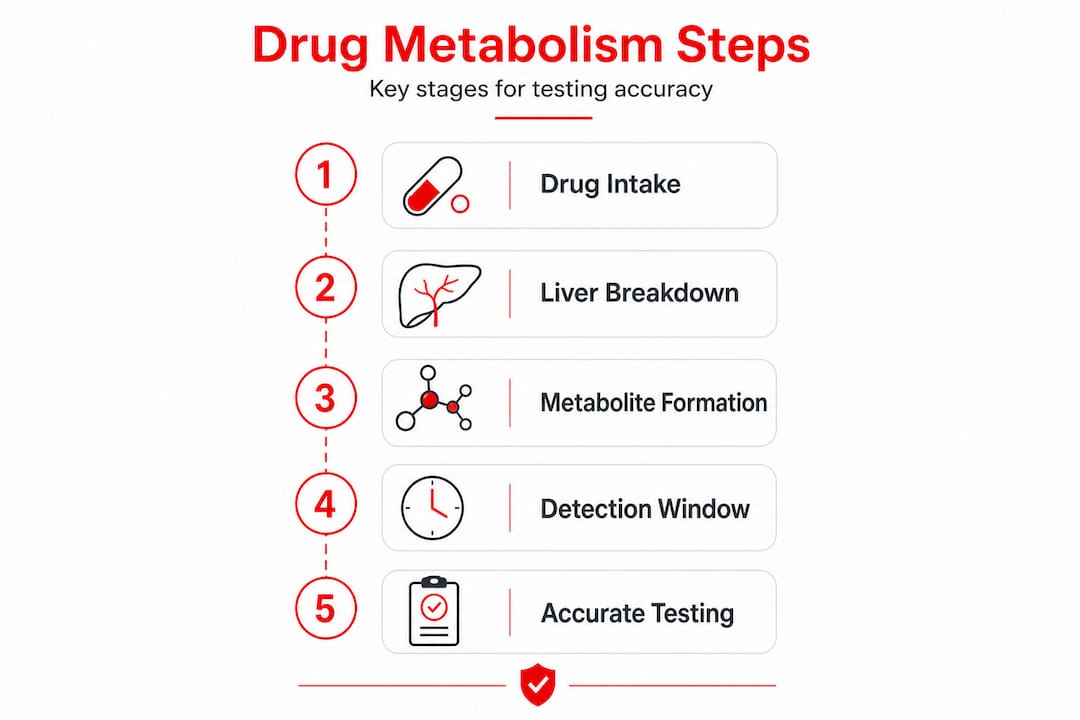
This is exactly why testing for parent drugs alone is insufficient for drug test accuracy in most scenarios. Heroin, for instance, is undetectable within minutes of use, but its metabolite 6-monoacetylmorphine confirms recent heroin use specifically, with no confusion from prescription opioids. Relying on the parent compound would produce false negatives in nearly every real-world case.
Key factors that influence metabolite detection windows:
- Lipid solubility of the parent drug (affects tissue storage and gradual release)
- Enzymatic activity in the individual, shaped by genetics, age, and health status
- pH of urine samples, which affects metabolite stability
- Half-life of both the parent compound and its primary metabolites
- Sample matrix: urine, blood, oral fluid, or hair each offer very different windows
Pro Tip: Understanding factors influencing test accuracy in your specific matrix is a foundational step before selecting any panel or cutoff threshold. A test with the wrong matrix for the detection window you need is essentially useless.
| Drug | Parent drug detection window (urine) | Primary metabolite | Metabolite detection window (urine) |
|---|---|---|---|
| Heroin | Minutes | 6-MAM, morphine | 1 to 3 days |
| Cocaine | Hours | Benzoylecgonine (BZE) | 2 to 4 days |
| THC | Hours (acute) | 11-nor-9-carboxy-THC | 3 to 30+ days |
| Fentanyl | 8 to 12 hours | Norfentanyl | 2 to 4 days |
The table above makes the point clearly. In every case, the metabolite is the reliable marker, not the parent drug. Building your testing protocols around metabolite targets is a scientific necessity, not just a best practice.
Analytical methods for metabolite detection: LC-MS/MS, HRMS, and beyond
With an understanding of how drugs are metabolized, professionals need the right tools to detect these metabolites accurately. Let’s compare what’s available and what’s required for defensible results.
Immunoassay screening is the workhorse of high-volume drug testing. It’s fast, affordable, and scalable. But immunoassays are designed around antibody cross-reactivity, not molecular specificity. That means they can flag substances that chemically resemble the target metabolite without actually being it. For confirmation, and increasingly for primary detection in forensic and legal contexts, mass spectrometry-based methods have become the standard.
LC-MS/MS and LC-HRMS are gold-standard methodologies for metabolite identification, offering high sensitivity at nanomolar and even picomolar levels, combined with specificity that immunoassays simply cannot match. The ability to detect unknown metabolites via accurate mass measurement and fragmentation analysis makes HRMS especially valuable for novel psychoactive substances (NPS) where reference standards may not yet exist.
Comparison: LC-MS/MS vs. LC-HRMS for metabolite detection
| Feature | LC-MS/MS | LC-HRMS |
|---|---|---|
| Sensitivity | nM range | pM range |
| Specificity | High (targeted) | Very high (broad + targeted) |
| Unknown metabolite ID | Limited | Strong |
| Throughput | High | Moderate to high |
| Instrument cost | Moderate | High |
| Legal defensibility | Accepted standard | Emerging, widely accepted |
| Best use case | Routine confirmation | Forensic unknown screening |
Steps for implementing a confirmation workflow:
- Screen all samples with immunoassay panels at established cutoffs.
- Flag any reactive result for confirmation, regardless of apparent certainty.
- Apply LC-MS/MS confirmation with deuterium-labeled internal standards to control for matrix effects.
- For novel substances or complex cases, escalate to LC-HRMS for full metabolite profiling.
- Document chain of custody and method validation records at each stage for legal defensibility.
Pro Tip: Labs integrating innovations in drug testing like automated sample prep and data management software see significant reductions in manual error rates, particularly when handling high-volume forensic submissions.
The confirmation step is not bureaucratic overhead. It is the mechanism that separates a defensible result from a contested one. Courts, compliance programs, and clinical care teams all depend on the accuracy that only MS-based confirmation can provide.
Pitfalls, false positives, and confirmatory strategies
While advanced instrumentation improves detection, it is just as critical to understand and avoid costly errors and misinterpretations, especially in high-stakes testing environments.
False positives in immunoassays are a well-documented reality, and their consequences range from jeopardized legal cases to wrongful treatment decisions. Cross-reactivity is the core mechanism. An antibody designed to bind benzoylecgonine (BZE), cocaine’s primary urine metabolite, may also react with lidocaine, a topical anesthetic with a structurally similar region. Similarly, certain antidepressants, including bupropion and trazodone, have been documented to trigger false positives on amphetamine immunoassay panels.
Understanding these failure modes is not just useful trivia. It directly shapes how you design your testing protocols.
Common cross-reactivity scenarios to monitor:
- Lidocaine and structurally similar compounds triggering cocaine/BZE panels
- Bupropion and its metabolites producing false amphetamine positives
- Quinolone antibiotics cross-reacting on opiate immunoassays
- Over-the-counter antihistamines occasionally flagging phencyclidine (PCP) screens
- Poppy seed consumption creating low-level opiate signals
“Immunoassay results should always be treated as presumptive, not conclusive. In any context where results may be used for legal action, clinical intervention, or compliance reporting, mass spectrometry confirmation is not optional. It is the baseline standard.”
Professionals dealing with false positives in drug tests know that documenting each step of a safeguarding test results protocol is as important as the chemistry itself. Legal challenges to drug test results almost always focus on the chain of custody and the confirmation methodology, not the initial screen.
Reviewing immunoassay accuracy principles is also essential when evaluating which testing panels to deploy, since different antibody formulations carry different cross-reactivity risk profiles.
Edge cases and expert-level considerations: Species, genetics, and advanced strategies
Even after addressing common pitfalls, testing professionals must recognize advanced scenarios and edge cases that may affect results and compliance.
Species differences in metabolism represent one of the more underappreciated complexity factors. Research on novel synthetic cathinones like eutylone, for instance, shows that rodent models produce O-methylated metabolites not found in human samples. This matters for labs that reference animal study data when building human testing panels for emerging designer drugs. Blindly applying animal metabolite data to human testing protocols can create significant gaps in detection coverage.
Genetic polymorphisms represent an equally important variable. CYP2D6 is a prime example. Poor metabolizers of CYP2D6 substrates can show dramatically elevated parent drug levels and attenuated metabolite production. Ultrarapid metabolizers show the opposite pattern. For forensic drug testing contexts where parent-to-metabolite ratios are used to interpret compliance or rule out adulteration, CYP2D6 status can make a compliant patient appear non-compliant, or vice versa.
Advanced scenarios that require expert-level interpretation:
- Poor metabolizers showing high parent drug concentrations with low metabolite levels, mimicking external drug addition rather than ingestion
- Time-dependent CYP inhibition from drug-drug interactions altering expected metabolite profiles mid-program
- Designer drug novelty requiring untargeted screening because no immunoassay exists for the target compound
- Adulteration artifacts creating unusual metabolite ratios that mislead automated interpretation
- Hair matrix variability based on melanin content and cosmetic treatments affecting extraction efficiency
| Genetic factor | Enzyme | Clinical impact on testing |
|---|---|---|
| Poor metabolizer | CYP2D6 | High parent, low metabolite; risk of misclassification |
| Ultrarapid metabolizer | CYP2D6 | Low parent, high metabolite; false impression of high use |
| CYP2C19 variants | CYP2C19 | Altered diazepam and clobazam metabolite profiles |
| CYP3A4/5 variability | CYP3A4/5 | Affects fentanyl and buprenorphine ratios |
For law enforcement and clinical programs, forensic testing key facts confirm that prioritizing unique metabolites and ratios over parent drugs alone is essential to avoid false negatives from rapid parent drug clearance. This approach also aligns with ANSI/ASB standards, supporting legal admissibility.
Practical applications: From forensic labs to clinical decision-making
All of these technical refinements lead to a single goal: making drug testing more meaningful and actionable in real-world situations.
Matrix selection is often the first decision that determines whether a test will answer the clinical or legal question at hand. Detection windows vary significantly by matrix in forensic and clinical testing contexts. Urine is the most common matrix and provides a window of days to weeks depending on the drug. Blood provides a shorter, acute exposure window. Hair extends detection potential to months, making it valuable for retrospective investigation or long-term compliance monitoring.
Practical matrix selection principles:
- Urine for routine workplace, clinic, and probation monitoring where recent use confirmation is the goal
- Blood for post-accident investigation, impaired driving cases, or acute overdose assessment
- Oral fluid for roadside law enforcement screening and scenarios where observed collection is needed
- Hair for long-term exposure verification, custody cases, or employment background screening
Heroin provides the clearest illustration of why metabolite specificity matters in the real world. Heroin itself (diacetylmorphine) converts to 6-monoacetylmorphine (6-MAM) within minutes, which then further metabolizes to morphine. A positive morphine result alone does not confirm heroin use because morphine is also present in many prescription opioids. Detecting 6-MAM specifically proves heroin ingestion beyond reasonable doubt in any forensic or clinical context.
Fentanyl presents a different challenge. Its metabolite norfentanyl has a longer detection window and can be measured as a ratio against parent fentanyl levels to assess compliance in pain management programs. Unusually high norfentanyl-to-fentanyl ratios may indicate sporadic ingestion rather than regular therapeutic use, a finding that carries major clinical and legal weight.
Pro Tip: When evaluating the right matrix and panel for your workflow, compare urine vs. saliva detection windows in detail before committing to a single format. Many agencies now run parallel matrices for high-stakes cases.
The downstream impact of accurate metabolite interpretation extends beyond test results. In clinical settings, a confirmed fentanyl compliance result prevents unnecessary dose changes or discharge. In a court case, a confirmed 6-MAM result can mean the difference between a treatment referral and a criminal conviction. Precision here is consequential.
Our take: What most labs and agencies get wrong about metabolites
The assumption that technology alone solves the metabolite challenge is, in our view, the most damaging misconception in the field today. Computational prediction tools are advancing fast. Machine learning and rule-based systems can now propose metabolite structures with impressive accuracy. But these models require integration with experimental LC-HRMS data to be trustworthy. A predicted metabolite that has never been confirmed in human biological samples is a hypothesis, not a target, and building a testing panel around it is a compliance risk.
Matrix effects are another area where we see consistent underinvestment. Stable isotope-labeled internal standards are the only reliable way to mitigate co-eluting matrix components that suppress or enhance signal in LC-MS analysis. Labs skipping this step because of reagent costs are trading short-term savings for long-term liability. One contested result that falls apart under expert scrutiny costs far more than proper internal standardization would have.
Perhaps most critically, we think the field suffers from disciplinary silos. Toxicologists, clinicians, and prosecutors often operate with incompatible assumptions about what a drug test result means. A forensic scientist who understands CYP2D6 polymorphisms needs to communicate that clearly to a prosecutor who does not. Agencies that invest in cross-training and collaborative case review consistently produce more legally robust and clinically meaningful results than those that treat testing as a purely technical function. The science is only as useful as the interpretation it enables. Explore how emerging drug testing tools are helping bridge that gap between technology and practical application.
Streamline accurate metabolite testing with RapidTestCup solutions
Armed with a deeper understanding of metabolite science, professionals are ready to implement best-in-class tools. Getting from theory to practice means having testing products that match the rigor of your protocols.
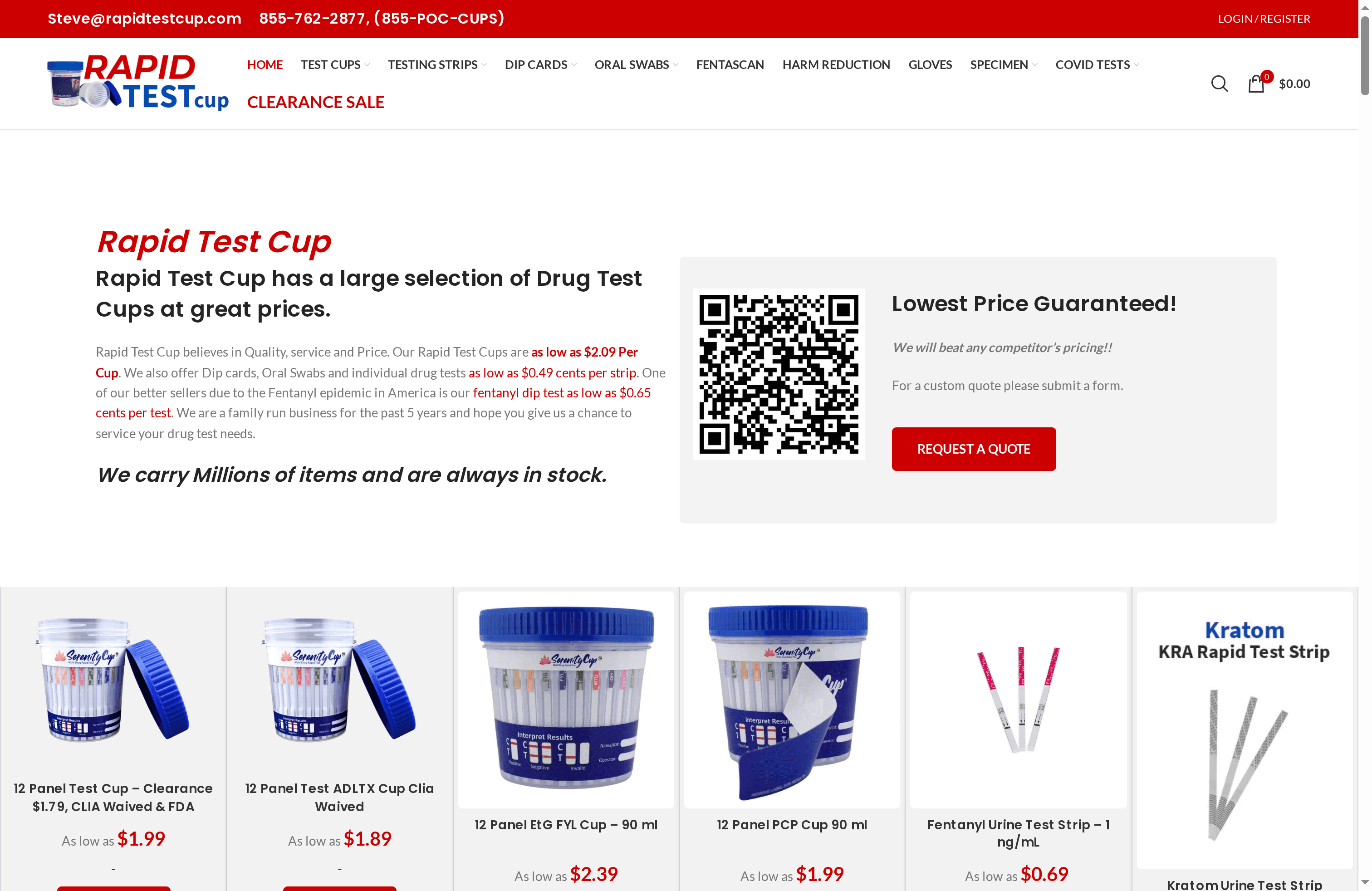
At RapidTestCup, we supply labs, clinics, and law enforcement agencies with CLIA waived, FDA-approved products built for professional accuracy. Our 22-panel drug test cup includes adulterant detection and covers an extensive range of metabolite targets, making it one of the broadest screening tools available for routine and forensic use. If you need to compare top urine kits across panels, cutoffs, and formats, our comparison resources help you make informed procurement decisions. For those building or refining laboratory-grade programs, our forensic methodology resources provide the technical grounding your team needs. We also offer bulk pricing and custom quote options for agencies scaling up their testing operations.
Frequently asked questions
Why are metabolites more reliable than parent drugs in testing?
Metabolites often remain detectable longer than parent drugs and provide clearer evidence of recent ingestion or exposure. Prioritizing unique metabolites and ratios over parent drugs avoids false negatives caused by rapid parent drug clearance.
How do genetic differences affect metabolite profiles?
Variants in enzymes like CYP2D6 can slow or speed up metabolism, changing which metabolites appear and how long they stay detectable. Genetic polymorphisms in CYP enzymes like CYP2D6 create significant individual variation that can directly affect result interpretation.
What factors cause false positives when testing for metabolites?
Immunoassays can cross-react with unrelated substances, causing false positives that mass spectrometry confirmation resolves. Cross-reactivity from compounds like lidocaine on cocaine panels or antidepressants on amphetamine screens are the most documented examples.
What is the typical detection window for drug metabolites?
Urine can show metabolites for days, while hair can detect them for months, depending on the drug and matrix. Detection windows vary by matrix and the specific metabolite being targeted, so matrix selection should always align with the testing objective.