

Blog
Adulteration Testing: Methods, Best Practices, and Results


TL;DR:
- Adulteration testing is essential for verifying sample integrity in forensic, drug, and food analyses to prevent manipulation. It employs diverse methods like chromatography, mass spectrometry, spectroscopy, and specimen validity parameters to detect tampering tactics such as dilution, substitution, and chemical adulteration. Strong collection protocols, staff training, and compliance with regulatory standards are critical for maintaining test accuracy and integrity.
Lab results carry enormous weight. A positive drug screen can determine employment, parole, or custody. A contaminated food sample can trigger a public health crisis. Yet many professionals still operate under a quietly dangerous assumption: that the specimen in front of them accurately represents what it claims to be. Adulteration testing exists specifically to challenge that assumption. Defined as laboratory testing that detects product tampering to ensure authenticity and safety, it sits at the intersection of analytical rigor, legal accountability, and patient welfare.
Table of Contents
- What is adulteration testing and why it matters
- Core methods for adulteration detection
- Best practices: specimen collection and integrity assurance
- Regulations and quality frameworks for adulteration testing
- Adulteration: what most guides miss about prevention and detection
- Need reliable adulteration checks? See our advanced solutions
- Frequently asked questions
Key Takeaways
| Point | Details |
|---|---|
| Purpose of adulteration testing | Adulteration testing protects authenticity and safety by detecting sample tampering. |
| Core detection methods | Key techniques include chromatography, spectroscopy, molecular assays, and specimen validity metrics. |
| Importance of process | Prevention via secure collection, chain-of-custody, and staff training is as vital as analytical tools. |
| Regulatory standards | Certifications like HHS/SAMHSA ensure labs follow validated, consistent practices. |
What is adulteration testing and why it matters
Adulteration, in the simplest terms, means a sample has been deliberately or accidentally altered to misrepresent its true composition. In forensic toxicology and substance abuse testing, that usually means someone is trying to beat a drug test. In food science, it often means an economically motivated substitution, think olive oil cut with cheaper seed oil, or milk powder mixed with melamine. Either way, the analytical consequence is the same: your test reports on what’s in the container, not on what should be there.
The cost of missing adulteration is severe. In workplace and forensic settings, a false negative can put safety-critical personnel back on the job while actively impaired. In substance abuse treatment programs, missed results delay recovery and distort program outcomes. In food testing, undetected adulteration exposes consumers to allergens, toxins, or nutritional deficiencies they never consented to.
“Economically motivated adulteration and abuse require advanced analytical methods for detection,” per the FDA’s guidance on food fraud, a principle that applies equally to forensic specimen testing.
The most common tampering strategies professionals encounter include:
- Dilution: Adding water to a urine sample to drop drug metabolite concentrations below cutoff thresholds
- Substitution: Replacing the original specimen entirely with synthetic urine, animal urine, or a clean sample from another person
- Chemical adulteration: Adding oxidizing agents like bleach, nitrites, or glutaraldehyde to chemically destroy drug metabolites
- Spiking or contamination: Introducing foreign substances to produce false positives or interfere with analytical instruments
Understanding these tactics is the foundation of any credible adulteration testing program. Effective adulterant detection methods are built around catching each of these specific strategies, not just running a general immunoassay and hoping for the best.
Core methods for adulteration detection
Detection methodology depends on what you’re testing and what you’re looking for. The tools used to authenticate a batch of saffron are very different from those used to validate a urine specimen at a treatment clinic. Professionals need to understand both domains and know when to cross-reference methods.
Food and agricultural authenticity testing relies primarily on four categories of techniques:
- Chromatography: High-performance liquid chromatography (HPLC) and gas chromatography (GC) separate and quantify individual compounds in complex matrices. These methods can catch substituted oils, adulterated spices, and undeclared additives with high precision.
- Mass spectrometry: Often paired with chromatography, mass spectrometry identifies compounds by molecular weight and fragmentation pattern. It’s the gold standard for confirming what chromatography flags.
- Spectroscopy: Fourier-transform infrared (FTIR), near-infrared (NIR), and Raman spectroscopy offer rapid, nondestructive screening. They’re well-suited for high-throughput environments where preliminary screening precedes confirmatory analysis.
- DNA barcoding and sequencing: Used increasingly for species authentication, especially for seafood, meat products, and botanical supplements. When you need to know if that “100% beef” label is accurate, PCR-based DNA methods answer the question definitively.
As food safety researchers confirm, food adulteration testing relies on chromatography, spectroscopy, and DNA methods working together rather than any single technique standing alone.
Urine specimen validity testing (SVT) takes a different approach. Rather than identifying specific compounds by molecular weight, SVT evaluates whether the specimen itself is physiologically plausible. Per established forensic toxicology protocols, the core parameters measured are:
| Parameter | Normal range | What an abnormal result suggests |
|---|---|---|
| pH | 4.5 to 8.5 | Outside range indicates dilution or chemical adulteration |
| Creatinine | 20 to 300 mg/dL | Below 2 mg/dL suggests substitution; 2 to 20 mg/dL suggests dilution |
| Specific gravity | 1.003 to 1.030 | Less than 1.001 or greater than 1.020 is flagged |
| Oxidants/nitrites | Negative | Positive indicates chemical adulterant added |
| Glutaraldehyde | Negative | Presence confirms chemical adulteration |
These parameters work as a system. Creatinine and specific gravity together flag dilution. Oxidant and nitrite panels catch chemical adulterants. pH alone is too easy to game without triggering another marker, which is why adulteration test strips that measure multiple parameters simultaneously are far more reliable than single-marker tests.
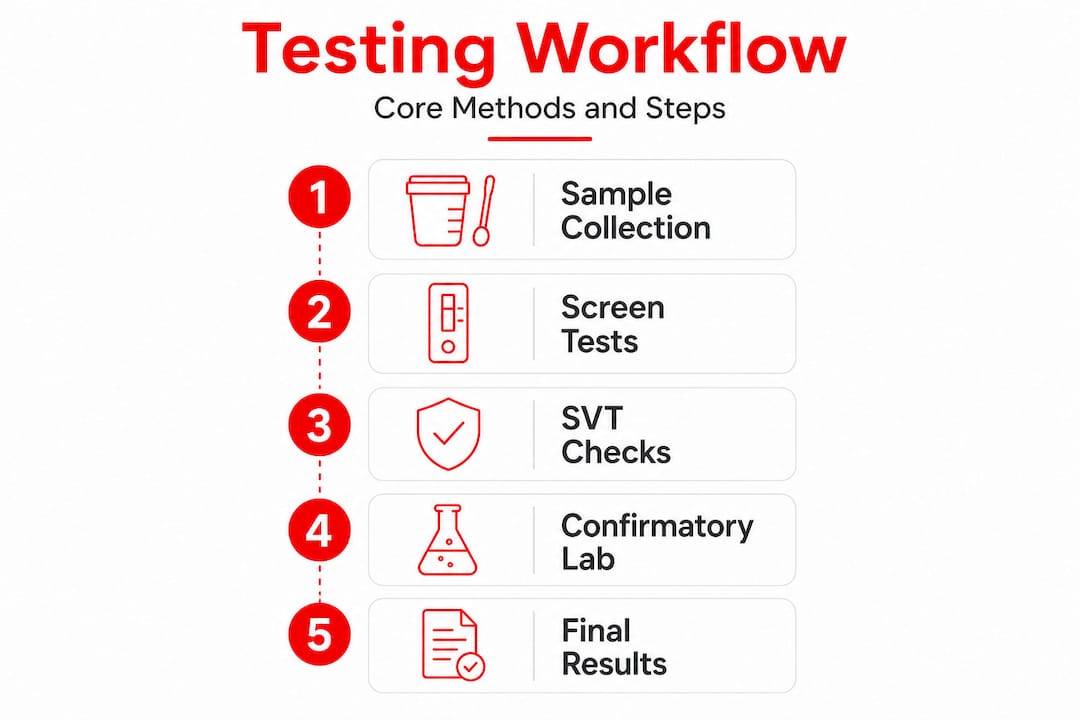
A final critical distinction: screening versus confirmatory testing. Immunoassay-based point-of-care tests are screening tools. They produce presumptive results fast and affordably, but they’re not the last word. Confirmatory testing via GC-MS or LC-MS/MS at a certified lab converts presumptive findings into legally defensible conclusions. Understanding adulterants in drug tests means knowing that a clever adulterant might pass a single-panel screen while failing an orthogonal confirmatory method.
Pro Tip: Always run at least two independent SVT parameters simultaneously. A specimen that looks borderline on creatinine alone can reveal chemical adulteration when you add an oxidant panel.
Best practices: specimen collection and integrity assurance
Detection technology is only half the equation. A perfectly calibrated mass spectrometer cannot compensate for a specimen that was compromised before it reached the instrument. Collection protocol is where most tampering actually occurs, and it’s where most labs have the most room to improve.
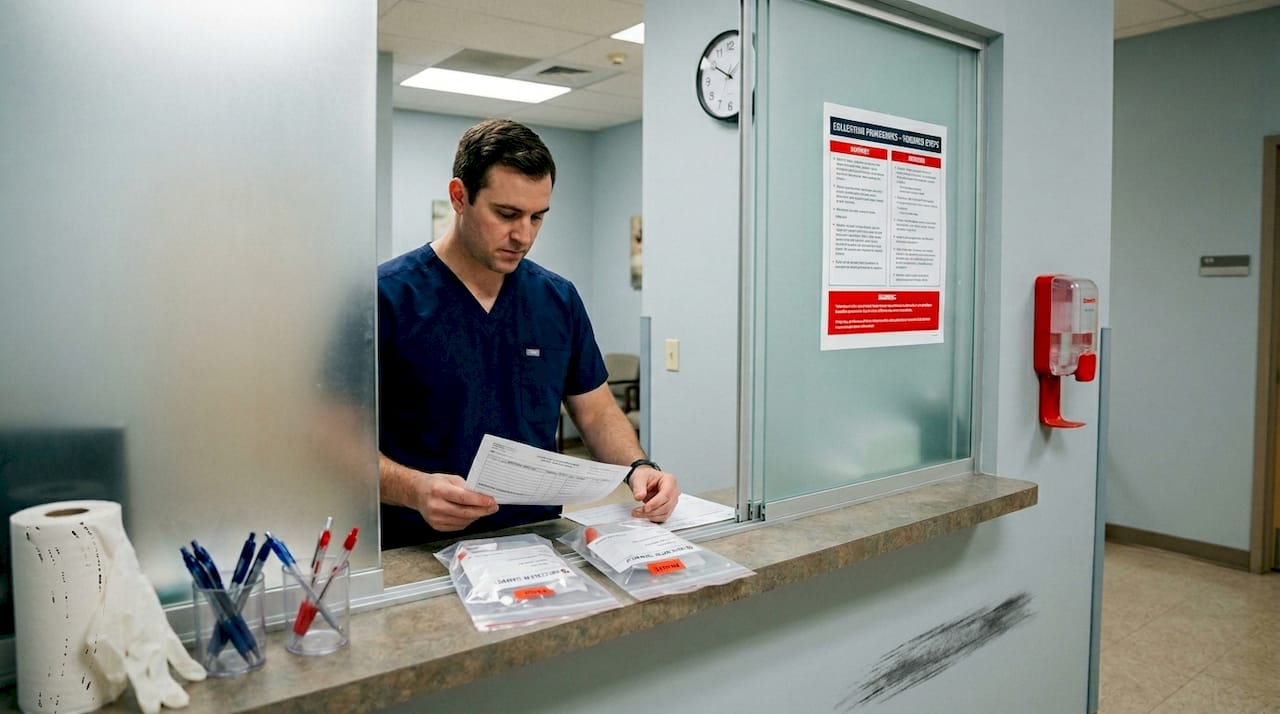
Chain-of-custody procedures and observed collection are the two strongest deterrents available. Observed collection, where a trained collector directly witnesses specimen production, virtually eliminates substitution and dramatically reduces dilution attempts. Chain-of-custody documentation creates a legally traceable record from the moment the specimen leaves the donor’s body to the moment results are reported.
Here is the core workflow professionals should follow for every collection event:
- Verify donor identity using two forms of ID before collection begins. Mistaken identity is a correctable error; an invalidated chain of custody is not.
- Prepare the collection area by securing all water sources, adding blue dye to toilet water, and removing cleaning products from the collection room that could serve as adulterants.
- Provide a temperature-checked collection cup. Legitimate urine reads between 90°F and 100°F within four minutes of production. A reading outside this range is immediate grounds for a direct-observed recollection.
- Label the specimen immediately in the donor’s presence. The donor should initial the label, confirming it matches their identity and the sample they provided.
- Perform SVT at the point of collection before sealing the specimen. This gives you a real-time flag if something is wrong, not three days later when the chain of custody is harder to reconstruct.
- Seal and ship under tamper-evident protocols, maintaining refrigeration where required and documenting every transfer point.
Common pitfalls that undermine otherwise solid programs include unsecured collection rooms, collectors who skip the temperature check because the donor seems cooperative, and facilities that run SVT only when they “have a reason to suspect something.” That last one is particularly problematic because it introduces selection bias into your data and may not hold up under legal scrutiny.
Review specimen validity best practices to align your collection protocols with current forensic standards. If your program is operating in a workplace environment, drug test tampering protocols provide a practical reference for recognizing behavioral and physical indicators of attempted fraud during collection. And for HR-facing programs, the workplace drug testing best practices guide covers the compliance and documentation layer that collection teams often overlook.
Pro Tip: Temperature strips on the collection cup are a frontline tool, but train your collectors to also note behavioral cues: excessive delays, requests to collect in private, or attempts to adjust the temperature of the cup by hand. These are documented patterns of substitution attempts.
Regulations and quality frameworks for adulteration testing
Methods and protocols only hold their credibility when they’re validated against recognized standards. For forensic and workplace urine drug testing in the United States, the primary regulatory framework comes from the Department of Health and Human Services (HHS) and the Substance Abuse and Mental Health Services Administration (SAMHSA).
The HHS/SAMHSA certification framework establishes minimum standards for urine testing labs operating in federally mandated workplace programs. Certification covers the full testing cycle: initial immunoassay screening, confirmatory GC-MS/LC-MS/MS testing, SVT parameter ranges, and chain-of-custody documentation requirements. Labs on the certified list have demonstrated that their methods, equipment, and procedures meet a nationally consistent baseline.
For food authenticity and adulteration testing, the FDA sets guidance under its food fraud program, while international standards from organizations like AOAC International and ISO provide method-specific validation frameworks. These aren’t optional frameworks for compliant organizations. They represent the minimum bar for results that can be used in regulatory actions, litigation, or public health interventions.
Key benefits of operating within these frameworks include:
- Standardized cutoff values that ensure consistent positive/negative calls across labs
- Reduced liability when results are challenged in court or administrative hearings
- Access to proficiency testing programs that allow labs to benchmark performance against peers
- Documented quality assurance that satisfies accreditation bodies and auditors
One important reality: certification and compliance are ongoing, not one-time achievements. Quality assurance means continuous monitoring of reagent lot performance, instrument calibration records, and staff competency. A lab that conducts workplace drug testing without a current quality assurance plan is operating on reputation, not evidence.
Callout: SAMHSA-certified labs are required to participate in quarterly proficiency testing, with specific performance thresholds for each drug class. Missing a proficiency cycle is grounds for certification suspension.
Adulteration: what most guides miss about prevention and detection
Here is something the analytical chemistry literature rarely addresses directly: most adulteration events that result in a false negative are not failures of the testing method. They are failures of the process surrounding the test. The instruments worked. The cutoffs were appropriate. The SVT panels were functional. But something upstream broke down, and the compromised specimen entered the analytical chain without triggering a flag.
The uncomfortable reality is that detection-focused thinking creates a reactive posture. You’re always one step behind the person trying to game the system. Prevention-focused thinking flips that dynamic. When collection protocols are tight, when collectors are trained to recognize tamper attempts, and when donors understand that the program has real teeth, most adulteration attempts either fail immediately or don’t happen at all.
This matters especially in substance abuse treatment settings, where the goal isn’t just producing defensible results. The goal is supporting recovery. A donor who successfully adulterates a specimen hasn’t beaten a test; they’ve delayed confronting a problem. Programs that treat testing as a deterrence tool, not just a detection tool, see better long-term compliance because the culture around testing changes.
The other underappreciated gap is staff training. A technically excellent lab can still produce compromised results if the collection staff lacks the knowledge to recognize a cold specimen, a diluted sample with a suspiciously low temperature reading, or a donor who has clearly rehearsed their approach to the collection room. Forensic testing insights consistently show that the human layer of quality assurance is where programs fail when they fail at all.
Technology is a force multiplier for trained humans with strong protocols. It is not a substitute for them.
Need reliable adulteration checks? See our advanced solutions
Labs and clinics that take adulteration seriously need products built to match that commitment.
At rapidtestcup.com, we carry a full range of validated adulteration testing solutions designed for professional environments. The 12 Panel ADLTX Cup combines multi-drug screening with built-in adulterant detection in a single integrated device. For broader panel needs, the 15-panel cup with adulterants extends coverage across commonly abused substances while maintaining SVT functionality. Labs requiring the most extensive coverage should look at the 18 Panel Drug Test Cup, which includes K2, fentanyl, and EtG alongside full adulterant panels. All products are CLIA waived and designed to integrate seamlessly with existing chain-of-custody documentation practices.
Frequently asked questions
What is the main goal of adulteration testing?
The main goal is to detect sample tampering or substitution, confirming that test results reflect authentic sample composition rather than a manipulated one.
Which sample parameters are used in urine adulteration testing?
Key parameters include pH, creatinine, specific gravity, oxidant levels, and nitrite presence, as defined in forensic specimen validity protocols.
How can labs prevent adulteration beyond analytical testing?
Prevention relies on observed collection and chain-of-custody documentation, combined with ongoing staff training to recognize tampering behaviors before specimens enter the analytical chain.
What certifications should a drug testing lab have?
Labs operating in federally mandated workplace programs must hold HHS/SAMHSA certification, which verifies that testing methods and documentation meet national quality standards.
Are adulteration testing methods different for food and urine samples?
Yes. Food testing uses chromatography, spectroscopy, and DNA methods, while urine testing relies on specimen validity markers and chemical adulteration panels targeting specific tampering agents.