
Blog
Faint Line on a Drug Test Means Negative, Read Within 2–5 Minutes

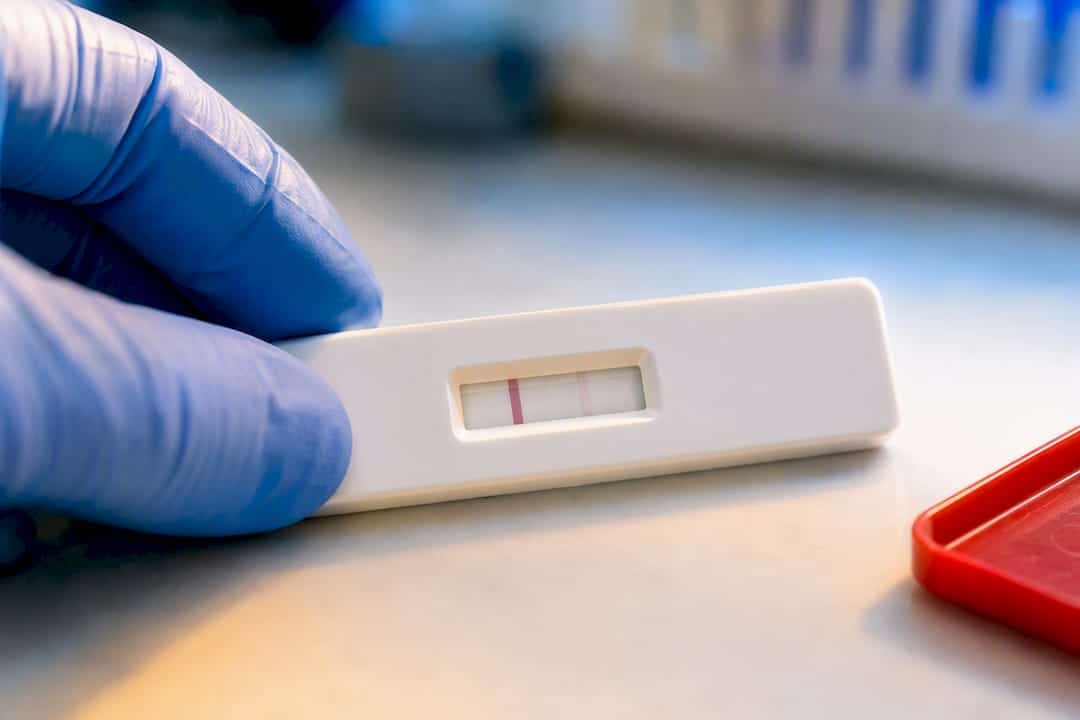
A visible line in the T region, even a faint one, counts as a negative screening result as long as the control © line shows up and you read the test inside the manufacturer’s time window. The exceptions are narrow: no control line means the test is invalid, and any line that appears after the read window is likely a false evaporation line, not a real result. If this is for employment or a legal matter, treat the checklist below as your starting point, and plan on lab confirmation.
TL;DR:
- A faint line on a drug test indicates a concentration near the device’s cutoff and does not reflect the amount of substance present.
- Reading timing is critical; lines appearing after the recommended window are usually evaporation lines and should be disregarded.
- Poor storage, expired kits, or improper sampling techniques can weaken reagent performance and produce unreliable faint or ghost lines.
- Confirmatory laboratory testing with GC/MS or LC-MS/MS is mandatory for legal or employment decisions based on screening results.
- Proper procedural checks, including control line verification and retesting if unclear, are essential before interpreting faint lines as negative.
Table of Contents
- What Does a Faint Line on a Drug Test Really Indicate?
- Why Faint Lines Show Up: Dilution, Timing, and Kit Problems
- How to Confirm a Faint Line Result Before You Panic
- When a Faint Line Needs Confirmatory Lab Testing
- Reading Faint Lines Across Urine, Saliva, and Hair Tests
- What to Do Right After You See a Faint Line
- Faint Line vs. False Positive vs. False Negative: What’s the Difference
- How User Error Changes What a Line Looks Like
- What a Faint Line Means for Employment or Legal Matters
- Talking to an Employer or Doctor About a Faint Line Result
- The Real Problem With Most Faint-Line Advice
- Where to Get Reliable Testing Kits That Reduce Faint-Line Confusion
- Sources
What Does a Faint Line on a Drug Test Really Indicate?
The reason a faint line still reads negative comes down to the chemistry inside the cassette, not the strength of the line. Most drug test cups and dip cards use competitive immunoassay technology: drug metabolites in the sample compete with labeled reagent molecules for a limited number of antibody binding sites on the test strip. There’s a fixed cutoff concentration built into the device, usually calibrated to federal or manufacturer standards.
Here’s the part people miss: when a urine sample sits below that cutoff, some antibody sites stay open, reagent binds there, and a test line forms. It can be faint, it can be dark. Either way, it means the same thing: the sample tested below the threshold the device is calibrated to flag. The line’s intensity is not a proxy for how much of a substance was in the sample. A faint line drug test guide from Toxchoice frames it plainly: faintness usually signals a concentration near the cutoff, not a partial or ambiguous result.
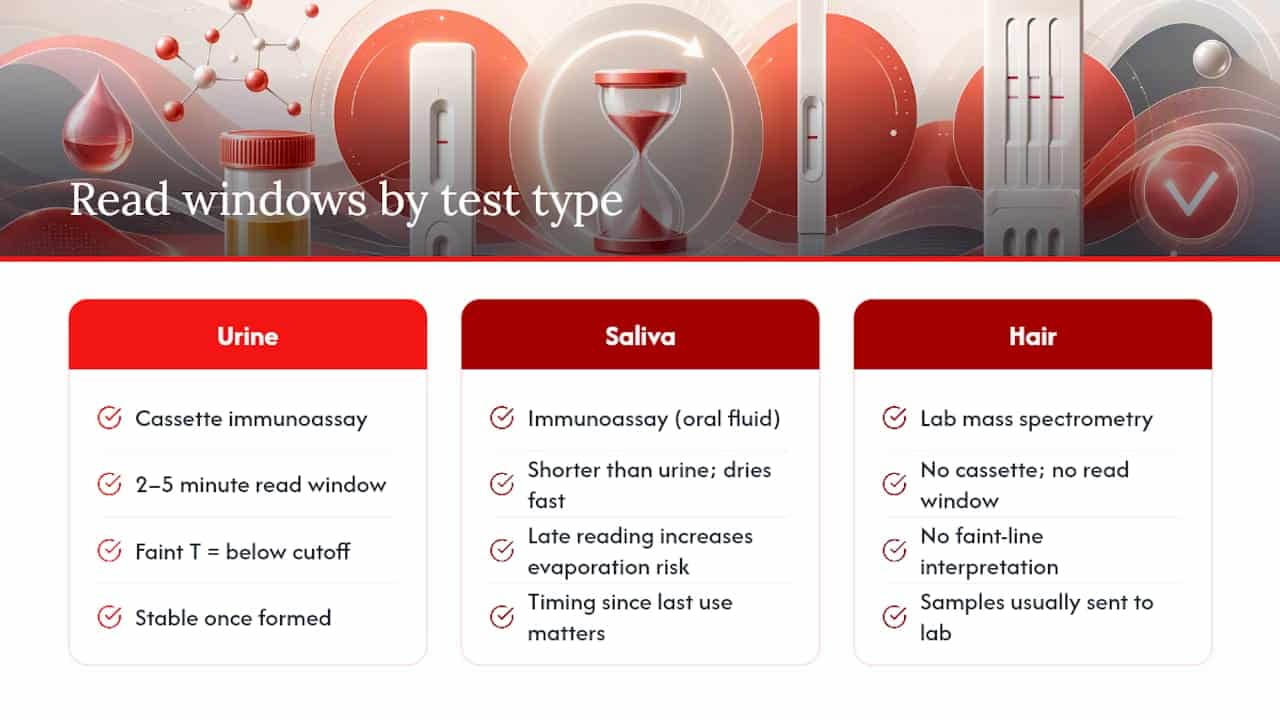
This is also why line intensity varies so much between test types. Urine cups typically give you 2 to 5 minutes before a stable read; oral fluid tests often need a shorter window because saliva evaporates faster and can produce misleading lines if you wait too long. The competitive immunoassay principle behind faint and ghost lines holds across both formats: below cutoff produces a visible T line, at or above cutoff suppresses it. That binary is the whole system. There’s no in-between reading built into the device, no matter how the line looks under a bathroom light.
Why Faint Lines Show Up: Dilution, Timing, and Kit Problems
Several ordinary things can push a line toward faint without anything being wrong with the person tested.
- Near-cutoff concentration. The metabolite level sits close to the device’s threshold, so only some antibody sites go unbound.
- Dilution. Drinking a lot of water before testing lowers metabolite concentration in urine, sometimes enough to shift a would-be dark negative line closer to invisible or, in rarer cases, closer to a borderline positive.
- Timing errors. Reading before the metabolite has fully migrated, or reading well past the window, both distort the line.
- Kit condition. Expired strips, cassettes stored in high humidity, or a bad manufacturing lot can weaken reagent performance.
- Cross-reacting medications. Certain over-the-counter drugs and supplements interact with the antibodies and can nudge a borderline reading in either direction.
Timing mistakes deserve special attention, because they’re the easiest to misread and the easiest to avoid. A step-by-step guide to reading faint, positive, and invalid results notes that lines appearing well after the stated window are often evaporation lines, not real results, because the liquid dries and leaves a faint colored streak where the antibody dye settled.
Pro Tip: Set a timer the second you activate the test. If a line shows up at minute 3 on a 5-minute-read device, trust it. If a line shows up at minute 20 because you forgot the cassette on the counter, don’t count it.
Storage matters more than most people assume. Rapidtestcup’s guide to drug test cutoff levels explains how reagent degradation from heat or moisture can produce inconsistent line intensity even on a technically unexpired kit.
How to Confirm a Faint Line Result Before You Panic
Run through these checks before you assume anything is wrong:
- Verify the control line. No C line means the test is invalid, full stop, regardless of what the T line shows.
- Confirm you’re inside the read window. Check the insert for the exact minute range; don’t eyeball it.
- Check the expiration date and lot number. An expired dip card or test strip is unreliable even if it still produces a line.
- Inspect storage conditions. A kit left in a hot car or a damp bathroom cabinet is more likely to misbehave.
- Reread under better light. Faint lines are notoriously hard to see under yellow bathroom lighting or fluorescent overhead bulbs; natural light or a white LED makes a real difference.
- Retest with a new kit if anything is unclear, and give it appropriate time relative to last use. Detection windows vary by substance, so check a drug detection window reference before assuming a repeat test will look different.
- For anything official, arrange confirmatory lab testing and tell the requesting party you’re doing so.
- Document everything if this touches employment or legal matters: kit brand, lot number, and a time-stamped photo of the result inside the read window.
| Situation | What it usually means | Recommended action |
|---|---|---|
| C line present, faint T line, read on time | Negative screening result | No action needed for personal use |
| No C line visible | Invalid test | Discard and retest with new kit |
| Line appears after read window | Possible evaporation/ghost line | Disregard, retest with new kit |
| Faint T line, official/employment context | Presumptive negative | Confirm with certified lab if required |
When a Faint Line Needs Confirmatory Lab Testing
Screening cups and dip cards are presumptive tools. They’re built to be fast and cheap, not legally definitive. Anytime a result feeds into an employment decision, a court proceeding, a custody matter, or a medical treatment plan, it needs backup from a certified laboratory using gas chromatography mass spectrometry (GC/MS) or liquid chromatography tandem mass spectrometry (LC-MS/MS). These methods identify and quantify specific molecules rather than relying on antibody competition, which is why WebMD’s drug abuse resource treats confirmatory testing as the standard for legally defensible results.
Turnaround for lab confirmation usually runs a few business days, and labs also check specimen validity markers like creatinine and specific gravity to catch dilution or substitution attempts that a simple screening cup can’t detect on its own. If a sample looks abnormally diluted, the lab can flag it as invalid rather than reporting a clean negative.
If you’re dealing with a workplace or program that requires certified testing, SAMHSA maintains a list of certified labs that meet federal chain-of-custody and accuracy standards. Contact whoever requested the test and ask directly about their confirmatory testing procedure rather than guessing at your rights or obligations.
Reading Faint Lines Across Urine, Saliva, and Hair Tests
The underlying rule doesn’t change by sample type, but the practical details do. Urine test cups and dip cards give you the widest margin for error, with read windows typically between 2 and 5 minutes and a fairly stable line once it forms. A faint T line on a urine panel means the same thing whether it’s testing for opiates, THC, or fentanyl: below cutoff.
Oral fluid (saliva) tests behave differently. Saliva samples dry out faster, and a common industry note on faint lines points out that reading an oral fluid device even a few minutes late increases the odds of a misleading evaporation streak. Saliva tests also tend to have shorter detection windows for most substances than urine, so timing relative to last use matters more here.
Hair follicle testing works on a completely different principle. There’s no faint line concept because hair tests are almost always sent to a lab and read through mass spectrometry rather than a cassette-style immunoassay. If someone mentions a “faint line” on a hair test, they’re likely thinking of a different device or confusing it with a urine screen, since standard hair testing doesn’t use a lateral-flow strip format at all.
What to Do Right After You See a Faint Line
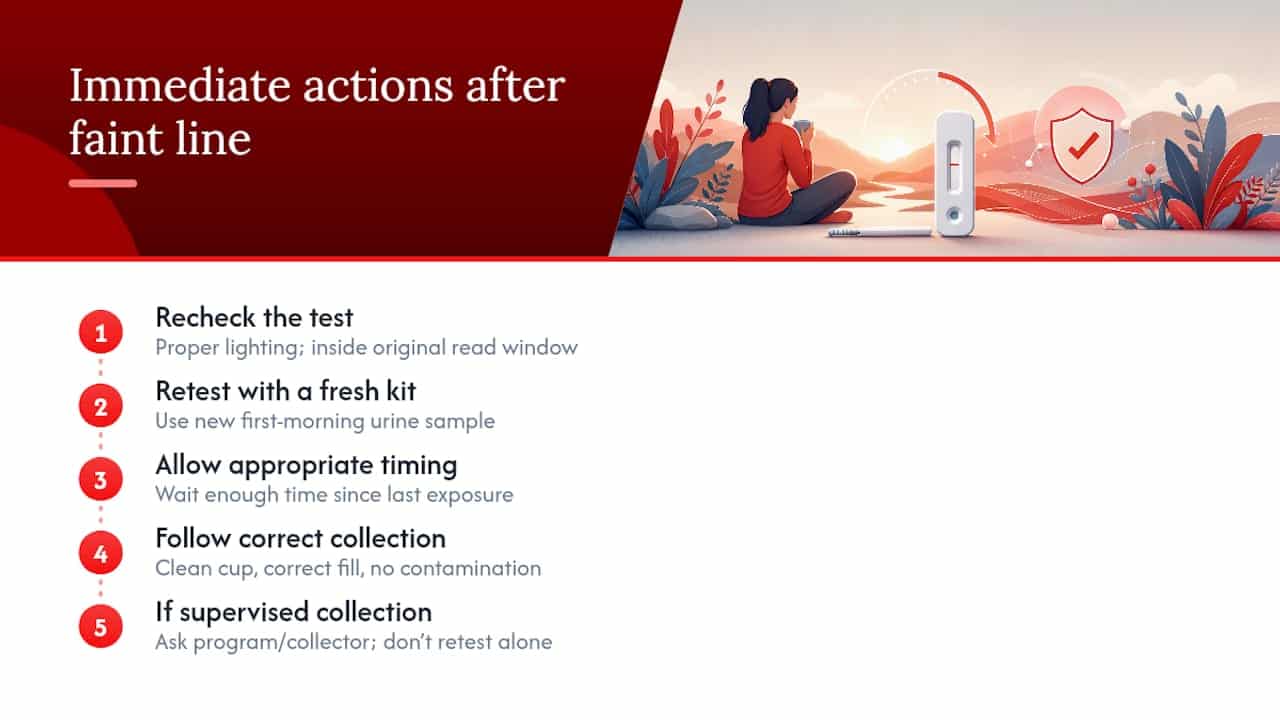
Don’t act on a single unclear read. Start by rechecking the test under proper lighting within the original read window, since a lot of “faint” concern turns out to be a lighting problem, not a chemistry problem.
If the line is genuinely faint and you want more certainty, retest with a fresh kit. Use a new first-morning sample when possible, since urine is generally more concentrated after several hours without fluids, which reduces the chance dilution is muddying the read. Give it real time relative to your last exposure, too. Testing too soon after use, or too soon after a borderline result, can produce another ambiguous line for reasons that have nothing to do with the original test’s accuracy.
Follow proper collection procedure on the retest: clean specimen cup, correct fill line, no contamination from soap or cleaning residue in the collection container. Small procedural slips are a bigger source of bad reads than most people realize.
If the original faint line was part of a supervised or official collection, don’t just retest on your own. Ask the collector or program administrator what their protocol is for an unclear screening result. Most workplace and clinical programs already have a defined path, usually a second collection or an automatic send to confirmatory testing, and jumping ahead of that process on your own can create confusion later.
Faint Line vs. False Positive vs. False Negative: What’s the Difference
These three terms get mixed up constantly, and they mean different things.
A faint line is a normal, expected screening outcome. It means the sample tested below the device’s cutoff. It’s not a category of error, it’s just what a negative looks like on a lateral-flow immunoassay.
A false positive happens when the test line fails to appear (or the device flags a positive some other way) despite no actual drug use, usually because of cross-reactivity with an unrelated compound, like certain decongestants triggering an amphetamine flag. Rapidtestcup’s breakdown of how to identify false positives walks through which OTC medications are common culprits.
A false negative is the opposite: someone used a substance, but the screening result came back clean, often because testing happened outside the detection window or because the sample was heavily diluted.
The faint line sits entirely inside the negative category. It’s not a weak version of a positive, and it’s not evidence of a false negative unless something else about the collection (timing, dilution signs, tampering) raises a separate concern. Conflating “faint” with “borderline positive” is probably the single most common misunderstanding people bring to a screening result, and it’s simply not how the immunoassay reports data.
How User Error Changes What a Line Looks Like
A surprising share of “confusing” faint lines trace back to how the test was handled, not the sample itself. Overfilling or underbilling a dip card past the fill line changes how much liquid migrates across the strip, which affects how clearly any line develops. Touching the reactive strip area with fingers can leave oils that interfere with capillary action.
Temperature matters too. A cold sample, or a test run in a cold bathroom, can slow the chemical reaction and produce a weaker-looking line even on a sample that would otherwise read clearly one way or the other. Reading a test cup at an angle, under colored lighting, or through a fogged viewing window is another common source of “was that line really there?” uncertainty.
None of this changes the underlying rule. A properly performed test with a faint T line and clear C line is still negative. But sloppy technique is exactly why the validity checklist earlier in this piece matters: confirming the control line, the timing, and the lighting rules out most of the false alarms before anyone starts worrying about lab confirmation they probably don’t need.
What a Faint Line Means for Employment or Legal Matters
For personal use, a faint negative is the end of the story. For workplace or legal situations, it’s a starting point, not a verdict, because employers and courts generally rely on confirmatory lab results rather than a single screening cup.
Most workplace drug policies already build in a distinction between a screening test and a legally actionable result. An employer typically can’t take adverse action, like termination or a failed pre-employment screen, based solely on a rapid cup result if their policy (or applicable state law) requires lab confirmation first. That said, policies vary by employer and by state, so an individual facing a faint or unclear screening result in a job-related context should ask specifically what the employer’s confirmed testing protocol requires rather than assuming.
Chain-of-custody documentation matters here too. If a result is contested, the paper trail, who collected it, when, under what conditions, often carries as much weight as the chemistry itself.
Talking to an Employer or Doctor About a Faint Line Result
Keep the conversation factual and specific. Tell the employer or medical professional exactly what you observed: the C line was present, the T line was faint but visible, and the read happened within the stated window. That level of detail signals you understand what you’re reporting, rather than guessing.
Ask directly whether the organization requires confirmatory testing before treating a screening result as final, and ask what the timeline looks like. Most HR departments and clinical staff have handled this question before and can walk you through their standard next step.
If you’re communicating with a doctor about a personal or diagnostic screen, mention any recent medications or supplements you’ve taken, since that’s the detail most likely to explain an unexpected borderline read. Bring the physical test if you still have it, or a time-stamped photo taken within the read window, since that’s more useful than a description after the fact.
The Real Problem With Most Faint-Line Advice
Most explainers either oversimplify the chemistry or overcomplicate the anxiety. The truth sits in between: the interpretive rule is genuinely simple, any visible T line with a valid C line inside the read window is negative, but the emotional weight people put on line intensity is completely disproportionate to what the device is actually measuring.
Where conventional advice falls short is in treating every faint line as worth a second opinion or a retest. That’s often unnecessary. A properly stored kit, read on time, with a clear control line, doesn’t need a follow-up test just because the T line isn’t bold. What it does need, if the stakes are official rather than personal, is lab confirmation, not more home testing.
The priority for readers should be procedural, not chemical: confirm the control line, confirm the timing, confirm the kit hasn’t expired. What’s left after that, employment disputes, legal matters, medical decisions, isn’t something a screening cup was ever built to settle on its own.
— Justin
Where to Get Reliable Testing Kits That Reduce Faint-Line Confusion
A lot of faint-line confusion traces back to the kit itself, not the person using it. Rapidtestcup sells CLIA waived, FDA-approved test cups and strips built for consistent, readable results, which matters more than most buyers realize when a borderline line shows up.
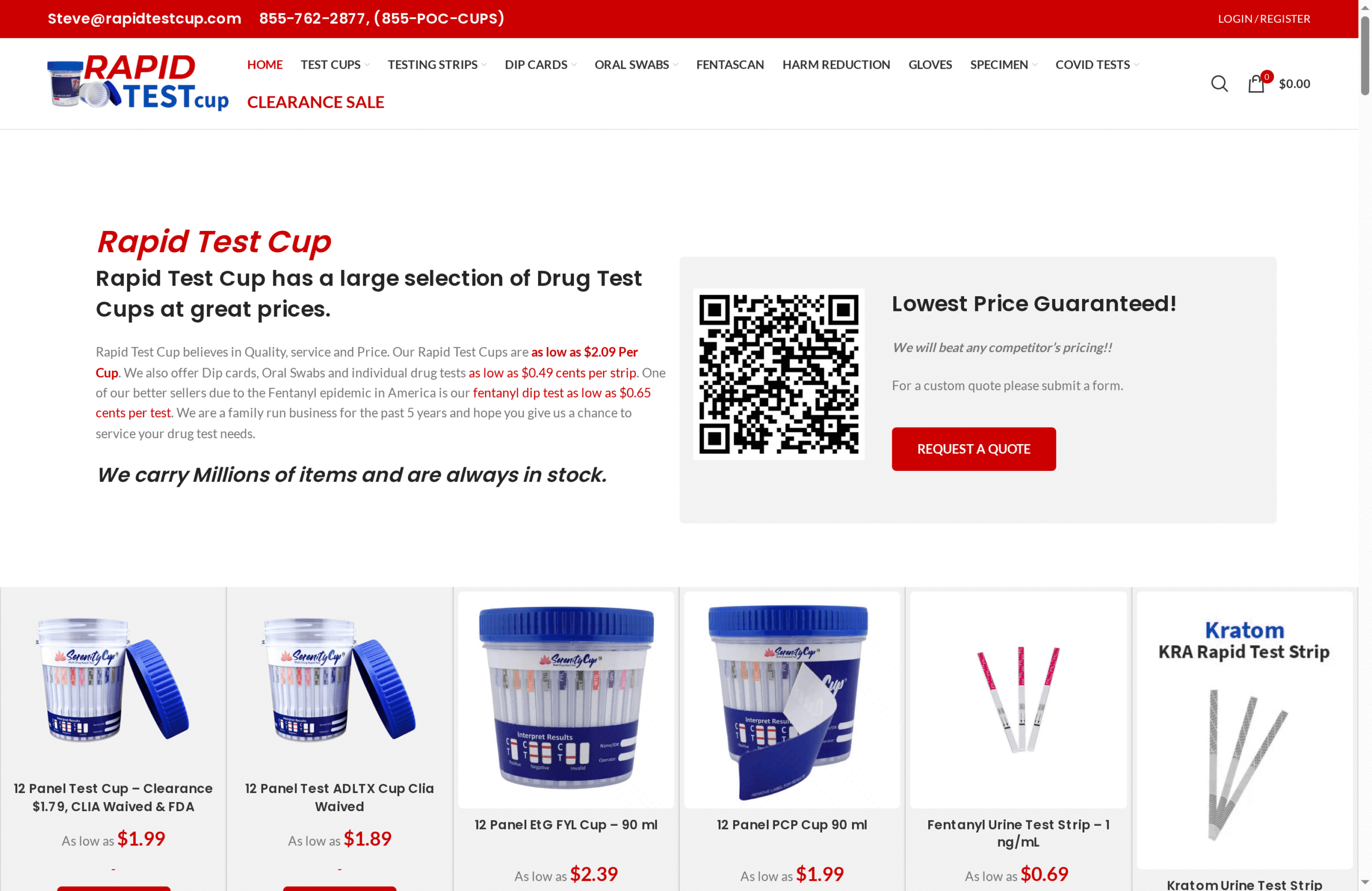
The catalog covers multi-panel cups for workplace and clinical programs, including options with fentanyl, ketamine, ETG alcohol, and adulterant detection built into a single device, so labs, clinics, and employers aren’t stuck ordering separate strips for each substance. Every product page lists panel details, cutoff levels, and bulk pricing up front, which helps buyers match the right kit to their program’s requirements instead of guessing. Store kits in original packaging away from heat and humidity, and always read within the manufacturer’s stated window; that alone eliminates most of the false alarms this article walks through.
If your program screens for multiple substances at once, the 18 panel drug test cup with fentanyl and adulterant detection covers a broad range in a single collection. Laboratories, clinics, and employers ordering in volume can request bulk pricing directly through Rapidtestcup’s 12 panel test cup clearance sale to get started today.