Blog
Law enforcement drug screening best practices 2026


Selecting effective drug screening protocols is a critical challenge for law enforcement agencies in 2026. Officers operate under strict compliance demands where accuracy directly impacts safety and legal outcomes. The wrong testing approach can lead to false positives, compromised investigations, and liability risks. This article presents essential criteria, proven methodologies, and practical best practices to help agencies implement drug screening programs that meet federal standards while maintaining operational efficiency and protecting public safety.
Table of Contents
- 1. Establishing Criteria For Effective Law Enforcement Drug Screening
- 2. Common Drug Screening Methodologies And Panels Used In Law Enforcement
- 3. Managing False Positives And Ensuring Accuracy In Law Enforcement Drug Screening
- 4. Comparing Drug Screening Options For Law Enforcement Agencies
Key takeaways
| Point | Details |
|---|---|
| Four primary testing types | Pre-employment, random, reasonable suspicion, and post-accident protocols address different operational needs. |
| Confirmatory testing is mandatory | GC/MS testing eliminates false positives and provides legally defensible results. |
| Updated federal panels include fentanyl | HHS/SAMHSA 2025 guidelines now authorize fentanyl/norfentanyl detection in standard panels. |
| Zero-tolerance policies require clear documentation | Refusal to test equals positive result with defined reporting requirements. |
| MRO review protects accuracy | Medical Review Officer processes handle disputed results and medication cross-reactivity. |
1. Establishing criteria for effective law enforcement drug screening
Agencies must evaluate multiple factors when selecting drug screening protocols. The foundation begins with understanding four primary testing types: pre-employment, random, reasonable suspicion, and post-accident. Each serves distinct operational needs. Pre-employment screening establishes baseline standards before hiring. Random testing maintains ongoing deterrence through unpredictability. Reasonable suspicion testing addresses observable behavioral concerns. Post-accident protocols protect investigations and determine impairment factors.
Random testing requires careful design to ensure fairness and legal defensibility. Selection methods must be truly random, documented, and applied consistently across all personnel. Agencies should establish clear intervals and selection pools to prevent claims of discrimination or targeting. The unpredictability element serves as the primary deterrent, making documentation of selection methodology critical for legal challenges.
Safety goals and compliance requirements drive protocol selection. Agencies must align testing frequency, specimen types, and drug panels with department risk profiles and state regulations. High-risk units may require more frequent random testing. Specialized units handling narcotics need expanded panels. Clear written policies defining each testing scenario prevent confusion and ensure consistent application across all personnel levels.
Zero-tolerance policies demand explicit language addressing test refusal. Most agencies treat refusal as equivalent to a positive result, triggering immediate disciplinary action. Written policies must clearly state this consequence, outline collection procedures, and define what constitutes refusal. This clarity protects both the agency and officers by eliminating ambiguity in high-stakes situations.
Pro Tip: Incorporate Medical Review Officer processes during policy development, not after problems arise. MROs provide essential expertise in evaluating legitimate medication use, handling disputed results, and documenting medical explanations for positive screens. Early MRO integration prevents costly appeals and protects officer rights while maintaining program integrity.
2. Common drug screening methodologies and panels used in law enforcement
Law enforcement agencies typically employ a two-stage testing approach. Initial screening uses urine immunoassay testing to detect multiple drug classes simultaneously. This method provides rapid, cost-effective preliminary results. Common panels test for amphetamines, cocaine, marijuana metabolites, opiates, and phencyclidine. The immunoassay method uses antibody reactions to identify drug presence above established cutoff levels.
Confirmatory testing with gas chromatography-mass spectrometry provides definitive results. GC/MS testing is essential for legal proceedings because it identifies specific drug compounds and quantifies concentration levels. This methodology eliminates false positives from cross-reactive substances. Every presumptive positive from immunoassay screening must undergo GC/MS confirmation before disciplinary action. The two-stage approach balances cost efficiency with legal defensibility.
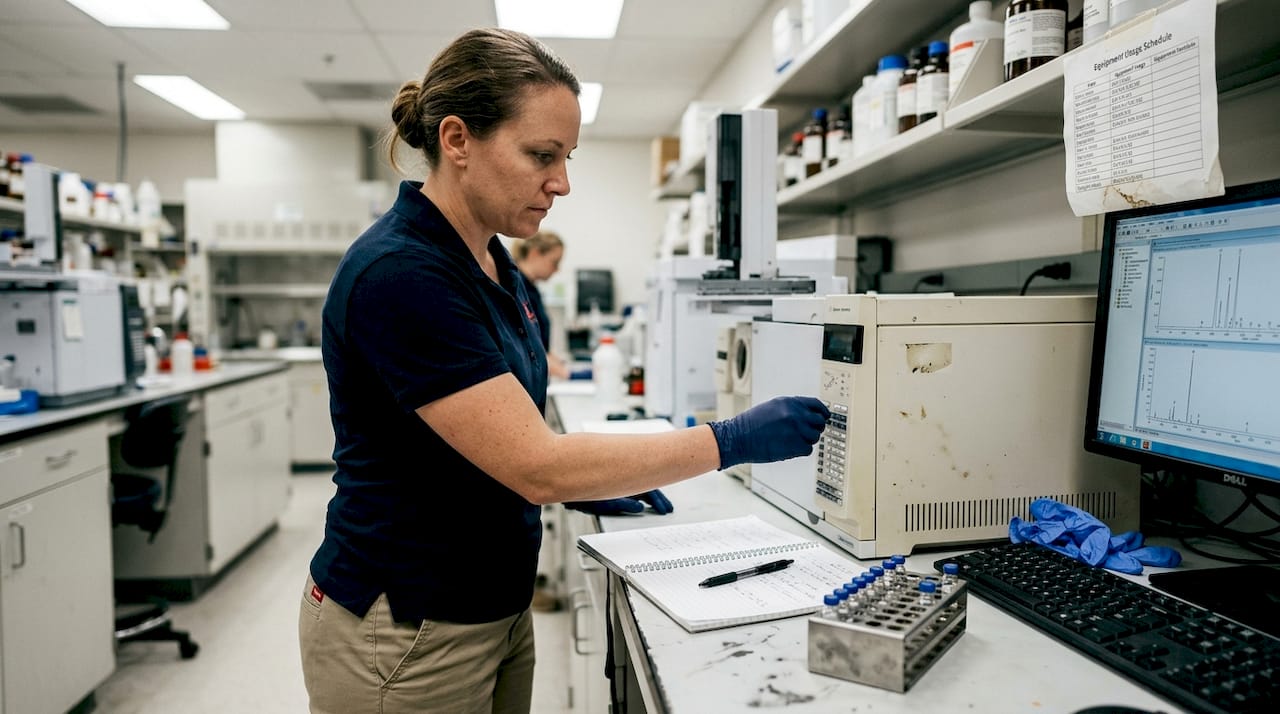
Federal guidelines underwent significant updates for 2025, now authorizing expanded panels including fentanyl and norfentanyl detection. This addition reflects the opioid crisis impact on public safety. Agencies can now include fentanyl in standard testing without special authorization. The updated HHS/SAMHSA guidelines also specify cutoff levels for each substance, ensuring consistency across testing laboratories and reducing interpretation disputes.
Cutoff levels serve as critical thresholds distinguishing positive from negative results. These scientifically established concentrations account for passive exposure, medication cross-reactivity, and detection sensitivity. Standard cutoff levels for initial screening differ from confirmatory testing levels. For example, marijuana metabolite screening typically uses 50 ng/mL, while confirmation uses 15 ng/mL. Understanding these thresholds helps agencies set appropriate detection standards.
| Drug Class | Initial Screen Cutoff | Confirmatory Cutoff | Detection Window |
|---|---|---|---|
| Marijuana (THC) | 50 ng/mL | 15 ng/mL | 3-30 days |
| Cocaine | 150 ng/mL | 100 ng/mL | 2-4 days |
| Opiates | 2000 ng/mL | 2000 ng/mL | 2-3 days |
| Amphetamines | 500 ng/mL | 250 ng/mL | 2-4 days |
| Fentanyl | 20 ng/mL | 10 ng/mL | 1-3 days |
Pro Tip: Oral fluid testing is emerging as a compliance alternative with distinct advantages. Collection occurs under direct observation, eliminating adulteration concerns. Results arrive within minutes for rapid decision making. Detection windows differ from urine, capturing more recent use. While federal guidelines now authorize oral fluid panels, agencies should evaluate operational fit before transitioning from established urine protocols.
3. Managing false positives and ensuring accuracy in law enforcement drug screening
False positives represent serious operational and legal risks for law enforcement agencies. Cross-reactivity with common medications causes many presumptive positive results. Labetalol, a blood pressure medication, can trigger false positives for fentanyl. Over-the-counter cold medications containing pseudoephedrine may cause amphetamine positives. Poppy seed consumption can produce opiate positives. These scenarios demonstrate why confirmatory testing is non-negotiable.
Field presumptive tests carry significant accuracy limitations. Research shows concerning error rates in portable testing devices used for probable cause determinations. Color-change reagent tests can misidentify legal substances as controlled drugs. While these tools serve investigative purposes, they lack the specificity required for employment decisions. Agencies must never use field test results alone for disciplinary action against personnel.
Confirmatory GC/MS testing eliminates ambiguity by identifying exact chemical compounds. This methodology separates legitimate medications from illicit drugs with identical immunoassay responses. The process takes longer and costs more than initial screening, but provides legally defensible results. Every agency policy should mandate confirmatory testing before adverse action. The investment protects both the agency from wrongful termination claims and officers from career-ending errors.
Confirmatory testing is not optional in law enforcement drug screening. The legal, professional, and personal consequences of false positives demand definitive identification through GC/MS methodology before any disciplinary action.
Medical Review Officer involvement provides essential safeguarding. MROs are licensed physicians trained in substance abuse disorders and testing interpretation. They review all positive results, interview the tested individual, and verify legitimate medical explanations. An MRO can determine whether a positive result stems from prescribed medication rather than illicit use. This expert review protects officer rights while maintaining program integrity.
Practical steps to minimize false positives include:
- Require officers to disclose all medications and supplements before testing
- Use certified laboratories meeting SAMHSA standards for all confirmatory testing
- Implement MRO review for every non-negative result before notification
- Maintain chain of custody documentation from collection through analysis
- Establish appeal processes allowing officers to provide medical documentation
- Train collection staff on proper specimen handling to prevent contamination
4. Comparing drug screening options for law enforcement agencies
Agencies face multiple decisions when designing drug screening programs. Protocol selection, specimen type, and testing methodology each impact cost, accuracy, and operational efficiency. Understanding tradeoffs helps agencies match capabilities to mission requirements. Federal guidelines authorize multiple approaches, giving agencies flexibility to customize programs.
| Testing Protocol | Primary Purpose | Frequency | Legal Considerations |
|---|---|---|---|
| Pre-employment | Baseline screening | Once before hiring | Must apply to all candidates equally |
| Random | Ongoing deterrence | Quarterly or monthly | Selection must be truly random and documented |
| Reasonable suspicion | Address behavioral concerns | As needed based on observations | Requires documented observations by trained supervisors |
| Post-accident | Determine impairment factors | After incidents meeting criteria | Must have clear triggering event definitions |
Specimen type selection involves operational and scientific tradeoffs. Urine testing remains the gold standard with established cutoff levels, extensive legal precedent, and comprehensive drug detection. Collection requires privacy, creating adulteration opportunities, but observed collection addresses this concern. Detection windows span days to weeks depending on substance and use patterns.
Oral fluid testing offers distinct advantages for certain scenarios. Direct observation during collection eliminates adulteration concerns. Results arrive rapidly, enabling same-day decisions. Detection windows capture recent use, typically 24 to 48 hours. However, oral fluid panels detect fewer substances than urine, and cutoff standardization is still evolving. Agencies should evaluate whether rapid results and collection simplicity outweigh narrower detection capabilities.
| Factor | Urine Testing | Oral Fluid Testing |
|---|---|---|
| Collection privacy | Requires private facility | Direct observation possible |
| Adulteration risk | Moderate without observation | Very low |
| Detection window | 3-30 days depending on drug | 24-48 hours |
| Panel comprehensiveness | Extensive, well-established | Growing but more limited |
| Result turnaround | 24-72 hours for confirmation | Minutes for screening |
| Federal authorization | Long-established | Authorized 2025 |
Testing methodology impacts both cost and defensibility. Rapid immunoassay tests provide preliminary results in minutes at low cost per test. However, they require confirmatory testing for any positive result. Laboratory-based immunoassay with automatic GC/MS confirmation costs more upfront but provides definitive results. High-volume agencies may find integrated laboratory services more cost-effective than managing two-stage testing internally.
Key deciding factors for protocol selection include:
- Budget constraints and cost per test across expected annual volume
- Required turnaround time for results and operational impact of delays
- Legal defensibility requirements and potential for challenged results
- Collection facility availability and staff training requirements
- Substance detection priorities based on regional drug trends
- Integration with existing personnel management systems
Agencies should pilot new approaches with small groups before full implementation. This allows refinement of procedures, identification of operational challenges, and cost validation. Selecting appropriate test kits and laboratory partners requires evaluating certifications, turnaround commitments, and result reporting systems.
Explore trusted drug test kits & solutions for law enforcement in 2026
Implementing the best practices outlined requires access to reliable, compliant testing products. Law enforcement agencies need solutions that meet updated 2026 federal standards while delivering the accuracy and efficiency operational demands require.
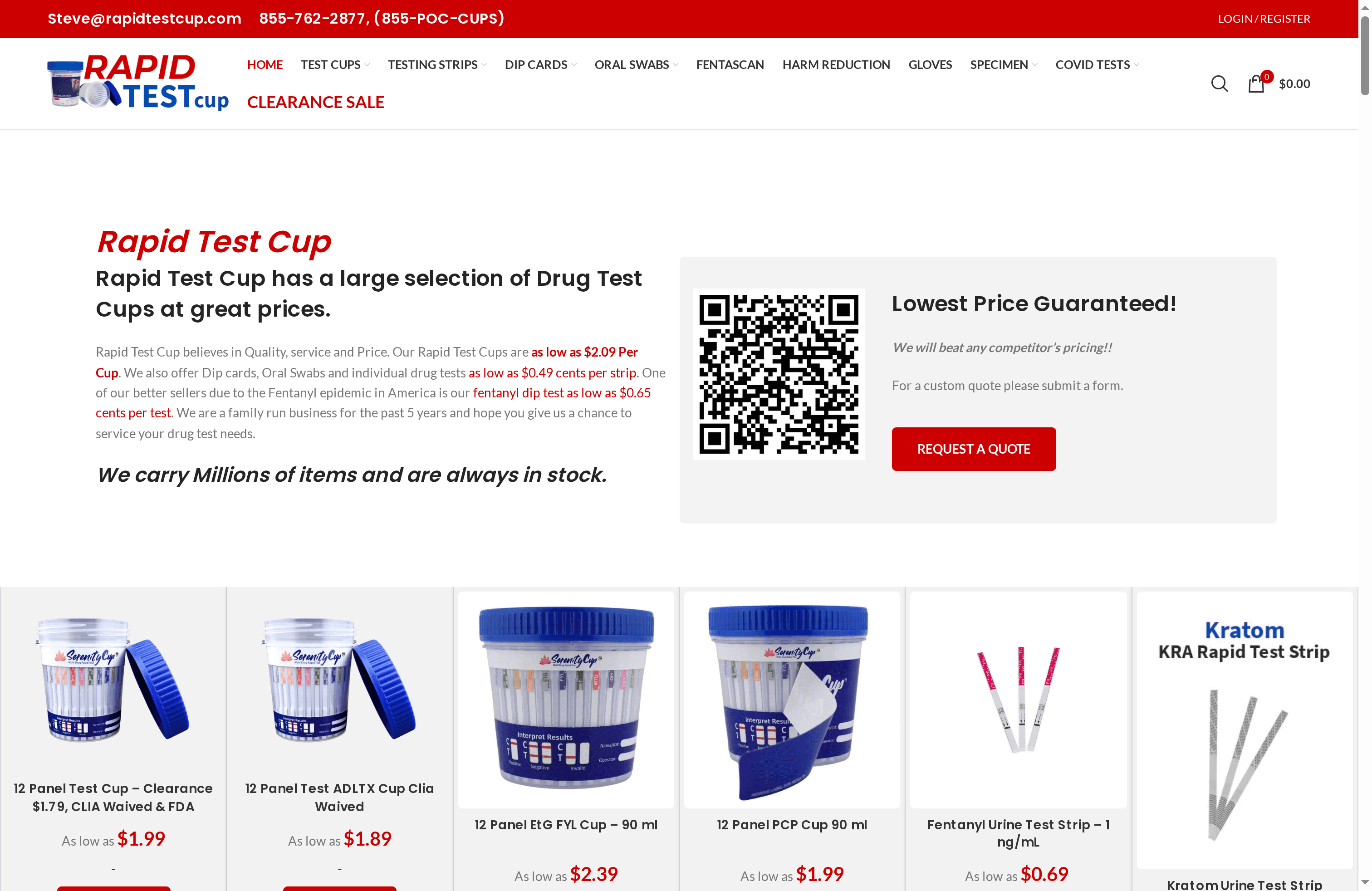
Explore expert-reviewed urine drug test kits designed specifically for professional applications. Comprehensive panels now include fentanyl detection alongside traditional drug classes, ensuring your program addresses current threats. Adulterant detection capabilities identify specimen tampering attempts, protecting program integrity. The 18 panel drug test cup with adulterant detection provides extensive coverage in a single, efficient collection device. Access detailed selection guides to match testing capabilities with your agency’s specific operational requirements and compliance obligations.
Frequently asked questions about law enforcement drug screening best practices
What are the primary drug testing protocols used by law enforcement?
Law enforcement agencies use four main protocols: pre-employment screening before hiring, random testing for ongoing deterrence, reasonable suspicion testing based on behavioral observations, and post-accident testing after qualifying incidents. Each protocol serves distinct operational and legal purposes with specific triggering criteria and documentation requirements.
How do agencies handle false positives in drug screening?
Agencies prevent false positives through mandatory confirmatory GC/MS testing before any disciplinary action. Medical Review Officers review all positive results, interview tested individuals, and verify whether legitimate medications explain the result. Officers can provide prescription documentation during the MRO review process to demonstrate authorized medication use.
What new substances should agencies be screening for as of 2026?
Federal guidelines updated in 2025 now authorize fentanyl and norfentanyl in standard testing panels. Given the opioid crisis impact, agencies should include fentanyl detection in routine screening. Synthetic cannabinoids and designer stimulants represent emerging threats, though detection methods continue evolving. Consult regional drug trend data to prioritize panel expansion.
Why is confirmatory testing critical in law enforcement?
Confirmatory GC/MS testing provides legally defensible results by identifying specific chemical compounds rather than antibody reactions. This eliminates false positives from medication cross-reactivity and distinguishes legitimate prescriptions from illicit drugs. Without confirmation, agencies face wrongful termination liability and officers suffer undeserved career damage. The legal, professional, and financial stakes demand definitive identification.
How does refusal to test impact an officer’s employment status?
Most agencies treat test refusal as equivalent to a positive result under zero-tolerance policies. Refusal typically triggers immediate disciplinary action up to and including termination. Written policies must explicitly define what constitutes refusal, including failure to appear, failure to provide adequate specimen, and attempts to adulterate samples. Clear communication of consequences protects both agency authority and officer awareness of expectations.