Blog
How to build an accurate law enforcement drug testing workflow


A single procedural misstep in a drug testing workflow can unravel a prosecution, expose your agency to liability, or cost an officer their career. Field color tests prone to errors contribute to an estimated 30,000 wrongful arrests every year in the U.S., and most of those failures trace back to skipped steps, missing documentation, or unverified presumptive results. A well-built workflow is not just about catching drug use. It is about producing results that hold up in court, satisfy federal regulators, and protect everyone involved.
Table of Contents
- Understanding drug testing in law enforcement
- What you need: Tools and requirements for drug testing workflows
- Step-by-step workflow: Employee drug testing process
- Step-by-step workflow: Suspect and evidence drug testing process
- Common errors and troubleshooting in drug testing workflows
- Verifying and documenting results for compliance and defense
- Better results start with trusted drug testing products
- Frequently asked questions
Key Takeaways
| Point | Details |
|---|---|
| Two main testing tracks | Law enforcement workflows involve distinct processes for internal employee testing and external suspect testing. |
| Confirmatory tests required | Legal and regulatory best practices always require a lab confirmation for any presumptive positive result. |
| Documentation is critical | Maintaining an unbroken chain of custody and complete records is crucial for legal defense and compliance. |
| Errors can be prevented | Most workflow mistakes can be avoided by following federal guidelines and prioritizing confirmatory testing. |
| Right tools matter | Using validated, multi-panel test cups and expert protocols supports both accuracy and speed in law enforcement workflows. |
Understanding drug testing in law enforcement
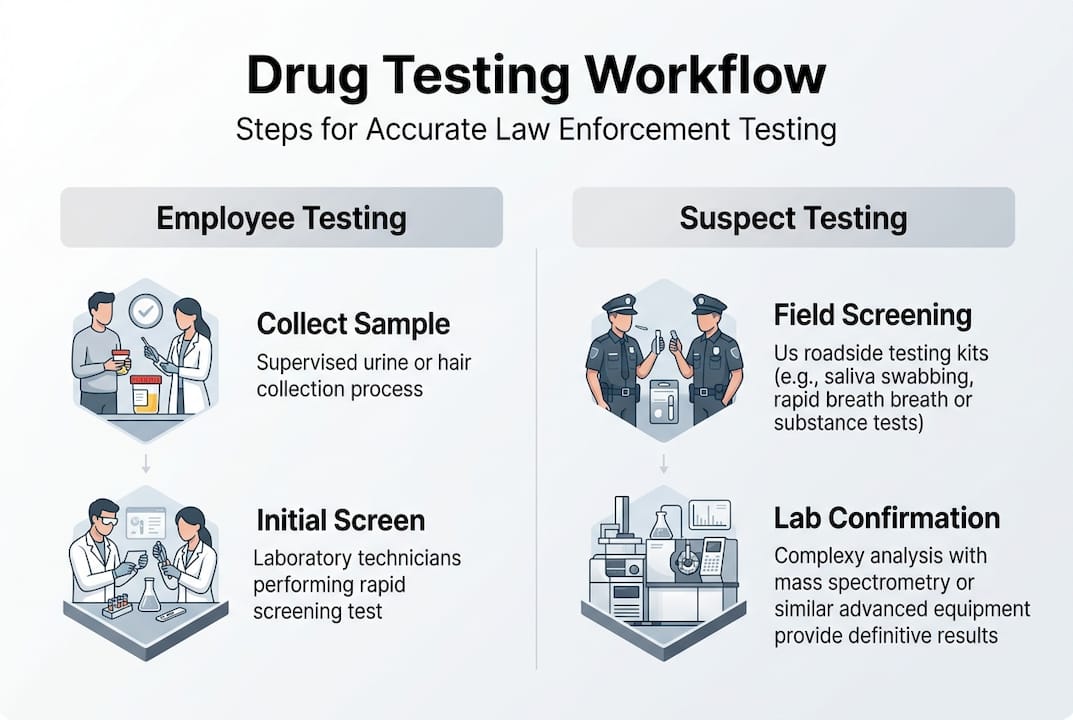
Law enforcement agencies run two distinct tracks of drug testing, and confusing them is a common source of compliance failures. The first is internal employee testing, which covers officers and staff under department policy, collective bargaining agreements, and federal workplace rules. The second is external suspect testing, which applies to individuals arrested or under investigation, and follows forensic and evidentiary standards.
Employee and suspect testing workflows differ significantly in their legal basis, specimen handling, and documentation requirements. Both tracks, however, share one non-negotiable requirement: an unbroken chain of custody. Chain of custody is the documented, chronological record of who collected, handled, transferred, and tested a specimen. Without it, results are legally indefensible.
Regulatory benchmarks vary by track. Employee testing typically follows SAMHSA (Substance Abuse and Mental Health Services Administration) and HHS (Department of Health and Human Services) mandatory guidelines, plus DOT (Department of Transportation) rules for safety-sensitive roles. Suspect testing follows forensic standards set by SWGDRUG and ISO 17025 accredited laboratories. Understanding which framework applies to your situation is the first step toward law enforcement compliance.
| Feature | Employee testing | Suspect testing |
|---|---|---|
| Legal basis | Workplace policy, DOT, HHS | Criminal procedure, forensic standards |
| Specimen type | Urine, oral fluid, breath | Urine, blood, oral fluid, evidence |
| Chain of custody form | CCF (Custody and Control Form) | Law enforcement evidence log |
| Confirmatory method | GC-MS or LC-MS via certified lab | GC-MS/MS, FTIR, ISO 17025 lab |
| Result reviewer | Medical Review Officer (MRO) | Forensic toxicologist, prosecutor |
Key principles that apply to both tracks:
- Every specimen must be sealed, labeled, and logged at collection
- Presumptive positive results always require laboratory confirmation
- Documentation gaps invalidate results regardless of accuracy
- Screening best practices must be followed at every handoff point
What you need: Tools and requirements for drug testing workflows
Gathering the right tools before testing begins prevents the most common procedural failures. The specimen type drives everything else. Urine remains the most widely used matrix for both employee and suspect testing. Oral fluid is gaining ground, particularly for roadside impairment checks. Breath testing is limited to alcohol but is standard in DUI enforcement.
DOT oral fluid collection requires a completed chain of custody form for every specimen, and forensic labs processing those samples must meet ISO 17025 accreditation standards. That requirement is not optional, and labs that fall short cannot produce legally defensible results.
Required documentation for any workflow includes:
- Custody and Control Form (CCF) or agency-specific evidence log
- Collector certification or training records
- Specimen seal integrity log
- Lab accreditation verification
- Result reporting form with MRO or forensic reviewer signature
For equipment, agencies need CLIA waived or FDA-cleared screening devices for initial tests, plus a contracted accredited laboratory for confirmation. Federal testing guidelines specify cutoff concentrations for each drug panel. For example, the SAMHSA cutoff for THC metabolites in urine is 50 ng/mL for initial screening and 15 ng/mL for confirmation.
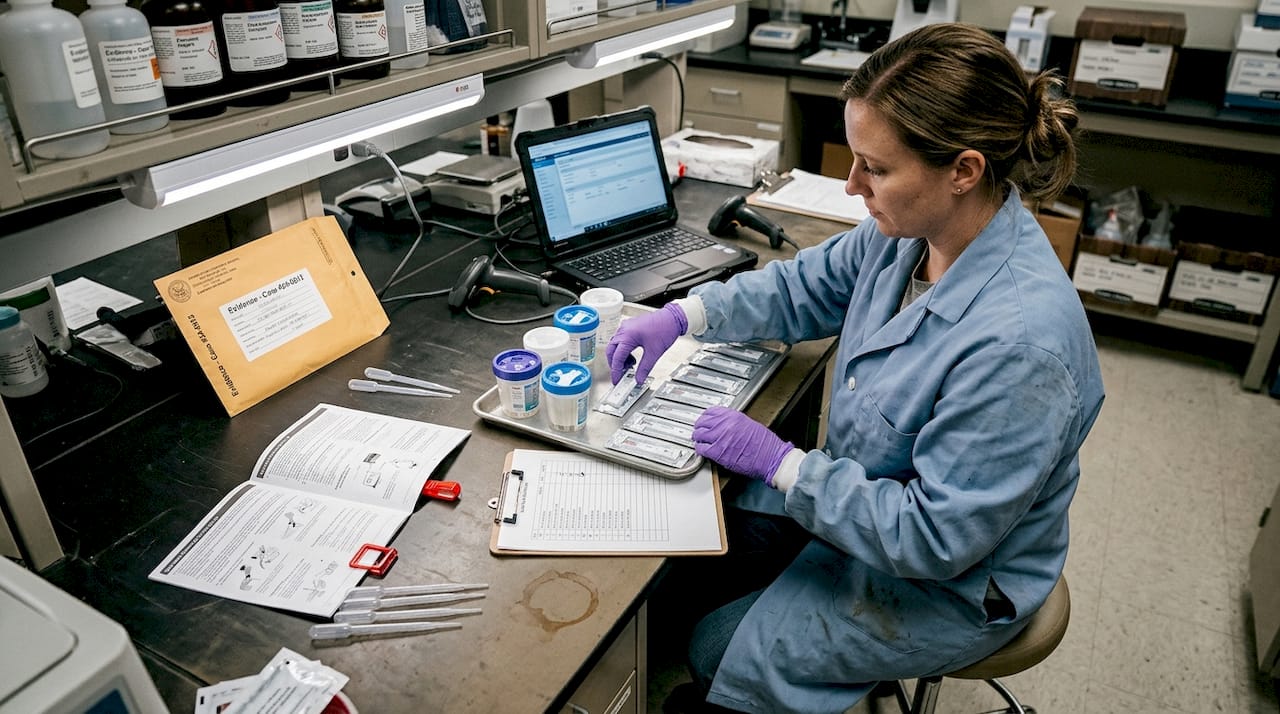
Pro Tip: Always verify that your rapid test cups are CLIA waived and FDA cleared before using them in any official workflow. Products that lack these designations cannot be used as the basis for employment or legal action. Review your forensic checklist before every collection event.
Step-by-step workflow: Employee drug testing process
A structured employee testing workflow protects both the agency and the officer being tested. Skipping steps, even with good intentions, creates vulnerabilities that defense attorneys and labor arbitrators will exploit.
Best-practice employee workflows follow this sequence:
- Trigger identification. Document the specific basis for testing: reasonable suspicion observations, random selection, post-incident protocol, or return-to-duty requirement.
- Supervisor notification and transport. A trained supervisor escorts the employee to the collection site. The employee should not drive themselves.
- Specimen collection. A certified collector follows standard protocols, including temperature verification, tamper-evident sealing, and CCF completion.
- Initial screening. A CLIA waived rapid test cup provides a presumptive result. This result alone cannot trigger disciplinary action.
- Split sample preservation. The specimen is split into two portions. One goes to the primary lab; the other is stored for potential retest.
- Laboratory confirmation. Any presumptive positive goes to a certified lab for GC-MS confirmation, which is the gold standard for identifying specific substances and concentrations.
- MRO review. A Medical Review Officer reviews the confirmed result, contacts the employee to check for legitimate prescriptions, and issues a final determination.
“No disciplinary action should follow a positive screen until MRO review is complete. Skipping this step is one of the most litigated errors in public sector employment law.”
Pro Tip: Keep a timestamped log at every handoff point, from collection to lab to MRO. If your chain of custody has a gap of even a few hours without documentation, the result can be challenged. Review workplace drug testing tips to build a gap-proof process.
Step-by-step workflow: Suspect and evidence drug testing process
Suspect testing carries higher evidentiary stakes. A result that cannot survive cross-examination is worse than no result at all, because it signals to the court that your agency’s procedures are unreliable.
Field presumptive tests and DRE protocols establish probable cause for arrest, not guilt. That distinction matters enormously. Here is the correct sequence:
- Field detection. Officers use color-based presumptive tests or Drug Recognition Expert (DRE) evaluation to establish probable cause. Results are documented but treated as preliminary.
- Arrest and evidence collection. Suspected substances and biological specimens are collected, sealed, and logged using law enforcement evidence forms.
- Secure transport. Evidence is transported to a certified forensic lab under documented chain of custody. Every transfer is signed and timestamped.
- Forensic lab confirmation. The lab uses GC-MS/MS, LC-MS/MS, or FTIR analysis per SWGDRUG standards. These methods identify specific compounds and rule out false positives.
- Legal documentation. The lab issues a certified report. This report, combined with the chain of custody log, forms the evidentiary package for prosecution or defense.
“Presumptive field results are the beginning of the process, not the end. Agencies that treat a color test as conclusive are building cases on sand.”
For screening method reliability, always pair field tools with a clear escalation path to lab confirmation. No field test, regardless of brand or technology, meets the evidentiary standard for conviction on its own.
Common errors and troubleshooting in drug testing workflows
Even experienced agencies make predictable mistakes. Knowing where workflows break down lets you build safeguards before problems occur.
Field tests are prone to error, and immunoassay screens miss up to 40% of benzodiazepine positives, contributing to thousands of wrongful arrests annually. The most common error sources include:
- Incomplete chain of custody forms. Missing signatures, timestamps, or transfer logs are the top reason results get thrown out.
- Specimen adulteration. Subjects may attempt to dilute or substitute specimens. Use cups with built-in adulteration checks to catch this at collection.
- Relying on presumptive results. Acting on a rapid screen without lab confirmation exposes your agency to legal liability.
- Improper storage. Specimens stored at incorrect temperatures or for too long degrade and produce unreliable results.
- Refusal handling errors. Refusal to test must be documented immediately and treated as a positive result per policy and DOT rules.
For minimizing false positives, always use multi-panel cups with adulterant detection built in. If a specimen shows signs of tampering, document it and initiate a retest under direct observation. Lab manager tips can help you build a quality control checklist that catches these issues before they reach the reporting stage.
Pro Tip: Run periodic blind audits on your workflow by submitting known-negative specimens through your standard process. This reveals documentation gaps and equipment calibration issues before a real case exposes them.
Verifying and documenting results for compliance and defense
Once results are in hand, documentation is what transforms a test result into a legally defensible finding. Blind audits, confirmatory testing, and robust documentation are the three pillars of a workflow that survives legal scrutiny.
Follow this documentation sequence after every test:
- Record the final result (positive, negative, or inconclusive) with the lab report attached.
- Log the MRO or forensic reviewer’s determination with date and signature.
- Store all chain of custody forms, collection logs, and lab reports in a secure, access-controlled system.
- Set a retention schedule. Federal guidelines generally require records to be kept for a minimum of two years for negative results and five years for positives.
- Prepare an audit package that includes all documentation from trigger to final result, organized chronologically.
Key elements of an audit-ready file:
- Original CCF or evidence log
- Collector certification records
- Lab accreditation certificate
- Confirmatory test report
- MRO or forensic reviewer determination
- Any retest or split-sample results
A well-organized reporting workflow makes the difference between a result that stands up in arbitration and one that gets dismissed. Build your compliance workflow around the assumption that every result will eventually be challenged.
Better results start with trusted drug testing products
Building a compliant workflow means nothing if the tools you use cannot deliver reliable, validated results. Every step described above depends on screening products that meet federal standards and hold up under scrutiny.
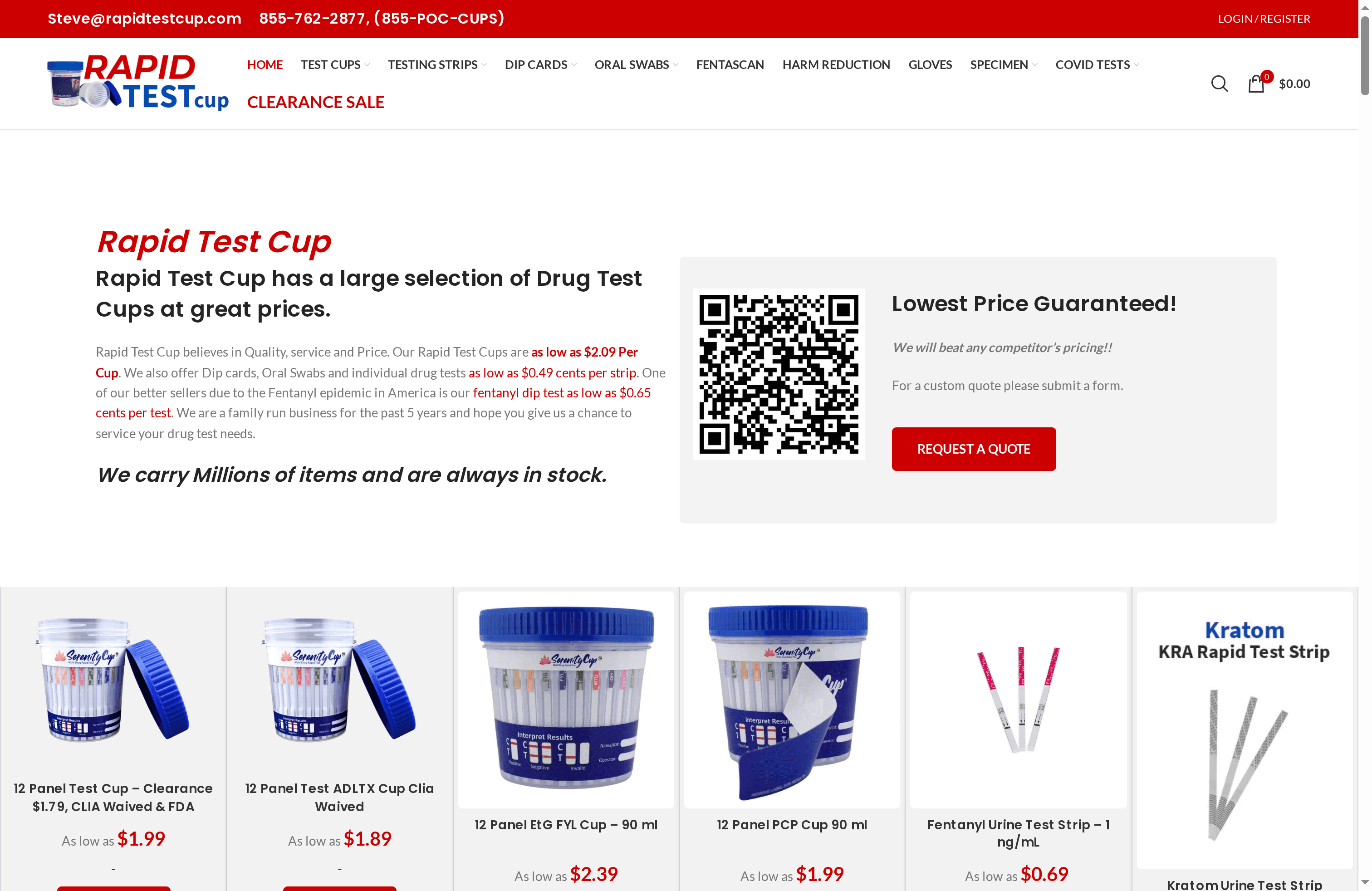
At rapidtestcup.com, we supply law enforcement agencies with CLIA waived, FDA-cleared testing products designed for professional workflows. The 12 panel ADLTX cup covers the most common substances with built-in adulterant detection, making it a strong fit for both employee and suspect screening. For broader coverage, the 22 panel drug test with adulterants and zaza addresses emerging substances that standard panels miss. Need targeted confirmation support? The MET drug test strip delivers fast, accurate methamphetamine screening for field or lab use. Bulk pricing and fast shipping make it easy to keep your supply chain ready.
Frequently asked questions
What is the legal standard for law enforcement drug testing documentation?
Documentation must ensure an unbroken chain of custody with complete logs at every transfer point, in compliance with applicable federal and state regulations. Any gap in that record can render a result legally indefensible.
How do agencies reduce false positives in field drug testing?
Agencies require confirmatory lab testing for all presumptive positives before taking any disciplinary or prosecutorial action. Field tests establish probable cause, not confirmed findings.
What are the main specimen types for law enforcement drug testing workflows?
Urine, oral fluid, and breath are the primary collection matrices for both employee and suspect testing under DOT and SAMHSA guidelines. The appropriate type depends on the testing context and substances being screened.
What happens if a collected specimen is insufficient or adulterated?
Insufficient specimens require a documented retest under direct observation. Adulteration or refusal to provide a specimen is generally treated as a positive result under both DOT rules and most agency policies.
Who reviews contested or positive drug test results for law enforcement employees?
A Medical Review Officer reviews all confirmed positive results for employees, verifies whether a legitimate prescription explains the finding, and issues the final determination before any action is taken.