
Blog
Substance abuse screening benefits for treatment centers


Choosing the right substance abuse screening approach directly impacts patient outcomes, cost efficiency, and treatment success rates in your facility. Healthcare professionals face mounting pressure to implement evidence-based protocols that identify substance use disorders early while managing limited budgets and resources. Understanding the tangible benefits of systematic screening helps administrators make informed decisions about which tools and methods will deliver the greatest return on investment. This article explores seven key advantages that effective screening programs provide to treatment centers, from early intervention opportunities to measurable cost savings and improved clinical decision-making.
Table of Contents
- 1. Early Identification Facilitates Timely Intervention And Recovery
- 2. Validated Screening Tools Improve Detection Accuracy And Clinical Decisions
- 3. Cost Savings And Reduced Healthcare Utilization Through Effective Screening
- 4. Addressing Screening Limitations And Implementation Barriers
Key takeaways
| Point | Details |
|---|---|
| Early detection saves lives | Screening identifies substance use disorders before complications escalate, enabling faster intervention |
| Validated tools boost accuracy | Evidence-based instruments like TAPS and ASSIST reduce false results and improve clinical decisions |
| Cost savings are substantial | Effective screening cuts healthcare costs by $366-$542 per member monthly through reduced readmissions |
| Implementation requires planning | Training staff and integrating protocols into workflows overcomes common barriers |
| Patient-centered approaches work best | Tailoring screening methods to individual needs increases cooperation and treatment success |
1. Early identification facilitates timely intervention and recovery
Substance use disorders progress rapidly when left undetected, leading to severe health complications, overdoses, and treatment resistance. Early identification through screening fundamentally changes addiction trajectories by enabling intervention before disorders become entrenched. Treatment centers that implement systematic screening protocols catch patients at earlier stages when brief interventions and outpatient services remain effective options.
Screening Brief Intervention and Referral to Treatment (SBIRT) exemplifies how early detection translates into action. This model combines rapid screening tools with immediate counseling for patients who screen positive, creating a seamless pathway from identification to care. Clinical studies demonstrate that patients receiving early intervention through SBIRT show significantly higher rates of treatment engagement and sustained recovery compared to those identified later in their disease progression.
Certain patient populations benefit disproportionately from early screening. Pregnant women with undetected substance use face severe maternal and fetal health risks that screening can prevent. Emergency department patients often present with injuries or illnesses masking underlying substance use, making routine screening essential. Adolescents and young adults represent another critical group, as early intervention during formative years prevents progression to chronic addiction.
Pro Tip: Implement substance abuse screening methods at every patient intake, not just when substance use is suspected. Universal screening eliminates bias and catches cases that subjective assessment would miss.
The clinical improvements linked to early screening extend beyond addiction metrics. Patients identified early show better management of co-occurring mental health conditions, reduced emergency room utilization, and higher medication adherence rates. Early detection also allows treatment teams to design personalized care plans that address the full spectrum of patient needs before crisis situations develop.
2. Validated screening tools improve detection accuracy and clinical decisions
Choosing appropriate screening instruments directly impacts the reliability of your detection program. Validated tools like TAPS and ASSIST demonstrate high sensitivity and specificity for identifying substance use disorders across diverse patient populations. The Tobacco, Alcohol, Prescription medication, and other Substance use (TAPS) tool offers a two-step screening process that first identifies any substance use, then assesses problem severity through targeted follow-up questions.
The Alcohol, Smoking and Substance Involvement Screening Test (ASSIST) provides detailed risk scores for multiple substance categories, helping clinicians prioritize interventions. The Drug Abuse Screening Test-10 (DAST-10) delivers rapid assessment through ten yes/no questions, making it ideal for high-volume settings. Urine drug testing (UDT) complements these self-report tools by providing objective biochemical confirmation of recent substance use.
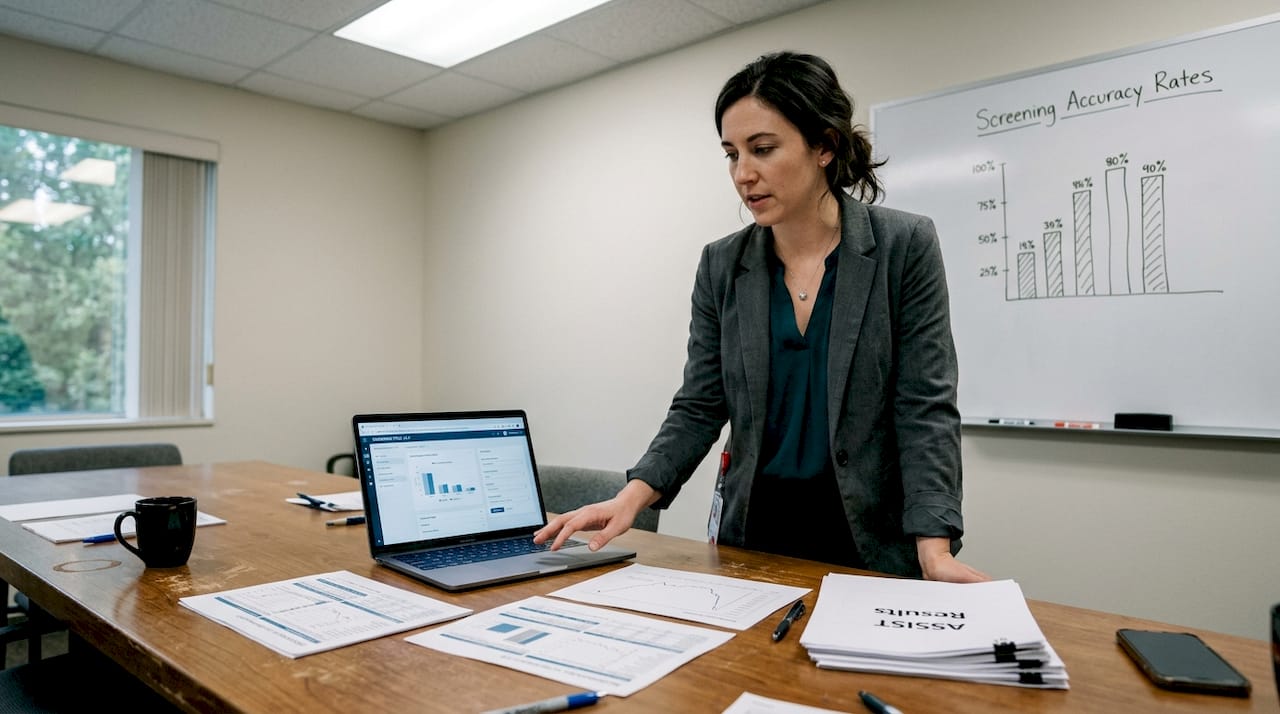
| Screening Tool | Sensitivity | Specificity | Best Use Case |
| — | — | — |
| TAPS | 93% | 88% | Primary care and intake screening |
| ASSIST | 87% | 84% | Multi-substance risk assessment |
| DAST-10 | 85% | 86% | Quick screening in busy settings |
| UDT Immunoassay | 95% | 90% | Objective confirmation and monitoring |
Common challenges threaten screening accuracy even with validated tools. False positive results occur when immunoassays cross-react with structurally similar medications or dietary supplements. False negatives happen when substance concentrations fall below detection thresholds or when patients adulterate samples. Understanding these limitations helps you implement quality controls that maintain result integrity.
Confirmatory testing using gas chromatography-mass spectrometry (GC-MS) or liquid chromatography-tandem mass spectrometry (LC-MS/MS) resolves ambiguous immunoassay results. These methods identify specific drug metabolites with near-perfect accuracy, eliminating false positives that could damage patient relationships or treatment plans. Many treatment centers establish protocols requiring confirmatory testing for all positive immunoassay results before taking clinical action.
Tool selection should match your patient population characteristics. Adolescent screening requires age-appropriate language and shorter instruments to maintain engagement. Patients with limited literacy benefit from verbal administration rather than written questionnaires. Testing for multiple substances simultaneously increases detection rates since polysubstance use affects over 60% of individuals with substance use disorders.
Pro Tip: Rotate between self-report tools and biological testing to capture the full picture. Self-report instruments detect substances outside typical detection windows, while UDT provides objective verification and identifies substances patients may not disclose.
3. Cost savings and reduced healthcare utilization through effective screening
Systematic screening programs deliver measurable financial benefits that justify implementation costs. Research demonstrates that screening reduces healthcare costs by $366 to $542 per member per month in Medicaid populations through decreased emergency department visits and hospital readmissions. These savings compound over time as patients achieve stable recovery and require fewer crisis interventions.
The Washington State Screening, Brief Intervention, and Referral to Treatment program provides compelling evidence of screening’s economic impact. After implementation, intervention rates for identified patients jumped from 32% to 90%, creating a direct pathway from detection to treatment. This dramatic increase in intervention rates corresponded with significant reductions in inpatient psychiatric admissions and medical hospitalizations.
| Outcome Measure | Before Screening | After Screening | Impact |
|---|---|---|---|
| Intervention rate | 32% | 90% | 181% increase |
| Hospital readmissions | Baseline | Reduced | OR 0.53 (47% reduction) |
| Monthly cost per member | Baseline | $366-$542 lower | 15-25% savings |
| Emergency visits | Baseline | 28% decrease | Fewer crisis presentations |
Hospital readmission rates serve as a key indicator of screening program effectiveness. Patients who receive screening and brief intervention show readmission odds ratios of 0.53 compared to unscreened populations, representing a 47% reduction in return hospitalizations. This reduction stems from earlier treatment engagement, better medication compliance, and stronger connections to outpatient support services.
“Screening programs that integrate brief intervention reduce costly acute care utilization by connecting patients to appropriate treatment before crisis situations develop. The return on investment becomes apparent within the first year of implementation.”
Treatment center administrators benefit from understanding these economics when advocating for screening resources. The upfront costs of training staff, purchasing screening tools, and modifying intake workflows pale in comparison to ongoing savings from reduced readmissions and emergency care. Drug screening’s clinical impact extends beyond individual patients to system-wide efficiency improvements.
Screening also reduces the hidden costs of undetected substance use, including prolonged lengths of stay, medication complications, and treatment non-adherence. Patients with unidentified substance use disorders occupy hospital beds 30% longer than similar patients without substance issues, creating capacity constraints and revenue losses. Early identification through screening allows care teams to address substance use concurrently with primary diagnoses, shortening stays and improving outcomes.
4. Addressing screening limitations and implementation barriers
No screening approach achieves perfect accuracy, and understanding limitations helps you design robust protocols. Immunoassay tests face adulteration risks when patients add substances to samples or substitute clean urine. Detection windows vary by substance, with marijuana remaining detectable for weeks while cocaine clears within days. These technical constraints require complementary strategies that combine multiple assessment methods.
Subtle screening instruments like the Substance Abuse Subtle Screening Inventory (SASSI) attempt to identify substance use through indirect psychological indicators rather than direct questions. However, research challenges their utility compared to straightforward validated tools, as indirect measures produce more false negatives and lack the specificity needed for clinical decision-making. Direct screening methods that ask explicitly about substance use demonstrate superior performance across patient populations.
Implementation barriers frequently derail even well-designed screening programs. Staff members require comprehensive training not just in administering screening tools but in delivering brief interventions and making appropriate referrals. Many clinicians feel unprepared to discuss positive screening results with patients, leading to inconsistent follow-through. Regular training refreshers and role-playing exercises build confidence and maintain protocol adherence.
Electronic health record (EHR) integration presents another common obstacle. Screening implementation challenges include creating workflows that prompt screening at appropriate touchpoints, documenting results in standardized formats, and triggering automatic referrals when patients screen positive. Treatment centers that invest in EHR customization see higher screening completion rates and better continuity of care.
Patient-centered approaches significantly improve screening effectiveness and acceptance. Explaining the purpose of screening, emphasizing confidentiality protections, and framing questions in non-judgmental language increases honest disclosure. Patients who understand that screening aims to help rather than punish them provide more accurate information and engage more readily with recommended interventions.
Confirmatory testing mitigates false positive concerns while maintaining patient trust. Establishing clear protocols that require laboratory confirmation before taking adverse actions protects patients from consequences based on inaccurate results. This two-step process (preliminary immunoassay followed by confirmatory testing) balances efficiency with accuracy, catching true positives while filtering out false alarms.
Explore products and resources for effective substance abuse screening
Implementing evidence-based screening requires access to reliable testing products and expert guidance. RapidTestCup provides comprehensive resources to help treatment centers optimize their screening protocols with CLIA-waived, FDA-approved testing solutions.
Our top urine drug test kits comparison evaluates leading products for accuracy, ease of use, and cost-effectiveness in clinical settings. The guide to selecting drug test kits walks you through choosing appropriate panel configurations based on your patient population and treatment protocols. For comprehensive screening needs, the 18 panel drug test cup with adulterants detects emerging substances like K2 and fentanyl while identifying sample tampering attempts through built-in validity testing.
Frequently asked questions
What are the common substance abuse screening methods used in treatment centers?
TAPS, ASSIST, DAST-10, urine drug testing, and SBIRT represent the most widely adopted screening approaches in treatment settings. These validated tools offer varying levels of detail, from quick 10-question assessments to comprehensive multi-substance risk evaluations. Combining self-report instruments with biological testing provides the most complete picture of patient substance use patterns.
How does substance abuse screening reduce healthcare costs?
Early identification through screening enables timely intervention before substance use disorders require expensive emergency or inpatient care. Studies document monthly cost savings of $366 to $542 per Medicaid member through reduced hospital readmissions and emergency visits. Treatment centers see additional savings from shorter lengths of stay and fewer complications when substance use is addressed proactively.
What are the challenges with false positives in drug screening?
Sample adulteration, cross-reactivity with medications, and cutoff threshold sensitivities can produce false positive immunoassay results. Common over-the-counter medications and certain foods trigger positive screens for amphetamines, opiates, and other substances. Confirmatory testing using GC-MS or LC-MS/MS methods eliminates these false positives by identifying specific drug metabolites with near-perfect accuracy.
Why is patient-centered care important in substance abuse screening?
Tailored screening approaches that respect patient dignity and explain the clinical rationale increase honest disclosure and cooperation. Patients who feel judged or coerced provide less accurate information and resist recommended interventions. Treatment centers that implement trauma-informed, non-punitive screening protocols see higher completion rates, better treatment engagement, and improved long-term recovery outcomes.