Blog
Urine vs saliva drug tests: key differences and uses


TL;DR:
- Urine tests detect drug metabolites over longer periods, suitable for comprehensive screening.
- Saliva tests identify recent drug use within 24 to 48 hours and are easier to observe.
- The choice depends on operational needs, regulatory compliance, and the specific detection window.
Choosing the wrong drug test for your setting is not just an operational inconvenience. It can compromise compliance, produce misleading results, and put your program at legal risk. Many labs and clinics assume urine and saliva tests are interchangeable, but they operate on fundamentally different biological principles, cover different detection windows, and suit very different use cases. This guide breaks down the real differences between urine and saliva drug tests, covering detection panels, accuracy, tampering vulnerabilities, and regulatory fit, so your team can make the right call every time.
Table of Contents
- Fundamentals of urine and saliva drug testing
- Substances detected: What each test type reveals
- Comparing accuracy, reliability, and tampering risks
- Applications, compliance, and real-world selection factors
- Our perspective: The practical truth about test selection
- Explore reliable drug testing solutions
- Frequently asked questions
Key Takeaways
| Point | Details |
|---|---|
| Urine tests provide longer detection | Urine testing reveals substance use over days to weeks and is best for routine workplace or compliance scenarios. |
| Saliva tests reveal recent use | Saliva testing captures very recent drug use, making it ideal for post-accident or suspicion cases. |
| Sample tampering risks differ | Saliva collection’s direct observation reduces tampering risk compared to urine. |
| Selection must fit situation | Regulatory needs, detection windows, and workflow all matter when choosing the test type. |
Fundamentals of urine and saliva drug testing
Urine and saliva tests are not just different collection methods. They target different biological markers, require different handling protocols, and carry different implications for chain of custody.
Urine tests screen for drug metabolites, which are the byproducts your body produces as it processes substances. Because metabolites accumulate in urine over time, urine tests can capture drug use that occurred days or even weeks in the past. Urine drug test advantages are well established, and urine testing has been the gold standard for detection due to its extensive substance coverage and metabolite screening capability.
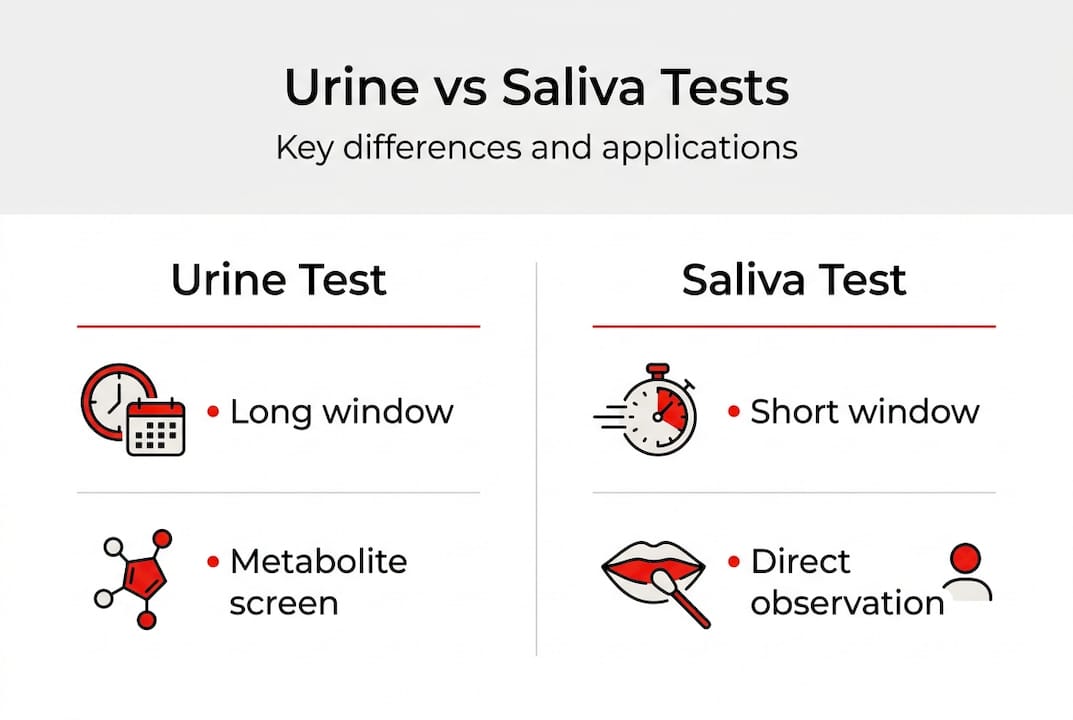
Saliva tests, by contrast, detect parent drugs directly from oral fluid. The substance itself, not its metabolite, must still be present in the donor’s saliva at the time of collection. This makes saliva tests highly sensitive to recent use but less useful for detecting past exposure. Saliva drug testing basics confirm that this method is less invasive and can be directly observed to reduce sample tampering risk.
Here is a quick overview of how the two methods differ operationally:
- Collection site: Urine requires a private restroom; saliva is collected on-site under direct observation
- Sample type: Urine contains metabolites; saliva contains parent compounds
- Handling: Urine specimens need temperature verification; saliva samples are stable at room temperature
- Chain of custody: Both require documentation, but saliva collection is easier to observe and control
- Turnaround: Both methods offer rapid results with point-of-care kits
Pro Tip: If your facility has limited private collection space or high patient throughput, saliva testing can reduce bottlenecks while maintaining observed collection integrity.
Understanding analytical approaches for oral fluid testing helps labs appreciate why saliva requires different cutoff thresholds and confirmation strategies compared to urine.
Substances detected: What each test type reveals
With both methods explained, let’s examine which drugs and substances each test is best suited to detect.
The detection panel and window period are two of the most critical variables when selecting a test. Urine tests detect a broader range of substances and capture use over a longer timeframe, making them the preferred choice for comprehensive screening programs. Saliva tests are typically used for recent use detection within 24 to 48 hours, making them ideal for reasonable suspicion or post-accident scenarios.
| Substance | Urine detection window | Saliva detection window |
|---|---|---|
| THC (cannabis) | 3 to 30 days | 4 to 24 hours |
| Cocaine | 2 to 4 days | 1 to 2 days |
| Opioids | 2 to 4 days | 12 to 36 hours |
| Amphetamines | 2 to 5 days | 24 to 48 hours |
| Benzodiazepines | 3 to 7 days | 1 to 2 days |
| PCP | 7 to 14 days | 1 to 3 days |
The gap in detection windows is not trivial. For a substance like THC, urine can detect use up to a month after exposure in heavy users, while saliva may miss use that occurred more than a day ago. This distinction shapes the entire purpose of each test.
Here is how to match test type to detection goal:
- Pre-employment screening: Use urine for broad historical coverage
- Post-accident testing: Saliva is better for confirming recent impairment at the time of the incident
- Random workplace testing: Urine provides a wider net; saliva is faster and less disruptive
- Treatment program monitoring: Urine is preferred for tracking abstinence over time
- Reasonable suspicion testing: Saliva is ideal when immediate impairment is the concern
For a side-by-side breakdown of drug test types, including multi-panel options, reviewing the full spectrum of available formats helps labs build a testing protocol that fits their specific regulatory environment. NIOSH workplace drug testing guidelines also inform which substances must be included in federally compliant panels.
Comparing accuracy, reliability, and tampering risks
After reviewing which drugs each test covers, let’s see how accuracy and reliability stack up.
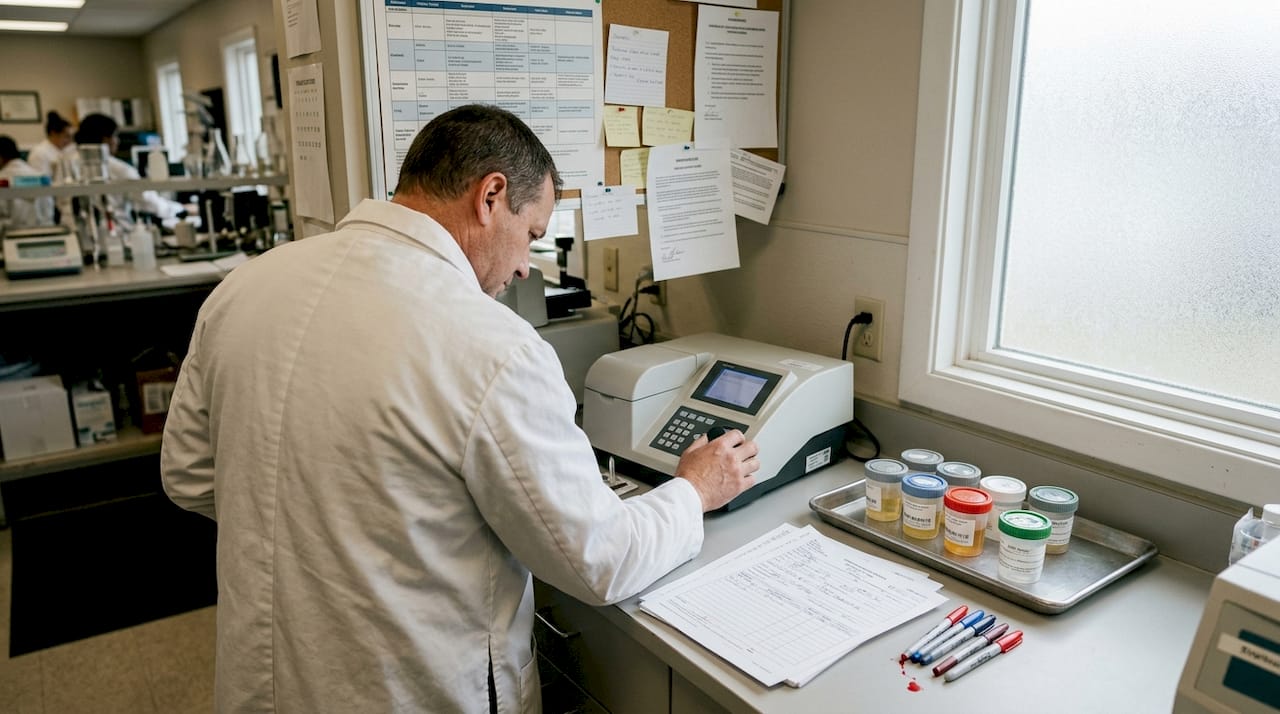
Both urine and saliva tests are highly accurate when used correctly, but they have different failure points. Sensitivity and specificity vary by substance, cutoff level, and collection conditions.
| Factor | Urine tests | Saliva tests |
|---|---|---|
| Sensitivity | High (metabolite accumulation) | Moderate to high (parent drug) |
| Specificity | Very high with confirmation | High with proper cutoffs |
| Tampering risk | Moderate (substitution, dilution) | Low (observed collection) |
| False positive risk | Low with validated kits | Low, but food/drink interference possible |
| Confirmation method | GC-MS or LC-MS/MS | LC-MS/MS preferred |
Observed saliva collection significantly reduces the risk of sample substitution, while urine tests remain more vulnerable to adulteration through dilution or chemical additives. Analytical approaches for oral fluid confirm that direct observation during saliva collection is one of its strongest integrity advantages.
That said, urine tests remain the reference standard for workplace testing due to decades of developed validation protocols, established cutoff values, and regulatory acceptance across federal and state programs.
Key stat: Adulteration is a real concern. Studies estimate that up to 10% of urine specimens submitted in unobserved settings show signs of tampering, which is why adulteration testing strips are a standard addition to professional urine test kits.
For labs evaluating options, a urine test kit comparison can clarify which cup formats include built-in adulteration checks. The urine test reliability of CLIA waived, FDA-approved kits is well supported when proper collection protocols are followed.
One often overlooked factor is the oral food and drink interference window for saliva tests. Donors should not eat, drink, or smoke for at least 10 minutes before collection to avoid dilution or pH interference that could affect results.
Applications, compliance, and real-world selection factors
Understanding test reliability leads directly into real-world application decisions, especially for compliance and best practice.
Selecting between urine and saliva testing is rarely just a scientific decision. Regulatory requirements, staffing capacity, cost per test, and patient population all factor in. Urine tests are preferred for federally mandated workplace testing, while saliva tests are better suited for recent impairment assessment in clinical or field settings.
Here is what to weigh when building or updating your testing protocol:
- Regulatory compliance: Federal DOT and SAMHSA programs require urine testing. Saliva is not yet accepted for federally mandated panels
- Cost per test: Saliva tests are often slightly higher per unit but eliminate the need for restroom facilities and temperature monitoring equipment
- Staffing and workflow: Saliva collection takes roughly 5 minutes and requires no private space, reducing administrative burden
- Patient population: Clinics serving populations prone to specimen manipulation benefit from observed saliva collection
- Legal defensibility: Urine tests have a longer track record in legal proceedings; saliva testing is gaining acceptance but varies by jurisdiction
“For substance abuse treatment programs, urine testing remains the backbone of monitoring protocols because of its long detection window and established legal standing. Saliva testing plays a supporting role when immediate impairment assessment is needed.”
Pro Tip: Many high-volume labs run both test types in parallel. Urine for scheduled monitoring and saliva for unannounced or field-based checks. This layered approach maximizes both historical coverage and real-time detection.
Staying current with compliance in drug testing regulations and following a structured drug screening compliance workflow helps labs avoid costly audit failures and ensures results hold up under legal scrutiny.
Our perspective: The practical truth about test selection
Here is something most comparison guides will not tell you: the biggest testing failures we see are not caused by choosing the wrong test type. They are caused by choosing a test without understanding the workflow it demands.
A saliva test is only as tamper-resistant as the collector standing in front of the donor. An urine test is only as accurate as the temperature strip being checked and the adulteration panel being reviewed. Both tests require trained staff and consistent protocols. Neither runs itself.
Labs that switch to saliva testing because it seems easier often underestimate the training required to handle borderline results, manage the shorter collection window, and interpret oral fluid-specific cutoffs. Labs that stick with urine because it is familiar sometimes ignore growing adulteration rates that quietly erode result integrity.
The honest answer is that neither test is universally superior. Context is everything. The right test is the one your team can execute correctly, consistently, and in full compliance with the regulations that govern your setting. Reviewing the guide to drug test differences is a useful starting point, but the real work is in matching test selection to operational reality.
Explore reliable drug testing solutions
When you are ready to implement or upgrade your program, the right products make a measurable difference in both compliance and workflow efficiency.
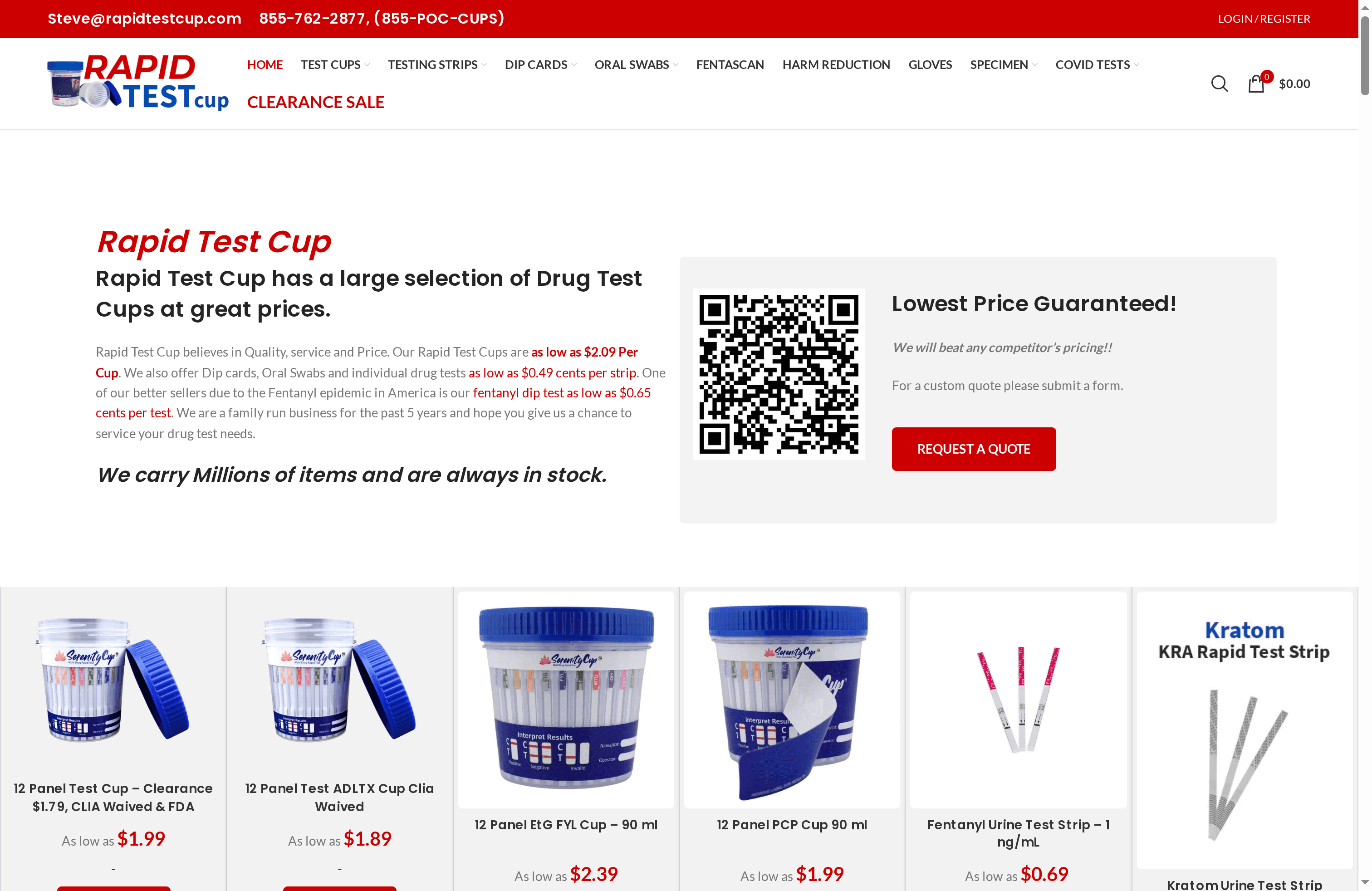
At RapidTestCup, we supply labs and clinics with professional-grade testing options built for real operational demands. The 12 panel ADLTX Cup includes built-in adulteration testing, making it a strong choice for programs where specimen integrity is a priority. For flexible urine screening, our urine drug test dip cards offer fast, accurate results across a broad substance panel. Need oral fluid testing? Our mouth swab drug test delivers observed-collection reliability with a 12-panel format. All products are CLIA waived and FDA approved. Contact us for bulk pricing and custom panel options.
Frequently asked questions
Which test detects drug use for the longest window?
Urine tests detect most substances for several days to weeks depending on the drug and frequency of use, while saliva tests typically only capture recent use within 24 to 48 hours.
Are saliva tests more resistant to sample tampering?
Yes. Because saliva collection is directly observed, it is significantly harder to falsify compared to urine tests, which are vulnerable to substitution, dilution, and chemical adulteration.
Do urine and saliva tests detect the same drugs?
There is significant overlap, but urine tests cover a broader and more in-depth range of substances, with longer detection windows for nearly every drug class compared to saliva.
Which test is best for workplace drug screening?
Urine tests are preferred for federally mandated and comprehensive workplace programs, while saliva tests are ideal for detecting recent impairment in post-accident or reasonable suspicion scenarios.