Blog
Why Verify Drug Tests: A Guide for Professionals


TL;DR:
- Verifying drug test results through confirmatory testing and Medical Review Officer review is essential to ensure accuracy and legal defensibility. Skipping these steps exposes organizations to wrongful termination claims, privacy violations, and unreliable decisions based on faulty data. Implementing a thorough verification process safeguards both employer and employee interests, promotes workplace safety, and maintains program integrity.
A positive drug test result landing on your desk does not tell you the whole story. For healthcare administrators, HR managers, and law enforcement supervisors, understanding why verify drug tests matters comes down to one core reality: initial screening results are not final verdicts. They are starting points. Without a structured verification process, organizations expose themselves to wrongful termination claims, privacy violations, and decisions built on faulty data. The stakes are too high to skip steps. This guide walks through exactly what verification involves and why every professional responsible for drug testing programs needs to treat it as non-negotiable.
Table of Contents
- Key takeaways
- Why verify drug tests: where errors enter the process
- Confirmatory testing and what it actually proves
- The MRO review: the most underestimated step
- Benefits of verifying drug tests for organizations and individuals
- My take on what professionals consistently get wrong
- How Rapidtestcup supports compliant verification programs
- FAQ
Key takeaways
| Point | Details |
|---|---|
| Initial screens are not final | Positive screening results require confirmatory testing before any employment action is taken. |
| Confirmatory testing reduces errors | Mass spectrometry and similar methods distinguish between similar substances that immunoassay screens cannot. |
| MROs protect all parties | A Medical Review Officer provides the legally defensible final result that shields both employer and employee. |
| Employee rights matter | Workers have 72 hours to request split specimen retesting at an independent certified lab. |
| Verification reduces legal risk | A thorough verification process significantly lowers employer exposure to costly wrongful termination claims. |
Why verify drug tests: where errors enter the process
Drug testing sounds straightforward until you examine where things go wrong. Most workplace programs begin with immunoassay screening, a rapid method that detects the presence of drug-related compounds in urine, saliva, or hair. These screens are fast and cost-effective. They are also prone to reacting to substances that were never the target.
The most common testing methods include:
- Urine testing: The most widely used method; detects recent drug use through metabolites excreted in urine
- Saliva testing: Useful for detecting very recent use, often within hours; preferred for post-accident or reasonable suspicion situations
- Hair follicle testing: Provides a longer detection window, typically up to 90 days, but cannot detect recent use
- Blood testing: Most accurate but invasive and expensive; used primarily in clinical or forensic settings
Each method carries its own set of limitations. Urine screens, for example, can produce a false positive from over-the-counter cold medications containing pseudoephedrine, poppy seed consumption triggering an opiate flag, or certain antidepressants resembling amphetamines in the assay. These are not rare edge cases. They happen regularly across high-volume testing programs.
Sample integrity is another vulnerability. Chain-of-custody procedures documenting sample handling from collection to reporting are designed to prevent tampering and misidentification, but they depend entirely on consistent execution. A gap in documentation anywhere in that chain can render a result legally indefensible.
Pro Tip: When selecting collection sites, prioritize those with certified collectors who follow strict chain-of-custody documentation. A poorly documented sample collected at an unmonitored facility creates legal exposure regardless of what the lab finds.
Onsite drug testing with certified collection oversight minimizes the window for sample adulteration and strengthens the evidentiary chain. For programs under federal regulation or legal scrutiny, this is not optional.
Confirmatory testing and what it actually proves
Here is where the importance of drug test verification becomes technical and worth understanding in detail. When an initial screen comes back positive, the result moves to a confirmatory test before any report is finalized. The most widely used confirmatory method is gas chromatography-mass spectrometry, commonly called GC-MS, or liquid chromatography-mass spectrometry (LC-MS). These technologies do not guess at what a compound resembles. They identify the exact molecular structure of a substance.
Confirmatory testing with mass spectrometry distinguishes between chemically similar substances with a level of precision that immunoassay screens cannot match, and initial positive results are confirmed before being forwarded to the Medical Review Officer.
The practical difference is significant. A screening test might flag a sample as positive for opiates. The confirmatory test will tell you whether that signal comes from heroin metabolites, codeine in a prescribed cough syrup, or morphine from a legitimate post-surgical medication. Without that distinction, employers act on incomplete information.
| Feature | Immunoassay screening | Confirmatory testing (GC-MS / LC-MS) |
|---|---|---|
| Speed | 5 to 30 minutes | 24 to 72 hours |
| Cost | Low | Higher |
| Accuracy | Moderate; false positives possible | Very high; identifies exact molecules |
| Purpose | Initial triage | Definitive identification |
| Legal standing | Insufficient alone | Accepted in legal and regulatory proceedings |
| Cutoff sensitivity | Broad | Substance-specific thresholds |
Laboratories certified by SAMHSA and CAP undergo rigorous inspections and proficiency testing to maintain the analytical quality that confirmatory results depend on. Certification matters. Sending samples to a non-certified lab undermines every subsequent step in the verification chain.
Pro Tip: Always confirm that your testing vendor uses SAMHSA-certified labs for confirmatory analysis. Ask for their certification documentation before signing a contract. This protects your organization legally and operationally.
For a deeper look at confirmatory testing accuracy, the differences between presumptive and definitive methods shape every downstream decision in a compliant program.
The MRO review: the most underestimated step
Most HR professionals know that a Medical Review Officer exists somewhere in the process. Far fewer understand that the MRO review is the single most protective element in the entire verification chain. This is where validating drug test results moves from a laboratory exercise to a legal and medical determination.

A Medical Review Officer is a licensed physician with specialized training in forensic toxicology and federal drug testing regulations. The MRO’s role is to independently review every confirmed positive result before it is ever reported to an employer.
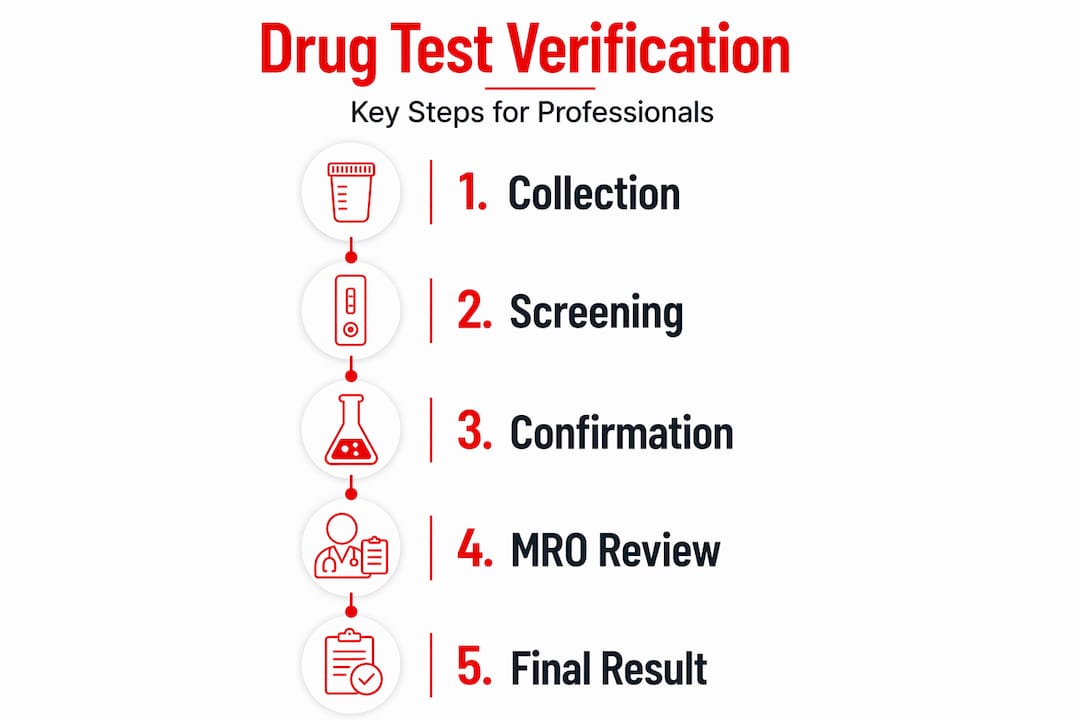
The MRO verification process follows a structured sequence:
- Receive the confirmed lab result from the certified laboratory along with chain-of-custody documentation
- Attempt contact with the donor (the person who was tested) to discuss the result directly
- Conduct a confidential medical interview to determine whether a legitimate medical explanation exists, such as a valid prescription
- Verify prescription legitimacy by reviewing dosage, pharmacy records, and medical history rather than simply accepting self-reported claims
- Make the final determination and report either a verified positive, negative, or other designated result to the employer
That fourth step is where the MRO earns its value. MROs verify prescriptions through pharmacy records and medical documentation, not just a donor’s word. This independent assessment prevents fraud while protecting legitimate patients.
Privacy protection is equally important. A positive lab result does not automatically fail a test because MROs report results as negative to employers when a valid prescription explains the finding, and they never disclose prescriptions or personal medical details to employers. The employer receives only what they need to know for workforce decisions.
Employees retain rights throughout this process. Workers have a 72-hour window to request split specimen testing at a second independent certified laboratory, which serves as a critical safeguard against errors or contamination in the original sample. This option exists for programs well beyond federally regulated workplaces and represents a best practice regardless of industry.
“The MRO process is designed to protect the employer and the employee by providing an independent, legally defensible final result, significantly reducing legal risks for all parties involved.” — MRO Process Overview
The MRO process is mandatory for all federally regulated drug testing programs, covering transportation, aviation, and defense contractors, among others. For non-regulated programs, implementing it is a strategic decision that dramatically improves defensibility.
Benefits of verifying drug tests for organizations and individuals
The reasons for drug test verification extend well beyond accuracy. The practical benefits touch every stakeholder in a drug testing program.
- Prevents wrongful termination: When verification catches a false positive driven by a legitimate medication, it stops an adverse employment action that could generate significant liability.
- Supports legal defensibility: Organizations with documented verification processes are in a far stronger position when decisions are challenged in court or before a regulatory body.
- Builds employee trust: Workers who know that a positive screen will be reviewed fairly are more likely to view the program as equitable rather than punitive.
- Reduces financial risk: Drug test positivity rates reached 4.6% in 2023 according to Quest Diagnostics, among the highest in two decades. Higher volumes of positives mean higher volumes of decisions that need to withstand scrutiny.
- Protects program integrity: Verification deters tampering and adulteration by signaling that results will be reviewed closely at every stage.
- Promotes workplace safety: Accurate results mean you are acting on real substance use data, not noise from the screening process.
Verification processes built around MRO review and confirmatory testing are indispensable for protecting against false positives and ensuring employer decisions are justified by the evidence rather than by a preliminary screen.
For HR teams specifically, learning how to manage drug test results within a compliance framework converts the verification process from a reactive burden into a proactive risk management tool.
My take on what professionals consistently get wrong
I have watched organizations invest in drug testing programs and then undermine them entirely by shortcutting verification. The most common failure I see is treating the initial screen result as the answer rather than the question.
In my experience, the MRO step gets cut most often in non-regulated private employer programs. The reasoning is usually cost or turnaround time. What these organizations do not account for is the cost of a single wrongful termination lawsuit, which far exceeds years of MRO fees. The math does not favor skipping it.
What I have found particularly instructive is watching how HR teams respond differently to verification outcomes. Teams that understand the process treat a negative MRO result after a positive screen as the system working correctly. Teams that do not understand it treat the same outcome as a failure or a loophole. That perception gap is where real compliance risk lives.
The professionals who run the tightest programs are the ones who understand that false positives in drug tests are not rare anomalies to be embarrassed about. They are predictable features of immunoassay technology, and verification exists precisely to catch them. Embrace the process instead of resisting it.
One more thing worth saying plainly: split specimen testing is underused. If your program does not communicate this option to donors at the time of collection, you are exposing your organization to a grievance that could have been avoided with a single sentence on the intake form.
— Justin
How Rapidtestcup supports compliant verification programs
Building a verification-grade drug testing program starts with reliable screening tools that hold up at every stage. Rapidtestcup carries a full catalog of CLIA waived, FDA-approved testing kits designed for the precision that healthcare facilities, HR teams, and law enforcement agencies need before results ever reach the confirmatory stage.
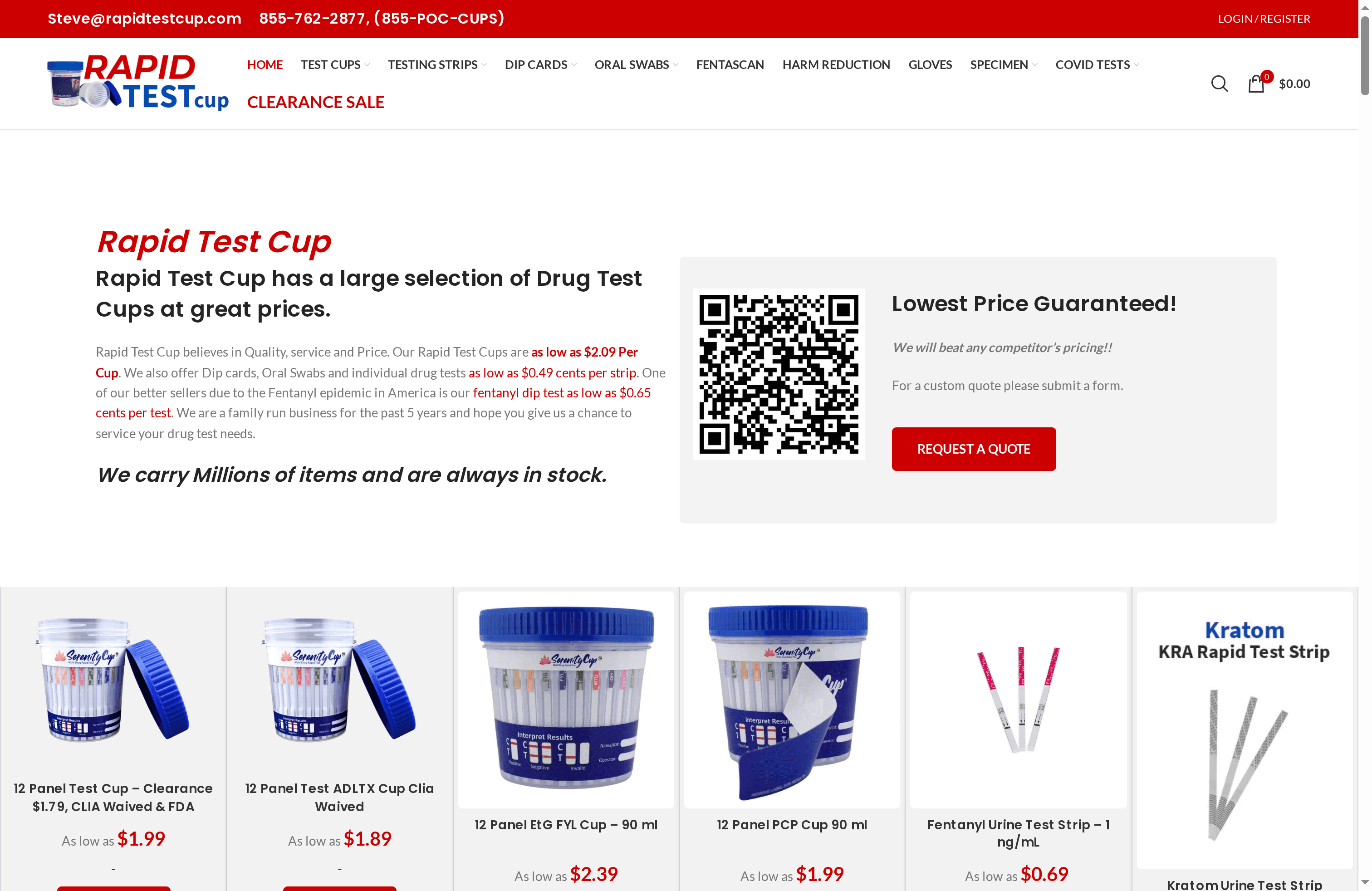
For programs that require both initial screening and adulteration detection in a single collection step, the 22-panel drug test with adulterants gives labs and compliance teams the confidence that samples entering the verification chain have not been compromised. For standard workplace screening, the 12-panel ADLTX cup delivers reliable results across the most commonly tested substances. Rapidtestcup offers bulk pricing, fast shipping, and custom quote options for organizations scaling up their programs.
FAQ
What does it mean to verify a drug test?
Verifying a drug test means running a confirmatory test on any positive initial screen and having a Medical Review Officer independently review the result before it is reported to an employer. This process confirms accuracy and checks for legitimate medical explanations.
Why is confirmatory testing required before reporting a positive result?
Initial immunoassay screens produce false positives from legally used medications and dietary sources. Confirmatory methods like GC-MS identify the exact substance present, providing a scientifically sound basis for any employment or regulatory action.
What is an MRO and why do they matter?
A Medical Review Officer is a licensed physician trained in forensic toxicology who independently reviews confirmed positive drug test results. Their review protects both the employer and the employee by verifying medical explanations and producing a legally defensible final result.
Can an employee dispute a positive drug test result?
Yes. Employees have a 72-hour window to request split specimen testing at a separate certified laboratory, which provides an independent second analysis of the original sample.
Do all drug testing programs require MRO review?
MRO review is mandatory for all federally regulated programs under DOT and related agencies. For non-regulated private employers, it is not legally required but is strongly recommended to protect against wrongful termination claims and maintain program credibility.