Blog
FDA-Cleared Tests: Why They Matter in Substance Abuse


TL;DR:
- FDA clearance indicates a drug test has passed regulatory standards for performance and safety.
- Using FDA-cleared tests with confirmatory lab testing ensures legal defensibility and reduces false positives.
- Ethical, patient-centered protocols rely on timely, randomized testing and proper confirmation to support recovery.
Substance abuse treatment centers operate in high-stakes territory where a single test result can change a patient’s entire treatment trajectory. False positives and unreliable tests can derail patient care, damage trust between clinicians and patients, and expose your program to serious legal and regulatory risk. FDA clearance is not just a checkbox on a procurement form. It is the foundational regulatory safeguard that separates defensible clinical practice from guesswork. This article explains what FDA clearance means in practice, why it matters specifically in substance abuse treatment, what goes wrong without it, and how to build a testing protocol that is both reliable and patient-centered.
Table of Contents
- What does FDA clearance mean for drug tests?
- Why FDA-cleared tests matter in substance abuse treatment
- The risks of non-FDA cleared or non-confirmed tests
- Integrating FDA-cleared and confirmatory testing into ethical clinical practice
- A clinical reality check: What most substance abuse professionals overlook
- Reliable FDA-cleared tests and supplies for defensible clinical protocols
- Frequently asked questions
Key Takeaways
| Point | Details |
|---|---|
| FDA clearance ensures reliability | Tests with FDA clearance meet strict safety and accuracy criteria, reducing risk in substance abuse screening. |
| Confirmatory testing is essential | Presumptive screens must be followed by laboratory confirmation to avoid false positives and errors. |
| Non-cleared tests pose serious risks | Using non-cleared tests exposes patients and programs to stigma, trauma, and legal issues. |
| Patient-centered protocols matter | Limiting testing frequency and communicating results clearly helps preserve trust and treatment engagement. |
What does FDA clearance mean for drug tests?
FDA clearance signals that a diagnostic device has passed a rigorous regulatory review process managed by the U.S. Food and Drug Administration. For drug testing devices, the primary pathway is the 510(k) premarket notification. Under this process, a manufacturer must demonstrate that their test is “substantially equivalent” to a legally marketed predicate device in terms of intended use and technological characteristics. This is not a rubber stamp. The FDA evaluates performance data, clinical trial results, labeling accuracy, and quality system controls before granting clearance.
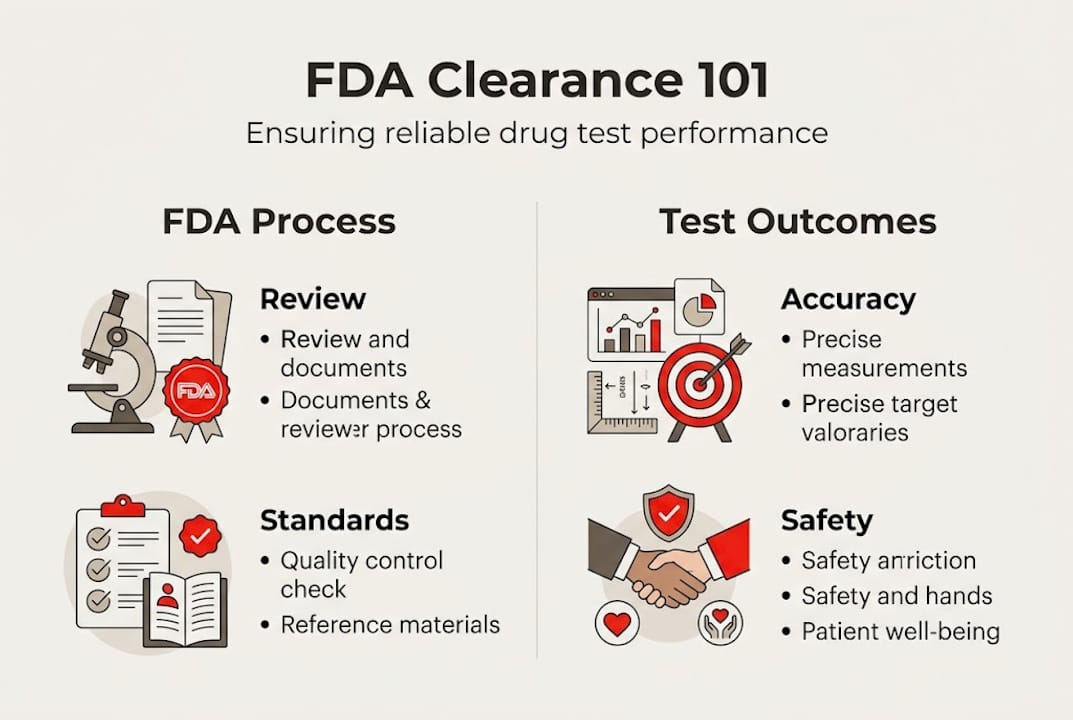
What this means for you, practically speaking, is that an FDA-cleared test has been shown to perform within acceptable parameters for sensitivity (the rate at which a test correctly identifies true positives) and specificity (the rate at which it correctly rules out true negatives). These benchmarks are especially important in substance abuse settings, where both over-detection and under-detection carry real consequences for patients.
Understanding FDA clearance in routine drug screening also means knowing what FDA clearance does not guarantee. Cleared tests are still immunoassays. That means they work by detecting drug metabolites that trigger an antibody reaction. They are presumptive by design, not definitive. The regulatory standard is clear: even FDA-cleared immunoassay screens must be followed by confirmatory testing such as gas chromatography-mass spectrometry (GC-MS) or liquid chromatography-tandem mass spectrometry (LC-MS/MS) before any positive result is used to make clinical decisions.
Here is a quick breakdown of what FDA clearance does and does not cover:
- Does cover: Performance standards for sensitivity and specificity; labeling accuracy; manufacturing consistency; device safety
- Does not cover: Protection from cross-reactive false positives; detection of all novel synthetic drugs; elimination of the need for confirmatory testing
- Does establish: A regulatory baseline that non-cleared tests simply cannot match
“Presumptive immunoassay results are a starting point, not a verdict. Clinical and legal defensibility depends on what happens after the screen.”
Non-cleared tests may work reasonably well in some cases, but they lack the documented performance history and regulatory accountability that cleared tests carry. For a treatment center that may need to defend its protocols in a regulatory audit, a malpractice proceeding, or a SAMHSA review, the absence of FDA clearance documentation creates a gap that is very difficult to close retroactively.
Why FDA-cleared tests matter in substance abuse treatment
Substance abuse treatment programs are not operating in a regulatory vacuum. Federal agencies including the Substance Abuse and Mental Health Services Administration (SAMHSA) and the Department of Transportation (DOT) have established firm requirements for drug testing in federally regulated programs. SAMHSA and DOT-regulated programs mandate the use of FDA-cleared initial screens followed by GC-MS or LC-MS/MS confirmation for all positive results, setting the standard for defensible results in treatment monitoring.
This mandate is not arbitrary. It exists because treatment decisions made on the basis of drug test results carry serious weight. A positive screen can trigger medication changes, affect housing eligibility, or influence legal outcomes for patients already navigating complex systems. When the test that drives those decisions has not been cleared by the FDA, the entire chain of clinical decisions becomes vulnerable.
From a legal defensibility standpoint, FDA-cleared tests provide documented evidence that your program used a device that met established performance standards. If a patient or an attorney challenges a result, you can point to the FDA clearance documentation, the manufacturer’s performance data, and your confirmatory testing records. Without FDA clearance, you are essentially defending a clinical decision with an instrument that has no recognized regulatory standing.
Following a compliant screening workflow also reduces harm to patients. When a clinician uses a non-cleared test and gets a false positive, the downstream effects can include unnecessary medication adjustments, removal from treatment programs, loss of custody in family court proceedings, or criminal justice consequences. These are not hypothetical risks. They happen in real treatment environments.
Consider this practical scenario: a patient admitted for opioid use disorder completes a urine screen on intake. The result is positive for amphetamines. If the test was non-cleared and no confirmation follows, the clinical team might incorrectly document polysubstance use, alter the treatment plan, or question the patient’s honesty. If the test was FDA-cleared and the program follows a confirmation-first policy, the positive triggers a GC-MS test, which comes back negative, revealing a cross-reactive false positive. The patient’s care continues without interruption. The difference is not minor. It can shape the entire therapeutic relationship.
Pro Tip: Train all clinical staff to treat every presumptive positive as a hypothesis, not a conclusion. FDA clearance supports reliable screening, but confirmatory testing is what makes a result clinically and legally actionable.
Key reasons FDA clearance is non-negotiable in substance abuse treatment:
- Regulatory compliance: Required by SAMHSA and DOT for federally funded or regulated programs
- Legal defensibility: Documented performance standards protect your program in disputes
- Patient safety: Reduces the rate of false positives that trigger harmful clinical actions
- Program integrity: Supports accurate monitoring and treatment planning for individual patients
Knowing the DOT drug testing rules is equally important when your facility handles cases involving federally mandated workplace drug testing referrals, which are increasingly common in treatment programs serving safety-sensitive workers.
“In substance abuse treatment, your testing protocol is only as credible as the instrument behind it.”
The risks of non-FDA cleared or non-confirmed tests
The consequences of using non-cleared tests or skipping confirmatory testing go well beyond a regulatory fine. They land directly on your patients and, ultimately, on your program’s reputation and liability exposure.
False positives are the most visible risk. Immunoassay tests, regardless of their clearance status, are susceptible to cross-reactivity. Certain medications are well-documented triggers. Bupropion, a commonly prescribed antidepressant and smoking cessation medication, is known to cross-react with amphetamine immunoassays. Quinolone antibiotics have triggered false positives for opioids. Poppy seeds, dextromethorphan, and even some over-the-counter antihistamines can produce unexpected results. Understanding false positives in depth is essential before interpreting any screen result in a clinical context.
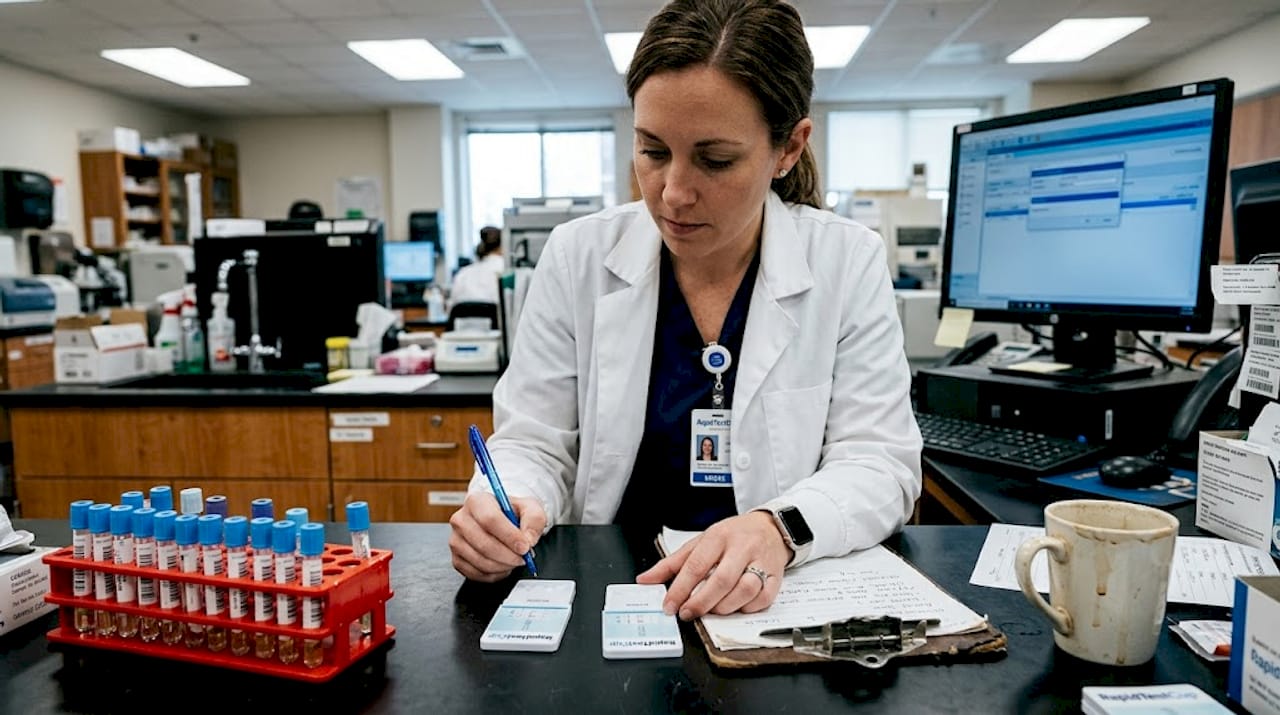
Non-cleared tests often have higher rates of these cross-reactive events because they have not been subjected to the standardized performance testing that FDA clearance requires. But even cleared immunoassays carry cross-reactivity risk. This is precisely why drug test accuracy depends on confirmatory testing, not just screen quality.
| Risk | Non-FDA cleared test | FDA-cleared test (no confirmation) | FDA-cleared + confirmation |
|---|---|---|---|
| False positive rate | Higher, undocumented | Lower, documented | Lowest, verified |
| Legal defensibility | Very low | Moderate | High |
| Clinical reliability | Unreliable | Presumptive only | Definitive |
| Regulatory compliance | Non-compliant | Compliant for screen | Fully compliant |
From a patient experience perspective, a false positive in a treatment setting creates real psychological harm. Patients in substance abuse treatment often arrive with histories of being disbelieved, stigmatized, or dismissed. When a test incorrectly flags a patient who is genuinely abstinent, it confirms their worst fear: that the system is not on their side. Research on urine drug screening shows that routine UDS lacks RCT evidence for improved outcomes and carries concrete risks including stigma, trauma, false positives, and treatment dropout. Experts consistently urge patient-centered, infrequent, and random testing over rigid routine schedules.
Novel synthetic drugs add another layer of complexity. Fentanyl analogs, designer benzodiazepines, and synthetic cannabinoids often lack the structural similarities needed for a standard immunoassay to detect them at all. This creates false negatives. Patients using these substances may pass a screen while still actively using, which distorts both clinical assessments and program outcome data. This gap is addressed not by using more tests, but by using the right tests with appropriate panel selections.
Key risks to document in your clinical policies:
- Cross-reactivity from common medications prescribed in treatment (bupropion, quetiapine, rifampin)
- Failure to detect novel synthetic substances on standard panels
- Patient disengagement triggered by a perceived unjust positive result
- Legal exposure when results are challenged without documented regulatory standards behind the test
“A false positive in substance abuse treatment is not just a data error. It is a rupture in the therapeutic relationship.”
Integrating FDA-cleared and confirmatory testing into ethical clinical practice
Building a testing protocol that is both reliable and ethical requires deliberate structure. The goal is not to test as often as possible, but to test in a way that produces actionable, defensible, and patient-respecting results.
Here is a step-by-step framework for integrating FDA-cleared and confirmatory drug testing into your clinical operations:
- Select FDA-cleared, CLIA-waived test cups appropriate for the drug panels most relevant to your patient population. Ensure the product documentation includes explicit FDA clearance details.
- Establish a written policy that defines when testing occurs, who collects specimens, and how results are communicated to patients and clinical staff.
- Treat all presumptive positives as unconfirmed until a GC-MS or LC-MS/MS result is returned from a certified laboratory.
- Document every result and the action taken, including the delay in clinical decisions pending confirmation.
- Communicate with patients transparently at each stage. Explain what the test found, what confirmation means, and when the final result will be available.
- Calibrate testing frequency to clinical need. Intake testing is typically warranted. Ongoing testing should follow a random or clinically indicated schedule, not a fixed weekly routine that patients can anticipate and game.
The step-by-step urine test guide outlines collection, handling, and documentation procedures that support this framework in practice.
Research clearly shows that experts urge patient-centered, infrequent and random testing as the standard for ethical substance abuse monitoring. Programs that test too frequently without clinical rationale often see increased patient anxiety, higher dropout rates, and paradoxically worse treatment adherence.
| Testing scenario | Recommended approach | Confirmatory required? |
|---|---|---|
| Intake assessment | FDA-cleared screen | Yes, if presumptive positive |
| Ongoing monitoring | Random, clinically indicated | Yes, if presumptive positive |
| Medication adherence check | Targeted panel | Yes, if relevant clinical decision follows |
| Legal or forensic referral | SAMHSA-compliant full panel | Always |
The benefits of urine testing for labs and clinics are maximized when testing is purposeful, not reflexive. Programs that use fewer, better-timed tests paired with rigorous confirmation typically generate more useful clinical data than programs that test constantly with unconfirmed screens.
Pro Tip: Build a testing calendar that includes random draws weighted toward early treatment phases, and reduce frequency as patients demonstrate sustained recovery. This approach aligns with both the clinical evidence and the ethical obligation to minimize stigma.
A clinical reality check: What most substance abuse professionals overlook
Here is something the industry does not say often enough: testing more does not mean treating better.
We see programs invest significantly in procurement, build multi-panel screening schedules, and congratulate themselves on compliance. Then a patient exits treatment early after a disputed positive. Another one stops engaging honestly with their counselor because they feel surveilled rather than supported. The testing protocol checked every regulatory box and still failed the patient.
FDA clearance and confirmatory testing are the floor, not the ceiling. Meeting SAMHSA standards is where ethical practice begins, not ends. The most effective programs we see use the advantages of urine drug tests to support clinical conversations, not replace them. A positive result is not a gotcha moment. It is clinical information that should be explored with curiosity and compassion, especially once confirmatory testing resolves the question of accuracy.
Consider a composite scenario: a patient in early recovery for methamphetamine use disorder screens positive for amphetamines two weeks into treatment. The counselor, following protocol, holds the result pending confirmation. Confirmation comes back negative, which is bupropion causing cross-reactivity. What happens next matters enormously. A program that handled this well used the delay to have a deeper conversation with the patient about the medications they were taking, strengthened trust, and continued treatment without disruption. The test was a tool. The relationship was the intervention.
The professionals who thrive in this field understand that compliance gives you the infrastructure and patient-centered care gives you the outcomes.
Reliable FDA-cleared tests and supplies for defensible clinical protocols
Running a substance abuse treatment program that meets SAMHSA requirements, protects patients from false positives, and holds up under legal scrutiny starts with the right supplies.
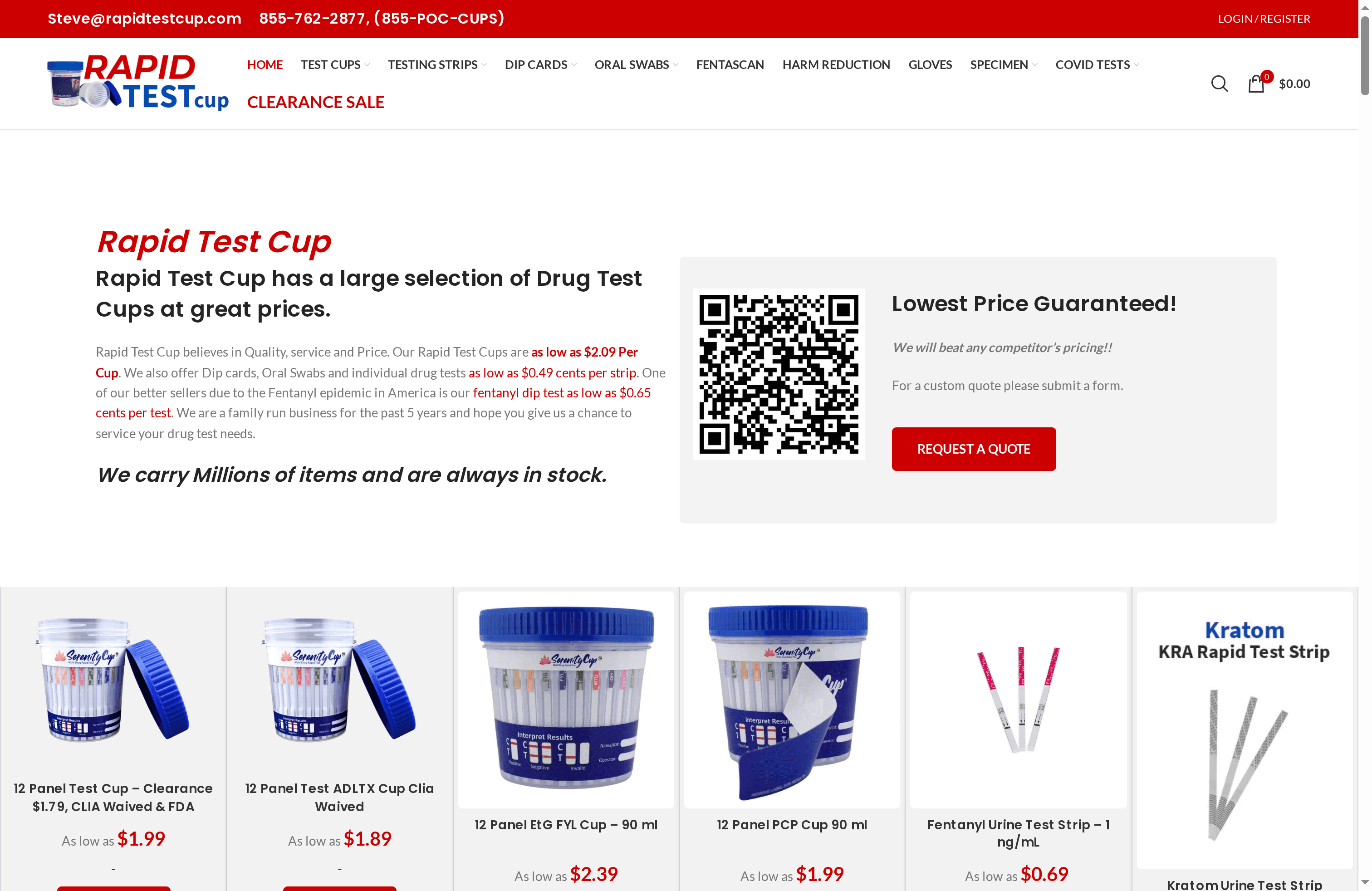
At rapidtestcup.com, we supply FDA-cleared, CLIA-waived drug test cups designed specifically for professional treatment and clinical environments. Our FDA-cleared 12 panel test cup is a reliable frontline screen for standard treatment admissions, and our broad-spectrum FDA-cleared drug cups include adulterant detection for high-reliability forensic and treatment applications. We offer bulk pricing, fast shipping, and detailed product documentation to support your compliance records. If you are ready to build a testing protocol that protects your patients and your program, our catalog has what you need.
Frequently asked questions
What does it mean when a test is FDA-cleared?
FDA-cleared means the test has met regulatory standards for safety and effectiveness established by the U.S. Food and Drug Administration through the 510(k) premarket notification process. It provides documented assurance of minimum performance standards for sensitivity and specificity.
Are FDA-cleared drug tests always accurate?
FDA clearance ensures a baseline level of quality, but no immunoassay is infallible. Confirmatory lab testing via GC-MS or LC-MS/MS remains essential for all presumptive positives, especially in edge cases involving cross-reactive medications.
Why do substance abuse programs require FDA-cleared drug tests?
SAMHSA and DOT programs mandate FDA-cleared initial screens to ensure test defensibility, meet federal compliance requirements, and reduce legal liability for treatment providers and patients alike.
What are the risks of using non-FDA cleared tests?
Non-FDA cleared tests can generate false positives, expose programs to litigation, and cause patient stigma and trauma that contributes directly to treatment dropout and disengagement from care.
Is routine drug screening without confirmation recommended?
No. Experts recommend infrequent, random, and patient-centered testing with consistent follow-up confirmation on all positive screens using certified laboratory methods before any clinical action is taken.