

Blog
Forensic testing in drug investigations: key facts

TL;DR:
- Forensic drug testing relies on validated, standardized methods to ensure accurate identification and court admissibility.
- Challenges include adapting to emerging synthetic drugs, polysubstance complexity, and maintaining strict quality assurance protocols.
- International standards and updated spectral libraries support laboratories in providing reliable, defensible forensic evidence.
Most drug-related deaths don’t involve a single substance. Polysubstance use is prevalent, and without systematic forensic analysis, cause-of-death determinations become guesswork. For law enforcement agencies and forensic labs, that guesswork has real consequences: wrongful conclusions, failed prosecutions, and missed intelligence about emerging threats. Forensic drug testing converts biological and physical evidence into verified, court-ready facts. This article walks through the core methods, quality assurance requirements, and evolving challenges that every forensic professional needs to understand to work effectively in today’s drug investigation environment.
Table of Contents
- Understanding forensic testing in drug investigations
- Key forensic drug testing methods and protocols
- Quality assurance and chain of custody
- Emerging challenges: Synthetic drugs and polysubstance use
- Expert perspective: What most articles miss about forensic drug testing
- Find the right solutions for your forensic drug testing needs
- Frequently asked questions
Key Takeaways
| Point | Details |
|---|---|
| Polysubstance is common | Most drug-linked autopsies involve multiple substances, making comprehensive testing essential. |
| Updated methods matter | Rapid, reliable techniques and certified protocols ensure evidence is accurate and admissible. |
| Synthetic drugs challenge labs | Emerging NPS and designer substances require adaptive, up-to-date spectral libraries and quick screening tools. |
| Chain of custody is critical | Strict documentation and QA protect results and support successful prosecution. |
| Forensic tools drive clarity | Multi-panel rapid test kits and detailed guides help professionals respond quickly and precisely. |
Understanding forensic testing in drug investigations
Forensic drug testing is the systematic identification, confirmation, and documentation of controlled substances in evidence samples, whether seized materials, biological specimens, or environmental samples. It sits at the intersection of chemistry, law, and investigative practice. Getting it wrong does not just compromise a case; it can result in wrongful convictions or allow dangerous substances to go unidentified in the evidence chain.
Accuracy is non-negotiable. A presumptive screen may flag a substance, but it takes confirmatory testing to produce results that hold up under cross-examination. Labs following the methods for forensic drug testing recommended by scientific working groups consistently produce more defensible findings than those relying on ad hoc approaches.
The core benefits forensic testing delivers to law enforcement and forensic professionals include:
- Definitive substance identification for charging and prosecution
- Quantification data that supports dosage and intent arguments
- Detection of adulterants and cutting agents that signal trafficking patterns
- Polysubstance profiling to clarify complex toxicology cases
- Chain-of-custody documentation that preserves admissibility
SWGDRUG provides recommendations for education, training, quality assurance, and validated methods, giving labs a unified framework that courts recognize and respect. You can review the published guidance directly from SWGDRUG standards to see how these recommendations translate into laboratory practice.
“Forensic drug testing is only as reliable as the protocols behind it. A method without validation is an opinion, not evidence.”
Understanding the testing importance in investigations goes beyond knowing which instrument to use. It means recognizing when a result needs additional confirmation, when a novel substance may be triggering a false response, and when the evidence itself demands a different analytical approach entirely.
Key forensic drug testing methods and protocols
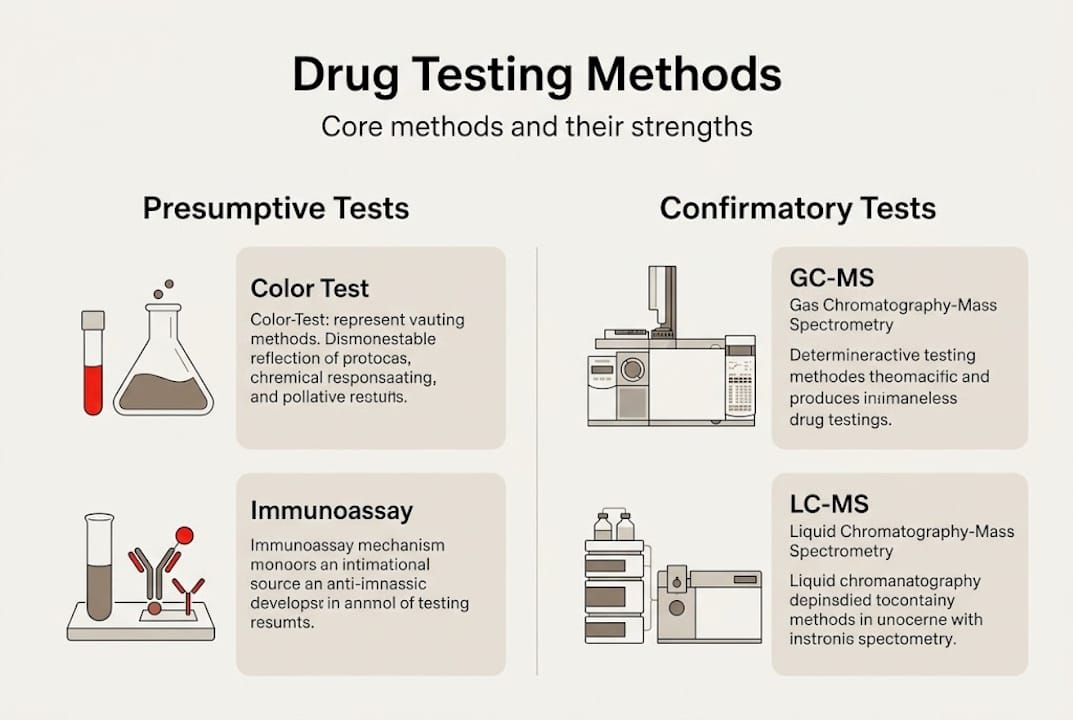
Every forensic drug case moves through a defined analytical workflow. The specific techniques applied depend on the sample type, the suspected substance class, and the evidentiary requirements of the jurisdiction. Standard methodologies include color testing, TLC, UV spectrophotometry, FTIR, GC-MS, and GC-IR, each serving a distinct role in the identification process.
Here is how the core techniques sequence in practice:
- Color/spot testing delivers rapid presumptive results in the field or at intake. Reagents like Marquis and Scott react visually with specific drug classes, flagging priority samples.
- Thin-layer chromatography (TLC) separates compound mixtures on a silica plate, useful for screening complex samples before instrumental confirmation.
- UV spectrophotometry measures light absorption to help characterize substance class, often paired with other methods.
- FTIR (Fourier-transform infrared spectroscopy) matches spectral fingerprints against reference libraries, ideal for bulk powder analysis.
- GC-MS (gas chromatography-mass spectrometry) is the gold standard for confirmatory identification. It separates compounds by volatility and then fragments them for mass spectral matching.
For a practical comparison of how these methods perform across common drug categories, the table below provides a quick reference:
| Method | Best for | Speed | Admissibility | NPS capability |
|---|---|---|---|---|
| Color/spot testing | Presumptive screening | Very fast | Presumptive only | Low |
| TLC | Mixture screening | Moderate | Presumptive/supportive | Moderate |
| FTIR | Bulk seized drugs | Fast | Confirmatory (bulk) | Moderate |
| GC-MS | Confirmatory ID, quantification | Moderate | High | High (with updated library) |
| GC-IR | Isomer differentiation | Slow | High | Moderate |
Protocol compliance matters as much as instrument choice. The UNODC global standards set benchmarks for method validation, analyst competency, and inter-laboratory proficiency testing. Labs that incorporate comprehensive testing methods aligned with these standards see fewer evidentiary challenges at trial.
Pro Tip: When encountering suspected new psychoactive substances (NPS), run a color screen first to rule out classical drug classes, then proceed directly to GC-MS with an updated spectral library before issuing any presumptive finding. Skipping the screen wastes confirmatory instrument time; skipping confirmation risks a legally indefensible result. A solid drug testing checklist keeps this workflow consistent across analysts.
Quality assurance and chain of custody
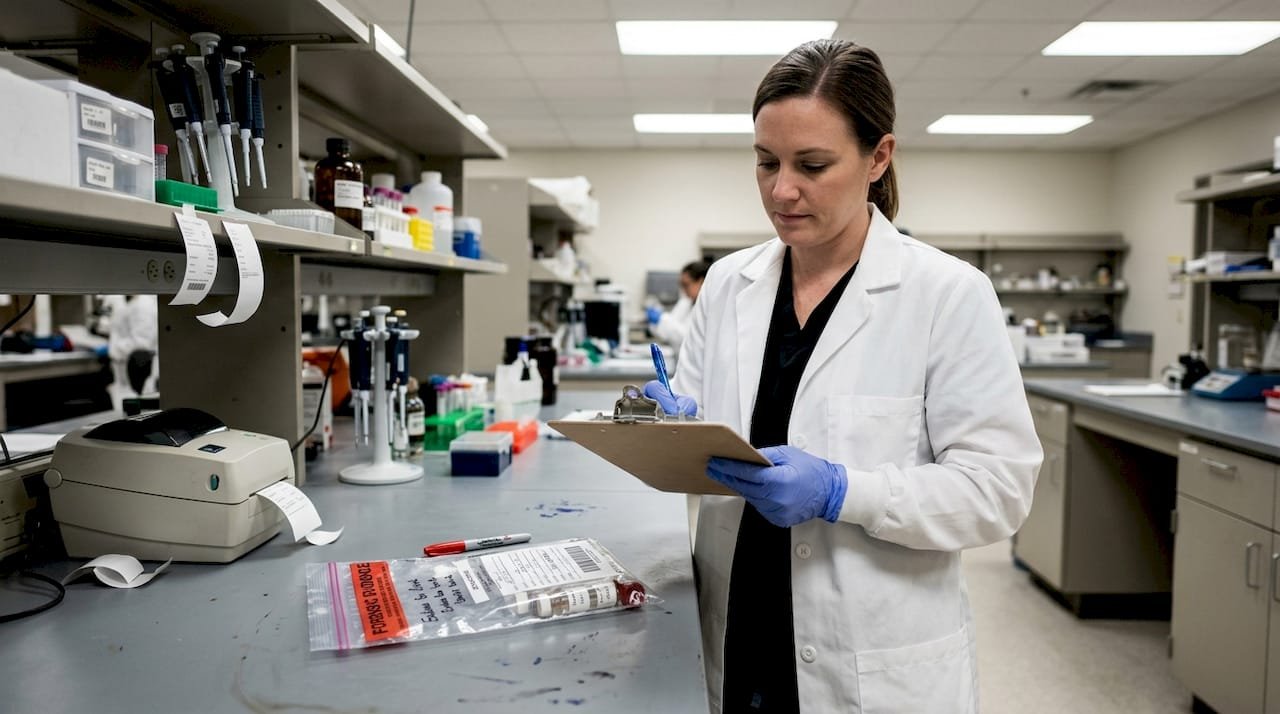
A technically perfect analysis is worthless if the evidence was mishandled before it reached the instrument. Chain of custody is the documented record of who had possession of a sample, when, and under what conditions. Break that chain and the defense has grounds to challenge every result obtained from that sample.

Quality assurance goes further. It covers the entire laboratory system: instrument calibration, reagent validation, analyst qualification, reference standard certification, and proficiency testing. Chain of custody and QA/QC are critical for admissibility, and labs follow SWGDRUG and UNODC frameworks to standardize these practices across jurisdictions.
Key QA/QC checkpoints that every forensic drug lab must maintain:
- Sample intake documentation: unique identifiers, condition on receipt, seal integrity
- Storage conditions: temperature-controlled, access-restricted evidence vaults
- Instrument calibration logs: dated, signed, and tied to specific analytical batches
- Reference standard traceability: certified materials with documented source and expiration
- Proficiency testing participation: external blind samples that verify analyst competency
- Internal audit cycles: regular review of case files, instrument records, and QC data
The legal impact of drug tests is directly tied to how thoroughly these controls are implemented and documented.
| QA failure | Potential legal consequence |
|---|---|
| Broken chain of custody | Evidence excluded from trial |
| Uncalibrated instruments | Results challenged as unreliable |
| Expired reference standards | Identification findings disputed |
| Undocumented sample transfer | Full case dismissal risk |
| Failed proficiency tests | Analyst credibility undermined |
The global QA standards published by UNODC make clear that these are not administrative formalities. They are the structural backbone that transforms a lab result into legally actionable intelligence. Investing in robust QA protocols for drug testing pays dividends every time a case goes to court.
Emerging challenges: Synthetic drugs and polysubstance use
The drug supply is not static. New psychoactive substances (NPS), synthetic opioids, and designer cannabinoids have multiplied faster than most lab reference libraries can track. This creates a real operational gap: an analyst runs a GC-MS search, finds no match in the current library, and issues an inconclusive finding on a substance that may be actively causing overdose deaths in the community.
Updated spectral libraries from SWGDRUG and NIST are essential to close this gap, providing continuously expanded reference data for seized drug identification. Without them, novel compounds slip through and contribute to lab backlogs when cases must be reanalyzed after a new substance is eventually identified.
Polysubstance cases add another layer of complexity. Systematic analysis is essential for accurate cause-of-death determination when multiple classes are involved. A toxicology report that captures only the most abundant substance misses interaction effects that may have actually driven the fatal outcome.
The key forensic challenges in this space include:
- Rapid structural variation in synthetic opioids and cannabinoids that outpaces regulatory scheduling
- Cross-reactivity issues where NPS trigger immunoassay responses for classical drug classes
- Multi-drug interactions that require quantification of each component, not just identification
- Backlog pressure that forces triage decisions about which confirmatory tests get run first
“The most dangerous substance in a forensic lab is the one you didn’t think to test for.”
Pro Tip: Incorporate rapid immunoassay screening at intake to triage high-priority samples for confirmatory GC-MS, particularly in suspected fentanyl analog and synthetic cannabinoid cases. This reduces backlog by focusing instrument time where the investigative stakes are highest. Pairing this with resources on testing for emerging substances helps labs stay ahead of emerging threats. Understanding the importance of rapid testing is what separates reactive labs from proactive ones.
Expert perspective: What most articles miss about forensic drug testing
Most published guidance treats forensic drug testing as a linear process: collect, screen, confirm, report. Real casework does not work that way. Samples arrive degraded. Exhibits are mislabeled. A presumptive screen contradicts the submitted paperwork. And behind all of it, there is a prosecutor on the phone asking when results will be ready.
The uncomfortable truth is that static protocols fail in dynamic drug landscapes. Labs that trained entirely on classical drug classes in 2018 found themselves unprepared for the fentanyl analog surge. Those same labs are now scrambling with xylazine combinations. Challenges with NPS and synthetics require updated libraries and rapid methods, not just more of what worked before.
Adaptability is the skill that textbooks don’t emphasize enough. Knowing the SWGDRUG protocol is necessary. Knowing when the protocol’s assumptions don’t fit your actual sample is the difference between a reliable finding and a reportable error. Forensic professionals who stay current through lab testing for law enforcement resources are the ones whose results hold up when it counts most.
Find the right solutions for your forensic drug testing needs
For labs and agencies ready to act on these insights, having the right tools in place is the first step toward consistent, defensible results.
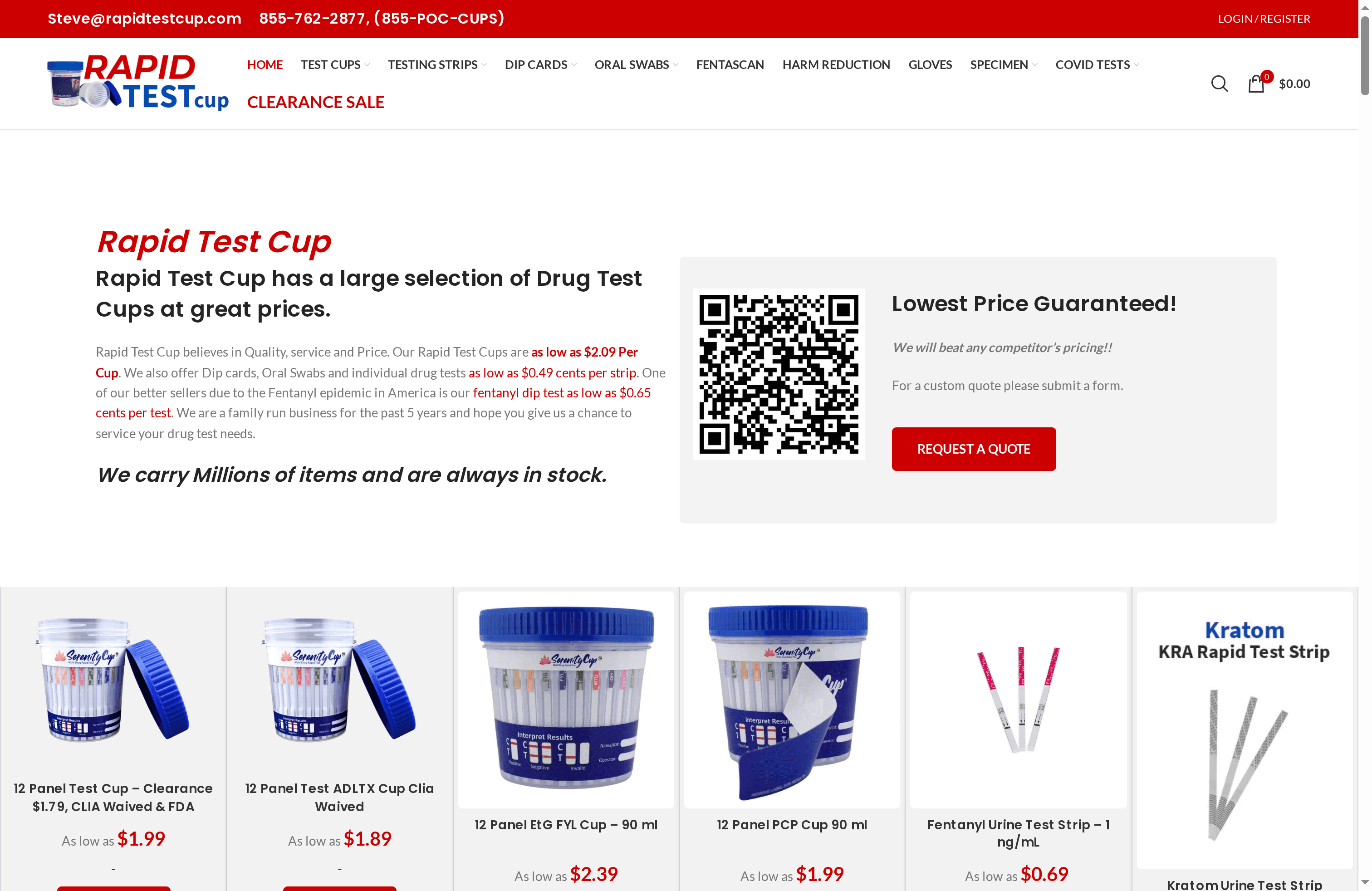
The 18 panel drug test cup provides broad-spectrum screening across the most operationally relevant substance classes, including fentanyl and synthetic cannabinoids, with built-in adulterant detection. For agencies building or refining their analytical workflows, the detailed forensic testing methods guide offers protocol-level guidance aligned with current standards. And if your team is navigating evidentiary requirements, the legal impact guide connects testing practices directly to courtroom outcomes. Bulk pricing and fast shipping make scaling your testing program straightforward.
Frequently asked questions
Which forensic drug testing methods are most effective for rapid identification?
GC-MS and NIST spectral libraries set the standard for confirmatory identification, while color/spot testing provides fast presumptive results at intake for immediate triage decisions.
How does quality assurance impact forensic drug investigation outcomes?
Strict QA/QC and chain-of-custody adherence ensures test reliability and legal admissibility, reducing errors and supporting valid court outcomes across every case type.
What challenges do forensic labs face with synthetic drugs and NPS?
Rapid structural evolution in NPS requires adaptive protocols and updated spectral libraries to avoid missed detections, particularly for fentanyl analogs and synthetic cannabinoids that do not match classical reference data.
Why is polysubstance use a forensic testing priority in autopsies?
Over half of positive autopsy toxicologies involve multiple substance classes; systematic polysubstance analysis is essential to accurately determine cause of death when drug interactions are a contributing factor.
How do international standards like UNODC impact forensic drug testing?
UNODC manuals and ICE programs drive global laboratory performance by harmonizing methodology and QA requirements across borders, raising the floor for evidentiary reliability worldwide.