Blog
Create a Substance Abuse Prevention Checklist That Works


TL;DR:
- Creating an effective substance abuse prevention checklist that produces real outcomes is challenging, as many programs merely check boxes for funders without reducing actual risk. A robust checklist functions as a quality assurance system, aligning with frameworks like SAMHSA’s SPF and CDC’s ENGAGE, emphasizing assessment, capacity building, targeted planning, fidelity in implementation, and continuous evaluation. Customizing these checklists for specific populations, involving community stakeholders, and avoiding outdated tactics are essential for sustainable, impactful prevention efforts.
Building a substance abuse prevention checklist that produces genuine outcomes is far harder than it looks. Most programs end up with a document that checks boxes for funders but barely moves the needle on actual risk reduction. The gap between surface-level compliance and real prevention is wide, and it’s filled with wasted resources, burned-out staff, and populations who slip through the cracks. This article lays out the frameworks, research, and step-by-step actions that close that gap, so you walk away with a checklist worth implementing.
Table of Contents
- Core components of an effective substance abuse prevention checklist
- A step-by-step substance abuse prevention checklist
- Comparing leading approaches: SPF, ENGAGE, and community coalitions
- Customization for at-risk populations: Making your checklist work in the real world
- What NOT to include: Outdated and ineffective prevention tactics
- The uncomfortable truth about checklists: Why implementation is everything
- Next steps: Screening tools and solutions for real-world prevention
- Frequently asked questions
Key Takeaways
| Point | Details |
|---|---|
| Use evidence-based frameworks | The most effective checklists follow research-backed methods like SPF and ENGAGE for comprehensive prevention. |
| Prioritize interactive strategies | Skill-building and community engagement work better than information-only approaches. |
| Customize for your setting | Adapting the checklist to local needs and culture boosts success and sustainability. |
| Implement validated screening tools | Early identification tools like TAPS, BSTAD, and S2BI enable faster intervention and better results. |
| Review and refine regularly | Frequent updates keep your prevention efforts effective as risks and resources change. |
Core components of an effective substance abuse prevention checklist
A checklist built on strong foundations does more than track tasks. It functions as a quality assurance system, confirming that every high-impact mechanism is in place before a single session is delivered. The moment a checklist becomes a formality, it loses its power.
Two frameworks give any prevention checklist its structural backbone. SAMHSA’s Strategic Prevention Framework (SPF) establishes five sequential steps: Assessment, Capacity Building, Planning, Implementation, and Evaluation. These aren’t bureaucratic hoops. Each step feeds directly into the next, creating a logic chain where data drives every decision. Alongside SPF, the CDC’s ENGAGE framework layers in six evidence-based strategies specifically targeting youth substance use, from creating protective environments to strengthening family bonds.
Your checklist should map directly to these building blocks:
- Needs assessment: Identify specific substances, affected subgroups, and local risk and protective factors using community-level data.
- Capacity building: Mobilize stakeholders, secure funding, and engage community partners before any programming launches.
- Targeted planning: Prioritize the highest-need areas and select interventions with evidence behind them. Build a logic model connecting inputs to outcomes.
- Implementation with fidelity: Deliver programming as designed while allowing contextual adaptation.
- Continuous evaluation: Track both process metrics (was the program delivered as planned?) and outcome metrics (did risk actually decrease?).
“A checklist that skips evaluation is a plan with no feedback loop. Without measuring outcomes, you can’t know if you’re helping or simply going through the motions.”
Aligning your internal workflow with drug testing checklist steps and documenting procedures for compliance ensures that day-to-day operations stay connected to your overarching prevention goals rather than drifting into routine paperwork.
A step-by-step substance abuse prevention checklist
Having established the structural backbone of a robust prevention plan, it’s time to get tactical with a checklist you can put into action right away. The steps below integrate the SPF, ENGAGE priorities, and clinical best practices into a single operational sequence.
-
Conduct a community needs assessment. Collect local data on substance use prevalence, demographics, and social determinants. Map risk factors (poverty, trauma exposure, peer influence) against protective factors (family connectedness, school engagement, community resources).
-
Identify and engage community stakeholders. Schools, healthcare providers, faith communities, law enforcement, and youth-serving organizations all belong at the table. Community coalitions implementing multi-component interventions consistently outperform single-agency efforts. Formalize these partnerships early with memoranda of understanding.
-
Select evidence-based programs. Use registries like SAMHSA’s National Registry of Evidence-Based Programs and Practices (NREPP) to identify interventions with documented efficacy for your target population. Avoid programs that sound compelling but lack rigorous evaluation data.
-
Build interactive skills training into every session. Replace lecture-style content with role-playing, problem-solving scenarios, and peer-led discussion. Resistance skills training, emotional regulation, and decision-making practice are not optional add-ons. They are the mechanism of change.
-
Integrate validated screening tools. NIDA’s validated tools such as TAPS (Tobacco, Alcohol, Prescription Medication, and Other Substance Use Tool), BSTAD (Brief Screener for Tobacco, Alcohol, and Other Drugs), and S2BI (Screening to Brief Intervention) give clinicians and program staff a standardized, defensible method for early risk identification. Embed these at intake and at regular intervals.
-
Implement harm reduction strategies alongside prevention. Naloxone access, safe disposal sites, and peer support networks don’t signal acceptance of use. They reduce mortality and create trust with populations that would otherwise disengage entirely.
-
Train staff on cultural responsiveness. Cultural misalignment undermines even technically strong interventions. Staff need specific training on the communities they serve, not generic diversity modules.
-
Document everything with a feedback loop. Collect attendance, engagement, and outcome data systematically. Schedule formal review meetings quarterly, not just at grant renewal time.
-
Evaluate early and adjust. NIDA’s prevention research consistently shows that early intervention and multi-component prevention produce long-term cost savings and measurably better outcomes. Build evaluation into the program budget from day one, not as an afterthought.
Pro Tip: If you serve multiple subpopulations, build modular checklist sections rather than one-size-fits-all protocols. A rural tribal community and an urban school district need different assessment instruments, different outreach channels, and different family engagement strategies. Modular checklists let you maintain fidelity to the evidence base while adapting for real-world context.
Understanding the screening benefits and effective screening methods at each program entry point is critical. For the full operational workflow, the complete drug screening steps provide a practical companion to the prevention checklist above.
“Prevention without screening is like navigation without a map. You may move forward, but you have no way to confirm you’re heading in the right direction.”
Comparing leading approaches: SPF, ENGAGE, and community coalitions
Now that you have an actionable checklist, you’ll want to choose or blend a prevention framework that matches your goals and resources. Here’s how the top methods stack up.

| Feature | SAMHSA SPF | CDC ENGAGE | Community Coalitions |
|---|---|---|---|
| Primary strength | Systematic, data-driven process | Skills-oriented, youth-focused | Cross-sector reach and community ownership |
| Best suited for | State and local program planning | School and youth settings | Multi-agency, multi-problem contexts |
| Evaluation emphasis | Strong (built-in logic modeling) | Moderate | Varies by coalition structure |
| Scalability | High | Moderate | High when well-organized |
| Resource demand | Moderate to high | Moderate | High (coordination-intensive) |
| Cultural adaptability | High (assessment-driven) | Moderate | High (community-driven) |
Key takeaways from this comparison:
- SPF excels when your program needs a replicable, auditable structure. It’s the right choice for organizations accountable to federal or state funders who require documented logic models. SAMHSA’s SPF and CDC’s ENGAGE strategies both provide actionable, multi-level guidance for sustainable prevention.
- ENGAGE is particularly strong in school or youth clinic settings where building life skills is the primary mechanism. Its six strategies are concrete enough for direct staff implementation without specialized research training.
- Community coalitions deliver impact at the population level. When multi-component interventions involving cross-sector coalitions are implemented well, documented reductions in youth substance use follow. The catch: they require sustained coordination and clear governance to avoid diffusion of responsibility.
In practice, the strongest programs blend all three. Use SPF’s structure for planning and evaluation. Use ENGAGE’s strategies as the content backbone for programming. Use coalition models to extend reach into underserved sub-communities. This combination also positions your program well for emerging substance public health threats, where cross-sector speed and flexibility matter enormously.
For programs embedded in clinical settings, aligning your prevention checklist with drug screening in clinical practice creates a seamless continuum from community-level prevention through clinical intervention.
Customization for at-risk populations: Making your checklist work in the real world
Choosing a strategy is only the beginning. True impact comes from tailoring your checklist for your own environment and populations. A framework that works beautifully in a suburban school district may completely miss the mark in a rural agricultural community or an urban shelter setting.
The CDC ENGAGE Resource-for-Action specifically calls for tailoring interventions to at-risk populations, including trauma-exposed youth and rural communities, with attention to cultural competence, sustainability, and the lived experience of participants.
Best practices for real-world customization include:
- Involve people with lived experience in checklist design and program delivery. Peer specialists and community health workers who share the background of the population served dramatically increase engagement and trust.
- Conduct a cultural competency audit of all materials before implementation. Language, imagery, examples, and facilitator identities all affect whether participants connect with programming.
- Address transportation and scheduling barriers explicitly in your checklist. The most evidence-based session accomplishes nothing if the target population can’t attend.
- Build sustainability into the design from day one. Programs that depend entirely on grant funding collapse when the grant cycle ends. Identify local funding streams, volunteer infrastructure, and partner agency capacity early.
- Stratify your checklist by subpopulation. Foster youth, justice-involved youth, LGBTQ+ youth, and recently immigrated communities each carry distinct risk profiles that generic checklists don’t capture.
- Use data disaggregated by race, gender, and geography. Aggregate data masks the populations most at risk and leads to resource misallocation.
Pro Tip: When language access is a barrier, don’t rely solely on translated materials. Partner with bilingual community health workers who can facilitate real conversations rather than simply read translated text. This single adaptation can double participant retention in multilingual communities.
What NOT to include: Outdated and ineffective prevention tactics
To maximize impact and credibility, it’s equally important to know what not to include. Here’s what the research says to avoid.
Common approaches that consistently underperform or cause harm:
- One-time assemblies or presentations delivered without follow-up, skills practice, or peer reinforcement
- Scare tactic campaigns using graphic imagery or exaggerated consequence messaging, which tend to increase curiosity rather than deter use among adolescents
- Purely informational curricula that assume knowledge deficits cause substance use (they typically don’t)
- DARE-model programs without skills-based interactive components; the original DARE model was extensively studied and found to have no significant effect on substance use behavior
- Passive media campaigns as standalone strategies without accompanying environmental or interpersonal support
- Stigma-based messaging that discourages help-seeking and drives high-risk individuals further from services
Information-only approaches such as scare tactics and non-interactive presentations are ineffective or even harmful. Skill-building and multi-level interventions are the standard of care.
This matters because ineffective programs don’t just waste resources. They actively consume the time and trust of the communities they’re meant to serve. Every session spent on a failed approach is a session that could have delivered validated skills training, coordinated a screening, or built a coalition relationship.
The uncomfortable truth about checklists: Why implementation is everything
Here’s something most prevention training programs don’t tell you: the checklist itself is almost never the problem. The framework exists. The evidence base is solid. The barriers live entirely in execution.
After watching dozens of programs launch with excellent documentation and flatline in year two, the pattern becomes clear. Staff turnover erases institutional knowledge. Stakeholder fatigue sets in when community meetings produce reports rather than action. Program fidelity drifts as facilitators “personalize” curricula in ways that eliminate the active ingredients. And evaluation data piles up in spreadsheets that nobody reviews until the grant report is due.
Getting genuine stakeholder buy-in means more than a signature on a partnership agreement. It means involving community members in problem identification before solutions are proposed, so the program reflects actual priorities rather than funder priorities. It means creating feedback mechanisms that let front-line staff flag implementation problems without fear of repercussions.
Fidelity without rigidity is a real skill. You need to know which elements of an evidence-based program are non-negotiable (the active ingredients) and which are adaptable to local context (the delivery format, the examples used, the scheduling). Training staff on this distinction is as important as training them on the content itself.
Finally, monitoring drug compliance across the program lifecycle isn’t just a screening function. It provides the outcome data that tells you whether your prevention investments are working, and gives you the evidence to adjust before problems compound. A checklist that’s reviewed quarterly performs better than one reviewed annually. Full stop.
Next steps: Screening tools and solutions for real-world prevention
If you’re ready to strengthen your checklist with the right screening tools and resources, consider these next-step options.
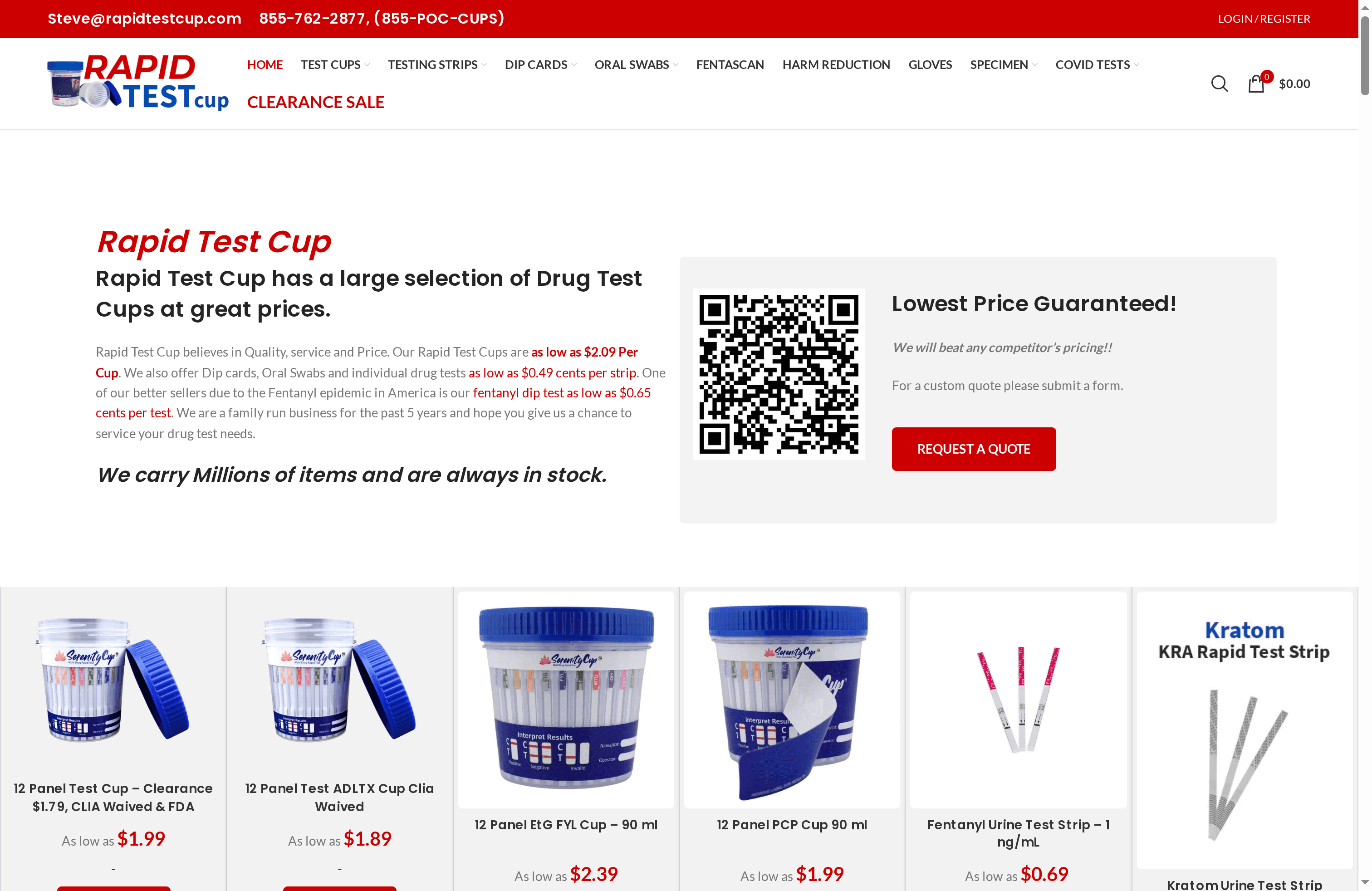
Validated screening is the operational link between your checklist and measurable outcomes. Whether you’re conducting initial assessments, monitoring program participants, or maintaining compliance documentation, having the right tools in hand determines how fast and accurately your team can act. The 12-panel test cup covers a wide range of substances in a single CLIA-waived, FDA-cleared collection, making it well-suited for clinical intake and ongoing monitoring within prevention programs. For targeted detection, the MET drug test strip delivers fast, reliable results in settings where a full-panel cup isn’t required. Pair these tools with standardized urine collection procedures to maintain chain-of-custody integrity and keep your documentation audit-ready.
Frequently asked questions
What is the most effective evidence-based checklist for substance abuse prevention?
The most effective checklists integrate SAMHSA’s SPF or CDC’s ENGAGE framework, combining needs assessment, skills-based programming, validated screening, and continuous outcome evaluation into a single coordinated process.
Why don’t information-only or scare tactic programs work for prevention?
Information-only approaches are shown to be ineffective or actively harmful because they address knowledge rather than behavior; interactive, skills-based interventions that build decision-making and resistance skills produce lasting change.
Are validated screening tools necessary in a prevention checklist?
Yes. NIDA’s validated tools such as TAPS, BSTAD, and S2BI are essential for identifying risk early and triggering timely intervention before use patterns escalate.
How often should substance abuse prevention checklists be reviewed?
Checklists should be reviewed at minimum annually and immediately following significant community changes, program transitions, or shifts in local substance use patterns.
What’s the biggest mistake in using checklists for prevention?
Treating the checklist as a static form rather than a living tool: programs that don’t actively review, update, and adapt their checklists lose fidelity over time and fail to respond to evolving population needs.