Blog
Laboratory Drug Testing Protocols: 2026 Compliance Guide

TL;DR:
- Laboratory drug testing protocols are governed by federal agencies like SAMHSA, HHS, and DOT, ensuring compliance from specimen collection through reporting. The 2026 standards maintain current panels, emphasizing specimen validity, chain-of-custody, and MRO review to produce legally defensible results. Operational workflows must embed compliance procedures into daily practices, with early adoption of oral fluid testing capacity critical for future readiness.
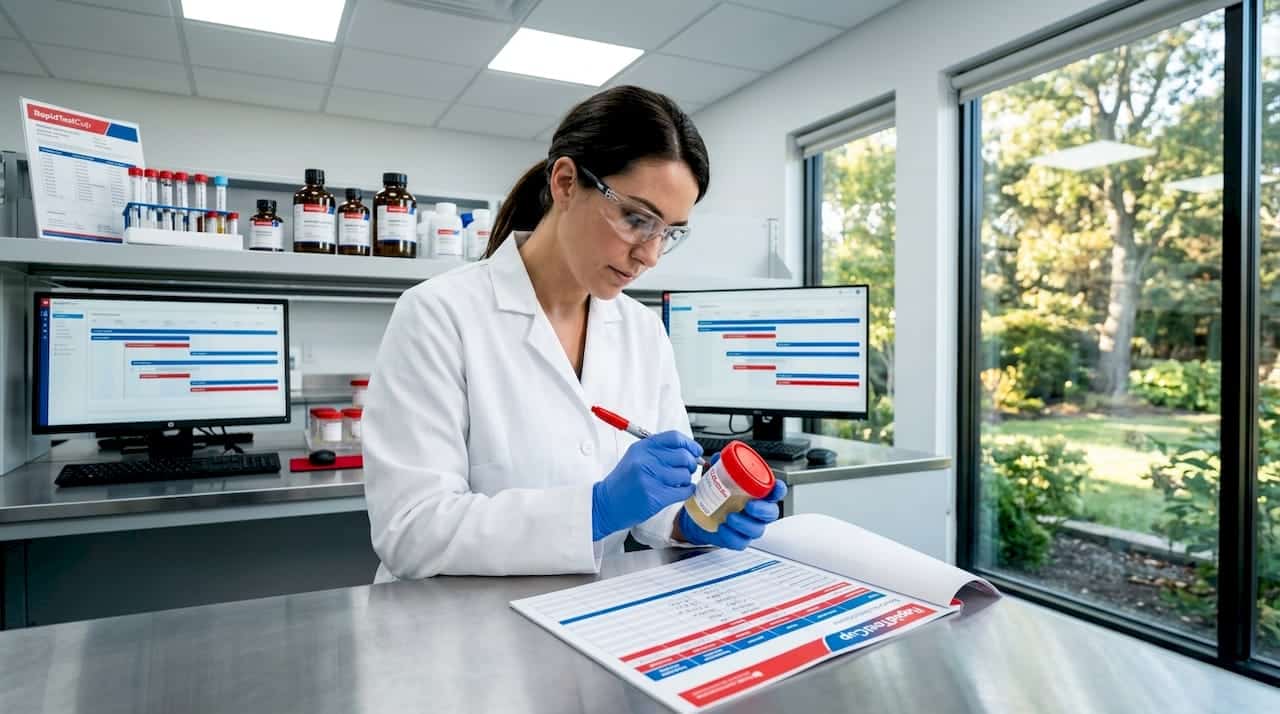
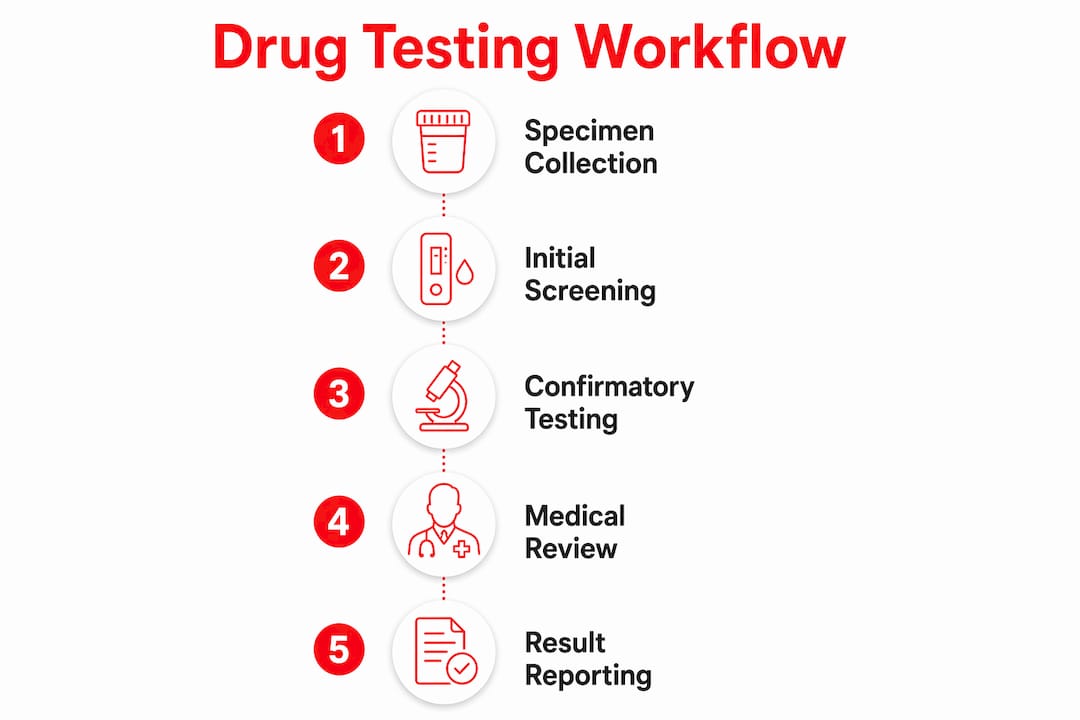
Laboratory drug testing protocols are the legally mandated procedures governing how biological specimens are collected, analyzed, and reported to produce defensible drug test results in clinical and forensic settings. Federal agencies including SAMHSA (Substance Abuse and Mental Health Services Administration), HHS (Department of Health and Human Services), and DOT (Department of Transportation) set the compliance framework that every certified laboratory must follow. Accurate results depend not just on instrumentation but on the entire chain from specimen collection through Medical Review Officer (MRO) sign-off. This guide covers the 2026 standards that laboratory professionals, healthcare practitioners, and legal personnel need to execute compliant, legally sound drug testing programs.
What drug testing panels and analytes are mandated for laboratories?
Federal workplace drug testing covers five core drug categories: amphetamines, cocaine, marijuana, opiates/opioids, and phencyclidine (PCP), plus specimen validity tests for adulteration and substitution. These categories form the baseline for any HHS-certified program and represent the minimum analyte coverage for federally mandated testing. Laboratories that serve DOT-regulated employers or federal agencies cannot substitute or omit these panels without violating their certification terms.
The 2026 Federal Register confirms no changes to urine or oral fluid panels and nomenclature, effective July 7, 2025. That stability matters operationally because it means your current panel configurations and reporting nomenclature remain valid without recertification updates. However, laboratories must still verify annually that their internal SOPs (standard operating procedures) reference the current Federal Register language.
Initial testing and confirmatory testing use different cutoff concentrations. Initial immunoassay screens use higher cutoffs to maximize sensitivity, while gas chromatography/mass spectrometry (GC/MS) or liquid chromatography/mass spectrometry (LC/MS) confirmation uses lower cutoffs to maximize specificity. A positive screen that falls below the confirmation cutoff is reported as negative, which is a distinction that matters enormously in legal proceedings.
| Test stage | Method | Purpose |
|---|---|---|
| Initial screen | Immunoassay (IA) | High sensitivity, broad detection |
| Confirmation | GC/MS or LC/MS | Specificity, legal defensibility |
| Specimen validity | pH, creatinine, oxidant tests | Detect adulteration or substitution |
| Biomarker panel | Creatinine, specific gravity | Confirm specimen is human urine |
Pro Tip: When selecting panels for non-federal clients, review the panel selection guidance from Rapidtestcup to align analyte coverage with your program’s risk profile rather than defaulting to the federal five-panel minimum.
How to collect and handle specimens without compromising integrity
Specimen type determines everything downstream. Urine remains the most widely accepted matrix for federal workplace testing, but oral fluid, blood, hair, and umbilical cord tissue each serve specific clinical or forensic purposes. Urine offers a wide detection window and non-invasive collection. Oral fluid captures recent use within hours. Hair provides a 90-day retrospective window. Umbilical cord tissue is used in neonatal exposure cases, where Cleveland Clinic Laboratories requires an 8-inch cord segment with refrigerated transport and rejects decomposed samples outright.
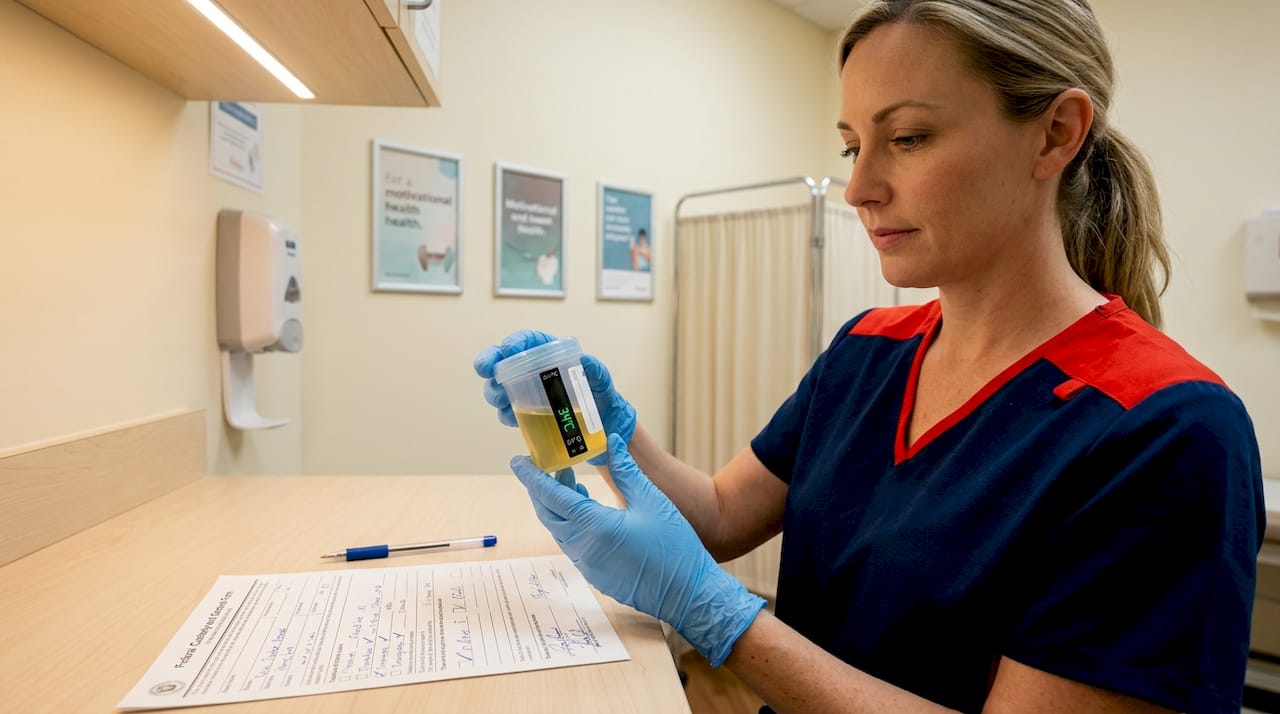
Temperature verification at collection is non-negotiable for urine specimens. A valid urine sample must read between 90°F and 100°F (32°C to 38°C) within four minutes of collection. Readings outside that range trigger an immediate observed collection or specimen rejection. Collectors who skip this step expose the entire result to legal challenge.
Specimen rejection criteria you must enforce at collection:
- Temperature out of range with no physiological explanation
- Visible signs of adulteration (unusual color, cloudiness, or odor inconsistent with urine)
- Broken or missing tamper-evident seal on transport
- Mismatched donor ID on the chain-of-custody form and specimen label
- Insufficient volume (less than 30 mL for urine initial screen plus validity testing)
Pro Tip: Train collectors to document every anomaly on the Federal CCF (Custody and Control Form) in real time, not after the donor leaves. Retroactive documentation is a red flag in legal review and MRO audits.
Oral fluid collection requires a different discipline. Donors must not eat, drink, or use tobacco for 10 minutes before collection. The collector observes the entire process and verifies the device’s volume adequacy indicator before sealing. Cross-contamination from improper glove handling is the most common collection error in oral fluid programs.
What are essential chain-of-custody procedures for legal defensibility?
Chain of custody is a critical control point in laboratory drug testing. Its breach can invalidate results regardless of how analytically accurate the underlying test was. Every hand-off, from collector to courier to receiving laboratory technician, must be documented with date, time, and signature.
The procedural sequence for legally defensible chain-of-custody is:
- Collector verifies donor identity with government-issued photo ID before collection begins.
- Collector completes the Federal CCF with donor information, collection site, and specimen ID.
- Specimen is labeled in the donor’s presence with a tamper-evident seal initialed by the donor.
- Collector and donor both sign the CCF before the specimen leaves the collection area.
- Specimen is placed in a secondary sealed bag with a copy of the CCF for transport.
- Receiving laboratory logs the specimen, verifies seal integrity, and assigns an internal accession number.
- Laboratory technician documents each transfer within the lab on the internal chain-of-custody log.
“MRO review is a procedural safeguard that transforms raw lab data into legally actionable information by contextualizing positives medically.” — Labcorp
MROs are licensed physicians with specialized training in substance use disorders. Their role is not administrative. They contact the donor directly when a confirmed positive result arrives, verify whether a legitimate medical explanation exists (such as a valid prescription for opioids), and only then report the result to the employer. A laboratory that bypasses MRO review and reports directly to an employer violates federal guidelines and exposes the employer to legal liability. For a deeper look at the legal framework around workplace testing, Rapidtestcup’s legal considerations resource covers the compliance boundaries clearly.
How do federal certifications shape laboratory drug testing standards?
HHS certification through the National Laboratory Certification Program (NLCP) is the baseline requirement for any laboratory performing federal workplace drug testing. Certified laboratories undergo quarterly proficiency testing and on-site inspections to maintain their status. Monthly Federal Register listings publish current certifications, suspensions, and revocations, so employers and MROs can verify a laboratory’s standing before submitting specimens.
Instrumented Initial Test Facilities (IITFs) are a distinct category. They perform initial immunoassay screening but cannot perform confirmation testing and, under current 2026 rules, cannot conduct oral fluid testing at all. Specimens with non-negative initial results at an IITF must be forwarded to a fully certified laboratory for GC/MS or LC/MS confirmation. Confusing IITFs with full-service certified laboratories is a compliance error that invalidates results in federal programs.
Key certification facts every lab professional should know:
- HHS-certified labs must use standardized analyte nomenclature as published annually in the Federal Register.
- Certification suspension triggers immediate prohibition from accepting federal workplace specimens.
- On-site inspections are unannounced and include review of SOPs, equipment calibration records, and personnel training logs.
- DOT’s 2026 rules permit directly observed urine collections as a fallback when certified oral fluid laboratories are unavailable, with an 18-month grace period for compliance.
Oral fluid testing is the most significant emerging shift in laboratory testing standards. DOT’s phased implementation acknowledges that certified oral fluid laboratory capacity is still building nationally. Laboratories investing now in oral fluid certification are positioning themselves ahead of the compliance curve rather than scrambling when the grace period expires.
What practical steps prevent errors when conducting drug tests?
Pre-test preparation determines result quality before a single specimen is collected. Donors should receive written instructions covering hydration (avoid excessive water intake that dilutes specimens), prohibited substances in the 24 hours before testing, and the ID documents required at the collection site. Collectors must verify the collection site is stocked with the correct CCF version, sufficient specimen containers, and functioning temperature strips before the first donor arrives.
The operational workflow for a compliant drug test runs as follows:
- Verify donor identity and document on CCF before any collection activity begins.
- Instruct the donor to empty pockets and wash hands before entering the collection area.
- For observed collections (required for return-to-duty and follow-up testing), document the observation basis on the CCF.
- Measure and record specimen temperature within four minutes of collection.
- Perform on-site validity checks if using a point-of-care device, and document results.
- Seal, label, and complete the CCF in the donor’s presence before they leave.
- Store specimens at the correct temperature (refrigerated for most matrices) until courier pickup.
- Confirm laboratory receipt and accession number within 24 hours of shipment.
Pro Tip: Build a pre-shift checklist into your collection site SOP. Collectors who verify supplies, CCF version, and equipment calibration before the first appointment catch 80% of procedural errors before they affect a specimen.
Common sources of error that compromise results include: using an expired CCF version, failing to document the temperature reading, allowing the donor to handle the specimen container unsupervised, and shipping specimens without the correct biohazard packaging. Each of these errors can trigger a rejected specimen or a legally challenged result. Reviewing a laboratory drug testing checklist before each collection cycle reduces these risks substantially. Turnaround time expectations should also be set with clients upfront: initial screens typically report within 24 hours, while confirmation results for non-negatives require an additional 24 to 72 hours depending on the laboratory’s volume and the analyte involved.
Key takeaways
Compliant laboratory drug testing requires integrating federally mandated panels, specimen validity testing, unbroken chain-of-custody documentation, and MRO review into a single defensible workflow.
| Point | Details |
|---|---|
| Federal panels are fixed | SAMHSA mandates five drug categories plus validity tests; no substitutions are permitted for federal programs. |
| Chain of custody is non-negotiable | A single undocumented transfer can invalidate an analytically accurate result in court or arbitration. |
| MRO review is legally required | MROs must contact donors before reporting positives to employers, protecting both parties from wrongful action. |
| Certification status must be verified | Check the monthly Federal Register listing before submitting specimens to any laboratory or IITF. |
| Oral fluid testing is expanding | DOT’s 18-month grace period means labs must plan now for certified oral fluid capacity or use observed urine as a fallback. |
Why compliance and workflow can’t be treated as separate problems
After years of working with laboratory professionals and legal teams navigating drug testing disputes, the pattern I see most often is this: the analytical result was correct, but the case fell apart on procedure. A collector skipped the temperature check. An MRO’s review was delayed past the reporting window. A laboratory’s certification had lapsed by three weeks and nobody caught it. The science was fine. The paperwork wasn’t.
The uncomfortable truth about laboratory drug testing in 2026 is that regulatory compliance and operational workflow are the same problem, not two separate ones. Laboratories that treat compliance as a documentation exercise separate from daily operations will always have gaps. The ones that build federal requirements directly into their SOPs, train collectors on the “why” behind each step, and verify certification status as a standing monthly task are the ones whose results hold up.
Oral fluid testing is the next inflection point. DOT’s grace period is not a reason to delay. It’s a window to build capacity before it becomes a crisis. Laboratories that partner with MROs early in the oral fluid rollout, rather than waiting for a failed inspection to force the conversation, will adapt faster and with fewer compliance incidents.
My recommendation: treat your MRO as a clinical partner, not a sign-off step at the end of the process. The best programs I’ve seen involve MROs in SOP development, collector training, and result interpretation discussions. That integration is what separates programs that produce defensible results from programs that produce results that get challenged.
— Justin
How Rapidtestcup supports compliant drug testing workflows
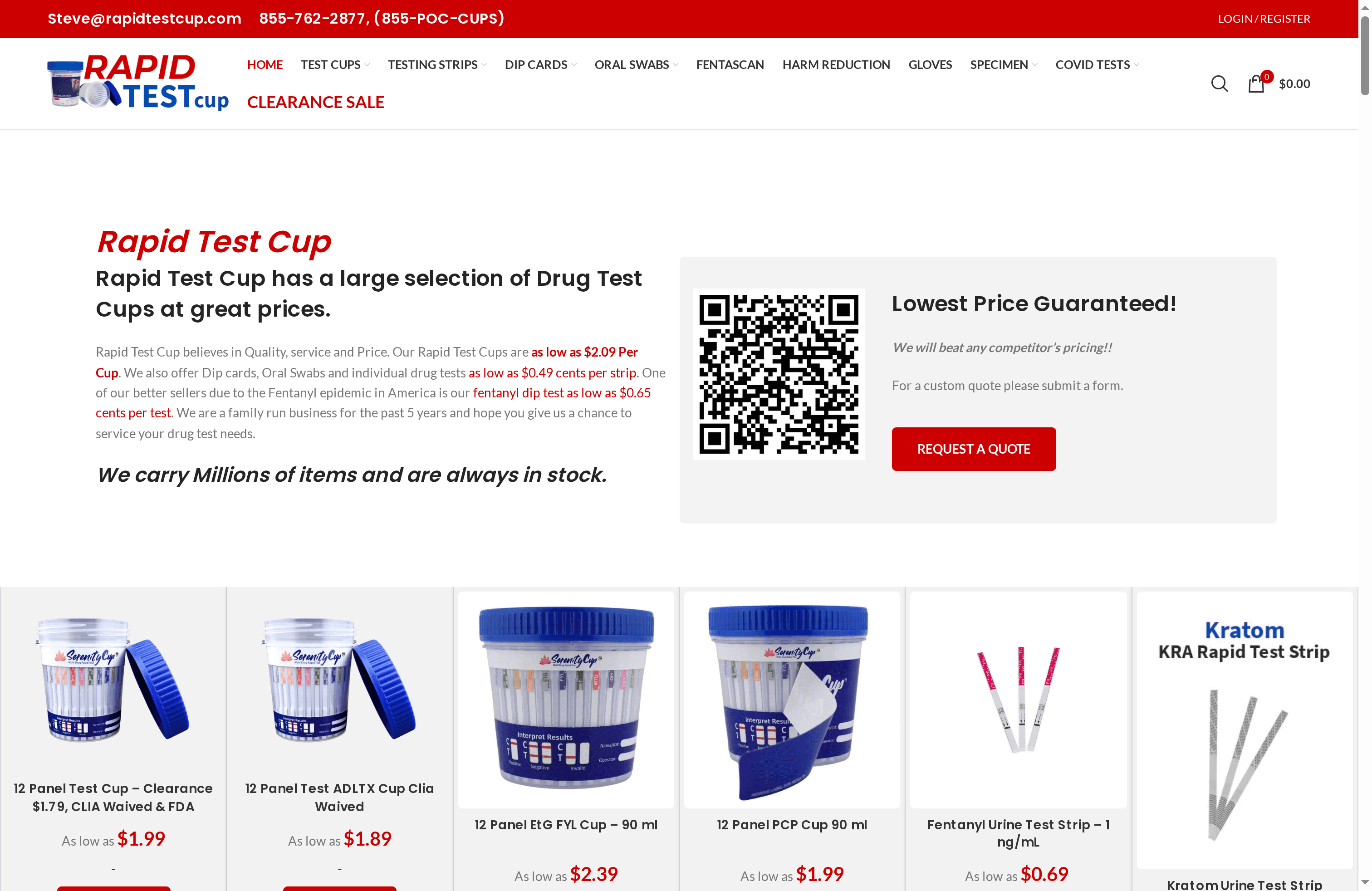
Rapidtestcup supplies laboratories, clinics, and substance abuse programs with CLIA-waived, FDA-approved drug test cups and strips built for professional and forensic use. The 12-panel ADLTX cup covers the core SAMHSA analytes plus adulterant detection in a single collection device, supporting specimen validity testing at the point of care. For programs requiring broader coverage, the 15-panel test with adulterants adds expanded analyte detection without adding complexity to the collection workflow. Every product ships fast, supports chain-of-custody labeling, and is priced for bulk ordering. Whether you run a high-volume clinical lab or a small occupational health clinic, Rapidtestcup has the panels and supplies to keep your program compliant and your results defensible.
FAQ
What are the five federally mandated drug categories for workplace testing?
SAMHSA mandates testing for amphetamines, cocaine, marijuana, opiates/opioids, and PCP in all federal workplace drug testing programs. Specimen validity tests for adulteration and substitution are also required alongside these analyte panels.
What is the role of an MRO in laboratory drug testing?
A Medical Review Officer is a licensed physician who reviews confirmed positive results, contacts the donor to verify medical explanations, and only then reports the final result to the employer. Bypassing MRO review violates federal guidelines and creates legal exposure for employers.
Can an IITF perform confirmation testing or oral fluid analysis?
No. Instrumented Initial Test Facilities perform initial immunoassay screening only. They cannot conduct GC/MS or LC/MS confirmation testing, and current 2026 HHS rules prohibit IITFs from performing oral fluid testing entirely.
How does DOT handle oral fluid testing when certified labs are unavailable?
DOT’s 2026 rules permit directly observed urine collections as a compliant fallback when a certified oral fluid laboratory is not available, with an 18-month grace period for transportation employers to achieve full oral fluid compliance.
What makes a urine specimen invalid at collection?
A urine specimen is invalid if the temperature falls outside 90°F to 100°F within four minutes of collection, if visible adulteration is present, if the volume is below 30 mL, or if the tamper-evident seal is broken or missing before laboratory receipt.