Blog
Types of Substances Detected in Drug Tests: 2026 Guide


TL;DR:
- Drug tests identify specific analytes, with panel selections determining detection scope rather than equipment complexity.
- Standard 5-panel screens detect key substances like THC, cocaine, amphetamines, opioids, and PCP, each with specific detection windows.
- Expanded panels add substances such as benzodiazepines, MDMA, fentanyl, and synthetic cannabinoids to meet clinical and legal needs.
Drug tests detect a defined set of substances called analytes, and knowing which ones your test targets is the difference between an accurate result and a dangerous blind spot. The types of substances detected depend entirely on the panel ordered, not the sophistication of the equipment. Standard 5-panel urine screens target marijuana, cocaine, amphetamines, opioids, and PCP because these carry the highest public health burden. Expanded panels add benzodiazepines, barbiturates, methadone, MDMA, and others. And emerging nanotechnology-based sensors are now pushing detection sensitivity to levels once reserved for forensic laboratories.
What are the most common types of substances detected in standard drug tests?
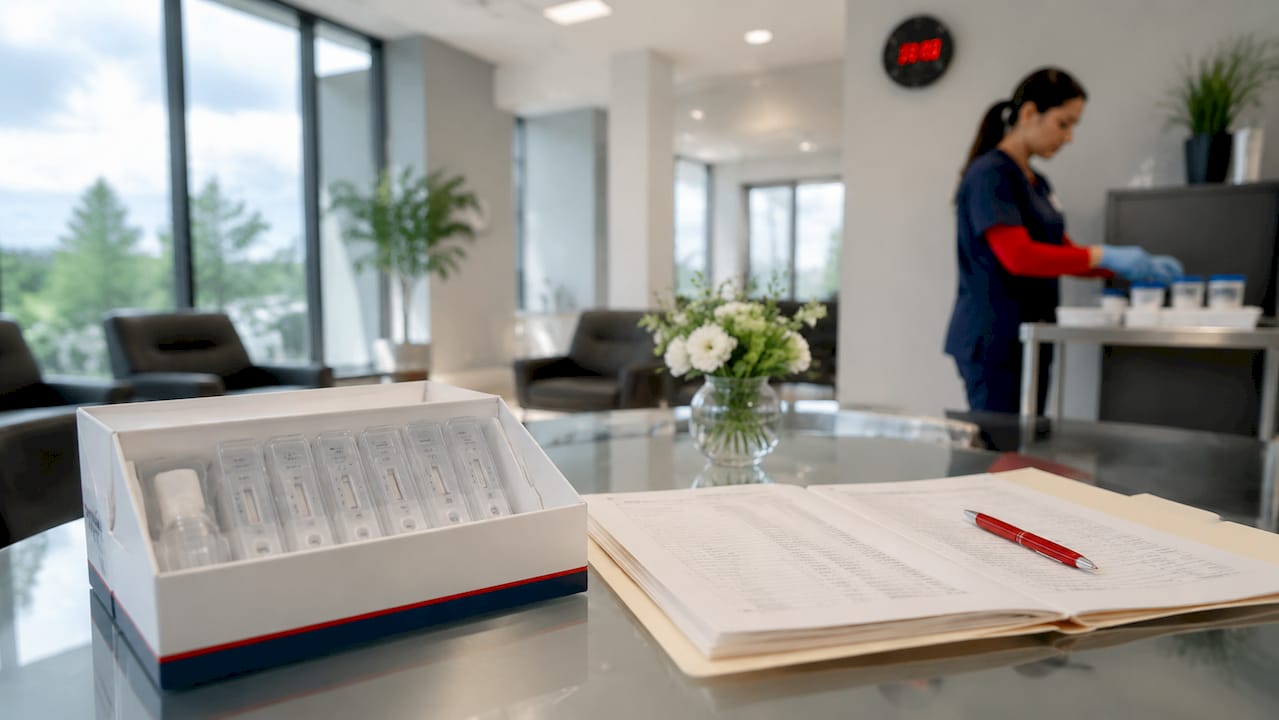
The five core analyte categories in a standard urine drug screen represent the most widely abused substances in the United States. Each is detected not as the parent drug itself, but as a metabolite your body produces after processing the compound. Understanding this distinction matters because it affects detection windows and result interpretation.
Here is what a standard 5-panel test covers:
- THC-COOH (marijuana metabolite): The primary metabolite of cannabis, detectable in urine for 3 to 30 days depending on frequency of use.
- Benzoylecgonine (cocaine metabolite): Cocaine itself clears quickly, but this metabolite persists for 2 to 4 days.
- Amphetamines: Covers amphetamine and methamphetamine, detectable for roughly 2 to 3 days.
- Opioids and opiates: Includes morphine, codeine, and heroin metabolites. Detection windows range from 1 to 4 days.
- Phencyclidine (PCP): Detectable for 7 to 14 days in casual users and longer in chronic users.
The table below summarizes these core substances and their key detection characteristics.
| Substance | Metabolite Detected | Typical Detection Window |
|---|---|---|
| Marijuana (THC) | THC-COOH | 3 to 30 days |
| Cocaine | Benzoylecgonine | 2 to 4 days |
| Amphetamines | Amphetamine/methamphetamine | 2 to 3 days |
| Opioids/Opiates | Morphine, codeine derivatives | 1 to 4 days |
| PCP | Phencyclidine | 7 to 14 days |
These five categories were selected because they represent the highest-volume substances in emergency department visits, workplace incidents, and public health data. A test panel is a deliberate design choice, not a catch-all screen. For a detailed breakdown of how panel size affects coverage, the 5-panel vs. 10-panel comparison from Rapidtestcup is worth reviewing before you order.
How do expanded panels detect additional substances?
Expanded panels, ranging from 10-panel to 15-panel configurations, add substance categories that are clinically or legally significant but absent from the standard screen. These additions reflect real-world demand from workplace programs, pain management clinics, and court-ordered monitoring.
Common additions across expanded panels include benzodiazepines (Xanax, Valium, Klonopin), barbiturates, methadone, propoxyphene, MDMA (ecstasy), and buprenorphine. Each addition targets a specific abuse pattern or clinical scenario. Methadone, for example, is included because it does not cross-react with standard opiate assays, meaning a patient on methadone maintenance would test negative on a 5-panel screen without explicit inclusion.
| Panel Size | Substances Added Beyond 5-Panel |
|---|---|
| 10-panel | Benzodiazepines, barbiturates, methadone, propoxyphene, methaqualone |
| 12-panel | MDMA, oxycodone |
| 15-panel | Buprenorphine, tramadol, fentanyl, synthetic cannabinoids |
Workplace programs governed by Department of Transportation (DOT) regulations use a specific 5-panel configuration, while non-regulated employers often choose 10-panel or 12-panel tests. Clinical settings managing chronic pain patients frequently use 15-panel or custom panels. For a practical look at how these configurations differ in real use cases, Rapidtestcup’s drug testing panel examples covers seven common configurations with substance lists.
Pro Tip: Always read the panel specification sheet before ordering. Two products labeled “10-panel” can test for entirely different substances depending on the manufacturer.
Which substances are excluded from standard drug testing and why?
Standard panels deliberately exclude many substances, and this is one of the most misunderstood aspects of drug testing. Exclusion is not an oversight. It reflects cost, prevalence data, and regulatory design. Common substances not detected by standard panels include alcohol, kratom, LSD, psilocybin, mescaline, and most designer synthetic drugs.
The following substances are routinely missed by standard screens:
- Alcohol (ethanol): Requires a dedicated breathalyzer or ethyl glucuronide (EtG) urine test. Standard immunoassay panels do not include it.
- Kratom (mitragynine): Growing in use but absent from most commercial panels. Requires a specific add-on test.
- LSD and psilocybin: Detected only at trace levels and clear rapidly. Standard panels do not include them.
- Designer synthetic cannabinoids (K2/Spice): Standard urine assays fail to detect these because their chemical structures differ significantly from THC-COOH.
- Many prescription drugs: Gabapentin, clonidine, and most antidepressants are not included unless specifically ordered.
There is also a subtler problem with panels that do include certain drug classes. Benzodiazepine assays often produce false negatives because they detect only some metabolites, primarily oxazepam, while missing others like alprazolam (Xanax) entirely. This has direct implications for legal and clinical contexts where a negative result might be incorrectly interpreted as non-use. If you are testing for substances related to a legal matter or medical program, knowing these gaps matters. The Suboxone and workplace drug testing guide at MDMatt covers one specific example of how analyte specificity affects real-world outcomes.
What emerging technologies improve substance detection sensitivity?
The most significant shift in substance analysis techniques over the past five years is the move from lab-only precision to field-deployable sensitivity. Gold nanoparticle-based colorimetric sensors now achieve detection of fentanyl and heroin at 1 ng/mL in solution and 50 ng/mL in urine. That level of sensitivity was previously achievable only with gas chromatography-mass spectrometry (GC-MS) in a certified laboratory.
Surface-enhanced Raman spectroscopy (SERS) and electrochemical sensors represent two additional methods pushing the boundaries of what substances can be detected in the field. SERS amplifies molecular signals by factors of up to 10 billion, allowing identification of trace analytes in complex biological matrices like urine or saliva. Electrochemical sensors offer rapid, low-cost detection with minimal sample preparation, making them practical for point-of-care screening.
“Data-driven complexity in chemical detection shifts focus from limits of detection to interpretation accuracy using AI-enabled tools.” — Machine learning and metabolomics in chemical detection
Machine learning integration with metabolomics takes this further by interpreting complex chemical signatures that simple immunoassay tests cannot resolve. Instead of a binary positive or negative result, AI-assisted platforms can distinguish between structurally similar compounds, flag multi-drug interactions, and reduce false positive rates in populations taking legitimate medications. The challenge is that these platforms require significant data infrastructure and trained personnel, which limits their current use to high-volume forensic and clinical labs. For individuals and organizations using standard point-of-care kits, the practical takeaway is that expanded panels and confirmatory testing remain the most accessible path to broader substance coverage.
Pro Tip: If you receive a positive result on an immunoassay screen, request a GC-MS confirmation test before any legal or employment action is taken. Immunoassay screens are designed for speed, not absolute specificity.
How should you interpret the substances detected in your test results?
Interpreting a drug test result requires knowing three things: what the test was designed to detect, whether the result is qualitative or quantitative, and what the detection window means for the substance in question. Qualitative analysis identifies what substances are present, while quantitative analysis measures concentration. Most point-of-care urine tests are qualitative. Serum blood testing provides quantitative concentration values, which are required for clinical interpretation in overdose or forensic evaluations.
Key factors that affect how you read your results:
- Detection windows vary by substance and use pattern. THC can remain detectable for weeks in chronic users, while cocaine metabolites clear in days. A positive result does not confirm recent impairment.
- False positives occur. Ibuprofen has historically triggered false positives for marijuana on some immunoassay platforms. Poppy seeds can trigger opiate positives.
- Panel limitations create false negatives. If a substance is not on the panel, it will not appear in results regardless of actual use.
- Knowing your panel is non-negotiable. A negative result on a 5-panel test says nothing about benzodiazepine or synthetic opioid use.
For anyone navigating a legal proceeding or clinical program, Rapidtestcup’s guide on reading test results accurately provides a structured framework for understanding what your results actually mean versus what they appear to say.
Key takeaways
The most reliable drug test is one matched precisely to the substances you need to detect, with results interpreted against the panel’s known limitations and detection windows.
| Point | Details |
|---|---|
| Standard panels cover five substances | The 5-panel screen targets THC, cocaine, amphetamines, opioids, and PCP based on public health data. |
| Expanded panels add critical categories | 10-panel to 15-panel tests include benzodiazepines, MDMA, methadone, fentanyl, and synthetic cannabinoids. |
| Many substances are excluded by design | Alcohol, kratom, LSD, and most designer drugs require specialized or add-on tests to detect. |
| Emerging sensors reach nanogram sensitivity | Gold nanoparticle and SERS-based tools now detect fentanyl at 1 ng/mL, previously a lab-only capability. |
| Qualitative vs. quantitative results differ | Urine screens give presence or absence; blood tests provide concentration data needed for clinical decisions. |
Why I think most people misread their drug test results
After years of working in this space, the most common mistake I see is treating a negative result as a clean bill of health. It is not. A negative result means the substances on that specific panel were not detected above the cutoff threshold at the time of testing. That is a much narrower statement than most people realize.
The second issue is the growing complexity of synthetic substances. Fentanyl analogs, novel benzodiazepines, and synthetic cannabinoids are being developed faster than standard panels are updated. Someone using a fentanyl analog like carfentanil could test negative on a standard opioid screen because the metabolite profile does not match what the antibody in the assay recognizes. This is not a flaw in the test. It is a fundamental limitation of targeted immunoassay design. The test finds what it was built to find.
My honest recommendation is to match your panel to your actual concern, not to the cheapest or most common option. If you are monitoring for synthetic opioids, order a panel that explicitly includes them. If you are in a legal context, request GC-MS confirmation on any positive. And if you are evaluating someone in a clinical setting, emerging substance testing is no longer optional. The landscape of what people use has changed. Your testing strategy needs to keep pace.
— Justin
Find the right drug test kit for your needs
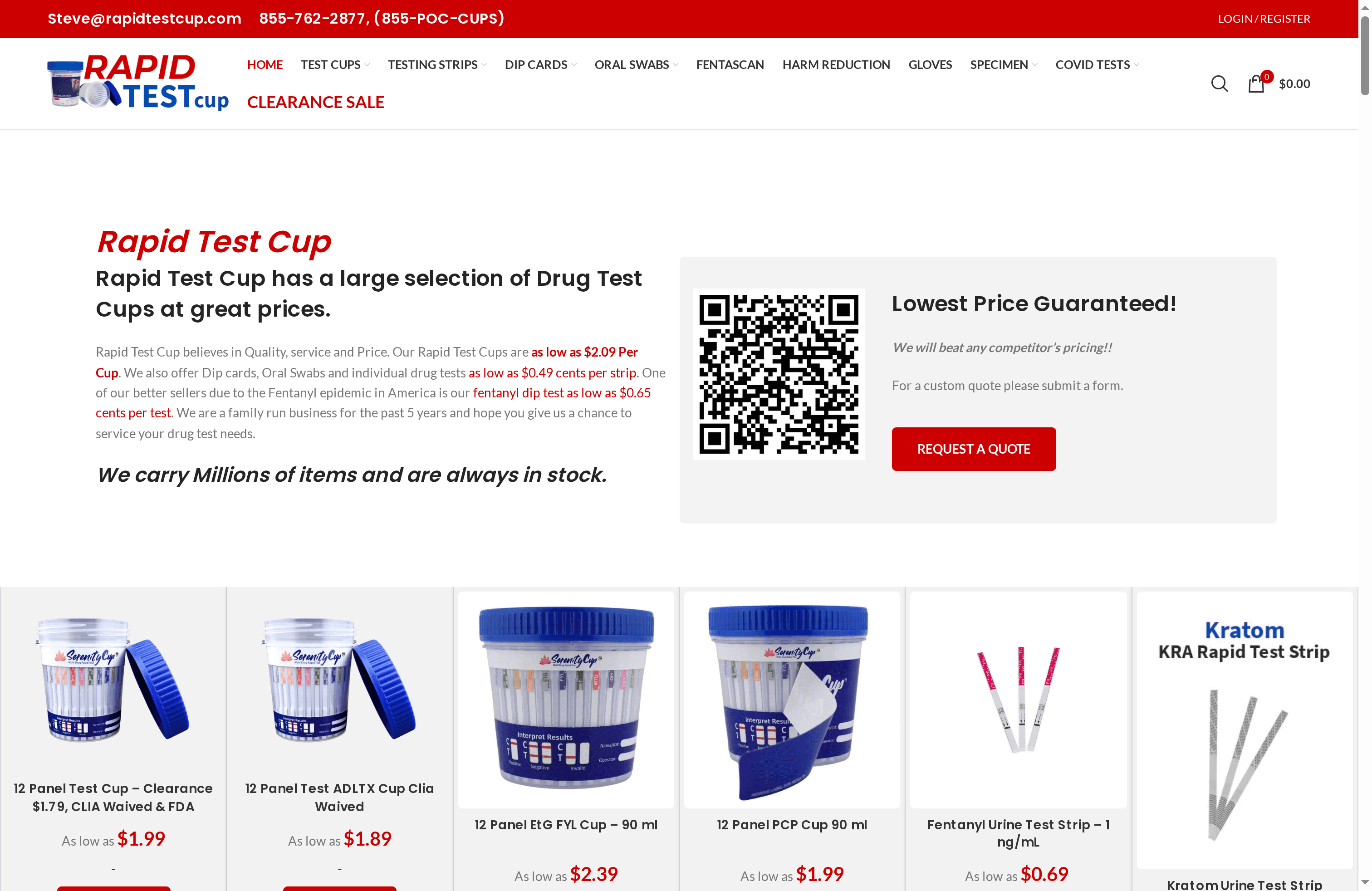
Knowing which substances your test covers is only half the equation. The other half is using a kit that actually delivers reliable results for those analytes. Rapidtestcup carries a full range of CLIA-waived, FDA-cleared test cups and dip cards spanning 5-panel through 15-panel configurations, including kits that cover fentanyl, synthetic cannabinoids, and buprenorphine. Whether you are screening for workplace compliance, personal monitoring, or clinical use, the urine drug test kit comparison at Rapidtestcup breaks down exactly which substances each product detects, with pricing for single units and bulk orders. If you are not sure which panel fits your situation, the drug test kit selection guide walks you through the decision by use case and substance coverage.
FAQ
What substances does a standard 5-panel drug test detect?
A standard 5-panel urine drug test detects marijuana (THC-COOH), cocaine (benzoylecgonine), amphetamines, opioids and opiates, and PCP. These five categories were selected based on their prevalence in public health and workplace safety data.
Can a drug test detect alcohol?
Standard immunoassay drug panels do not detect alcohol. Alcohol requires a dedicated breathalyzer test or a urine EtG (ethyl glucuronide) test ordered separately.
Why do some substances show false negatives on drug tests?
False negatives occur when a substance is not included in the panel, when metabolite concentrations fall below the cutoff threshold, or when the assay antibody does not recognize the specific metabolite. Benzodiazepine panels, for example, often miss alprazolam because they are calibrated to detect oxazepam.
What is the difference between qualitative and quantitative drug testing?
Qualitative testing identifies whether a substance is present above a defined cutoff, producing a positive or negative result. Quantitative testing measures the exact concentration, which is required for clinical decisions like overdose management or forensic evaluation.
Do expanded panels detect synthetic opioids like fentanyl?
Most standard and 10-panel tests do not include fentanyl unless explicitly specified. Detection of fentanyl and its analogs requires a panel that lists fentanyl as a targeted analyte, or a confirmatory GC-MS test in a certified laboratory.