Blog
Substance Abuse Program Tips for Workplace Compliance


TL;DR:
- Effective substance abuse programs include clear testing policies, trained supervisors, and recovery-supportive practices.
- Measuring success requires tracking multiple metrics like employee trust, referral rates, and safety incidents, not just positive tests.
What makes a substance abuse program actually work?
The most effective substance abuse programs share a common structure: clear testing policies, trained supervisors, recovery-supportive accommodations, and reliable testing supplies. Here is what that looks like in practice.
- Define program goals around safety and compliance, not punishment. Recovery-supportive programs improve retention and reduce safety incidents more reliably than zero-tolerance-only models.
- Specify all five testing scenarios in your written policy: pre-employment, random, reasonable suspicion, post-accident, and follow-up testing. SAMHSA’s model plan treats this specificity as foundational to legal compliance.
- Involve a Medical Review Officer (MRO) to validate positive results and account for lawful prescription medications before any disciplinary action.
- Communicate transparently with employees about what substances are tested, how results are interpreted, and what consequences follow. The National Safety Council links this transparency directly to employee cooperation.
- Protect medical privacy at every stage. Confidentiality is not optional; it is a legal requirement and a trust-builder.
- Connect employees to Employee Assistance Programs (EAPs) for counseling, referrals, and support before problems escalate.
- Use federal frameworks from SAMHSA, the U.S. Department of Labor, and NIOSH as your policy backbone, not a starting point you improvise from.
Table of Contents
- ## 1. How to define and implement your drug testing scenarios
- ## 2. How supervisor training strengthens your program
- ## 3. How to accommodate medication-assisted treatment at work
- ## 4. How to choose drug testing supplies that hold up to scrutiny
- ## 5. How to monitor and evaluate whether your program is working
- ## 6. How to connect employees to treatment and support
- ## 7. Steps for implementing and maintaining your drug testing process
- Get the testing supplies your program depends on
- Key Takeaways
## 1. How to define and implement your drug testing scenarios
Every workplace drug testing policy needs to spell out exactly when testing happens. Vague policies invite legal challenges and inconsistent enforcement.
-
Pre-employment testing screens applicants before they start. Confirm state-specific rules, since some states restrict when or how you can test candidates.
-
Random testing applies to safety-sensitive positions. Selection must be genuinely random, typically through a third-party administrator, to withstand legal scrutiny. See Rapidtestcup’s random drug testing guide for setup details.
-
Reasonable suspicion testing is triggered by documented, observable behavior, not a hunch. Supervisors must record specific physical or behavioral signs before initiating a test.
-
Post-accident testing follows workplace injuries or unsafe incidents. Define the threshold clearly: what severity of incident requires a test, and within what timeframe.
-
Follow-up testing applies to employees returning after treatment. It is typically unannounced and runs for a defined period, often for a defined period.
-
Communication matters throughout. Tell employees upfront which substances are screened, how results are handled, and what the consequences are. Clear communication reduces resistance and builds program credibility.
## 2. How supervisor training strengthens your program
Supervisors are your first line of detection. A policy without trained supervisors is just a document.
- Train on physical, cognitive, and behavioral signs of impairment: slurred speech, unsteady gait, erratic decision-making, sudden mood shifts. Generic awareness is not enough; supervisors need scenario-based practice.
- Documentation must be objective. Record what was observed, when, and by whom. Avoid interpretive language like “seemed drunk.” Stick to observable facts.
- Confidentiality is non-negotiable. SAMHSA guidance is explicit: supervisors must handle impairment observations discreetly and refer employees without broadcasting the situation.
- Referral should be non-judgmental. The goal is connecting the employee to an EAP or treatment resource, not confrontation. Frame it as a safety and health issue.
- Drug testing identifies substance presence, not impairment level. The National Safety Council notes that combining testing with supervisor assessment produces better safety outcomes than testing alone.
Pro Tip: Embed supervisor training inside your broader safety and wellness calendar rather than running it as a standalone compliance event. When impairment recognition sits alongside ergonomics and mental health training, it normalizes the conversation and reduces stigma.
## 3. How to accommodate medication-assisted treatment at work
Employees undergoing Medication-Assisted Treatment (MAT) with medications like buprenorphine or methadone are in active recovery. Automatically disqualifying them is both counterproductive and legally risky.
- MAT does not inherently impair job performance. The U.S. Department of Labor is clear: employees on MAT may require workplace flexibility, but MAT itself is not grounds for termination.
- The Americans with Disabilities Act (ADA) may require reasonable accommodations for employees with substance use disorder who are in recovery. Consult legal counsel to understand your obligations.
- Reasonable accommodations can include scheduling flexibility for outpatient appointments, temporary reassignment from safety-sensitive roles, or modified duties during early treatment phases. The DOL’s Recovery-Ready Workplace Toolkit provides concrete implementation examples.
- Reduce stigma actively. Employees who fear judgment will not disclose substance use issues until a crisis forces the issue. A recovery-supportive culture, where addiction treatment programs are discussed openly, encourages earlier help-seeking.
- Integrate MAT accommodation into your written policy. Employees and supervisors both need to know the rules before a situation arises.
## 4. How to choose drug testing supplies that hold up to scrutiny
The quality of your testing supplies directly affects the reliability of your results. A false positive or a missed detection can expose your organization to legal liability or safety failures.
- FDA-approved and CLIA-waived kits are the baseline standard for workplace programs. These designations confirm the product meets federal accuracy and safety requirements.
- Multi-panel test cups are the workhorse of most programs. They screen for multiple substances in a single collection, saving time and reducing handling steps. Rapidtestcup’s 12-panel ADLTX cup covers the most common substances in one test.
- Adulterant detection matters. Specimen validity testing catches attempts to dilute, substitute, or chemically alter a sample. Kits that include adulterant checks, like Rapidtestcup’s 22-panel cup with adulterant detection, add a meaningful layer of integrity.
- Oral swabs work well for post-accident or reasonable suspicion scenarios where observed collection is preferred over restroom-based urine collection.
- Fentanyl-specific strips are worth adding to any program in 2026. Fentanyl contamination of other substances has made targeted detection a practical necessity, not a specialty item.
- Bulk pricing matters for ongoing programs. Rapidtestcup offers volume discounts and quick shipping, which keeps per-test costs manageable for high-frequency random testing schedules.
- Match the panel to your testing scenario. A pre-employment screen for an office role may need fewer panels than a post-accident test for a safety-sensitive position. Consult Rapidtestcup’s lab-focused product guide to align product selection with your program’s specific needs.
## 5. How to monitor and evaluate whether your program is working
A program that never gets measured never gets better. Tracking the right metrics tells you whether your investment is reducing risk or just generating paperwork.

SAMHSA’s Drug-Free Workplace Toolkit recommends measuring program success across multiple dimensions, not just positive test rates. That means tracking employee participation in education sessions, program expenditures, and qualitative feedback alongside test data.
Useful metrics to track:
- Positive test rate trends over time, broken down by testing scenario
- EAP referral and utilization rates, which signal whether employees trust the support system
- Post-accident frequency before and after program implementation
- Employee survey data on program awareness and perceived fairness
- Return-to-work success rates for employees who completed treatment
Review these metrics at least annually. If positive test rates are flat but EAP referrals are near zero, that usually means employees do not trust the program enough to self-refer. That is a policy and culture problem, not a testing problem.
## 6. How to connect employees to treatment and support
Testing identifies a problem. Support is what actually resolves it. The two have to work together or the program stalls at detection.
Employee Assistance Programs are the most direct referral pathway. A well-structured EAP offers confidential counseling, substance use assessments, and referrals to treatment providers. Employees are far more likely to use an EAP when supervisors present it as a health resource rather than a disciplinary step.
For employees who need more structured care, MAT programs provide medically supervised treatment that significantly reduces relapse risk. Building a relationship with local treatment providers before you need them means you can make a warm referral instead of handing someone a phone number.
Peer support is underused in most workplace programs. Employees in recovery who volunteer as informal mentors or recovery coaches can reach colleagues in ways that HR and supervisors simply cannot. The DOL’s Recovery-Ready Workplace framework explicitly supports this model.
## 7. Steps for implementing and maintaining your drug testing process
Getting a program off the ground requires more than buying test kits. Here is the sequence that holds up:
- Conduct a needs assessment. Identify your highest-risk roles, your regulatory obligations, and any existing gaps in your current policy.
- Draft a written policy that covers all five testing scenarios, consequences, confidentiality protections, and the appeals process. Have legal counsel review it before rollout.
- Communicate the policy to every employee before it takes effect. Use multiple formats: written notice, team meetings, and a Q&A session. A substance abuse prevention checklist can help structure this rollout.
- Train supervisors on impairment recognition, documentation, and referral procedures before the policy goes live.
- Select and stock your testing supplies. Confirm your kits are FDA-approved and CLIA-waived, and that your panel selection matches your testing scenarios.
- Establish your MRO relationship. Positive results need a Medical Review Officer to validate them before any action is taken. This step protects both the employee and the organization.
- Run the program consistently. Random testing must be genuinely random. Reasonable suspicion testing must follow documented observations. Inconsistency is where programs fail legally.
- Review and update annually. Regulations change, substances of concern shift, and your workforce evolves. A program that was compliant in 2024 may need updates for 2026.
Get the testing supplies your program depends on
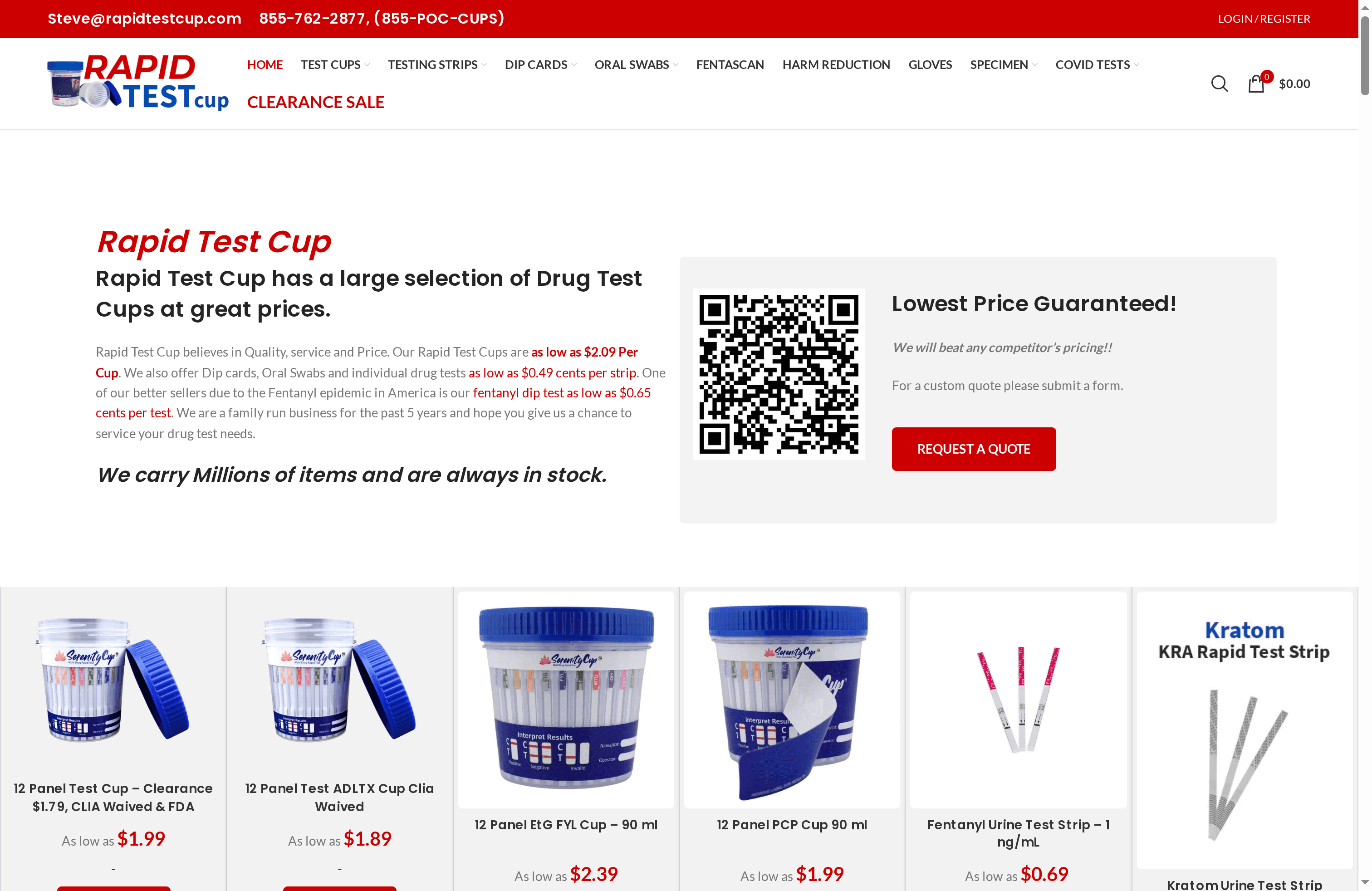
A well-designed program needs supplies that match its standards. Rapidtestcup carries FDA-approved, CLIA-waived multi-panel test cups, adulterant detection kits, oral swabs, fentanyl strips, and specimen collection supplies, with bulk pricing built for organizations running ongoing testing programs. Browse the top drug testing products for labs or request a custom quote for high-volume orders.
Key Takeaways
Effective substance abuse programs combine clear testing policies, trained supervisors, recovery-supportive accommodations, and FDA-approved supplies to reduce risk and support employees.
| Point | Details |
|---|---|
| Specify all testing scenarios | Pre-employment, random, reasonable suspicion, post-accident, and follow-up testing must each have defined procedures. |
| Train supervisors on observation | Supervisors need documented, objective evidence before initiating reasonable suspicion testing. |
| Accommodate MAT legally | Employees on medication-assisted treatment may be entitled to reasonable accommodations under the ADA. |
| Use FDA-approved, CLIA-waived kits | Testing supply quality directly affects result reliability and your organization’s legal standing. |
| Measure beyond positive test rates | Track EAP utilization, employee feedback, and post-accident trends to assess true program effectiveness. |