Blog
How to Prevent Sample Adulteration: A Checklist for Test Administrators


Prevent sample adulteration by combining three controls: harden the collection site, run immediate specimen validity testing (SVT), and enforce strict chain-of-custody from the moment the cup is handed over. Those three layers, applied together, catch the vast majority of tampering attempts before a specimen ever reaches the lab.
Immediate action checklist:
- Secure or disable all water sources in the collection area before the donor enters
- Apply a bluing agent to toilet water or use a dry-toilet protocol
- Conduct a temperature check within 4 minutes of collection (acceptable range: 90°F–100°F / 32°C–38°C)
- Perform a visual inspection for unusual color, odor, foaming, or clarity
- Apply a tamper-evident seal in the donor’s presence and document the time
- Run on-site SVT for creatinine, specific gravity, pH, and oxidant/nitrite
- Log every step on a chain-of-custody form and have the donor initial the seal
DOT/SAMHSA-regulated programs require SVT as a standard component of workplace testing. Rapidtestcup supplies multi-panel cups with integrated adulterant detection pads that cover all of these on-site checks.
Key Takeaways
Preventing sample adulteration requires layered controls: site hardening, multi-parameter SVT, and documented chain-of-custody applied consistently at every collection.
| Point | Details |
|---|---|
| Multi-parameter SVT is the standard | Single-parameter checks miss synthetic urine and oxidizing agents; run creatinine, specific gravity, pH, and oxidant screens together. |
| Temperature check timing is critical | Read the temperature strip within 4 minutes of collection; late checks are unreliable and may not hold up legally. |
| Site hardening reduces opportunity | Disable water sources, apply bluing agents, and remove chemicals before every collection session, not selectively. |
| MRO review protects the program | All invalid results require MRO review to distinguish medical causes from deliberate subversion before any adverse action. |
| Rapidtestcup for integrated SVT cups | Multi-panel cups with built-in adulterant pads cover the full SVT checklist in a single device, CLIA waived and FDA cleared. |
Table of Contents
- What adulteration, substitution, and dilution actually mean
- Common adulterants and methods used to beat urine tests
- Specimen validity testing: markers, thresholds, and lab checks
- Collection-site controls that stop tampering before it starts
- Chain-of-custody, SOPs, and regulatory policy considerations
- How to interpret an invalid or suspicious specimen and what to do next
- Device features and supplies that materially reduce adulteration risk
- Research-backed cautions and common operational pitfalls
- What field experience actually teaches about adulteration prevention
- Rapidtestcup supplies the SVT-capable cups your program needs
- Sources
What adulteration, substitution, and dilution actually mean
These three terms describe distinct forms of specimen subversion, and the prevention strategy for each differs.
Adulteration is the in vitro addition of a foreign substance to a collected specimen. The donor has already provided the sample and then introduces a chemical, household product, or commercial masking agent directly into the cup. Common examples include bleach, nitrite salts, vinegar, and commercial oxidizing products sold specifically to defeat immunoassays.
Substitution means replacing the donor’s own urine entirely with a different fluid, most often synthetic urine or another person’s clean specimen. Substitution is harder to detect visually because a quality synthetic product can look and smell like real urine. Modern synthetic urine products are formulated to include creatinine and urea, which means single-parameter checks can miss them.
Dilution can be in vivo (the donor drinks large volumes of fluid before the test to lower analyte concentration below detection cutoffs) or in vitro (water is added directly to the cup). In vivo dilution produces a specimen with low creatinine and low specific gravity but otherwise normal parameters.
The scope of this guide is primarily urine, the most common matrix in workplace and forensic testing. Rotating matrices — adding oral fluid, hair, or blood collections to a program — reduces the predictability that enables substitution and adulteration planning. Oral fluid collections are inherently observed, which removes the substitution window entirely.
- Adulteration: foreign substance added to the cup after collection
- Substitution: donor’s urine replaced with a different fluid
- Dilution: analyte concentration reduced, either before or after collection
- Matrix alternatives: oral fluid (observed), hair (historical window), blood (clinical settings)
For a deeper look at urine adulteration and compliance, the definitions above map directly to the detection thresholds labs use.
Common adulterants and methods used to beat urine tests
Knowing what donors actually use is the first step toward catching it. The list below covers the most frequently encountered methods, what they do to the specimen, and which SVT marker flags them.
-
Water or in vitro dilution. Adding tap water to the cup lowers creatinine, specific gravity, and analyte concentration. The specimen may appear pale or clear. Creatinine below the accepted minimum level and specific gravity below the accepted minimum level typically indicate an invalid specimen.
-
Synthetic urine. Commercially available products mimic the color, pH, and basic chemistry of human urine. Higher-end products include creatinine and urea, making them harder to catch with a single-parameter check. Temperature mismatch is often the first giveaway — synthetic urine stored in a pocket or heating pad may still fall outside the 90°F–100°F window. Labs should use multi-parameter SVT and consider chromatographic approaches to detect synthetic patterns.
-
Nitrite-based oxidizing agents. Products like Klear and Whizzies contain sodium nitrite. Nitrite oxidizes drug metabolites, particularly THC-COOH, causing false negatives on immunoassays. A nitrite concentration above the medically recognized threshold is the standard for reporting a specimen as adulterated. Nitrite-specific assays catch this reliably.
-
Bleach and hypochlorite. Household bleach raises pH dramatically and can destroy drug metabolites. The specimen may foam, smell strongly of chlorine, and show an extreme pH reading (above 11). Visual inspection alone often flags it.
-
Chromates and dichromates. Products such as Urine Luck contain pyridinium chlorochromate. These oxidize THC and other analytes and can interfere with immunoassay enzyme systems. Oxidizing adulterants cause false negatives by chemically altering analytes before the immunoassay can detect them; labs are developing oxidation-product markers to catch these attempts.
-
Glutaraldehyde. Found in commercial products like UrinAid, glutaraldehyde interferes with enzyme-multiplied immunoassay technique (EMIT) systems. It does not significantly change pH or creatinine, so it requires a specific glutaraldehyde screen or an EMIT-inhibition check.
-
Acids and alkalis. Vinegar (acetic acid) or ammonia can shift pH outside the normal range (4.5–8.5). Extreme pH values are a direct SVT flag. The specimen may also smell abnormal.
-
Commercial masking products. Drinks and supplements marketed as “detox” products work primarily through in vivo dilution. They do not chemically adulterate the specimen but produce a dilute result with low creatinine and specific gravity. Some contain creatine or B vitamins to mask dilution, which is why creatinine alone is insufficient.
-
Substitution via concealment. Donors may conceal a separate container of clean urine or synthetic urine on their body, sometimes with a heating element. Behavioral signs include unusual bulkiness under clothing, reluctance to remove outer layers, or a specimen temperature that is either too low (cold storage) or too high (overheated).
Labs use visual, chemical, and biochemical tests — color, pH, creatinine, and oxidant assays — as the standard detection battery, and DNA testing when identity is genuinely in question.
Specimen validity testing: markers, thresholds, and lab checks
SVT is the analytical backbone of adulteration detection. The table below maps each marker to what it detects and the threshold that triggers an invalid or adulterated result.
Temperature is the only check that must happen at the collection site, within 4 minutes of donation. Every other marker can be run on-site with an integrated cup or sent to the lab. SVT in workplace testing commonly includes pH, creatinine, and oxidant screens as the minimum panel.
Laboratory follow-up when on-site SVT flags a specimen:
- Confirmatory oxidant-specific assays (nitrite quantitation, chromate screen, glutaraldehyde EMIT inhibition)
- Gas chromatography/mass spectrometry (GC/MS) or liquid chromatography/tandem mass spectrometry (LC-MS/MS) for definitive drug confirmation
- Biomarker panels to distinguish human from synthetic urine (uric acid, urea, specific protein markers)
- DNA identity testing when substitution with another person’s urine is suspected
- SVT assay validation review to rule out interfering compounds causing a false invalid result
Regulated programs require SVT validation — labs must establish cutoffs, characterize performance around those cutoffs, and evaluate interfering substances and carryover. A lab that skips validation risks generating false invalids or missing real adulteration. For a step-by-step procedural walkthrough, the urine test guide covers lab SVT workflows in detail.
Collection-site controls that stop tampering before it starts
The collection site is where most adulteration attempts succeed or fail. Physical controls reduce opportunity; trained staff close the gaps.
Site hardening checklist:
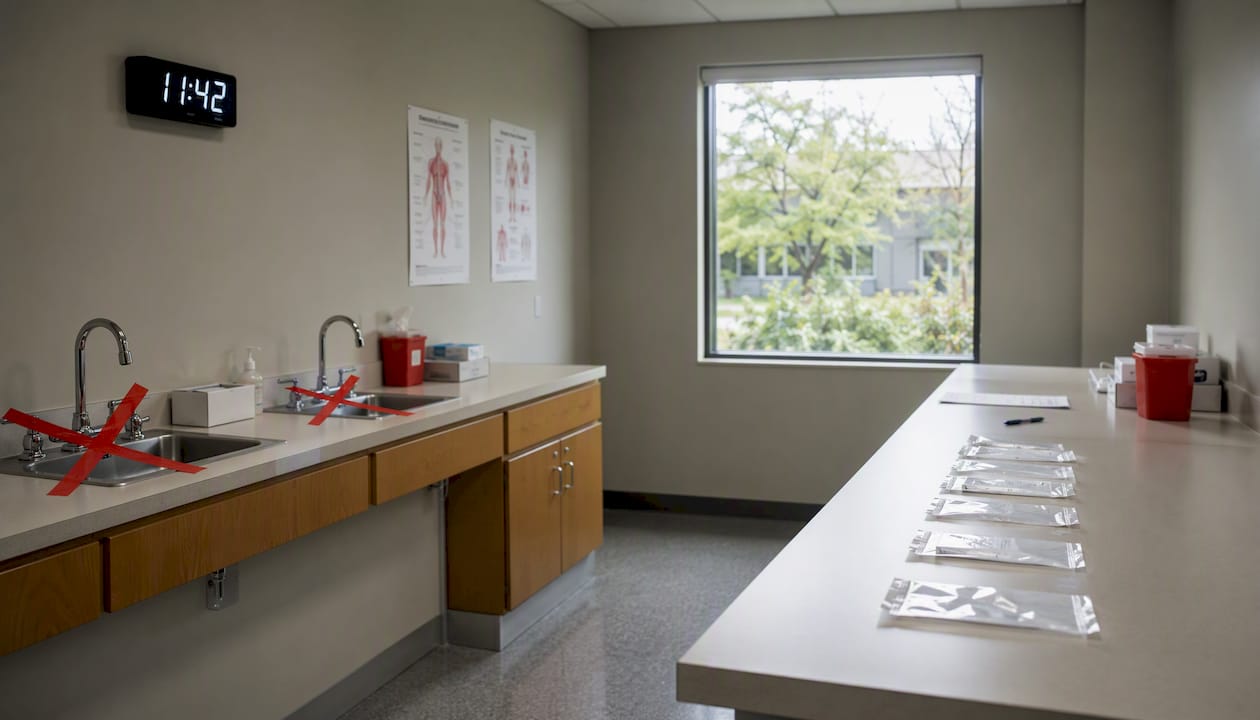
- Disable or dye toilet water with a bluing agent before every collection session
- Remove or lock all water sources (sinks, water fountains, soap dispensers with liquid that could dilute)
- Remove cleaning products, chemicals, and any containers from the restroom
- Ask donors to empty pockets and remove unnecessary outer clothing per written policy
- Restrict re-entry to the restroom after the specimen is collected
- Apply tamper-evident seals immediately after collection, in the donor’s presence
- Check temperature within 4 minutes; document the reading on the chain-of-custody form
Dry-toilet protocols and immediate temperature checks reduce successful adulteration in unobserved collections, though compliance with these measures can be inconsistently applied in practice. That inconsistency is where programs lose integrity.
Direct observation is the most effective single control but requires specific legal and policy justification. Under DOT rules, observed collections are triggered by specific circumstances: a prior invalid or substituted result, a return-to-duty test, or a follow-up test. Single-sex observer policies and clear written consent protect both the donor’s dignity and the program’s legal defensibility.
Staffing and timing:
- Collectors must be trained on SVT procedures, chain-of-custody completion, and escalation protocols
- Temperature checks delayed beyond 4 minutes are unreliable and may not be defensible
- Any specimen outside the temperature range should be treated as potentially substituted and escalated to the Medical Review Officer (MRO) immediately
Pro Tip: Write your dry-site and observation protocols into a single laminated checklist posted at the collection station. Collectors under time pressure skip steps they have to remember; they rarely skip steps on a posted card.
For a comprehensive operational reference, ways to prevent test adulteration covers site-hardening techniques matched to collection-site SOPs.
Chain-of-custody, SOPs, and regulatory policy considerations
A defensible result requires a documented chain of custody from the moment the donor hands over the specimen to the moment the lab reports it.
Chain-of-custody events to document at every step:
- Donor identity verification (government-issued ID, date, time)
- Collection time and collector’s name
- Temperature reading and time of reading (must be within 4 minutes)
- Tamper-evident seal number and confirmation that the donor observed the sealing
- Transfer to transport container and name of courier or shipping method
- Lab receipt time, condition of seal on arrival, and accession number assigned
Policy checklist for program administrators:
- Randomize testing schedules so donors cannot predict when they will be tested
- Define consequences for a confirmed adulterated, substituted, or refused specimen in writing
- Specify recollection triggers: when an invalid result requires immediate recollection under observation
- Document MRO review procedures for all non-negative and invalid results
- Maintain staff training logs showing annual refresher training on SVT and chain-of-custody procedures
- Audit chain-of-custody forms quarterly for completion errors that could invalidate results
Regulatory note: DOT-regulated programs (49 CFR Part 40) require SVT as a mandatory component of the testing process. Laboratories certified under the National Laboratory Certification Program (NLCP) must perform SVT on every specimen and report results to the MRO. Non-regulated programs that follow DOT-equivalent procedures gain the same legal defensibility. Federal guidance requires labs to validate SVT assays and establish SOPs before deploying them in regulated testing.
For biospecimen handling and chain-of-custody best practices in clinical and research contexts, EIV Diagnostics’ biospecimen services describe how professional labs manage specimen integrity from collection through analysis.
How to interpret an invalid or suspicious specimen and what to do next
An invalid SVT result is not automatically proof of tampering. The workflow below keeps the response defensible whether the cause turns out to be medical or deliberate.
-
Stop processing. Do not run the immunoassay panel on a specimen flagged as invalid or adulterated. Document the SVT findings on the chain-of-custody form immediately.
-
Notify the MRO or supervisor. The MRO reviews all invalid results and determines whether a medical explanation is plausible before any adverse action is taken.
-
Consider medical causes. Unusually low creatinine can result from kidney disease or aggressive hydration therapy. Extreme pH can occur with certain metabolic conditions or medications. The MRO contacts the donor to collect a medical explanation before concluding the result is subversion.
-
Order confirmatory testing. If the initial SVT flags oxidants or nitrite, send the specimen for confirmatory quantitative assays. GC/MS or LC-MS/MS confirms drug results on non-adulterated portions if any remain.
-
Schedule recollection under observation when the MRO cannot identify a plausible medical cause for the invalid result, or when the specimen is reported as substituted. Observed recollection removes the opportunity that produced the first suspicious specimen.
-
Document and close the loop. Record the MRO’s determination, the basis for it, and any action taken. If the result stands as adulterated or substituted, apply the program’s stated consequences.
Abnormal SVT results require MRO review because medical or storage conditions can alter pH, creatinine, or oxidant levels in ways that mimic adulteration. Skipping MRO review and acting directly on an invalid result exposes the program to legal challenge.
Pro Tip: If legal action may follow, treat the collection site as a potential evidence scene. Secure the restroom immediately after the collection, preserve any CCTV footage covering the collection area, and document witness statements from the collector and any staff present. Chain-of-custody documentation alone is insufficient if the physical evidence is lost.
The detecting adulterants step-by-step guide covers the lab and field methods used at each stage of this workflow.
Device features and supplies that materially reduce adulteration risk
The hardware you choose at the collection site determines how much SVT you can run before the specimen leaves the room.
Features to require in collection cups and devices:
- Built-in temperature strip readable within 4 minutes of collection
- Integrated SVT pads covering at minimum: creatinine, oxidant/nitrite, and pH
- Tamper-evident lid with a breakable or one-way seal
- Large fill volume (at least 30 mL) to allow both on-site SVT and lab confirmation from the same specimen
- Single-use design with no reusable components that could carry over contamination
Purchase criteria for administrators:
- CLIA waiver and FDA clearance if the device will be used in a clinical or regulated workplace setting
- Multi-parameter detection in a single cup rather than separate single-analyte strips, which reduces handling steps and documentation burden
- Vendor-supplied SOPs and batch validation documentation so your lab can demonstrate assay performance
- Ease of reading results at the collection site without specialized equipment
Rapidtestcup’s multi-panel cups with adulterant detection cover these criteria, including the 12 Panel ADLTX Cup with integrated adulterant pads for creatinine, oxidant, nitrite, pH, specific gravity, and glutaraldehyde. For programs needing broader analyte coverage, the 22-panel cup with adulterants adds expanded drug panels alongside the full SVT battery.
For oral-fluid collections in observed settings, single-use oral swab devices eliminate the substitution window entirely. StatPearls notes that rotating matrices, including oral fluid, reduces the predictability that makes adulteration planning possible.
For a broader look at device options, specimen collection kits for clinical and forensic use covers the full range of collection hardware.
Research-backed cautions and common operational pitfalls
The forensic toxicology literature is clear on a few points that field programs routinely get wrong.
Key finding from forensic toxicology reviews: Single-parameter SVT is insufficient against modern adulteration products. Advanced synthetic urine formulations include creatinine, and some commercial oxidizing products do not significantly alter pH or creatinine. Multi-parameter SVT combined with strict collection-site controls is the current standard recommendation for detecting these attempts. — Advances in testing for sample manipulation, Springer Nature
Common operational pitfalls:
- Overreliance on visual inspection. Color and clarity catch bleach and gross dilution. They miss nitrite, glutaraldehyde, and synthetic urine entirely.
- Late temperature checks. A temperature strip read after 4 minutes may not reflect the specimen’s actual temperature at donation. This is the single most common procedural failure in unobserved collections.
- Inconsistent SOP enforcement. Bluing agents and water lockouts are only effective when applied every time. Selective enforcement creates predictable gaps.
- Failing to validate SVT assays. SVT validation must characterize performance around cutoffs and evaluate interfering compounds; labs that skip this step risk false invalids from dietary or medical factors.
- Ignoring oxidant-specific follow-up. A positive oxidant screen on an integrated cup should trigger confirmatory quantitative testing, not just a reported invalid result. The confirmatory step determines whether adulteration is the cause or an interfering substance is.
Oxidizing adulterants cause false negatives by chemically altering analytes before the immunoassay runs, and advanced analytical approaches are being developed to detect oxidation products as markers of adulteration.
Pro Tip: Never advise donors to take creatine supplements or B vitamins to “normalize” a dilute result. That practice is itself a form of specimen manipulation and creates legal and ethical exposure for the program. Address dilution through collection controls and SVT, not by coaching donors on how to pass.
For background on synthetic urine detection approaches, the synthetic urine explainer covers the science and detection challenges in detail.
What field experience actually teaches about adulteration prevention
Most programs that struggle with adulteration aren’t failing on the science. They’re failing on consistency. The SVT markers are well-established. The collection-site controls are documented in federal guidance. What breaks down is the gap between written policy and what actually happens at the collection window at 4:45 PM on a Friday.
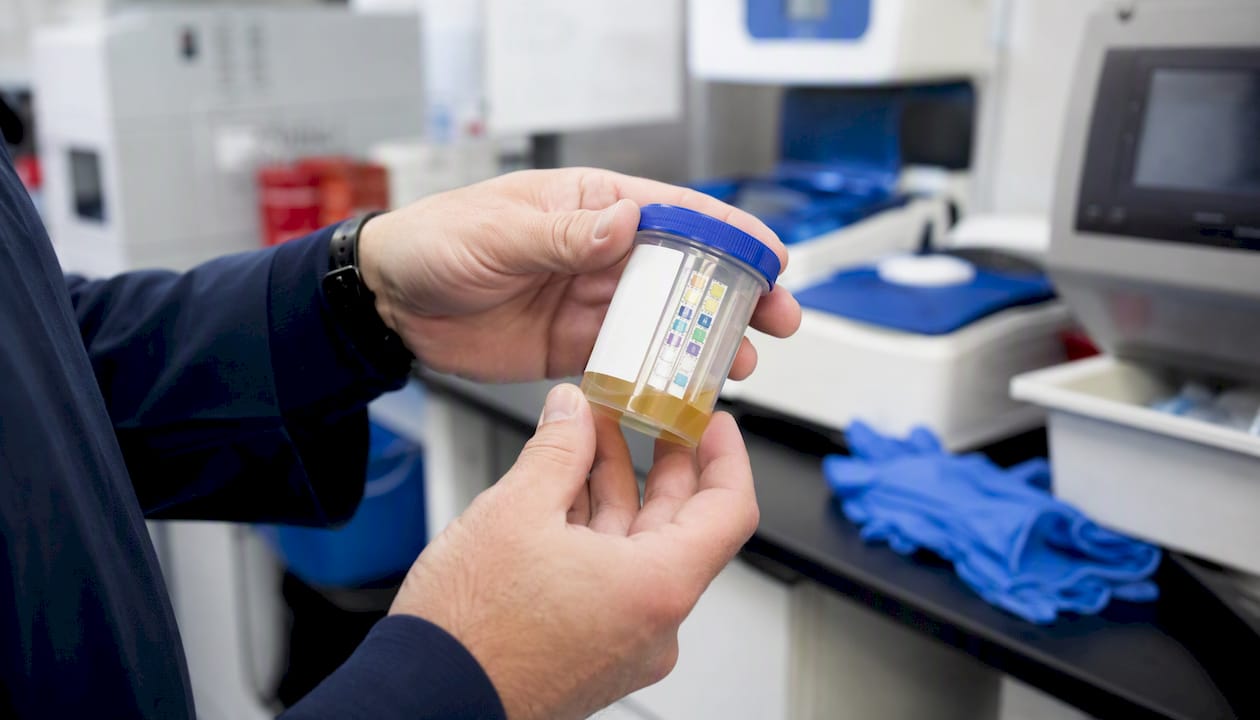
The clients who see the sharpest improvement in detection rates share one trait: they treat the collection-site checklist as non-negotiable, not advisory. Bluing agents go in every time. Temperature strips get read within 4 minutes every time. Tamper-evident seals get applied in the donor’s presence every time. When those steps become reflexive rather than remembered, the rate of suspicious specimens drops noticeably.
The other consistent finding is that integrated cups with built-in SVT pads outperform separate strip-based workflows in real collection environments. Not because the chemistry is different, but because fewer handling steps mean fewer opportunities to skip a check or misread a result under time pressure. Durable temperature strips and integrated adulterant pads reduce the cognitive load on collectors who are managing multiple donors, documentation, and escalation calls simultaneously.
Rapidtestcup supplies the SVT-capable cups your program needs
Running a complete SVT panel at the collection site requires the right hardware, and most programs are underequipped. Rapidtestcup’s catalog is built around exactly this gap: multi-panel cups with integrated adulterant detection, temperature strips, and tamper-evident seals that cover the full prevention checklist in a single device.
The 12 Panel ADLTX Cup includes creatinine, oxidant, nitrite, pH, specific gravity, and glutaraldehyde pads alongside 12 drug panels, all CLIA waived and FDA cleared. For programs with broader analyte needs, the 18-panel cup with adulterants adds kratom, K2, tramadol, ETG, and fentanyl to the same integrated format. Bulk pricing is available for labs, clinics, and substance abuse programs, and the team can provide SOP documentation to support your validation requirements. Browse the full lab drug testing product catalog or request a custom quote for volume orders.
Sources
- Advances in testing for sample manipulation in clinical and forensic toxicology (Springer Nature)
- Drug Testing – StatPearls (NCBI Bookshelf)
- Integrity of Urine Specimens for Toxicological Analysis – Adulteration, Mechanisms of Action, and Laboratory Detection (PubMed)
- Effect of Urine Adulterants on Commercial Drug Abuse Screening Test Strip Results (PMC)
- CDC guidance (MMWR) related to drug testing and testing program standards
This article is general information, not a substitute for advice from a qualified doctor. Consult a qualified healthcare professional about your own circumstances before acting on anything here.