Blog
Top Advantages of FDA Approved Drug Test Kits Explained


TL;DR:
- FDA approval ensures drug test kits are validated for accuracy and reliability, reducing false results.
- Using FDA-approved kits enhances legal compliance and strengthens credibility during audits or legal challenges.
- These kits improve operational efficiency by minimizing retests and streamlining high-volume testing workflows.
In professional drug testing environments, a single unreliable result can trigger a cascade of consequences: failed audits, legal liability, compromised safety, and damaged credibility. Labs, clinics, and law enforcement agencies operate under intense scrutiny, where every result must be defensible. The difference between an FDA-approved drug testing kit and an unvalidated alternative is not a matter of preference. It is a matter of professional survival. This guide breaks down the core advantages of FDA-approved kits, so your procurement decisions are backed by evidence, not guesswork.
Table of Contents
- Validation and reliability: The foundation of FDA approval
- Legal compliance and regulatory confidence
- Superior accuracy versus non-approved alternatives
- Streamlined workflow and operational efficiency
- Rethinking drug testing: Going beyond regulatory checkboxes
- Where to find FDA approved drug test kits you can trust
- Frequently asked questions
Key Takeaways
| Point | Details |
|---|---|
| Validation ensures accuracy | FDA-approved kits are thoroughly validated to reduce false results and improve test reliability. |
| Assured regulatory compliance | Using FDA-approved kits makes meeting legal and accreditation standards much easier. |
| Operational efficiency gains | Fewer retests and administrative errors make workflows faster and less costly. |
| Legal defensibility | Results from FDA-approved kits are more likely to withstand legal scrutiny. |
| Trusted stakeholder confidence | FDA approval fosters trust in testing outcomes across teams, clients, and regulators. |
Validation and reliability: The foundation of FDA approval
FDA approval is not a marketing label. For drug test kits, it means the product has passed rigorous analytical validation protocols set by the U.S. Food and Drug Administration, confirming the kit measures what it claims to measure, at the concentrations it claims to detect. That is a non-negotiable requirement in any professional testing context.
What does this look like in practice? Think about sobriety monitoring programs, where a false negative could mean a dangerous driver returns to the road. Or workplace safety testing, where an inconclusive result stalls an entire hiring process. In clinical diagnostics, a false positive for opioids could alter a patient’s treatment plan. The stakes are not abstract.
Non-FDA kits lack validation, which increases the risk of unreliable results, false positives, false negatives, and regulatory non-compliance. That is a documented reality, not a vendor claim. When your program depends on results that will be reviewed by attorneys, accreditors, or federal inspectors, validation is the floor, not a bonus.
FDA-approved kits deliver on several critical reliability benchmarks:
- Analytical sensitivity: Confirmed detection at established cutoff concentrations
- Specificity: Reduced cross-reactivity with non-target substances
- Reproducibility: Consistent performance across different lots and testing conditions
- Stability: Validated shelf life under specified storage conditions
- Documented performance data: Available for review during audits or legal proceedings
You should also know that understanding confirmatory testing importance is directly tied to how well your initial screen performs. A validated screen reduces the rate of confirmatory follow-up needed, saving time and resources.
Pro Tip: When evaluating kits, look for the FDA 510(k) clearance number or PMA approval on the product label or package insert. Legitimate FDA-approved kits list this information prominently. If a vendor cannot provide it, treat that as a disqualifying factor.
“The integrity of a drug testing program is only as strong as the validation behind its tools. Without FDA approval, you are building compliance on an unverified foundation.”
Maintaining accuracy in test results is not optional in clinical or legal settings. FDA-approved kits give your team the documented proof that accuracy was built into the process from day one.
Legal compliance and regulatory confidence
Reliable results matter, but they are only part of the equation. FDA approval gives your organization a compliance edge that holds up under scrutiny at every level.
Most professional drug testing programs must align with multiple regulatory frameworks simultaneously. SAMHSA guidelines govern federal workplace testing. CLIA requirements apply to any lab performing diagnostic tests. State-specific occupational health laws add another layer. FDA-approved kits are designed to fit within these frameworks, which reduces the compliance burden on your team.
Here is how FDA approval supports compliance at each operational stage:
- Procurement: FDA-approved kits come with documentation that satisfies vendor qualification requirements during audits.
- Testing: Standardized protocols in FDA-approved kits align with established testing procedures, reducing operator error.
- Record-keeping: Package inserts and lot-specific validation data provide the paper trail inspectors and attorneys look for.
- Reporting: Results generated by FDA-approved kits carry more weight in official reporting, whether to employers, courts, or regulatory bodies.
- Dispute resolution: When a result is challenged, FDA approval is one of the first things legal teams check.
Non-FDA kits increase the risk of non-compliance, which can expose your organization to sanctions, loss of accreditation, and costly litigation. That risk compounds every time a non-approved kit is used in a legally sensitive context.
Pro Tip: Create a kit procurement log that records the FDA clearance number, lot number, expiration date, and intended use for every batch. This single practice dramatically improves audit readiness and takes less than five minutes per order to maintain.
Understanding how false positives and compliance interact is critical. One false positive from an unvalidated kit can invalidate an entire testing round in the eyes of regulators. The urine test advantages for labs include both compliance alignment and operational simplicity, making them the dominant format in regulated environments.
Key stat: Organizations using FDA-approved testing tools are significantly better positioned during regulatory inspections because they can immediately produce documentation that non-approved kit users simply cannot provide.
Superior accuracy versus non-approved alternatives
Beyond compliance, comparing FDA-approved kits directly with non-approved alternatives reveals where accuracy gaps appear and why they matter.
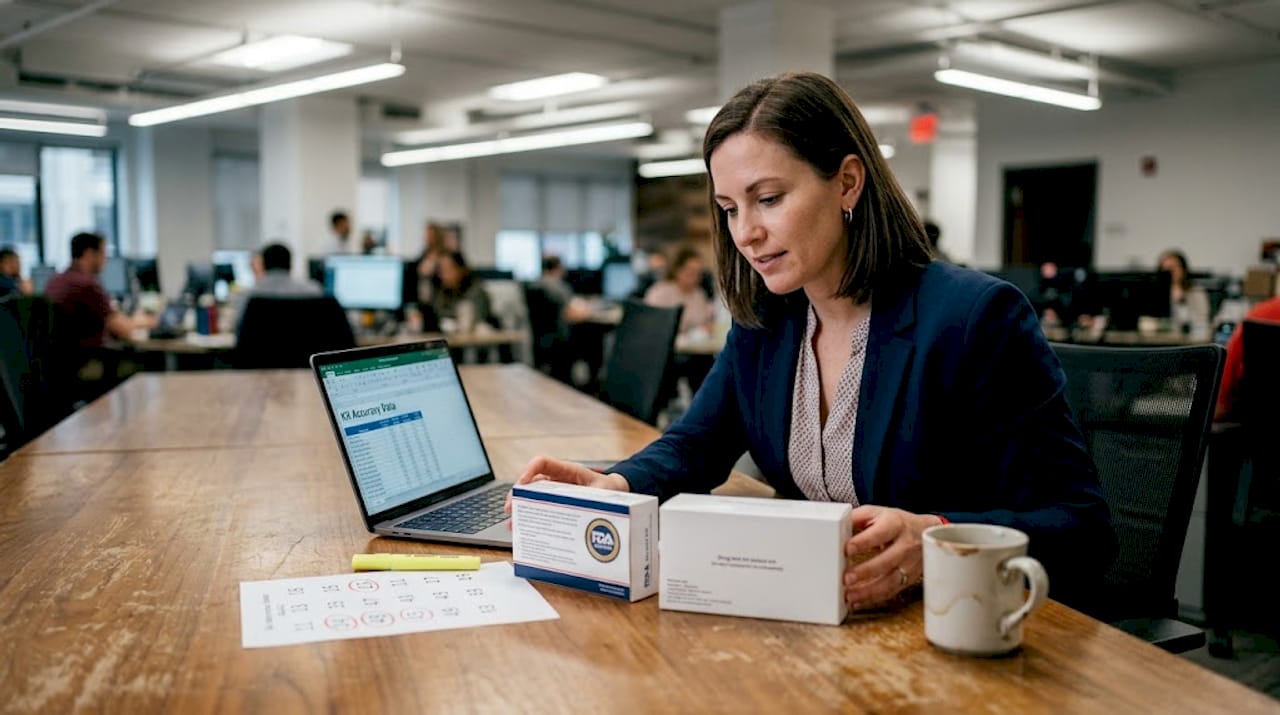
FDA-approved kits are validated for both sensitivity (the ability to correctly detect a substance when present) and specificity (the ability to avoid flagging substances that are not present). Non-approved kits often skip or abbreviate this dual validation, creating exposure on both ends of the accuracy spectrum.
Understanding immunoassay accuracy explained helps frame this clearly. Immunoassay limitations such as high false negative rates underscore the need for FDA-cleared screens that are rigorously tested before reaching your workflow.
| Accuracy criterion | FDA-approved kits | Non-FDA kits |
|---|---|---|
| Sensitivity validation | Confirmed at cutoff levels | Often unverified |
| Specificity testing | Cross-reactivity tested | Frequently incomplete |
| False positive rate | Minimized through validation | Higher, often undocumented |
| False negative rate | Controlled and disclosed | Often unknown |
| Lot-to-lot consistency | Validated | Variable |
| Regulatory acceptance | Full | Limited or none |
The real-world impact of accuracy gaps is not theoretical. Consider these practical scenarios:
- A law enforcement officer conducts a field screen using a non-approved kit. The result comes back positive. The suspect is detained. Later, confirmatory GC-MS testing comes back negative. The case collapses, and the agency faces a civil claim.
- A clinic uses an unvalidated kit for pre-employment screening. Multiple candidates test positive for opioids due to cross-reactivity with a common over-the-counter medication. The clinic faces wrongful rejection complaints.
- A substance abuse program relies on non-approved kits to monitor compliance. High false negative rates allow clients to pass screens while still using substances, undermining treatment outcomes.
Choosing between a CLIA waiver vs FDA approval is a nuanced decision, but in high-consequence testing, FDA approval provides the stronger documentation trail. When choosing accurate drug test kits, accuracy documentation should be the first filter, not an afterthought.
Streamlined workflow and operational efficiency
Accuracy also means fewer workflow frustrations. FDA-approved kits deliver measurable operational gains that matter in high-volume or time-sensitive environments.
Every inconclusive or disputed result requires follow-up. That means additional specimen collection, repeat testing, staff time, documentation, and in some cases, delays to hiring or court proceedings. FDA-cleared screens minimize workflow disruption by reducing the frequency of retests and the administrative burden that follows.
| Metric | FDA-approved kits | Non-FDA kits |
|---|---|---|
| Average retest rate | Lower (validated performance) | Higher (unverified accuracy) |
| Time to valid result | Consistent | Variable |
| Administrative follow-up | Minimal | Frequent |
| Staff training complexity | Standardized protocols | Inconsistent instructions |
| Long-term cost per test | Lower (fewer retests) | Higher (hidden retest costs) |
Those differences add up fast in high-volume settings. A lab running 500 tests per month that reduces its retest rate by even 5% saves significant technician hours and consumables over the course of a year.
Efficiency gains vary by setting, but here is what organizations typically report:
- Laboratories: Fewer unresolved results means faster batch processing and quicker report turnaround to clients.
- Clinics: Reduced patient callbacks for repeat specimens improves patient experience and staff morale.
- Law enforcement: Faster, cleaner field results reduce the time officers spend documenting inconclusive outcomes.
- Substance abuse programs: Reliable monitoring results reduce disputes between counselors and clients, keeping the focus on treatment.
Following kit selection best practices from the start prevents the hidden costs of switching kits mid-program, retraining staff, and re-establishing protocols around a new product. Choosing FDA-approved from the outset is the operationally smarter path.
Rethinking drug testing: Going beyond regulatory checkboxes
Here is the perspective most vendors will not share: compliance is the minimum, not the goal.
Every organization that adopts FDA-approved kits because they are required is meeting a baseline. The organizations that genuinely benefit are the ones that recognize what those kits signal to everyone watching: clients, patients, defense attorneys, accreditation bodies, and their own staff.
When your program uses validated, FDA-approved tools, you are not just checking a box. You are communicating that your results can be trusted, that your team operates with integrity, and that you take the consequences of your work seriously. That message builds something compliance documentation cannot: credibility.
We have seen programs struggle not because their results were wrong, but because they could not prove their results were right. The differentiator in high-consequence testing is trustworthiness, and trustworthiness is built on documented, validated tools. The benefits of rapid drug tests extend well beyond speed. They include the organizational confidence that comes from knowing every result you deliver is defensible.
Compliance gets you in the room. Trust keeps you there.
Where to find FDA approved drug test kits you can trust
Ready to move from research to readiness? Explore these trusted FDA-approved solutions for your protocols.
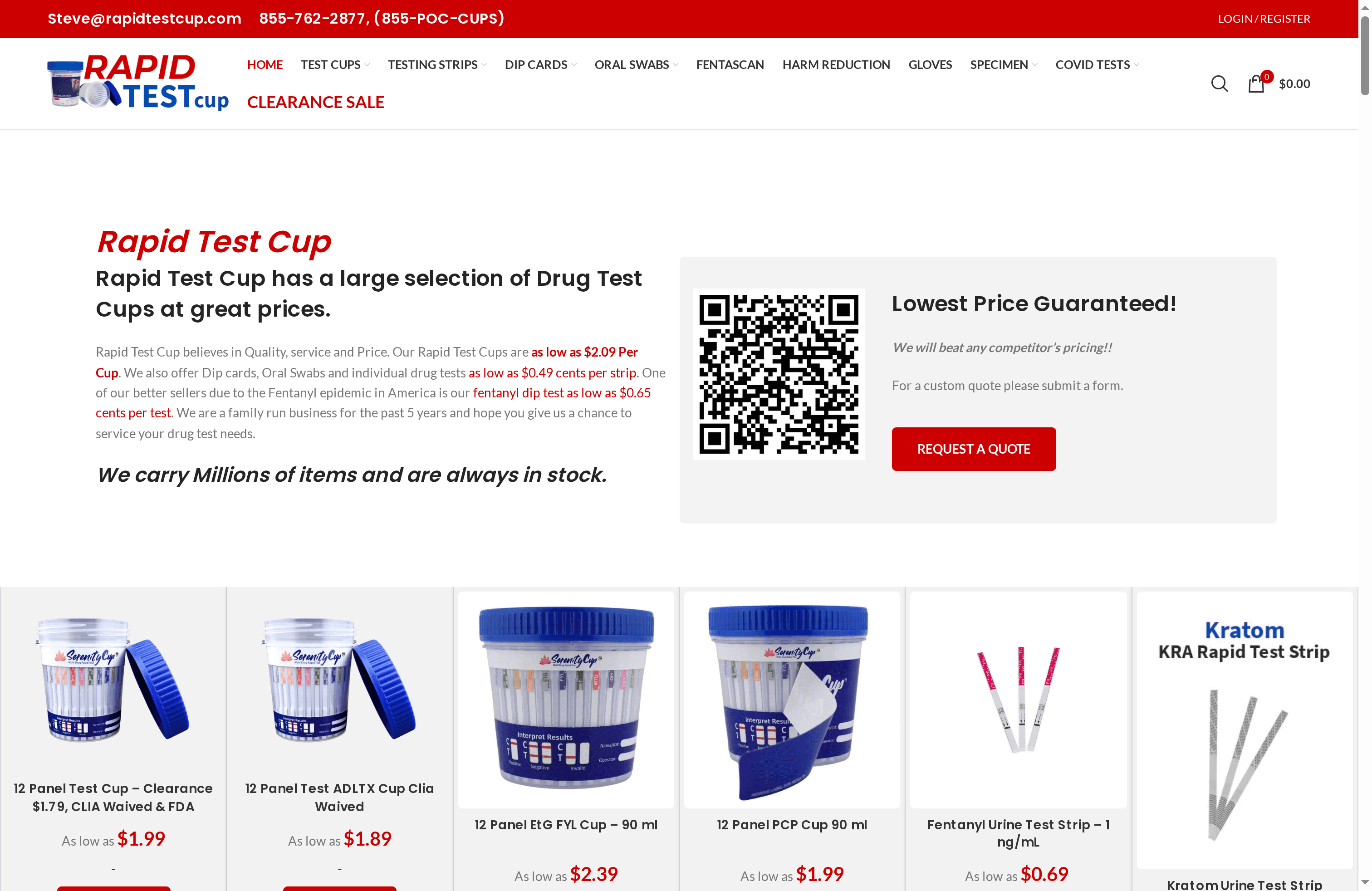
At RapidTestCup.com, professionals across labs, clinics, and law enforcement have access to a full catalog of CLIA-waived, FDA-approved testing kits built for high-stakes environments. Whether you need multi-panel cups for workplace programs or high-volume bulk orders, the options are vetted and ready to ship. The 12 panel drug test cups are among the most popular for comprehensive screening, and the top drug testing cups roundup helps you identify the best fit for your specific setting. Bulk pricing, fast shipping, and full compliance documentation are all part of the package.
Frequently asked questions
What does FDA approval mean for drug test kits?
FDA approval means the kit has passed analytical validation to confirm accuracy, reliability, and safety for its intended use. The FDA guarantees validation benchmarks that non-approved products are never required to meet.
Are non-FDA approved kits legal to use in workplaces?
Non-FDA kits are not automatically illegal, but they increase non-compliance risk in regulated workplace testing programs and may fail to meet SAMHSA or CLIA requirements.
How do FDA-approved kits improve testing accuracy?
They undergo validated sensitivity and specificity testing that minimizes false positives and negatives. Immunoassay false negative rates are a known risk with non-validated screens, which FDA approval directly addresses.
Do FDA-approved kits help in legal disputes?
Yes. Results from FDA-approved kits are far more likely to hold up in court or during regulatory audits. FDA approval strengthens legal defensibility because the validation documentation is available and recognized by courts.
Where can I buy FDA-approved drug test kits online?
You can find vetted, FDA-approved kits at specialized vendors like RapidTestCup.com, which offers bulk pricing, fast shipping, and full compliance documentation for professional buyers.