

Blog
Under 20 ng/mL? Clinician’s Guide to Cotinine Urine Test Cutoffs


A cotinine urine test detects recent nicotine exposure by measuring cotinine, the chemical your body makes when it breaks down nicotine. A positive result means nicotine entered your system recently, whether from smoking, vaping, chewing tobacco, or nicotine replacement therapy. The numeric level offers a rough estimate of how much exposure occurred, but that number only means something when a clinician reads it against your history, your medications, and how the specimen was collected.
TL;DR:
- Cotinine levels in urine reflect recent nicotine exposure but vary based on usage frequency, with heavy users detectable for up to two weeks.
- The detection window is influenced by individual factors like hydration, metabolism, age, and assay sensitivity, making timing critical for interpretation.
- Confirmatory testing with LC-MS/MS is recommended when results impact legal, employment, or clinical decisions, especially near cutoff levels.
- Nicotine replacement therapies produce cotinine without tobacco, so adding an anabasine test helps distinguish NRT from actual tobacco use.
- On-site cotinine test strips offer a quick screening option, with lab confirmation necessary for high-stakes results or borderline cases.
Table of Contents
- What the Cotinine Urine Test Measures and Why Labs Skip Nicotine
- Types of Cotinine Tests and How Labs Measure the Result
- The Cotinine Detection Window: How Long It Lingers in Urine
- How to Read Cotinine Levels in Urine: Ranges and Cutoffs
- What Skews the Results: Dilution, NRT, and Other Confounders
- When to Order the Test and How to Collect the Specimen
- Why Cotinine Numbers Need a Human Reading Them
- Where to Find Reliable Cotinine Test Strips for Screening
- Sources
- FAQ
What the Cotinine Urine Test Measures and Why Labs Skip Nicotine
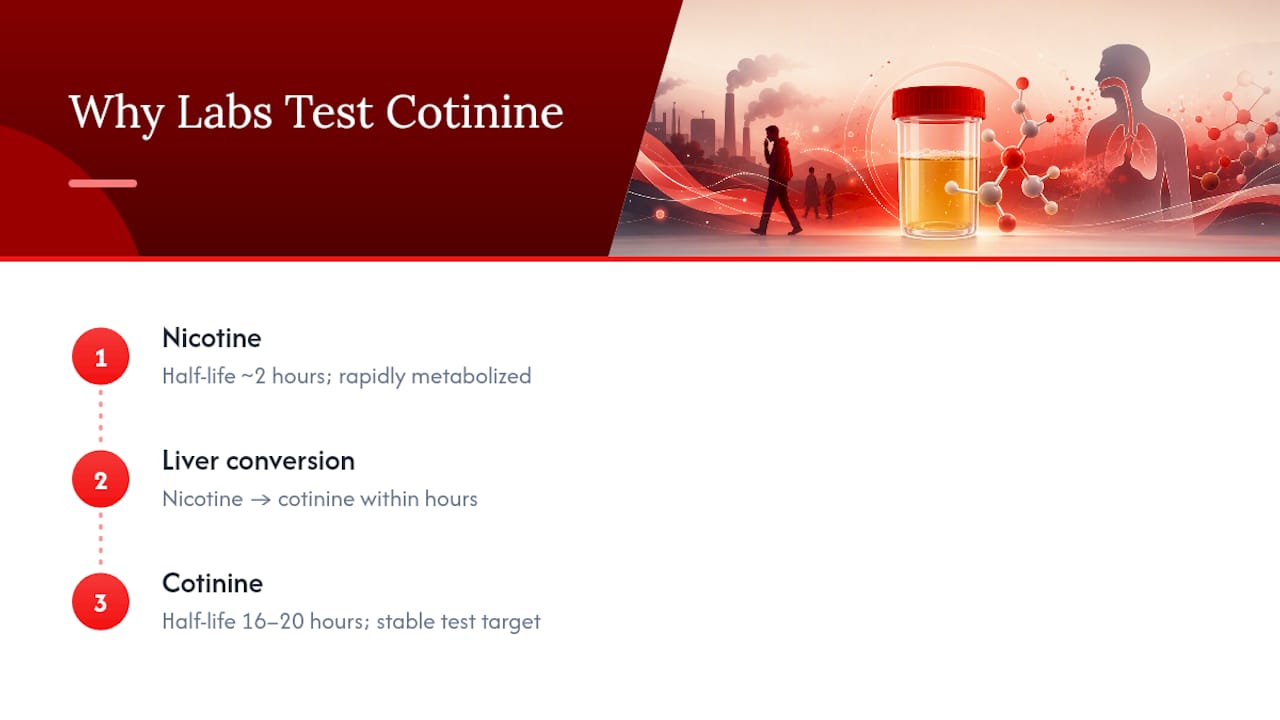
Nicotine breaks down fast. Your liver converts most of it into cotinine within hours, and that metabolite sticks around far longer than the parent compound. That’s the entire reason labs test cotinine instead of nicotine itself: nicotine’s half-life is measured in a couple of hours, while cotinine’s half-life runs closer to 16 to 20 hours in most adults, giving testers a stable, measurable target instead of a molecule that’s already gone by the time a sample reaches the lab, according to the patient information published by URMC’s medical encyclopedia.
Urine is the preferred specimen for a nicotine urine test because it offers a longer detection window than blood or saliva and it’s simple to collect without a phlebotomist. Blood and saliva cotinine tests exist, but they close their detection window faster and cost more to run in most settings.
Some panels go a step further and add anabasine, a tobacco-specific alkaloid absent from purified nicotine products, which becomes useful the moment someone using a nicotine patch or gum needs their tobacco status confirmed separately from their nicotine status.
Types of Cotinine Tests and How Labs Measure the Result
A cotinine panel test comes in two flavors, and mixing them up leads to a lot of confused patients and confused HR departments.
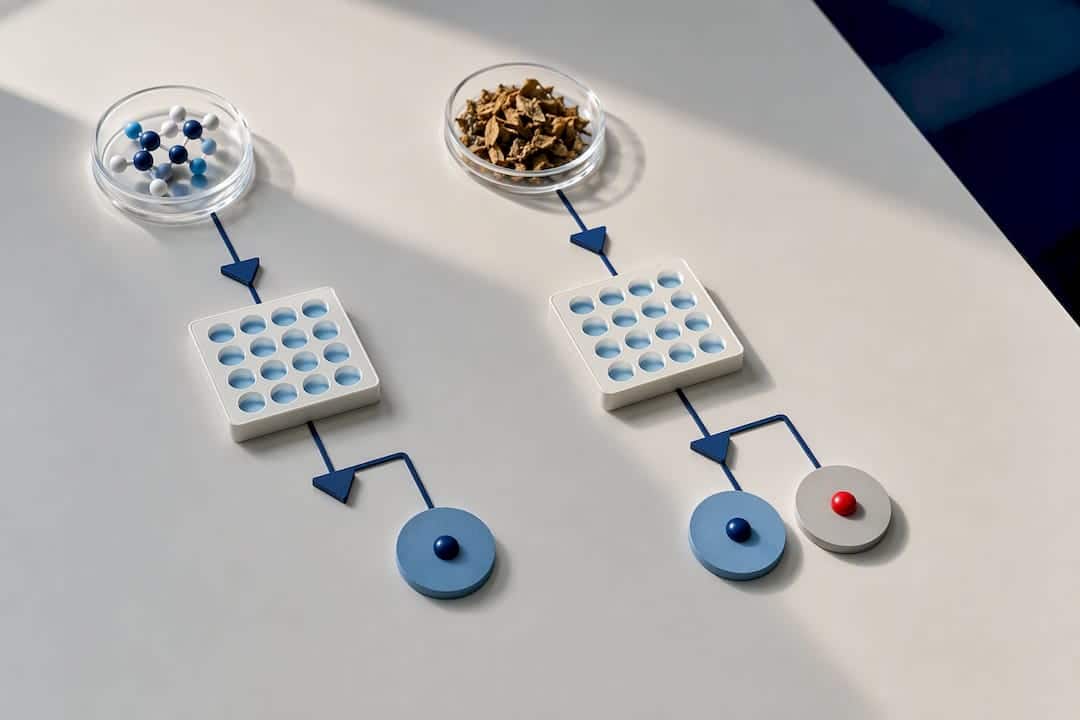
- Qualitative screening gives a simple positive or negative answer against a fixed cutoff, typically run as an immunoassay. It’s fast, cheap, and ideal for a quick workplace or clinical check.
- Quantitative testing reports an actual concentration in nanograms per milliliter, which lets a clinician track trends over time or distinguish light exposure from heavy use.
- Confirmatory testing using LC-MS/MS or GC-MS verifies a screening result and adds precision that immunoassays can’t match.
Statistic Callout: Modern LC-MS/MS methods can quantify cotinine at limits below 1 ng/mL and often measure several nicotine metabolites in the same run, according to a diagnostic methods review covering cotinine detection techniques.
For a routine occupational check, a screening-only immunoassay is usually enough. When a result will affect employment, insurance, or a clinical decision, quantitative confirmation matters. Rapidtestcup’s cotinine urine test strips work as the screening layer; confirmatory testing then happens at a certified laboratory when the stakes justify it. A clinical guide to how metabolites are detected breaks down how the two testing tiers actually work together.
The Cotinine Detection Window: How Long It Lingers in Urine
The cotinine detection window depends heavily on how much and how often someone uses nicotine, not just the fact that they used it at all.
- Occasional or light use: cotinine often clears from urine within 2 to 4 days.
- Regular daily use: detection commonly extends to 4 to 7 days, sometimes longer.
- Heavy, long-term use: cotinine can remain detectable for up to 10 to 14 days or more in some individuals.
Several factors push that window wider or narrower. Hydration status and specimen dilution change the measured concentration without changing actual exposure. Metabolic rate varies by individual, and age plays a role too. Infants and young children can show elevated cotinine relative to adult exposure levels not because they metabolize it slower, but because their exposure patterns and body size differ, a nuance documented in pharmacokinetic data on PubChem’s cotinine compound record. Assay sensitivity matters too: a lab running a lower cutoff will flag trace cotinine that a less sensitive test would miss entirely, which stretches the practical detection window on paper even when actual clearance hasn’t changed.
How to Read Cotinine Levels in Urine: Ranges and Cutoffs
Numbers without context are close to useless here, but they’re still the part everyone wants to see first.
- Non-exposed individuals typically show very low or non-detectable cotinine, often under 20 ng/mL.
- Passive or secondhand smoke exposure tends to land in a low but measurable range, well below active-use levels.
- Active tobacco users commonly fall within a high concentration range typical of active use, based on findings published in a urinary cotinine quantification study comparing smokers and non-smokers.
Statistic Callout: Mayo Clinic Laboratories’ test catalog for urine nicotine and metabolites lists example active-use concentration ranges for nicotine and cotinine, figures used to flag active use or high-dose nicotine therapy, per Mayo Clinic Laboratories’ NICOU test overview.
Cutoffs vary by lab and by purpose. A workplace wellness screen might use a stricter cutoff than a clinical cessation program tracking a patient’s progress. When results carry legal, employment, or insurance weight, or when nicotine replacement therapy is in the picture, adding anabasine or requesting LC-MS/MS confirmation removes most of the ambiguity a single cotinine number can’t resolve on its own. A guide to interpreting urine drug test results walks through how dilution and timing shift these numbers in practice.
What Skews the Results: Dilution, NRT, and Other Confounders
Specimen dilution is the most common reason a cotinine result reads lower than actual exposure. Someone who drinks a lot of water before a test produces urine with lower creatinine, which drags down every analyte concentration in the sample, cotinine included. Labs increasingly correct for this by checking creatinine alongside cotinine, since interpreting either number in isolation invites errors, a point emphasized in a study on interpretation and confounders published in the International Journal of Environmental Research and Public Health.
- Nicotine replacement therapy (patches, gum, lozenges) produces cotinine without any tobacco use at all.
- Secondhand or passive smoke exposure can push cotinine into a measurable, sometimes borderline range.
- Product type and genetics both shift metabolism speed, meaning two people with identical exposure can post different numbers.
Pro Tip: If a result needs to distinguish tobacco use from NRT, don’t rely on cotinine alone. Add an anabasine panel; it’s absent from nicotine replacement products and present in actual tobacco, according to research on anabasine as a discriminator.
When to Order the Test and How to Collect the Specimen
Clinicians and employers order a cotinine urine drug test for a handful of recurring reasons, and the collection process matters as much as the assay itself.
- Pre-operative screening to confirm abstinence before surgeries where nicotine affects healing or anesthesia risk.
- Smoking cessation programs that need an objective marker to track progress alongside self-reported quitting.
- Employment or insurance screening where policy requires documented tobacco-free status.
- Exposure assessment for patients, often children, with suspected secondhand smoke exposure at home.
- Collect a clean-catch midstream specimen in a sterile container, note the time since last suspected exposure, and avoid excessive fluid intake beforehand to reduce dilution risk. A step-by-step urine test collection guide covers the handling details that keep a specimen valid.
A typical lab report includes the cotinine concentration in ng/mL, the method used (immunoassay or LC-MS/MS), a reference range, and sometimes a corresponding LOINC code for electronic health record integration. When a result sits near a cutoff or carries real consequences, request confirmatory testing before acting on it.
Why Cotinine Numbers Need a Human Reading Them
A cotinine urine test is a genuinely useful objective tool, but it was never built to replace judgment. A number on a lab report can’t tell you whether someone is chewing nicotine gum to quit smoking or lighting up in the parking lot between appointments. That distinction requires history, not just chemistry.
For anything high stakes, pair the screen with confirmatory testing and, ideally, a conversation. Cessation counseling works better when a cotinine trend supports the discussion rather than becomes a gotcha moment used to punish a relapse. Treat the number as a starting point for care, not the final word on someone’s behavior.
— Justin
Where to Find Reliable Cotinine Test Strips for Screening
Clinics, treatment programs, and individuals need accurate screening tools without the markup or shipping delays other suppliers pile on. Rather than waiting on a lab to schedule a draw, you can screen for nicotine exposure on-site with a fast, low-cost strip and reserve lab confirmation for the results that actually need it.
Rapidtestcup’s cotinine urine test strips give clinicians and cessation programs a point-of-care option for cotinine detection. Before ordering, check three things: CLIA-waived or FDA-cleared status for your setting, the sensitivity cutoff in ng/mL, and whether you need bulk packaging for a program versus a single-test box for personal use. Clinics and treatment programs running higher volumes typically move to the full shop catalog for panel cups and strips at bulk pricing, and larger orders qualify for a custom quote directly through the site.
This article is general information, not a substitute for advice from a qualified doctor. Consult a qualified healthcare professional about your own circumstances before acting on anything here.
Sources
- MDPI International Journal of Environmental Research and Public Health — study on interpretation and confounders
- Nicotine Cotinine (Urine) — URMC Rochester Medical Center
- Diagnostic methods for detection of cotinine level in tobacco users: a review (PMC4843405)
FAQ
How Long Will Cotinine Show Up in Urine?
Light or occasional nicotine use typically clears within 2 to 4 days, while regular daily use extends detection to roughly 4 to 7 days. Heavy, long-term use can push the cotinine detection window to 10 to 14 days or longer in some people.
What Can Cause a Positive Cotinine Test?
Active tobacco use is the most common cause, but nicotine replacement therapy, vaping, and even significant secondhand smoke exposure can also produce a positive result. Distinguishing between these usually requires added context or a supplementary marker like anabasine, which isn’t present in NRT products, per research on anabasine testing.
Can I Pass a Cotinine Test in 14 Days?
For light or occasional users, cotinine often clears within a few days, so 14 days is generally enough time for many people to test clean. Heavy, long-term users sometimes need the full 10 to 14 days or slightly more, and hydration or metabolism differences can shift that timeline in either direction.
Will One Cigarette Show Up in a Urine Test?
Yes. A single cigarette produces enough cotinine to register on a standard nicotine urine analysis, typically detectable for at least a couple of days afterward. Sensitive assays with low cutoffs can catch even minimal, single-exposure nicotine intake.
Does Rapidtestcup Sell a Cotinine Urine Test Strip?
Yes, Rapidtestcup offers a dedicated cotinine urine test strip for point-of-care screening. Current pricing and bulk options are listed on the product page itself.