Blog
What is toxicology screening and why it matters


Toxicology screening reveals substances in biological samples that can mean the difference between life and death, yet many professionals misunderstand its limitations. Toxicology screening is the laboratory analysis of biological samples to detect and identify drugs, toxins, or poisons, primarily used in emergency departments for acute poisoning, overdose, forensic investigations, and occupational monitoring. From emergency departments to crime scenes, these tests guide critical decisions about treatment, prosecution, and workplace safety. This article examines the techniques, specimen types, accuracy challenges, and applications that define modern toxicology screening practice.
Table of Contents
- Key takeaways
- Overview of toxicology screening: purpose and contexts
- Common specimens and laboratory methodologies
- Interpreting toxicology screening results: challenges and nuances
- Applications and best practices in healthcare and law enforcement
- Explore rapid, accurate toxicology test products
- FAQ
Key Takeaways
| Point | Details |
|---|---|
| Test purpose and methods | Toxicology screening uses immunoassays for initial screening and mass spectrometry for definitive confirmation across emergency care, forensic investigations, and occupational health. |
| Specimen choices and windows | Urine remains the most common specimen with the longest detection windows, while blood reflects current intoxication and other specimens like gastric contents, vitreous humor, and hair offer unique forensic information. |
| Accuracy and confirmatory testing | Screening results carry false positives and false negatives, and medicolegal cases require confirmatory testing and strict chain of custody. |
| Clinical and legal framework | Context and consent govern testing, with emergency care often using implied consent and forensic testing requiring explicit consent or warrants along with privacy protections. |
Overview of toxicology screening: purpose and contexts
Toxicology screening serves as a diagnostic and investigative tool across multiple professional settings. Emergency departments rely on these tests to identify unknown substances causing altered mental status, respiratory depression, or cardiovascular instability. Forensic laboratories use them to investigate suspicious deaths, drug-facilitated crimes, and impaired driving cases. Occupational health programs monitor workplace exposure to industrial chemicals and verify compliance with drug-free policies.
The clinical context determines which tests to order and how to interpret results. Emergency physicians face patients presenting with toxidromes, characteristic symptom clusters suggesting specific drug classes. Pediatric cases require special consideration because children may ingest household products or medications accidentally. Trauma patients need screening to assess whether substances contributed to injuries or might complicate treatment.
Forensic applications demand higher standards of accuracy and documentation. Overdose death investigations require comprehensive testing to establish cause of death. Drug-facilitated sexual assault cases need specialized panels detecting sedatives and date rape drugs. These medicolegal contexts require confirmatory testing and strict chain of custody protocols that clinical screening may not need.
Pro Tip: Always document the clinical or investigative reason for ordering toxicology screening. This context guides laboratory selection of appropriate methods and panels, improving result relevance.
Occupational health monitoring serves dual purposes: protecting worker safety and enforcing workplace policies. Industries with safety-sensitive positions test for substances that impair judgment or motor skills. Environmental exposure monitoring detects toxic chemicals before they cause harm. Drug screening treatment centers use regular testing to verify abstinence and support recovery programs.
Legal and ethical considerations shape toxicology screening practice. Clinical testing for diagnosis and treatment generally proceeds under implied consent during emergency care. Forensic testing often requires explicit consent, legal warrants, or statutory authority. Privacy protections limit who can access results and how they’re used. Understanding these boundaries prevents legal challenges and protects patient rights.
Common specimens and laboratory methodologies
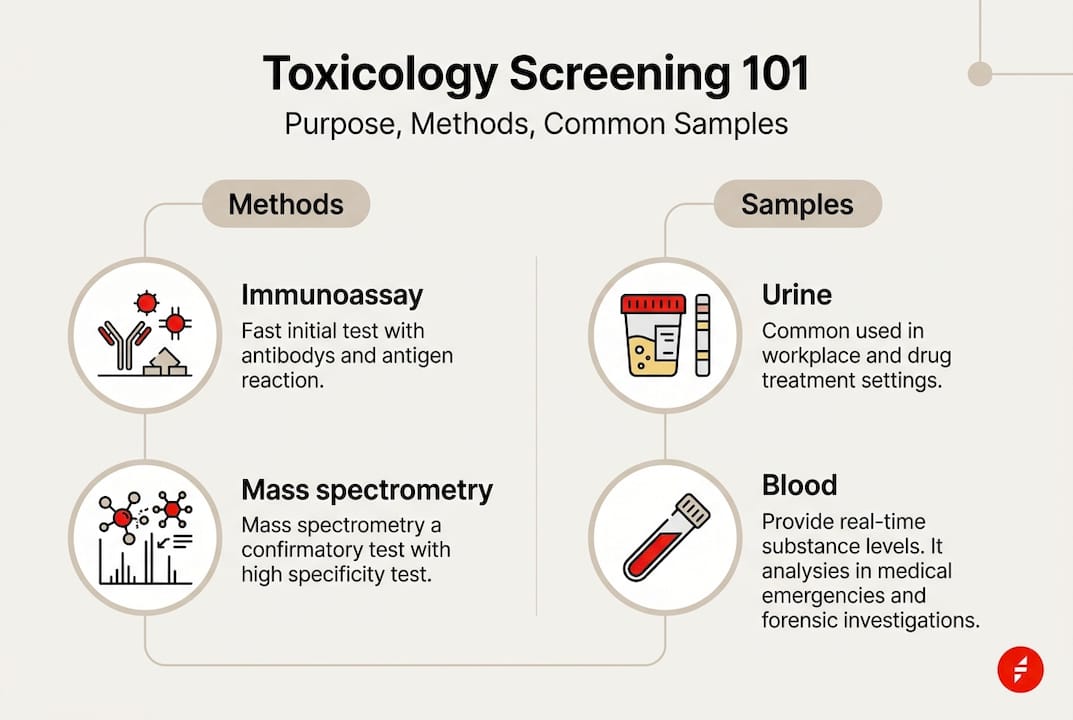
Biological specimen selection profoundly affects what substances can be detected and for how long after exposure. Urine remains the most common screening specimen because drugs and metabolites concentrate in it, extending detection windows from days to weeks depending on the substance. Blood provides the most accurate picture of current intoxication levels but offers shorter detection windows, typically hours to days. Gastric contents recovered during lavage can reveal recent ingestions before absorption occurs.

Specialized specimens serve specific forensic needs. Vitreous humor from the eye resists postmortem decomposition, making it valuable when bodies are discovered days after death. Hair analysis detects chronic drug use over months but cannot pinpoint exact timing of use. Oral fluid offers a less invasive alternative to blood for detecting recent drug use, though detection windows remain shorter than urine.
Laboratory methodologies divide into screening and confirmatory categories. Primary methodologies include immunoassays for rapid presumptive screening and confirmatory techniques like gas chromatography-mass spectrometry (GC-MS), liquid chromatography-mass spectrometry (LC-MS/MS), and high-resolution MS. Immunoassays use antibodies that bind to drug classes, producing results in minutes at the point of care or within hours in laboratories. These tests sacrifice specificity for speed and cost efficiency.
Pro Tip: Match specimen type to your investigation timeline. Use blood for acute intoxication assessment, urine for detecting use within the past week, and hair for documenting chronic patterns over months.
Mass spectrometry methods separate compounds by molecular weight and chemical structure, achieving far greater specificity than immunoassays. GC-MS volatilizes samples and separates compounds through a gas phase. LC-MS/MS works with liquid samples, making it ideal for drugs that decompose when heated. High-resolution mass spectrometry can identify unknown compounds by their exact molecular mass, supporting toxicology research and unusual poisoning cases.
| Specimen Type | Detection Window | Best Use Case | Limitations |
|---|---|---|---|
| Urine | 2-7 days (longer for some drugs) | Screening for recent use | Doesn’t indicate current impairment |
| Blood | Hours to 2 days | Assessing acute intoxication | Invasive collection, short window |
| Oral fluid | 24-48 hours | Non-invasive recent use detection | Limited drug concentration |
| Hair | Months to years | Documenting chronic use patterns | Cannot determine timing of specific use |
| Vitreous humor | Extended postmortem | Death investigations with decomposition | Requires specialized collection |
Methodology selection balances multiple factors. Rapid screening methods drug testing provides immediate results guiding emergency treatment but cannot stand alone for legal proceedings. Confirmatory testing takes longer but provides court-admissible evidence. Cost considerations matter in high-volume settings, while accuracy takes priority in forensic cases. Regulatory requirements often mandate specific methods for workplace testing and criminal justice applications.
Interpreting toxicology screening results: challenges and nuances
Result interpretation requires understanding both technical limitations and clinical context. False positives from cross-reactivity and false negatives due to poor metabolite detection or high cutoffs are common issues affecting test accuracy. Immunoassays designed to detect drug classes sometimes react with structurally similar compounds, producing positive results for substances the patient never used. Common medications trigger false positives: pseudoephedrine can cross-react with amphetamine tests, and some antidepressants trigger positive results for phencyclidine.
False negatives occur through multiple mechanisms. Some immunoassays target specific metabolites rather than parent drugs, missing compounds that metabolize differently in some individuals. Cutoff thresholds set to reduce false positives may be too high to detect low-level exposures. Synthetic drugs and designer compounds often evade detection entirely because immunoassays weren’t designed to recognize their novel chemical structures.
Detection windows vary dramatically between drugs and individuals. Marijuana metabolites persist in urine for weeks in chronic users but only days in occasional users. Cocaine clears rapidly, typically within 2 to 3 days. Opioids show intermediate windows of 1 to 3 days for most compounds. Individual factors like metabolism, hydration status, and kidney function affect how long substances remain detectable.
| Method | Sensitivity | Specificity | Speed | Best Application |
|---|---|---|---|---|
| Immunoassay | Moderate | Low to moderate | Minutes to hours | Initial screening, point of care testing |
| GC-MS | High | Very high | Hours to days | Confirmatory testing, volatile compounds |
| LC-MS/MS | Very high | Very high | Hours to days | Confirmation, non-volatile drugs |
| High-resolution MS | Extremely high | Extremely high | Days | Unknown compound identification, research |
Pro Tip: Never make critical decisions based solely on screening immunoassay results. False positives drug tests occur frequently enough that confirmatory testing should precede any action with serious consequences.
Postmortem samples present unique interpretation challenges. Drugs redistribute after death, with concentrations in blood changing as substances move from tissues back into circulation. Putrefaction produces compounds that interfere with testing or mimic drugs. Vitreous humor resists these changes better than blood, but even it has limitations. Forensic toxicologists account for postmortem interval, body condition, and sample source when interpreting results.
Clinical correlation transforms raw laboratory data into actionable information. Toxidromes guide test selection by suggesting which drug classes to investigate. A patient with pinpoint pupils, respiratory depression, and decreased consciousness likely has opioid intoxication, directing screening toward that class. How to interpret drug test results requires integrating laboratory findings with clinical presentation, medication history, and investigation circumstances.
No single toxicology method detects all possible substances. Comprehensive screening requires multiple complementary techniques, clinical judgment, and understanding of each method’s strengths and limitations.
Confirmatory testing becomes essential in medicolegal cases where results may be challenged in court. Mass spectrometry methods provide the specificity needed to definitively identify compounds and quantify concentrations. Chain of custody documentation proves samples weren’t tampered with or switched. Quality control measures demonstrate the laboratory’s methods produce reliable results. These safeguards transform screening results into evidence that can withstand legal scrutiny.
Applications and best practices in healthcare and law enforcement
Applications include emergency departments for toxidromes, pediatrics, trauma; law enforcement and forensics for overdoses and drug-facilitated crimes; testing requires consent except in diagnostics or warrants. Emergency medicine uses toxicology screening to identify unknown ingestions, guide antidote administration, and predict clinical course. When patients present unconscious or unable to provide history, screening results help narrow diagnostic possibilities and prevent harmful treatments. Pediatric poisonings require rapid identification to minimize exposure and begin appropriate therapy.
Forensic investigations rely on toxicology to establish cause of death, document impairment, and link suspects to crimes. Overdose deaths require comprehensive testing to identify all contributing substances, supporting accurate death certification and public health surveillance. Drug-facilitated sexual assault cases need specialized testing for sedatives, often requiring analysis of blood or urine collected within narrow time windows. Impaired driving cases use blood alcohol and drug testing to prove intoxication at legally significant levels.
Best practices for toxicology screening:
- Collect specimens as soon as possible after suspected exposure to maximize detection probability
- Document collection time, specimen type, and chain of custody for all forensic samples
- Use appropriate containers and preservatives to prevent sample degradation
- Store specimens properly, typically refrigerated or frozen depending on stability requirements
- Request appropriate test panels based on clinical presentation or investigation needs
- Interpret results in context of detection windows, cutoff thresholds, and patient factors
- Obtain confirmatory testing for all positive screening results with legal or serious clinical implications
- Follow institutional protocols for reporting critical results and maintaining confidentiality
Ethical considerations govern when and how toxicology screening can be performed. Clinical testing for diagnosis and treatment proceeds under implied consent during emergency care, but routine screening without clinical indication raises ethical concerns. Some emergency departments screen all patients, arguing it improves care, while others limit testing to cases with clear toxicologic presentations. Research shows routine screening rarely changes management and increases costs.
Law enforcement testing requires different legal foundations. Consent from suspects or defendants allows testing but isn’t always obtained. Search warrants authorize collection of biological specimens when probable cause exists. Some jurisdictions have implied consent laws for drivers, deeming operation of a vehicle as consent to chemical testing if arrested for impaired driving. Law enforcement drug screening best practices emphasize following proper legal procedures to ensure results are admissible.
Quality management systems ensure toxicology laboratories produce reliable results. ISO 15189 accreditation demonstrates compliance with international standards for medical laboratories. College of American Pathologists (CAP) accreditation provides similar quality assurance through proficiency testing and inspection. These programs require laboratories to validate methods, participate in external quality checks, maintain equipment, and document all procedures.
Pro Tip: Develop multimodal screening strategies combining rapid immunoassays for immediate clinical decisions with confirmatory mass spectrometry for definitive identification. This approach balances speed with accuracy.
Effective toxicology screening workflow:
- Assess clinical presentation or investigation circumstances to determine testing need
- Select appropriate specimen type based on detection window requirements and invasiveness
- Choose initial screening method balancing speed, cost, and accuracy needs
- Collect specimen following proper technique and chain of custody if forensic
- Perform screening test and interpret results in clinical context
- Order confirmatory testing for positive screens with significant implications
- Integrate final results with clinical or investigative findings to guide action
- Document all steps and maintain records according to regulatory requirements
Ongoing education keeps professionals current with evolving drug trends and testing technologies. New synthetic drugs appear regularly, requiring updated testing panels and methods. Interpretation guidelines change as research reveals new information about drug metabolism and detection. Understanding forensic drug testing importance helps professionals appreciate why rigorous methods and quality standards matter for justice and patient care.
Explore rapid, accurate toxicology test products
When you need reliable initial screening to guide clinical decisions or investigations, having the right testing tools matters. RapidTestCup offers professional-grade drug testing products designed for healthcare facilities, law enforcement agencies, and forensic laboratories. Our 12 panel ADLTX cup detects common drugs of abuse while screening for adulterants that might compromise sample integrity. For more comprehensive screening, the 15 panel drug test with adulterants covers an expanded range of substances in a single convenient test.
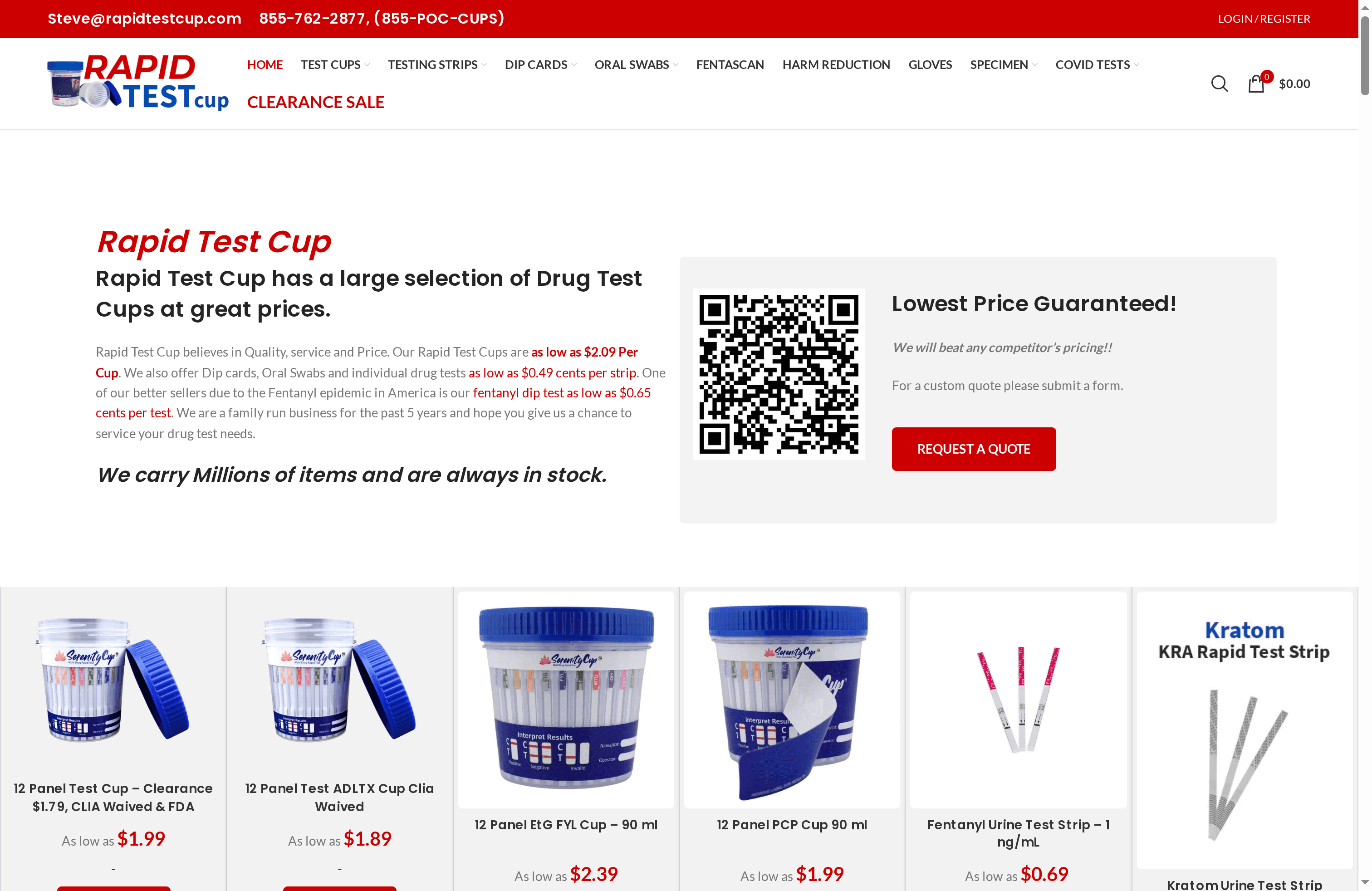
These rapid immunoassay products provide presumptive results within minutes, supporting immediate decision making while samples are sent for confirmatory laboratory testing. Individual test strips like our MET drug test strip offer targeted screening for specific substances when focused testing is appropriate. All products meet CLIA waiver standards and FDA requirements, ensuring quality and reliability for professional applications. Explore our full catalog to find testing solutions that match your specific screening needs and workflow requirements.
FAQ
What is toxicology screening used for?
Toxicology screening detects drugs, poisons, and toxins in biological samples to assist with diagnosis, treatment planning, and investigation. Healthcare providers use it to identify unknown substances causing patient symptoms and guide appropriate interventions. Law enforcement and forensic professionals rely on screening to investigate deaths, document impairment, and support criminal cases. Occupational health programs use it to monitor workplace exposure and verify compliance with safety policies.
Which biological samples are most reliable for toxicology screening?
Urine is preferred for screening because drugs and metabolites concentrate in it, providing detection windows of days to weeks depending on the substance. Blood offers the most accurate assessment of current intoxication levels but has shorter detection windows of hours to days. Specialized samples like vitreous humor resist postmortem decomposition, making them valuable in death investigations. The optimal specimen depends on whether you need to detect recent use, current impairment, or chronic exposure patterns.
How do false positives and false negatives occur in toxicology tests?
False positives result from cross-reactivity when immunoassays react with structurally similar compounds that aren’t the target drug. Common medications like pseudoephedrine can trigger amphetamine positives, while some antidepressants cause false phencyclidine results. False negatives occur when detection thresholds are set too high, when tests target metabolites the patient doesn’t produce, or when novel synthetic drugs evade detection entirely. Confirmatory testing using mass spectrometry resolves these uncertain results by definitively identifying compounds present.
What are best practices for conducting toxicology screening in law enforcement?
Proper sample collection with documented chain of custody forms the foundation of defensible forensic testing. Use screening immunoassays for rapid preliminary results, but always confirm positive findings with mass spectrometry before taking legal action. Respect legal requirements for consent or warrants before collecting specimens, and follow your jurisdiction’s specific procedures for impaired driving and criminal cases. Law enforcement drug screening best practices emphasizes quality assurance through accredited laboratories and proper documentation to ensure results withstand courtroom scrutiny.