Blog
eCCF vs CCF in Drug Testing: What Changes and What Doesn’t


The CCF and the eCCF are the same form in two formats. The CCF (Custody and Control Form) is the paper version. The eCCF is its electronic version. Per the U.S. Department of Transportation, the collection process and the information recorded stay the same. What changes is how the form is created, signed, distributed and linked to the specimen. This guide covers the differences, the current DOT rules, the 2026 form revision, the errors that cost employers time, and where non-DOT testing fits.
TL;DR
- CCF is the paper Federal Custody and Control Form. eCCF is the same form in electronic or combined electronic-and-paper format.
- The collector documents the same information either way. The format and the distribution medium are what differ.
- A collector may use an eCCF for DOT testing only when the employer has chosen to use it and the employer’s laboratory is approved through the HHS National Laboratory Certification Program (NLCP) for that eCCF.
- The revised 2026 Federal CCF is a form update, not a change to collection procedures. The 2023 version stays authorized until May 31, 2027.
- Non-DOT testing programs must not use the federal CCF. Point-of-care screening is documented with your own procedures.
Table of Contents
- What CCF and eCCF actually mean
- CCF vs eCCF side by side
- How the eCCF works at the collection site
- DOT rules: when you may use an eCCF
- The 2026 Federal CCF revision
- What the form must document
- What goes wrong when the form is wrong
- Non-DOT and point-of-care testing
- Which should you choose?
- Stock the screening supplies your program runs on
- FAQ
- Sources
What CCF and eCCF actually mean
CCF stands for Custody and Control Form. According to SAMHSA’s 2024 Collection Site Manual for urine, the Federal CCF is the form approved by the Office of Management and Budget. It documents collection and chain of custody from the moment of collection until the specimen reaches the testing facility. It can also be used to report the result to the Medical Review Officer (MRO).
The eCCF is the Electronic Custody and Control Form. The DOT’s eCCF notice for collectors describes it as documenting the same information as the paper form. A Workforce QA explainer traces the form’s path in both formats: donor, collector, lab, then MRO review.
Chain of custody is the idea behind the form. Under 49 CFR 40.3, it is the procedure that documents handling of the urine specimen from the time the employee gives it to the collector until the specimen is destroyed. The Federal CCF is the tool that procedure uses. SAMHSA’s manual makes the same point: every handling and storage step must be accounted for, which supports specimen integrity and traceability.
CCF vs eCCF side by side
| Feature | Paper CCF | eCCF |
|---|---|---|
| Format | Printed multi-part form | Fully digital, or a combination of electronic and paper |
| Structure | 5 parts: Copies 1 to 5 for the test facility, MRO, collector, employer and donor | 2 parts: Copy 1 for the test facility, Copies 2 to 5 for the MRO, employer, collection site and donor |
| Collection steps | Unchanged | Unchanged |
| Signatures | Handwritten | Electronic or digitized signatures for a fully digital eCCF |
| Linking to the specimen | Copy 1 travels in a separate compartment of the specimen bag | Printed Copy 1, a package label, or a QR code on the outside of the bag |
| Data entry | Handwritten at the collection site | Can be pre-ordered and pre-populated before the donor arrives |
| Approval | Federal form in use under DOT rules | Requires an NLCP-approved system for that test facility |
The five-part and two-part structures come from SAMHSA’s Federal eCCF oversight and requirements document. The five copies are also described in SAMHSA’s Specimen Collection Handbook.
How the eCCF works at the collection site
For the donor, a collection with an eCCF looks like a collection with paper. The collector verifies identity, supervises the specimen, seals the bottles and records the same facts. The difference shows up around the edges.
Before the visit. An eCCF system can let the employer or a service agent pre-order the test. Donor and test information is entered on a computer and pre-populated for the collector. Workforce QA says this reduces spelling errors and incomplete forms that delay results. DISA reports that eCCF can speed turnaround by up to 25%. Treat that as a provider’s claim, not a guarantee for your program.
At the counter. The collector completes the chain-of-custody entries and places the sealed bottles in a leak-proof bag. Per SAMHSA’s CCF instructions, with a paper form Copy 1 goes in the separate compartment of the bag. With a digital eCCF, the collector may place a printed Copy 1, a package label or a QR code on the outside of the bag.
The label rule. In a paperless system, the collector must either include a printed Copy 1 with the specimen or apply a label to the outside of the package. Per SAMHSA’s eCCF oversight document, that label shows the specimen ID number, the test facility name and contact information, and the collection site name and contact information. Its purpose is to link the physical package to the electronic record.
When the system fails. Collection sites must keep a supply of paper Federal CCFs. They must also be able to print the Federal eCCF on demand if a software or hardware problem blocks an electronic collection, according to the 2024 Oral Fluid Specimen Collection Handbook. Paper is the fallback, so a collector trained on only one format is a risk.
SAMHSA’s MRO Guidance Manual sets the standard. An electronic Federal CCF must be the functional equivalent of the paper form for specimen type, content, integrity, accuracy and accessibility.
DOT rules: when you may use an eCCF
The DOT authorized the eCCF in a final rule effective April 13, 2015. It allows employers, collectors, laboratories and MROs to use the electronic version in the DOT-regulated program. Two conditions apply, per the DOT collector notice:
- The employer has decided to use the eCCF.
- The employer’s laboratory is approved through the HHS NLCP to use that eCCF.
If a laboratory receives a specimen collected with an eCCF system that SAMHSA has not approved for that test facility, it rejects the specimen, per the Oral Fluid Specimen Collection Handbook. That is the costliest mistake in the switch. Confirm approval with your laboratory before a collector uses any electronic system.
Two other DOT requirements matter:
- Always the Federal form. Under 49 CFR 40.40, the Federal Drug Testing CCF documents every collection required by the DOT program. A non-Federal form or an expired CCF must not be used for a DOT collection.
- Security for electronic records. With an eCCF, the employer must set up adequate confidentiality and security measures. These include physical security, access controls and computer security, so that confidential employee records are not available to unauthorized people (49 CFR 40.40©(5) and 40.351(e)).
The 2026 Federal CCF revision
Search results on this topic mix old and new deadlines, so here is the current picture. According to the DOT’s Revised CCF 2026 notice:
- OMB approved the revised 2026 Federal CCF on May 4, 2026. It is effective April 27, 2026 and expires April 30, 2029.
- It may be used as a paper form or an electronic form.
- DOT-regulated employers and service agents may keep using the 2023 version until May 31, 2027.
- Between April 27, 2026 and May 30, 2027, no memorandum for the record (MFR) is required when the 2023 form is used. As of May 31, 2027, an MFR must be completed under 40.205(b)(2).
This is a form update, not new collection rules. DISA’s summary of the ODAPC position says collection steps and requirements stay the same. The practical task is order management: when you restock paper forms or update your eCCF system, check which version you are loading.
The older history explains some of the dates you will still see ranked. The 2014 form expired on June 30, 2018, and DOT collections then required the revised form. Those pages are now history, not a current deadline. Always check the DOT page for the form in force on the day of collection.
What the form must document
Whatever the format, the entries are the same. Per SAMHSA’s instructions:
- Step 4, Copy 1 (collector): signature, printed name, date, time of collection and name of the delivery service.
- Step 5, Copy 2 (donor): certification statement with signature, printed name, date, birthdate, phone number and email address.
The Collection Site Manual adds that chain-of-custody documents must include the name and signature of each person who handled the specimen or aliquot, plus the date and purpose of the handling.
If a collector makes a mistake on paper, the handbook rule is simple. Never use correction fluid and never overwrite. Draw a line through the error, write the correct information nearby, then initial and date the change. Electronic systems prevent some of these errors by design, but they do not replace trained collectors.
What goes wrong when the form is wrong
Form errors are the most preventable cause of delayed results. A memo from First Advantage to collection site partners (January 3, 2024) names these risks:
- Inaccurate or incomplete forms can lead to incorrect processing or posting of results. A fatal flaw, such as the collector failing to sign, can force the testing process to start over.
- Using the wrong form, or sending an illegible handwritten one, can send a person’s results to the wrong recipient organization or contact. That raises privacy problems and delays transmission.
For certain CCF errors, the laboratory holds the specimen for at least five business days after notifying the collector, before reporting a rejected-for-testing result (Oral Fluid Specimen Collection Handbook). That window is for the collector to correct the record, so train staff to respond to a lab notice the same day.
A short checklist cuts most of these errors:
- Confirm the employer’s approved form version and format before the collector starts.
- Check that donor details match the ID exactly.
- Complete every step in order, with no blank signature or time fields.
- Match the specimen ID on the bottles, the form and the package label.
- Keep a supply of paper forms for system outages.
Documentation discipline is the common thread across lab work generally, and this protocol on avoiding lab mix-ups covers the same habits of labeling and tracking. For form-by-form walk-throughs on our side, see our chain of custody form guide and our evidence handling workflow. For the collector’s side, our step-by-step collection guide covers the procedure from donor check-in to sealing.
Non-DOT and point-of-care testing
This is where many employers and clinics get confused. The federal CCF belongs to the federal programs. Under 49 CFR 40.13, DOT tests must be completely separate from non-DOT tests in all respects, and an employer must not use the CCF or the alcohol testing form in non-DOT programs. SAMHSA’s 2024 Urine Specimen Collection Handbook adds that Federal agencies must use the Federal CCF for their workplace programs. Private-sector employers are prohibited from using it, except for transportation-industry testing under DOT regulations.
In practice, a clinic, treatment program or non-regulated employer running point-of-care screening documents results through its own policy: who collected, when, which device and lot, who read the result, and what happened next. Our guide on documenting drug test results lays out a record that holds up. If you are building a program from scratch, our selection checklist for compliance professionals helps match panel and format to your policy. For a general overview of the regulated side, read what DOT drug testing is. Oral fluid collection under DOT has its own status, covered in our DOT oral fluid testing checklist.

Which should you choose?
Your choice depends on who you are:
- DOT-regulated employer: use the Federal CCF. Choose paper or eCCF based on what your laboratory and collection sites support, and confirm the lab’s NLCP approval before going electronic.
- Collection site or collector: be fluent in both. Keep paper forms on hand for outages and train for the package label rule.
- Federal agency program: the Federal CCF is required for your workplace testing.
- Non-DOT employer, clinic or treatment program: do not use the Federal CCF. Build your own chain-of-custody and result log around the screening method you use.
Our perspective
We talk with labs, clinics and employers every week, and the same pattern repeats. People ask whether the electronic form is “better,” when the real question is whether their records are consistent. A paper CCF filled in carefully beats an eCCF entered in a hurry, and the reverse is just as true.
What we see work is a simple discipline: one documented procedure, the right form for the program, and a log that anyone could audit months later. That is why we build our catalog around the screening formats programs actually run, from multi-panel cups to dip cards and oral swabs, with CLIA waived options and bulk pricing so a program can standardize on one setup instead of improvising.
If your program sits outside DOT, your documentation is yours to design. Pick a cup or card that fits your panel, write the steps down, and train everyone to the same script. We would rather help you get that right at the start than have you fix it after a dispute.
Justin
Stock the screening supplies your program runs on
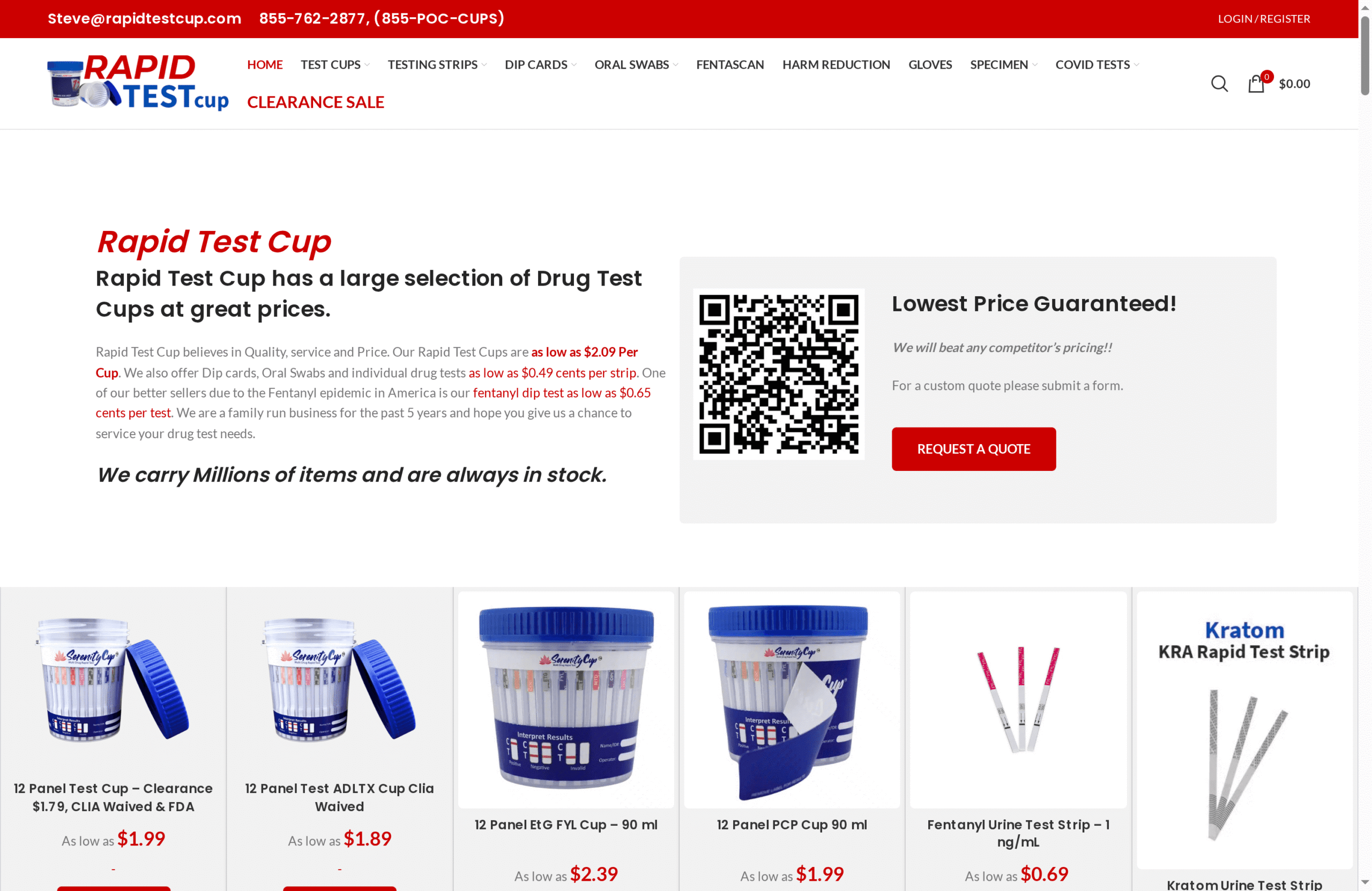
If your non-DOT program needs reliable point-of-care screening, we carry multi-panel urine test cups, dip cards, urine strips, oral swabs and specimen collection supplies, with bulk discounts and custom quotes available. Browse the full range in our shop, compare formats in cup vs dip card drug tests, or start with a popular configuration such as the CLIA waived 15 panel drug test cup.
Need collection cups for your site as well? See our urine specimen cups.
FAQ
What does eCCF mean?
eCCF stands for Electronic Custody and Control Form. It is the electronic version of the Federal CCF and documents the same information as the paper form. It can be fully digital or a combination of electronic and paper.
Is an eCCF valid for DOT drug tests?
Yes, since the DOT final rule effective April 13, 2015. The employer must have chosen to use it, and the employer’s laboratory must be approved through the HHS NLCP to use that eCCF. Specimens collected on an unapproved system are rejected.
What is the main purpose of a custody and control form?
It documents the handling of a specimen from the donor to the collector, to the laboratory and through MRO review. That record supports specimen integrity and traceability. Under DOT rules, chain of custody runs from the time the employee gives the specimen until it is destroyed.
Can I use the federal CCF for a non-DOT workplace test?
No. DOT rules say employers must not use the CCF in non-DOT programs, and SAMHSA’s 2024 handbook says private-sector employers are prohibited from using it except for DOT-regulated transportation testing. Use your own documented procedure for non-DOT screening.
Do I need to switch to the 2026 CCF right away?
Not for DOT collections. The DOT notice authorizes the 2023 version until May 31, 2027. After that date, an MFR must be completed under 40.205(b)(2). Check the DOT page for the current rules before your next restock.
Sources
- eCCF Notice: Specimen Collectors, U.S. DOT
- Collection Site Manual 2024, Urine, SAMHSA
- Workforce QA: CCF and eCCF difference
- 49 CFR 40.3, U.S. DOT
- Federal eCCF: HHS/NLCP oversight and requirements, SAMHSA
- Specimen Collection Handbook, SAMHSA
- DISA: eCCF technology
- Instructions for Completing the Federal CCF, SAMHSA
- Oral Fluid Specimen Collection Handbook, SAMHSA
- Medical Review Officer Guidance Manual, SAMHSA
- 49 CFR 40.40, U.S. DOT
- Revised CCF 2026 Notice, U.S. DOT
- DISA: 2026 Federal CCF key changes
- First Advantage memo to collection site partners
- 49 CFR 40.13, U.S. DOT
- Urine Specimen Collection Handbook 2024, SAMHSA
- How to Avoid Lab Mix-Ups: A Practical Protocol Guide