Blog
How to Interpret Lab Drug Test Results Accurately


TL;DR:
- Lab drug test results indicate the presence or absence of substances but do not confirm impairment or abstinence. A positive confirms detection above thresholds but not usage frequency, while a negative may miss recent or low-level use; context is essential for accurate interpretation. Confirmatory testing and professional review are crucial to prevent misreading results and making damaging decisions.
Lab drug test results report the presence or absence of specific substances or their metabolites in a biological specimen, and knowing how to interpret lab drug test results correctly means understanding what those findings actually prove and what they do not. A positive result does not confirm impairment. A negative result does not guarantee abstinence. The gap between those two facts is where most misinterpretation happens. This guide breaks down every major term, testing method, and contextual factor that shapes accurate reading of lab drug tests, written for patients, employers, and legal professionals who need clarity, not guesswork.
How to interpret lab drug test results: the core framework
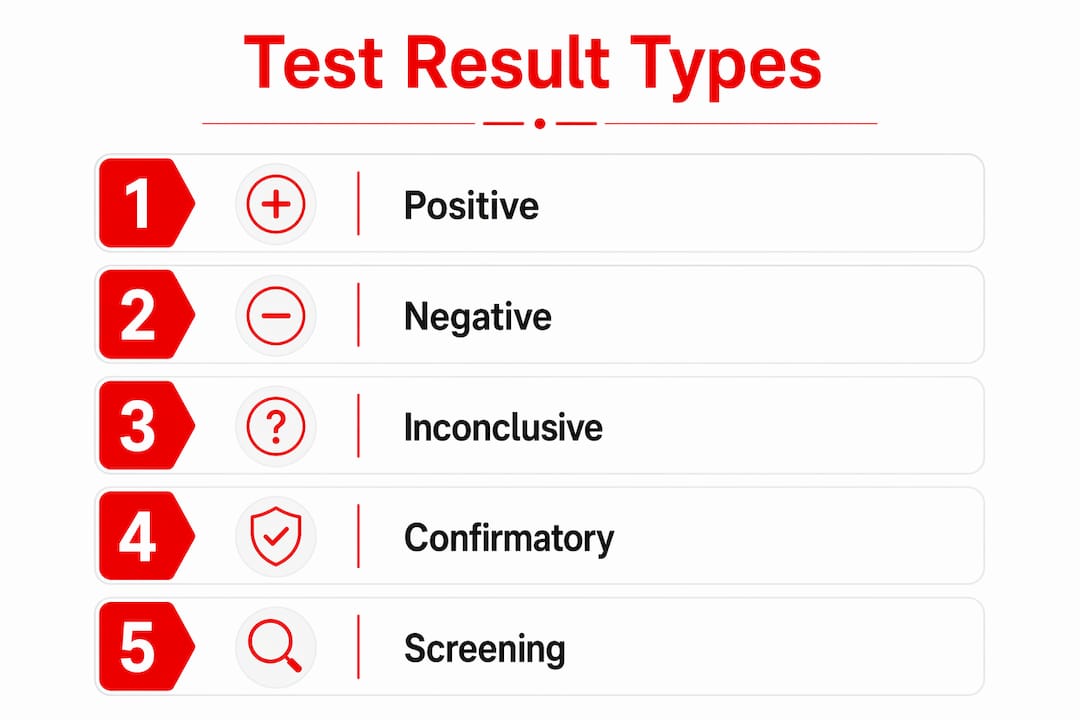
Reading lab drug tests starts with three foundational outcome categories: positive, negative, and inconclusive. Each carries a specific technical meaning that differs significantly from everyday language.

A positive result means the lab detected a drug or metabolite at or above a defined cutoff concentration. Critically, a positive result confirms presence above the cutoff threshold but does not prove impairment, frequency of use, or addiction status. A person who used marijuana once two weeks ago may still test positive for THC metabolites. That result says nothing about whether they were impaired at work.
A negative result means the substance was either absent or present below the detection threshold. Negative results indicate absence or sub-threshold levels, but they do not conclusively rule out drug use. Detection windows vary by substance and specimen type. Cocaine clears urine in two to four days. Hair tests can detect use up to 90 days back. The same person could test negative on a urine screen and positive on a hair panel taken the same day.
An inconclusive or invalid result signals a problem with the sample itself, not necessarily with the donor. Sample adulteration, dilution, or improper timing can produce invalid results that require retesting or careful interpretation. A dilute specimen, for example, may reflect excessive water intake before collection or deliberate tampering.
Cutoff levels are the concentration thresholds that separate a positive from a negative. The National Institute on Drug Abuse (NIDA) and the Substance Abuse and Mental Health Services Administration (SAMHSA) publish federal cutoff standards for workplace testing. Cutoff concentrations balance minimizing false positives against minimizing false negatives, but individual labs and test purposes can set different thresholds. A clinical toxicology lab may use lower cutoffs than a federally mandated workplace program.
Pro Tip: Always ask the testing lab which cutoff values they applied. Two labs testing the same specimen can return different results if their thresholds differ.
What is the difference between screening and confirmatory tests?
The two-step testing process is the single most misunderstood aspect of reading lab drug tests. Most people see a result and assume it is final. It often is not.
| Test type | Method | Speed | Accuracy | Primary use |
|---|---|---|---|---|
| Screening (immunoassay) | Antibody reaction | Minutes to hours | High sensitivity, lower specificity | Initial detection |
| Confirmatory | GC-MS or LC-MS/MS | Hours to days | Definitive chemical identification | Legal, employment, clinical decisions |
Screening tests, also called presumptive tests, use immunoassay technology. They are fast and cost-effective, but they react to entire classes of compounds rather than specific molecules. A positive screening result is presumptive and must be confirmed by more specific methods before any consequential decision is made.
Confirmatory tests use gas chromatography-mass spectrometry (GC-MS) or liquid chromatography-tandem mass spectrometry (LC-MS/MS). These methods separate and identify individual molecules with chemical precision. GC-MS and LC-MS/MS provide definitive identification that is accepted as evidence in courts, employment tribunals, and clinical settings. For a deeper look at how these two stages interact, the Rapidtestcup resource on presumptive vs. confirmatory testing explains the distinction with practical examples.
Labs perform confirmatory testing after a screening positive, not after a negative. This means a negative immunoassay result is typically final, while a positive one is a starting point. For legal or employment decisions, skipping confirmatory testing is a serious procedural error that can expose organizations to liability.
Pro Tip: If you receive a positive result that will affect employment or legal standing, request the confirmatory GC-MS or LC-MS/MS report specifically. You are entitled to that documentation.
What causes false positives and false negatives?
Understanding drug test results means knowing that lab reports are not infallible. Several variables can push a result in the wrong direction, and recognizing them is the difference between an accurate interpretation and a damaging mistake.
-
Cross-reactivity with medications. Immunoassay screening tests are prone to false positives from cross-reactivity with common medications and food compounds. Pseudoephedrine, found in over-the-counter cold medications like Sudafed, can trigger a false positive for amphetamines. Bupropion, prescribed as Wellbutrin for depression, has been documented to cross-react with methamphetamine panels. Quinolone antibiotics can interfere with opiate screens. This is why full medication disclosure before testing is not optional. It is the foundation of accurate interpretation.
-
Dietary interference. Cutoff values are calibrated to prevent false alarms from incidental exposures, but edge cases exist. Poppy seed consumption is the classic example. Poppy seeds contain trace morphine and codeine, and cutoff values are carefully calibrated to account for this, but high consumption close to testing time can still produce borderline results on lower-threshold panels.
-
Detection window mismatches. False negatives occur when testing happens outside the detection window for a substance. Alcohol, for instance, clears urine within 12 hours. A urine test taken the morning after heavy drinking may return completely negative. Hair testing extends the window dramatically but cannot detect very recent use within the past five to seven days.
-
Sample integrity issues. Dilute specimens, pH abnormalities, and the presence of adulterants like bleach or nitrites all compromise result accuracy. Labs test for these markers using creatinine levels and specific gravity measurements. A specimen flagged as substituted or adulterated is not a negative result. It is an invalid one, and it carries its own set of consequences in employment and legal contexts.
-
Lab error and chain of custody failures. Mislabeled specimens, improper storage temperatures, and broken chain of custody documentation can all invalidate results. Any result used in a legal proceeding should come with a documented chain of custody report.
For a detailed breakdown of how to identify and challenge false positives, the Rapidtestcup guide on lab accuracy and false positives covers the most common causes and how labs address them.
How context shapes interpretation for patients, employers, and legal professionals
The same lab result means different things depending on who is reading it and why. Interpretation of drug screening is never a purely technical exercise. Context determines consequence.
For patients and clinicians:
- A positive opioid result in a pain management patient requires review of the prescribed medication list before any clinical action. The result may be fully expected.
- Symptoms, medical history, and the timing of specimen collection all affect what a result means. Accurate interpretation requires clinical context, including symptoms and medication history, to avoid misreading a legitimate prescription as illicit use.
- Urine drug screens in emergency settings are often interpreted alongside blood alcohol content, vital signs, and patient history rather than in isolation.
For employers:
- Federal workplace drug testing programs regulated by the Department of Transportation (DOT) require a Medical Review Officer (MRO) to review all positive results before they are reported to the employer. MROs play a key role in reviewing prescriptions and contextualizing positive results so that a legitimate prescription does not end a career.
- Employers using non-DOT programs have more flexibility in panel selection and cutoff thresholds, but they still carry legal exposure if they act on unconfirmed screening results.
- Test panels vary by industry. A 5-panel test covers marijuana, cocaine, opiates, amphetamines, and phencyclidine (PCP). A 12-panel test adds benzodiazepines, barbiturates, methadone, and others. Knowing which panel was used is the first step in reading the report correctly.
For legal professionals:
- Courts require confirmatory testing documentation. A screening-only positive is generally inadmissible as standalone evidence of drug use.
- Chain of custody documentation must be intact from collection through analysis. Any gap creates grounds for challenging the result.
- Hair follicle testing is increasingly used in custody disputes and criminal cases because of its extended detection window, but it cannot determine when within a 90-day window use occurred.
Key takeaways
Accurate interpretation of lab drug test results requires understanding both the technical meaning of each result type and the contextual factors that shape what those results actually prove.
| Point | Details |
|---|---|
| Positive means presence, not impairment | A positive result confirms detection above the cutoff, not that someone was impaired or addicted. |
| Screening results are presumptive | Immunoassay positives require GC-MS or LC-MS/MS confirmation before any consequential decision. |
| Cutoffs vary by lab and purpose | Always confirm which cutoff thresholds were applied, since different programs use different standards. |
| Context determines meaning | Clinical, employment, and legal settings each require different interpretive frameworks for the same result. |
| MROs protect against misinterpretation | In federally regulated workplace testing, a Medical Review Officer reviews all positives before employer notification. |
Why most people misread drug test results and what actually matters
I have spent years working with drug testing products and the professionals who rely on them, and the most consistent mistake I see is treating a lab report like a verdict. It is not. It is a data point.
The number of consequential decisions made on unconfirmed immunoassay positives is genuinely troubling. An employer terminates someone based on a screening result that a GC-MS test would have overturned. A parent loses custody because a court accepted a presumptive positive without demanding confirmatory documentation. These are not hypothetical scenarios.
What I have found actually matters in practice is asking two questions before acting on any result: Was this confirmed by GC-MS or LC-MS/MS? And was a qualified professional, such as an MRO or clinical toxicologist, involved in the interpretation? If the answer to either question is no, the result is incomplete.
The technology for accurate drug testing exists and is widely accessible. The Rapidtestcup catalog includes CLIA-waived, FDA-approved test cups that produce reliable screening results, and the resources on interpreting results accurately reflect the same standard of rigor I would apply in any professional setting. The gap is not in the tools. It is in how people use the information those tools produce.
— Justin
Get reliable drug test kits that support accurate results
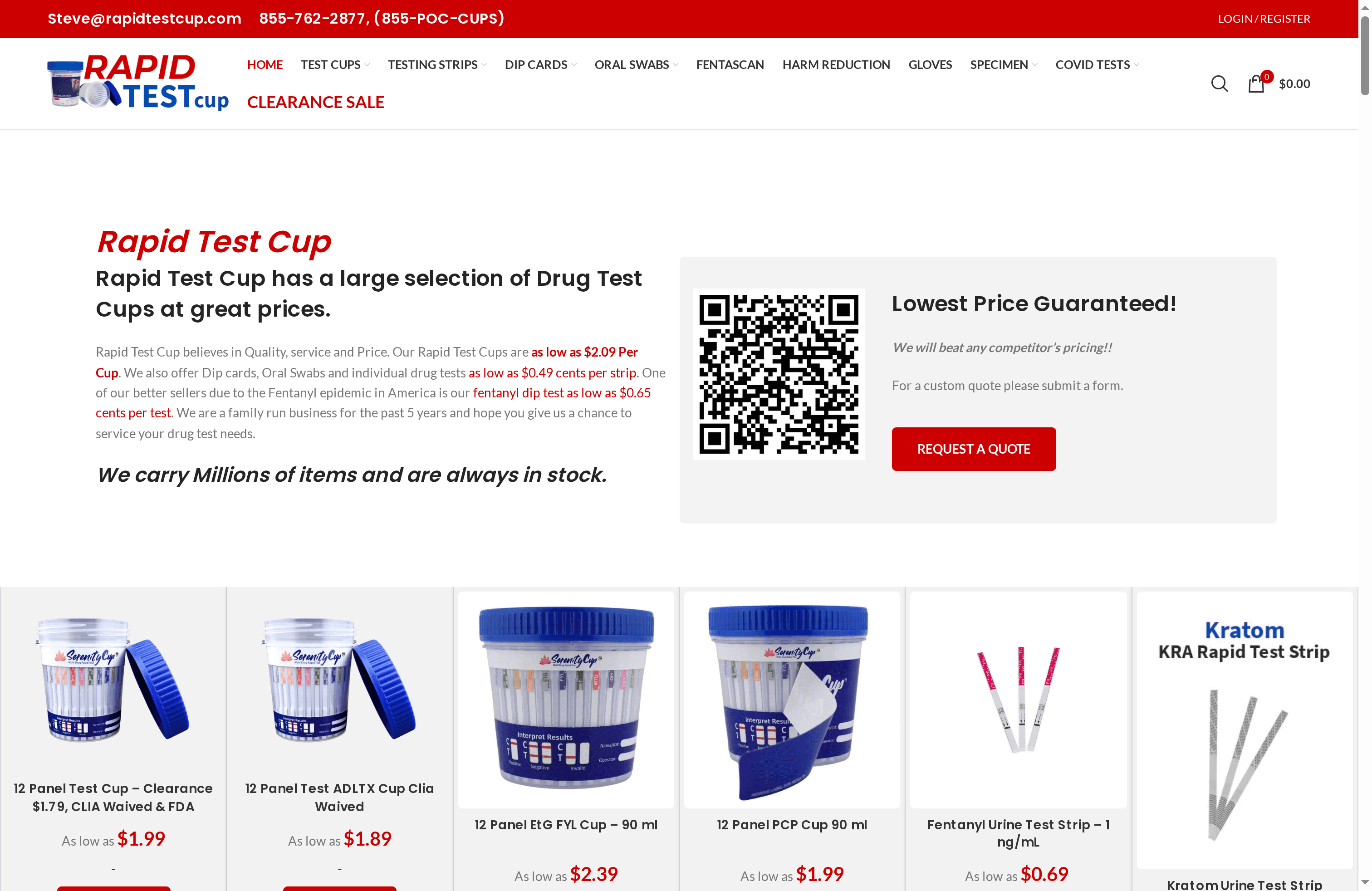
Accurate interpretation starts with a reliable test. Rapidtestcup offers a full catalog of CLIA-waived, FDA-approved urine drug test cups, dip cards, and multi-panel strips designed for laboratories, clinics, substance abuse programs, law enforcement, and individual buyers. Products range from standard 5-panel cups to 12-panel and 14-panel configurations with built-in adulterant checks for creatinine, pH, and nitrites. Bulk pricing and fast shipping make it practical to maintain consistent testing protocols at scale. Start with the urine drug test kit comparison to find the right panel and format for your specific testing needs, or use the kit selection guide to match product specs to your program requirements.
FAQ
What does a positive drug test result actually mean?
A positive result means a drug or metabolite was detected at or above the lab’s cutoff concentration. It does not prove impairment, frequency of use, or addiction, and it should be confirmed by GC-MS or LC-MS/MS before any consequential action is taken.
Can a negative drug test result be wrong?
Yes. Negative results indicate levels below the detection threshold but do not conclusively rule out drug use. Testing outside the detection window for a substance, using the wrong specimen type, or applying a panel that does not include the substance in question can all produce a negative result despite recent use.
What is a Medical Review Officer and when are they required?
A Medical Review Officer (MRO) is a licensed physician trained to review and interpret workplace drug test results. Federal DOT regulations require MRO review of all positive results in safety-sensitive employment programs to verify whether a legitimate prescription explains the finding before the employer is notified.
Why do labs run two tests instead of one?
The first test, an immunoassay screen, is fast and sensitive but prone to cross-reactivity. The second test, typically GC-MS or LC-MS/MS, provides definitive chemical identification. Using both together reduces both false positives and the risk of acting on an incorrect result in legal or employment settings.
What causes a drug test to come back inconclusive or invalid?
Inconclusive or invalid results are typically caused by sample adulteration, excessive dilution, pH abnormalities, or collection errors. These findings do not indicate a negative result. They indicate a compromised specimen that requires retesting under observed conditions.