

Blog
Phentermine Drug Tests: Why a Positive Screen Needs Lab Confirmation


Yes, phentermine can trigger a presumptive amphetamine-positive result on a urine immunoassay screen, because the antibodies cross-react with the similar structure. That result is not a confirmed illicit amphetamine finding. It has to be followed by confirmatory testing with GC/MS or LC‑MS/MS, the workflow laid out in SAMHSA guidance and consistent with FDA labeling.
TL;DR:
- Urine is the usual specimen, with estimates of a few days; blood and saliva reflect recent exposure, while hair looks back weeks to months.
- Detection varies with dose and duration, kidney function, urine acidity, assay design, cutoff, collection timing, and concentration, so no exact window applies to everyone.
- Tell the collector or Medical Review Officer about phentermine before providing the sample, and bring a prescription label or pharmacy record for review.
- Keep the laboratory report, which names the compound, and ask the Medical Review Officer to explain any finding questioned by an employer or clinic.
Table of Contents
- How do screening tests work, and why does cross-reactivity happen?
- Does phentermine show up as amphetamine on common tests?
- How long is phentermine detectable in urine, blood, saliva, and hair?
- What affects how long phentermine stays detectable?
- What should you do if your test is non-negative?
- How do laboratories confirm phentermine versus illicit amphetamines?
- An honest note from our side of the counter
- Which screening products make sense for at-home or on-site checks?
- FAQ
- Sources
How do screening tests work, and why does cross-reactivity happen?
A screening immunoassay does not identify a single molecule. It uses antibodies built to latch onto a drug class, and anything with a similar shape can latch on too. That is why the screen answers “does this specimen resemble the target class?” rather than “which compound is in it?”
Phentermine is pharmacologically similar to amphetamine, so on an amphetamine-class screen it can look like the real target. SAMHSA’s clinical drug-testing guidance treats any initial non-negative as presumptive, not definitive, and calls for a more specific method before anyone draws a conclusion.
The usual workflow looks like this:
- Collection: a urine specimen is collected, often with a disclosure step where you can list prescriptions.
- Initial screen: an immunoassay checks the specimen against class-level cutoffs.
- Presumptive result: a non-negative screen is flagged, not reported as a confirmed finding.
- Confirmation: a laboratory runs GC/MS or LC‑MS/MS on the same specimen to name the specific compound.
- Review: a Medical Review Officer (MRO) or clinician interprets the confirmed result alongside your prescription.
For you, a presumptive result means “not finished yet.” It does not mean the process has concluded you used an illicit stimulant. If you want the deeper reasoning behind this two-step design, our piece on why laboratory confirmation matters walks through it.
Does phentermine show up as amphetamine on common tests?
It can, and it is one of the better-documented examples. Phentermine commonly yields a false-positive result on the initial amphetamines immunoassay because of antibody cross-reactivity, and SAMHSA says that result is presumptive and must be confirmed with a more specific method (SAMHSA, Clinical Drug Testing in Primary Care).
The FDA’s Adipex-P labeling supports the underlying logic by describing phentermine as pharmacologically similar to amphetamine. Brand names matter little here: Adipex-P contains phentermine, and phentermine can cross-react on an amphetamine-class screen.
Which tests are most likely to flag it? An amphetamine-class immunoassay can react to phentermine because of antibody cross-reactivity. A non-negative screen cannot by itself identify which specific compound is present.
The next step is confirmation. A more specific laboratory method is needed to determine whether the presumptive amphetamine-class result reflects phentermine or another compound. If you are taking phentermine and a screen comes back non-negative for amphetamines, the right reading is “unresolved,” not “failed.” Our guide on how to identify false positives covers the documentation side.
How long is phentermine detectable in urine, blood, saliva, and hair?
Nobody can promise an exact window, and any source that does is overstating what the evidence supports. Windows shift with dose, how long you have been taking it, kidney function, urinary pH, and the sensitivity of the assay. Treat all of these as approximations.
- Urine: the most common specimen for workplace and clinic screens. Common estimates run to a few days after the last dose, but they stretch or shrink with the variables above. Urine is where the amphetamine cross-reactivity question usually arises.
- Blood: a shorter window, more useful for recent use than for looking back several days. Blood draws are less common for routine screening.
- Oral fluid (saliva): also a shorter window than urine and generally suited to detecting recent exposure rather than a multi-day history.
- Hair: a much longer look-back, measured in weeks to months, but hair testing is used in different contexts and is not what most people meet in a quick workplace or clinic screen.
The FDA label gives one useful anchor for why urine matters so much. According to the Adipex-P prescribing information, peak concentrations occur at about 3–4.4 hours, and a large share of the drug leaves through the urine, with cumulative urinary excretion under uncontrolled conditions reported at 62%–85%. That widespread is itself a reminder that excretion varies between people.
Notice what these windows do not tell you. A detection window describes when a test might pick up the drug, not whether a result will be positive or whether it will be read as a problem. A screen that flags presumptively still needs confirmation to say anything specific.
What affects how long phentermine stays detectable?
Several biological and test-related factors shape the window, which is why two people on the same dose can get different results.
- Dose and chronicity: a single dose leaves less behind than weeks of daily use, so repeated dosing generally raises concentrations and the chance of detection.
- Kidney function: because phentermine is eliminated largely through the kidneys, reduced renal function can slow excretion and stretch the window.
- Urinary pH: acidic versus alkaline urine changes how quickly a drug of this type is excreted, and the FDA label’s wide urinary excretion range reflects that kind of variability (Adipex-P label).
- Test cutoffs and assay design: the cutoff concentration and the antibody used decide whether a low level triggers a presumptive result at all. Cups and dip cards are not identical on this point.
- Collection timing and hydration: a diluted sample can read lower, while a concentrated first-morning sample can read higher.
Pro Tip: Bring your prescription label or a pharmacy printout to any test, and mention phentermine before you provide the sample, not after a result appears.
A word on shortcuts: aggressive home remedies, flushing, or tampering with a specimen are not advised. They can create safety concerns. Disclose your prescription and let the laboratory or Medical Review Officer interpret any presumptive result. Honest disclosure plus confirmation is the reliable route.
What should you do if your test is non-negative?
A non-negative screen is a prompt to document and confirm, not to panic. Work through these steps in order:
- Disclose your phentermine prescription right away to the collector or the Medical Review Officer, and show prescription information. SAMHSA’s guidance points to disclosure and documentation as the practical way to let a lab or MRO interpret a presumptive result while confirmation proceeds.
- Ask for, or expect, confirmatory testing by GC/MS or LC‑MS/MS on the specimen. This is the step that names the actual compound.
- Read the confirmation report. It should identify the specific substance rather than a vague class-level “positive for amphetamines.”
- Keep the MRO or lab report as your record. If an employer or clinic raises concerns, the confirmed report, not the screening cup, is the document that settles it.
- Talk to your prescriber or occupational health if anything is unclear or the dispute continues.
Our walkthrough of what confirmatory tests involve is a useful companion if you want to know what happens in the lab.
How do laboratories confirm phentermine versus illicit amphetamines?
Confirmation works by measuring what the molecule actually is, not what it resembles. GC/MS and LC‑MS/MS are more specific methods used to resolve presumptive immunoassay results. Ask the laboratory or Medical Review Officer how to interpret the confirmation report.
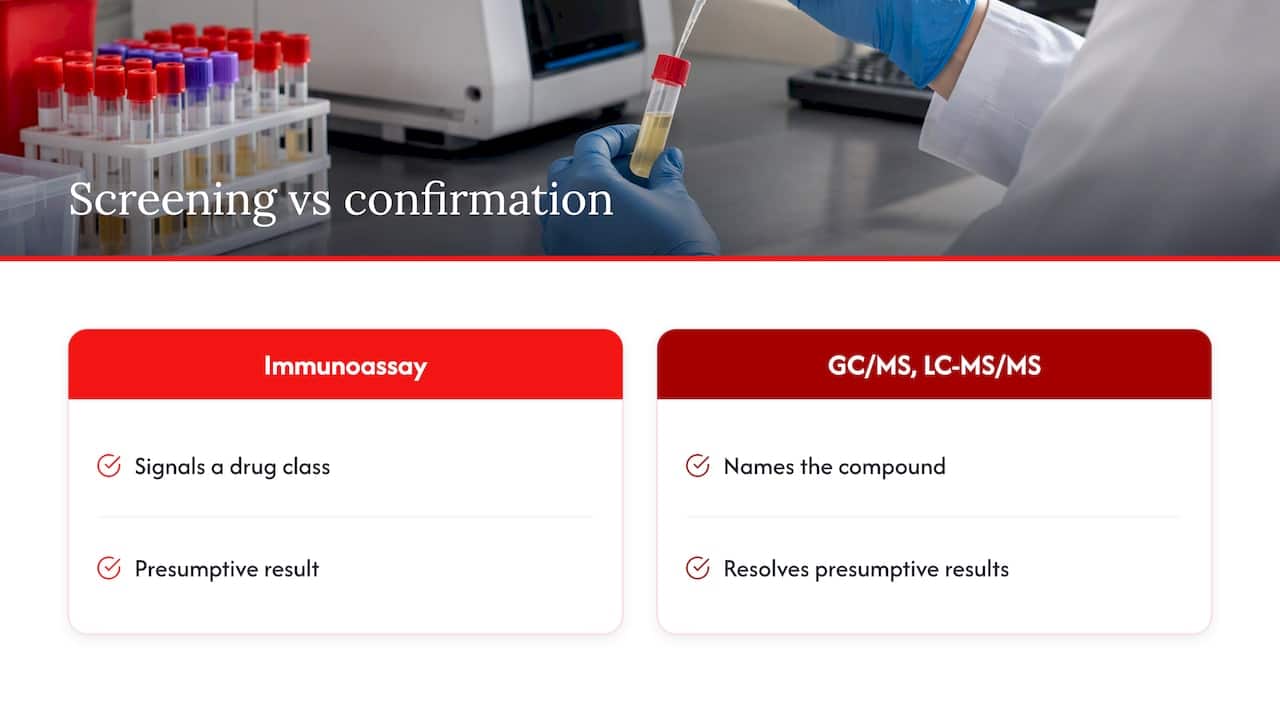
That is why confirmatory reports list a compound by name instead of a class. FDA and SAMHSA materials describe these methods as the gold standard for resolving presumptive immunoassay results, along with the cutoff and clearance frameworks used for cleared devices (FDA Regulation of Drugs of Abuse Tests). These methods are used to resolve presumptive immunoassay results; the laboratory can explain how to interpret its report. For the technical background, see why labs trust GC-MS confirmation.
An honest note from our side of the counter
We sell screening kits, and we talk with customers who are surprised that a prescription medication can trigger a presumptive result. Our firm view: a screen is a first look, never a verdict, and the most useful thing you can do is disclose your prescription and insist on confirmation instead of trying to interpret a line on a card yourself.
The topic also sits in a wider conversation about weight-loss prescribing and what clinical evidence does and does not support. If you want a clinician’s perspective on that bigger picture, this clinical discussion of a weight-loss peptide trial is a reasonable place to start. For the screening side, our pages on confirmation and false positives are written for exactly this question.
— Justin
Which screening products make sense for at-home or on-site checks?
If you want a screening option, we carry rapid multi-panel cups, dip cards, and amphetamine strips, and our full range is on our shop page. 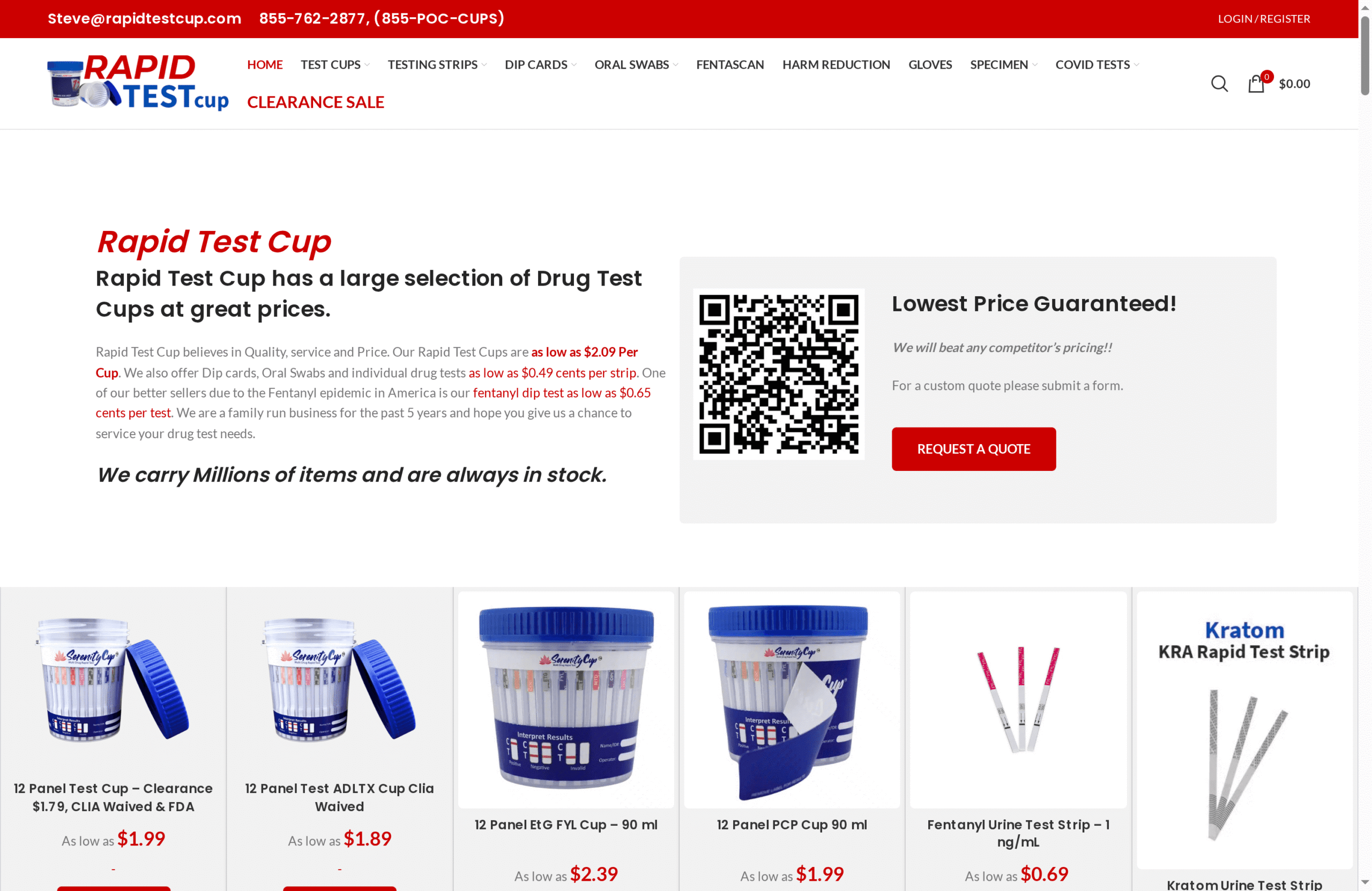
Be clear about what they do. These are screening tools. They show presumptive results only, and a non-negative on any of them still needs a laboratory test to confirm what is actually present. If you take phentermine, expect that an amphetamine channel may react.
For a quick single-class check, our amphetamine test strips are the direct choice. For a broader look, an 8 panel urine test cup covers several drug classes at once, and our cup versus dip card comparison helps you pick a format. Browse the catalog, choose what fits your situation, and keep the lab-confirmation step in mind before you act on any result.
This article is general information, not a substitute for advice from a qualified doctor. Consult a qualified healthcare professional about your own circumstances before acting on anything here.
FAQ
Does phentermine show on a urine drug screen?
It can show as a presumptive amphetamine-class result, because the screening antibodies cross-react with phentermine. SAMHSA guidance says such a result is not definitive and must be confirmed. A lab method like GC/MS or LC‑MS/MS then identifies the specific compound.
Can phentermine cause insomnia?
For information about possible side effects, check the FDA label and talk with your prescriber. Our expertise is in drug screening rather than prescribing, so check the FDA label and talk with your prescriber about timing and side effects.
Is phentermine the same as Adderall?
No. They are different medications, though the FDA describes phentermine as pharmacologically similar to amphetamine. That similarity is the reason a screening test can confuse them, which is why confirmatory testing separates the two.
Why don’t doctors like to prescribe phentermine?
Reasons vary by clinician and patient, and we do not speak for prescribers. Concerns generally center on who the medication suits and how it is monitored, so your prescriber is the right person to explain their approach and what the label says about appropriate use.
Sources
- Clinical Drug Testing in Primary Care
- Adipex-p (phentermine hydrochloride) capsules label
- FDA Regulation of Drugs of Abuse Tests