

Blog
Can Poppy Seeds Really Cause a Positive Drug Test?

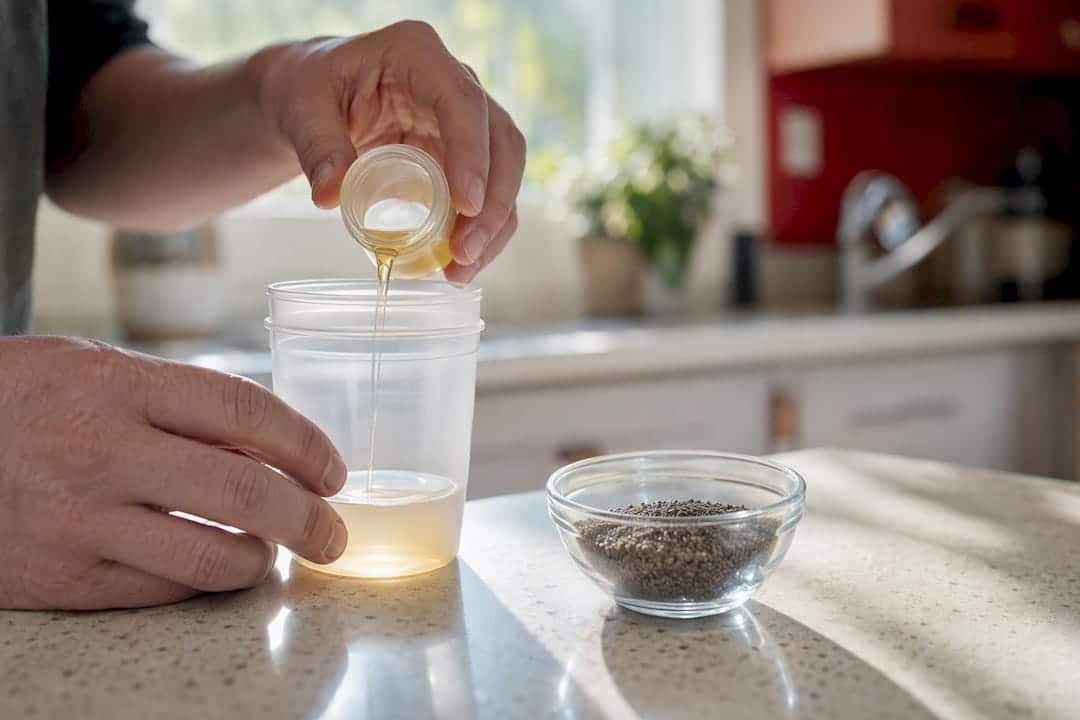
Yes, eating poppy seeds can trigger a positive opiate result for morphine or codeine on a sensitive drug screen. The Department of Defense has warned service members to steer clear of poppy-seed foods for exactly this reason, and peer-reviewed research backs it up. Don’t panic if you test positive after a bagel binge. Request confirmatory testing before assuming the worst.
TL;DR:
- Poppy seed consumption can cause positive opiate drug tests due to trace contamination from the plant’s latex during harvesting, especially in unwashed or raw seeds.
- Detection windows vary: urine tests can show positive for up to 48 hours, while oral fluid tests typically clear within a few hours, and hair tests rarely detect dietary exposure.
- Using the federal cutoff of 2,000 ng/mL for urine screening helps reduce false positives from poppy seed foods, but results still depend on lab protocols and individual metabolism.
- Confirmatory testing with gas chromatography-mass spectrometry is essential to accurately distinguish dietary poppy seed residue from actual opiate use.
- To avoid false positives, individuals should refrain from poppy seed foods at least 48 to 72 hours before testing and disclose recent ingestion when tested.
Table of Contents
- Why Poppy Seeds Show Up on a Drug Test
- How Long Do Poppy Seeds Stay Detectable on a Test?
- Screening vs. Confirmatory Testing: Why Cutoffs Matter
- Who Faces the Highest Stakes From a False Positive
- What to Do If You Test Positive After Eating Poppy Seeds
- What the Research and Official Guidance Actually Say
- How RapidTestCup Supports Accurate Screening Programs
- A Fairer Approach to Drug Testing Policy
- Sources
Why Poppy Seeds Show Up on a Drug Test
Poppy seeds come from the opium poppy plant, and they pick up trace amounts of morphine, codeine, and thebaine during harvest. The seeds themselves don’t produce these alkaloids. Contamination happens when the seed pod’s milky latex, the substance opium is made from, coats the seed casing during processing.
That contamination is wildly inconsistent. One batch of seeds from Turkey might carry a fraction of the residue found in a batch from Australia or the Czech Republic, and there’s no label that tells you which is which. Poppy seed residue varies dramatically by origin and batch, which is exactly why nobody can promise you a “safe” muffin. You’re rolling dice with each purchase.
Food form matters too. Baking and rinsing seeds tends to reduce alkaloid content, so a poppy seed bagel that’s been through a 400-degree oven usually carries less residue than raw seeds sprinkled on yogurt. Poppy seed tea, made by steeping unwashed seeds or pods directly in hot water, concentrates the alkaloids and carries the highest documented risk of any common preparation.

None of this means you get high off a bagel. Dietary poppy seed exposure produces no pharmacologic or intoxicating effect. This is purely a laboratory sensitivity problem, not a drug use problem.
Common poppy seed products and their relative risk:
- Poppy seed bagels and muffins: baked, generally lower residue, but still capable of triggering a positive within hours of eating.
- Raw poppy seeds on salads or dressings: unwashed and unbaked, moderate to high residue.
- Poppy seed tea or “poppy pod tea”: steeped directly from pods or unwashed seeds, the highest known risk.
- Commercial poppy seed fillings (in pastries like hamantaschen): variable, depending on the manufacturer’s seed source.
Pro Tip: If you have a scheduled drug test coming up, don’t just avoid the obvious poppy seed bagel. Check ingredient labels on salad dressings, crackers, and specialty breads. Poppy seeds hide in places you wouldn’t expect.
How Long Do Poppy Seeds Stay Detectable on a Test?
Detection windows depend entirely on which specimen a lab tests, and the differences are bigger than most people assume.
Urine is the most common specimen type and the one where poppy seed contamination shows up most reliably. Most people clear morphine and codeine metabolites within 48 hours of eating poppy seed products, though some documented cases with larger exposures show detectable levels lasting somewhat longer. Mayo Clinic Laboratories notes that bakery products containing poppy seeds can push urine morphine concentrations as high as 2,000 nanograms per milliliter for a period of hours after ingestion, right at the threshold many labs use to call a screen positive.
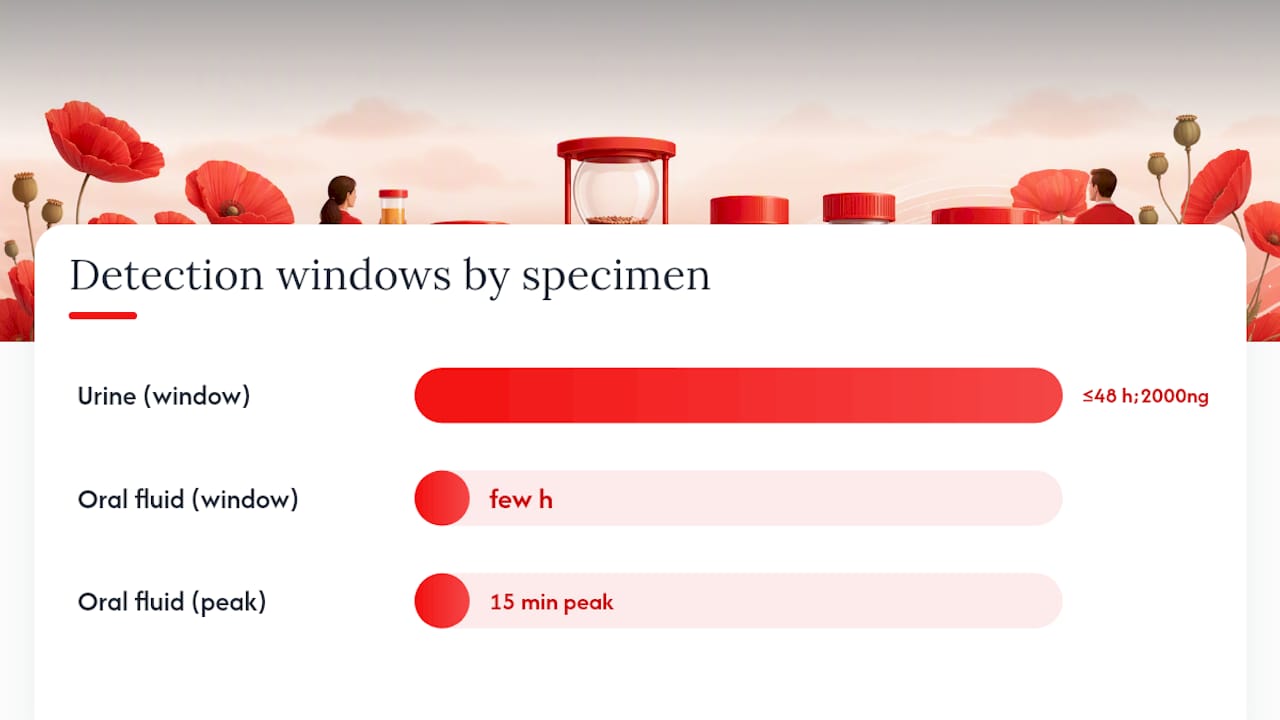
Oral fluid testing behaves very differently. Controlled research on poppy seed ingestion found that morphine and codeine levels in saliva peak around 15 minutes after eating and typically drop below common cutoffs within a few hours. That’s a much narrower window than urine, which makes oral fluid testing somewhat less prone to catching a poppy seed muffin from the day before, though not immune to it.
Hair testing is a different animal entirely. A single dietary exposure, or even several, generally doesn’t produce detectable levels in hair because hair testing measures chronic, repeated exposure incorporated into the hair shaft over weeks, not a one-time trace ingestion. That distinction matters for anyone comparing testing methods, and it’s worth understanding how hair follicle testing differs from urine testing if your organization uses both.
A few factors stretch these windows further than average:
- Eating a large quantity of poppy seeds in one sitting, rather than a light sprinkle.
- Consuming unwashed seeds or poppy seed tea instead of baked goods.
- Testing at a lab using an older, more sensitive cutoff level.
- Individual metabolism and hydration, which affect how fast the body clears any substance.
Quick fact: Mayo Clinic’s own testing data confirms poppy seed ingestion can drive urine morphine readings up to 2,000 ng/mL, landing right at the modern federal cutoff and explaining why timing your last poppy seed meal matters so much.
Screening vs. Confirmatory Testing: Why Cutoffs Matter
A positive result on an initial urine cup or dip card doesn’t mean someone used heroin or a prescription opioid without authorization. It means the sample crossed a chemical threshold, and how that threshold got set has a real history behind it.
Here’s how the two-step testing process actually works:
- Immunoassay screening is the first pass, the fast, inexpensive method used in most workplace cups and dip cards. It detects a class of chemically similar compounds rather than one specific drug, which is precisely why it can’t tell the difference between codeine from a poppy seed bagel and codeine from a prescription bottle.
- The cutoff decides who screens positive. In 1998, HHS raised the federal urine opiate cutoff from 300 ng/mL to 2,000 ng/mL specifically to filter out dietary poppy seed false positives while still catching actual opioid use. Some private labs and older clinical protocols still run lower thresholds, which is part of why identical poppy seed exposure produces different outcomes at different facilities.
- Confirmatory testing resolves the ambiguity. Gas chromatography-mass spectrometry (GC-MS) or liquid chromatography-mass spectrometry (LC-MS) identifies and quantifies the exact compounds present. This is the only method precise enough to distinguish a dietary trace from an actual opiate use pattern, and it’s the standard tool for interpreting drug test results accurately when a screen comes back positive.
- The Medical Review Officer reviews the case. An MRO is a licensed physician trained to evaluate positive results, request documentation, and determine whether a legitimate medical or dietary explanation accounts for the finding.
Inconsistent lab cutoffs and testing protocols mean two people who ate the exact same poppy seed muffin, at the same lab network, can get different results depending on which specific threshold that facility applies.
That inconsistency isn’t a flaw in the science. It’s a policy gap that individual labs and employers haven’t fully closed, even 25 years after the federal cutoff changed.
Who Faces the Highest Stakes From a False Positive
Not everyone deals with the same consequences from a poppy-seed-triggered positive, and the gap between institutions is wide.
Military personnel face the strictest exposure. The Department of Defense’s advisory exists precisely because service members operate under zero-tolerance drug policies where a positive urinalysis can trigger disciplinary action, including separation from service, regardless of the dietary explanation. That’s a much harsher standard than most civilian workplaces apply.
Civilian employers vary enormously in practice. Some rely heavily on MRO review and automatic confirmatory testing for any positive opiate screen, treating a poppy seed defense as routine and quickly verified. Others, particularly smaller employers without dedicated MRO relationships, may not have a clear escalation path, leaving an employee’s job hanging on a screen that was never meant to be a final answer.
Patients on prescribed opioid therapy face a different kind of risk. Someone managing chronic pain with a legitimate prescription who also eats poppy seed bread could see an already-complicated urine screen become harder to interpret. Open communication with the prescribing physician and the testing lab before the test, not after, heads off most of that confusion.
Organizations that want to reduce false-positive fallout tend to follow a similar playbook:
- Apply the federal 2,000 ng/mL cutoff consistently rather than an older, more sensitive threshold.
- Route every positive screen through confirmatory GC-MS or LC-MS testing before taking action.
- Give employees or patients advance written notice about poppy seed foods before a scheduled test.
- Train MROs and administrators to document dietary explanations thoroughly.
What to Do If You Test Positive After Eating Poppy Seeds
A positive result doesn’t have to end badly, but how you respond in the first 24 hours matters.
- Stay calm and request confirmatory testing immediately. Don’t accept an immunoassay screen as a final verdict. Ask specifically for GC-MS or LC-MS confirmation, and make sure the chain of custody on your sample is preserved and documented.
- Disclose your poppy seed consumption to the MRO or testing administrator. Tell them exactly what you ate, roughly how much, and when. Specificity helps. “A poppy seed bagel around 9 a.m. yesterday” is far more useful than “I think I had poppy seeds recently.”
- Request the lab’s cutoff level and testing documentation. You have a right to understand which threshold was applied and why. If it’s an older 300 ng/mL standard rather than the federal 2,000 ng/mL cutoff, that’s relevant context worth raising.
- Ask about split-sample or re-testing options. Many labs retain a portion of the original specimen specifically for this kind of dispute.
- If disciplinary action is on the table, gather supporting evidence. Save receipts, packaging, or even a photo of what you ate. If coworkers saw you eating the item, their account can help too. For anything with serious job or legal consequences, consult with an employment attorney or union representative before signing any admission.
Pro Tip: Learning to spot a likely dietary false positive before it escalates can save you weeks of stress. Our guide on identifying false positives on a drug test walks through the warning signs that point to food rather than drug use.
What the Research and Official Guidance Actually Say
The strongest evidence on this topic comes from a mix of government advisories and peer-reviewed lab data, not internet folklore.
- The Department of Defense’s warning to service members is the clearest institutional acknowledgment that poppy seed foods can produce a codeine-positive urinalysis with no drug use involved.
- Peer-reviewed research on oral fluid confirms morphine and codeine peak fast and clear fast, a genuinely different risk profile than urine.
- Mayo Clinic Laboratories’ reference data anchors the urine side, showing concentrations that can reach 2,000 ng/mL for a period of hours after a bakery-item exposure.
- Clinical commentary consistently recommends avoiding poppy seed foods for 48 to 72 hours before any scheduled drug test, the most practical, evidence-grounded buffer available.
Bottom line: a 48 to 72 hour avoidance window, paired with insistence on confirmatory testing if you do test positive, covers nearly every documented scenario in the research.
How RapidTestCup Supports Accurate Screening Programs
An employer or clinic that understands poppy-seed false positives needs testing tools built for exactly this kind of ambiguity, not a bargain-bin cup that only screens and never confirms.
Rapidtestcup’s 18-panel drug test cup includes opiate detection alongside adulterant strips, giving administrators a first-line screen that also flags sample tampering, a common complication when employees panic over a suspected false positive. For clinics building a full screen-then-confirm workflow, pairing an initial cup with dedicated opiate test strips lets you run a quick recheck before escalating to lab-based GC-MS confirmation. Organizations still comparing options can start with our urine drug test kit comparison to match panel type and cutoff sensitivity to their actual policy needs, whether that’s a strict military-adjacent standard or a more forgiving civilian workplace. Every kit ships CLIA waived and FDA cleared, so the screening step of your process holds up to scrutiny before a sample ever reaches confirmatory testing.
A Fairer Approach to Drug Testing Policy
False positives from something as ordinary as a bagel cause real anxiety, and I don’t think that anxiety gets taken seriously enough by policies written decades ago. The 2,000 ng/mL cutoff exists because someone finally admitted the old standard was catching innocent people. That should tell every employer and lab something about how testing policy evolves: slowly, and usually only after enough people get hurt by it.
The fix isn’t complicated. Confirmatory testing, transparent cutoff documentation, and a properly trained MRO resolve nearly every poppy seed dispute without drama. Organizations that skip those steps aren’t being tough on drugs. They’re just being careless with people’s jobs.
— Justin
Sources
- Poppy Seed Consumption and Oral Fluid Opioids Detection — PMC
- Defense Department provides warning to military services regarding poppy seed consumption — defense.gov
- Opiates — Mayo Clinic Laboratories