Blog
What a TCA Drug Test Reveals About Tricyclic Antidepressant Use


A TCA drug test detects tricyclic antidepressants or their metabolites in urine or blood, and most rapid versions give you a qualitative positive or negative reading, not an exact concentration. The most common rapid immunoassay cutoff sits around 1,000 ng/mL, meaning anything above that threshold trips a preliminary positive. If a result comes back positive unexpectedly, or if someone shows signs of overdose, the next move is straightforward:
- Confirm any preliminary positive with GC/MS or HPLC lab methods before treating it as fact.
- Seek immediate clinical evaluation, including an ECG, if TCA overdose is suspected.
- Disclose all current medications to the person collecting the sample, since several common drugs interfere with the screen.
Key Takeaways
A TCA drug test screens for tricyclic antidepressants using a qualitative rapid immunoassay near a 1,000 ng/mL cutoff, but every positive requires confirmatory GC/MS or HPLC testing before clinical or legal action.
| Point | Details |
|---|---|
| Six common TCAs | Panels typically target amitriptyline, nortriptyline, imipramine, doxepin, desipramine, and clomipramine. |
| Cutoff varies by purpose | Rapid screens often use 1,000 ng/mL, while monitoring labs may use lower, more sensitive thresholds. |
| Positives need confirmation | GC/MS or HPLC identifies the exact compound and concentration behind any preliminary positive. |
| Disclosure prevents confusion | Diphenhydramine, quetiapine, carbamazepine, and cyclobenzaprine can cause false positives on immunoassays. |
| Rapidtestcup supports first-line screening | CLIA-waived multi-panel cups with TCA and adulterant checks offer bulk pricing for clinics and programs. |
This article is general information, not a substitute for advice from a qualified doctor. Consult a qualified healthcare professional about your own circumstances before acting on anything here.
Table of Contents
- What Does a TCA Drug Test Actually Screen For?
- Why Do Providers Order TCA Testing?
- How Is a TCA Drug Test Performed?
- How Accurate Are Rapid TCA Screening Tests?
- What Causes False Positives on a TCA Screen?
- How Should You Interpret a Positive or Negative Result?
- What Should You Know Before Getting Tested?
- The Case for Treating Screens as a Starting Point, Not a Verdict
- Where RapidTestCup Fits Into TCA Screening Programs
- Sources
What Does a TCA Drug Test Actually Screen For?
Tricyclic antidepressants are an older class of psychiatric medication, still prescribed for depression, chronic pain, and migraine prevention, and they’re screened because overdose risk is real and dosing windows are narrow. A TCA panel typically targets six drugs that show up again and again in clinical and forensic testing:
- Amitriptyline, one of the most widely prescribed TCAs for depression and nerve pain
- Nortriptyline, amitriptyline’s active metabolite and often the reference compound labs calibrate against
- Imipramine, an early TCA still used for bedwetting in children and depression in adults
- Doxepin, prescribed for depression and, at low doses, for insomnia
- Desipramine, a metabolite of imipramine with its own prescribing uses
- Clomipramine, used primarily for obsessive compulsive disorder
Parent drugs and their metabolites don’t clear the body at the same rate. Amitriptyline breaks down into nortriptyline, so a screen might catch the metabolite even after the original dose has largely metabolized, which stretches the detection window slightly beyond what you’d expect from the parent compound alone.
Why Do Providers Order TCA Testing?
Therapeutic drug monitoring is the most routine reason: TCAs have a narrow therapeutic index, so clinicians order levels to fine-tune dosing without tipping into toxicity. Pain-management and psychiatric programs also use TCA screening to confirm patients are taking medication as prescribed rather than diverting it.
Workplace, forensic, and court-ordered panels represent a different use case entirely. Here the goal isn’t dose optimization, it’s documentation, and results need to hold up under scrutiny in clinical evaluation criteria similar to what treatment programs already apply to compliance monitoring.
Then there’s the emergency scenario: a patient arrives unresponsive or with an altered mental state, and a rapid TCA screen becomes part of the diagnostic workup for suspected poisoning. Speed matters more than precision in that moment.
How Is a TCA Drug Test Performed?
Urine is the standard specimen for rapid screening because it’s noninvasive and works well with lateral-flow immunoassay devices. Blood draws come into play when a clinician needs a quantitative concentration, since LabCorp’s testing documentation notes that quantitative results report actual ng/mL levels while many screening tests stay qualitative.
Here’s how the process typically unfolds:
- The patient provides a urine sample under standard collection protocols, sometimes observed depending on the testing context.
- The sample is applied to a test cup or dip card containing antibody-coated strips.
- A competitive immunoassay reaction occurs. If TCA concentration exceeds the cutoff, it blocks the antibody from binding to the test line, and no line appears there. Below the cutoff, a line shows up, indicating a negative.
- A control line confirms the test ran correctly regardless of the result.
- Any positive gets sent for confirmatory testing using GC/MS or HPLC, which identifies and quantifies the specific compound.
Pro Tip: Keep the collection cup at room temperature and read it within the manufacturer’s stated window. Reading a lateral-flow device too early or too late produces false or invalid readings even when the chemistry itself is sound.
How Accurate Are Rapid TCA Screening Tests?
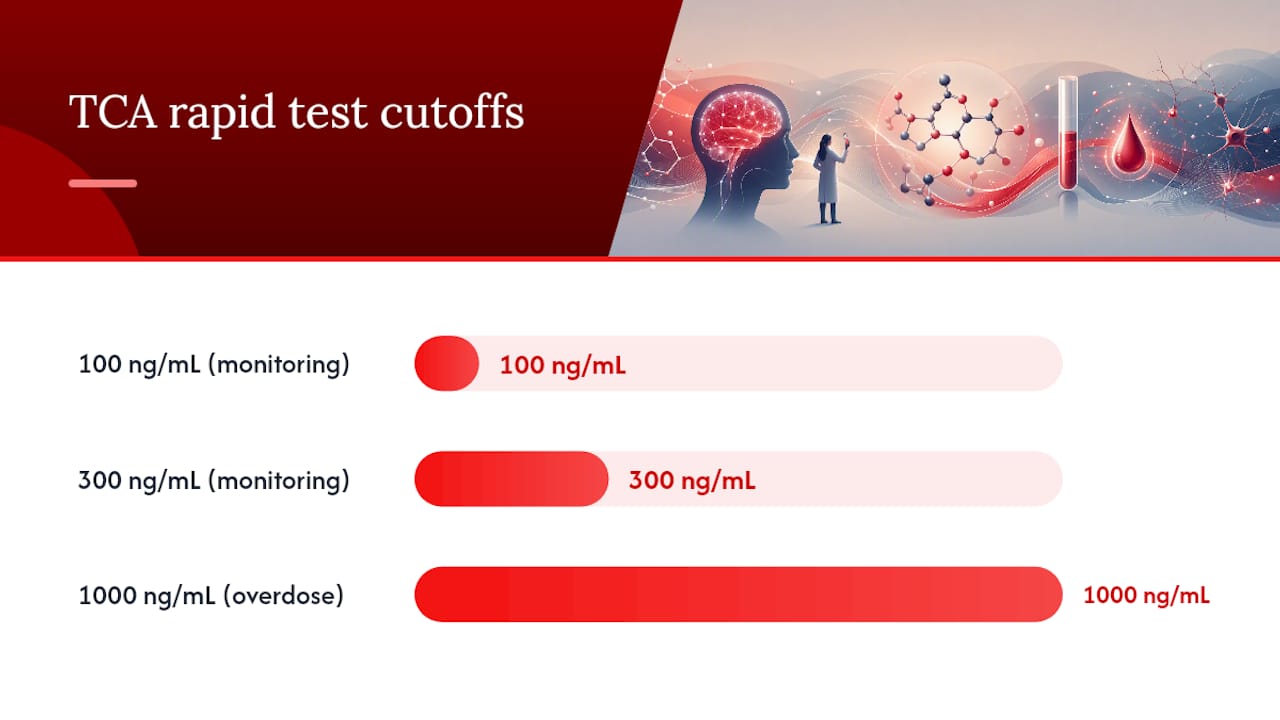
Most rapid immunoassays are calibrated to nortriptyline at a cutoff near 1,000 ng/mL, though some clinical labs use more sensitive thresholds, sometimes 100 or 300 ng/mL, when the goal is close monitoring rather than overdose detection. A positive on a qualitative screen means the concentration crossed that line, nothing more specific. A negative means it fell below the cutoff, which is not the same as saying zero drug is present.
Manufacturer package inserts report strong agreement rates against comparator methods near the cutoff, but real-world accuracy depends on factors the insert can’t control: specimen handling, timing since last dose, and individual metabolism. That’s why the industry treats these devices as preliminary screening tools, never as a standalone diagnosis. A negative rapid screen simply cannot rule out low-level exposure sitting under the cutoff.
What Causes False Positives on a TCA Screen?
Cross-reactivity is the most common reason a TCA screen flags positive in someone who isn’t taking a tricyclic antidepressant. The antibodies used in competitive immunoassays sometimes bind to structurally similar compounds, producing a false signal:
- Diphenhydramine (the active ingredient in many allergy and sleep aids) is one of the most frequently cited interferents
- Quetiapine, an antipsychotic, shares enough structural overlap to occasionally cross-react
- Carbamazepine, an anticonvulsant and mood stabilizer, can trigger the same issue
- Cyclobenzaprine, a muscle relaxant, rounds out the list of common offenders
If a result looks inconsistent with what someone is actually taking, the fix is simple: disclose every medication and supplement to the tester, then request confirmatory testing before treating the screen as final.
How Should You Interpret a Positive or Negative Result?
A preliminary positive is a starting point, not a verdict. Here’s the sequence that responsible testing follows:
- Send the specimen for confirmatory testing using GC/MS or HPLC, which identifies the exact compound and reports a precise concentration.
- Compare the confirmatory result against the patient’s known prescriptions and disclosed medications.
- If levels seem unusually high, or the clinical picture doesn’t add up, order a repeat sample or a quantitative blood test for closer monitoring.
- If overdose is suspected at any point, prioritize an ECG and supportive stabilization immediately since cardiac rhythm disruption is the primary danger in TCA toxicity, not the screening result itself.
Interpretation always needs clinical context. A number on a printout means little without knowing the patient’s history, current prescriptions, and symptoms.
What Should You Know Before Getting Tested?
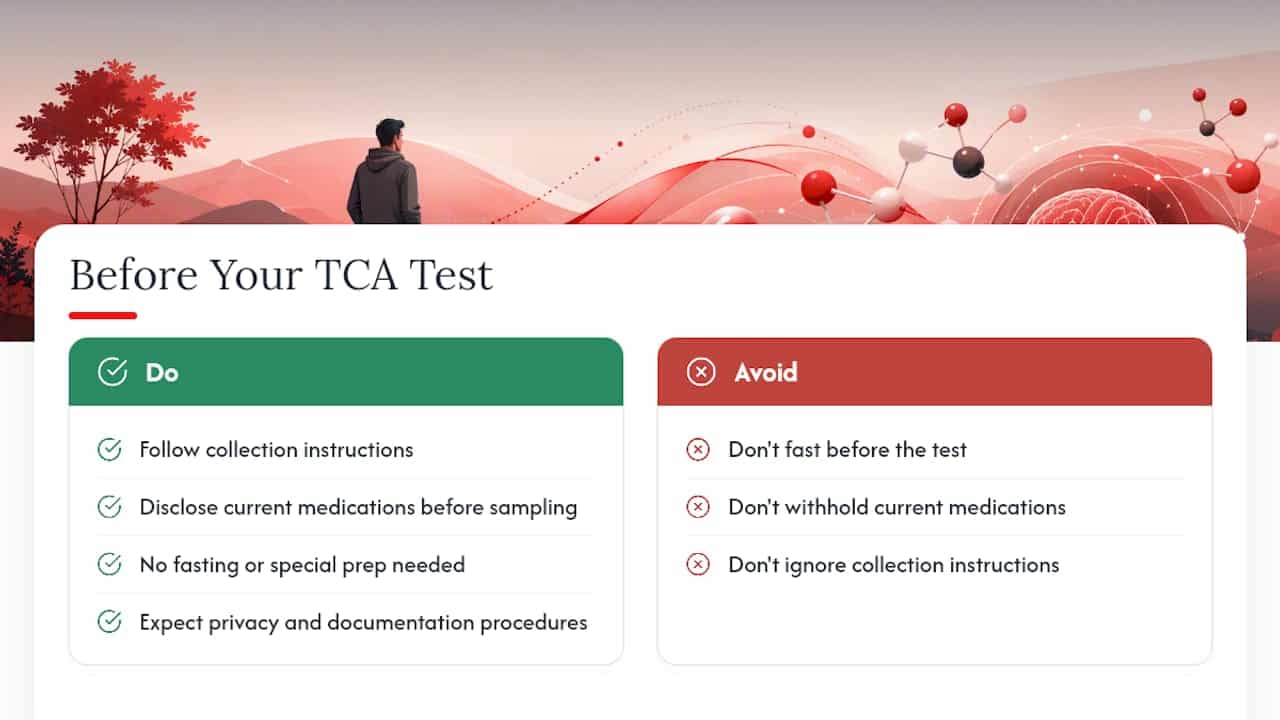
No fasting or special prep is needed. Just follow the collection instructions given at the clinic or lab. A urine test carries essentially no physical risk; a blood draw might leave brief soreness or a small bruise. Expect standard privacy and documentation procedures, and always disclose current medications before the sample is taken.
The Case for Treating Screens as a Starting Point, Not a Verdict
The biggest mistake I see in how people talk about TCA testing is treating a rapid screen like it delivers a diagnosis. It doesn’t. It delivers a probability above or below a line. Confirmatory testing and clinical judgment fill in the rest, and no one should skip that step, especially when a positive doesn’t match someone’s known medication list.
— Justin
Where RapidTestCup Fits Into TCA Screening Programs
Clinics, treatment programs, and workplace testing sites need a preliminary screening tool that’s fast, reliable, and easy to document, and that’s exactly the gap Rapidtestcup fills. Rather than sourcing single-panel TCA tests and separate adulterant checks separately, Rapidtestcup offers multi-panel cups, including 12-panel options with TCA detection, that combine drug detection with built-in adulterant testing in one CLIA-waived device.
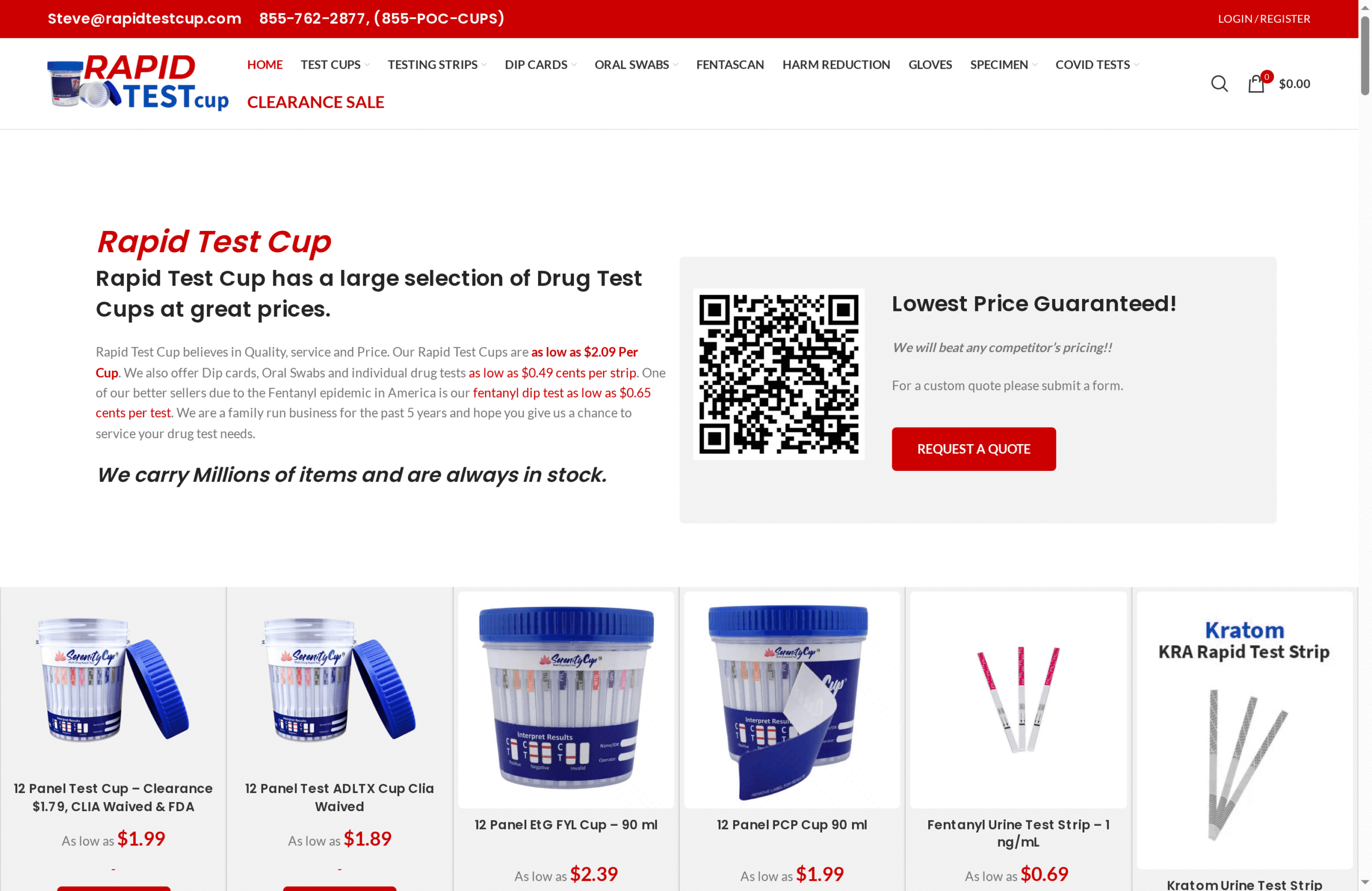
These cups are built for preliminary screening exactly as described above: a fast qualitative read that flags what needs confirmatory lab testing, not a replacement for GC/MS or HPLC. Programs managing high sample volumes get bulk pricing and custom quotes, which matters when a treatment center or occupational health clinic is processing dozens of tests weekly. If your program needs a dependable first-line TCA screen backed by clear documentation, browse the current lab testing lineup and request a quote for your volume.
Sources
- Tricyclic Antidepressant (TCA) Screen
- Drug screen — immunoassay, urine — Michigan Medicine laboratory
- Tricyclic Antidepressant Screen – URMC
- Tricyclic Antidepressants Screen, Urine | LabCorp