Blog
Forensic drug testing methods: A detailed list 2026

TL;DR:
- Forensic drug testing requires at least one Category A method paired with another for court admissibility.
- Presumptive tests are rapid screening tools with false positive risks, confirmed by high-specificity techniques like GC-MS.
- Continuous validation and method updates are essential due to evolving drug formulations and new psychoactive substances.
Choosing the wrong forensic drug testing method doesn’t just slow down a case. It can invalidate results, create legal exposure, and let evidence get thrown out of court. Forensic drug analysis requires a structured, methodologically sound approach, and compliance frameworks like SWGDRUG exist precisely because the stakes are that high. Forensic drug testing standards require at least one Category A method paired with another category, ensuring specificity and defensibility. This article walks through method categories, presumptive and confirmatory tools, emerging techniques, and protocol-building strategies to help your lab get results that hold up.
Table of Contents
- Understanding forensic method categories (SWGDRUG framework)
- Presumptive (screening) methods: Fast and cost-effective tools
- Confirmatory (definitive) analysis: High-specificity analytical techniques
- Specialized and emerging methods: Expanding the forensic toolkit
- Practical method selection: Building a robust testing protocol
- Expert perspective: Why flexibility and continual method validation are key
- Upgrade your forensic testing with reliable rapid tools
- Frequently asked questions
Key Takeaways
| Point | Details |
|---|---|
| Follow SWGDRUG categories | Always use both a high-specificity method and an orthogonal test for compliant, defensible results. |
| Screen, then confirm | Start with rapid, cost-effective presumptive tests, but only act on results after definitive confirmatory analysis. |
| Adapt to challenges | Regularly review and update protocols to address sample impurities, drug trends, and emerging technologies. |
| Validate your process | Routine method validation, recordkeeping, and reference libraries ensure results stand up in legal proceedings. |
Understanding forensic method categories (SWGDRUG framework)
Every defensible forensic drug analysis starts with understanding how methods are classified. The Scientific Working Group for the Analysis of Seized Drugs (SWGDRUG) created a tiered classification system that defines the evidential strength of each analytical technique. Understanding drug testing methods in this context means knowing not just what a technique does, but where it sits in the evidentiary hierarchy.
The three SWGDRUG categories break down like this:
- Category A (highest specificity): Gas Chromatography-Mass Spectrometry (GC-MS), Infrared Spectroscopy (IR), Mass Spectrometry (MS), Raman Spectroscopy, and Nuclear Magnetic Resonance (NMR). These provide molecular-level identification.
- Category B (moderate specificity): Thin-Layer Chromatography (TLC), Ultraviolet Spectrophotometry (UV), and Capillary Electrophoresis. These support but don’t independently confirm identity.
- Category C (lowest specificity): Color tests, melting point analysis, and microscopy. Useful for initial triage but far from definitive.
Per SWGDRUG and NIST library standards, a compliant drug analysis must include at least one Category A method combined with at least one method from another category. This dual-method requirement exists because no single technique catches everything. Mixtures, impurities, and structural isomers can fool even high-quality instruments when used in isolation.
| Category | Example methods | Specificity level | Court strength |
|---|---|---|---|
| A | GC-MS, NMR, Raman | Highest | Strong |
| B | TLC, UV, CE | Moderate | Supporting |
| C | Color tests, microscopy | Lowest | Screening only |
For law enforcement labs dealing with increasingly complex synthetic drug blends, this matters enormously. A color test might react positively to a fentanyl analog, but without GC-MS confirmation, that result is not court-ready.
Pro Tip: Always pair GC-MS with an orthogonal technique, such as IR or NMR. This catches edge cases where two substances produce similar MS fragmentation patterns but differ in structure.
Presumptive (screening) methods: Fast and cost-effective tools
Presumptive tests serve a critical triage function. When you’re managing a backlog of submitted samples, you don’t run every exhibit straight to GC-MS. You use fast, low-cost screening tools to filter, prioritize, and direct resources efficiently.
The two dominant presumptive method types are:
- Color/spot tests: Reagents like Scott, Marquis, and Duquenois-Levine react with specific drug classes to produce color changes. Fast, cheap, and field-deployable but not specific.
- Immunoassay screening: Primarily used with biological matrices like urine and oral fluid. These antibody-based tests detect drug classes based on cross-reactivity. Immunoassay screening is the backbone of workplace and clinical drug monitoring.
The core limitation? False positives are a documented risk. Immunoassays work by cross-reactivity, meaning structurally similar compounds can trigger a positive result even when the target drug is absent. Common culprits include cold medications, certain antibiotics, and dietary supplements.
Biological specimen testing relies heavily on immunoassays for screening due to their throughput capability, with LC-MS/MS and GC-MS used for confirmation. Urine remains the preferred matrix, though oral fluid and breath testing are gaining ground in DUI and workplace contexts.
Presumptive tests also fall into Category C or the lower end of Category B under SWGDRUG. That means they cannot stand alone. They are starting points, not endpoints.
Pro Tip: Use commercial immunoassay kits with built-in positive and negative controls for every batch. Document all findings, including control results, before forwarding any sample to confirmatory analysis. This documentation protects chain-of-custody integrity.
Confirmatory (definitive) analysis: High-specificity analytical techniques
Once presumptive screening flags a sample, confirmatory testing delivers the molecular precision courts require. These are the methods that move a case from suspicion to certainty.
The primary confirmatory tools used in forensic labs today include:
- GC-MS (Gas Chromatography-Mass Spectrometry): The gold standard. Separates compounds by volatility then fragments them by mass-to-charge ratio, producing a library-matchable fingerprint.
- LC-MS/MS (Liquid Chromatography-Tandem Mass Spectrometry): Preferred for thermally labile compounds and biological matrices. Handles a wider analyte range without derivatization.
- FTIR (Fourier Transform Infrared Spectroscopy): Identifies functional groups and molecular structures. Requires relatively pure samples, above 90% purity, for reliable identification.
- NMR (Nuclear Magnetic Resonance): Exceptional for structural elucidation, especially useful for novel psychoactive substances and isomer differentiation.
- High-resolution Raman Spectroscopy: Non-destructive, rapid, and increasingly used for field and lab confirmatory work.
“Validation is essential. Real-case testing and reference libraries ensure court reliability, and labs that skip this step are building on sand.”
Rapid GC-MS optimization has cut cocaine analysis time to under 10 minutes with a 50% improvement in limit of detection (LOD), achieving an RSD below 0.25% and over 90% match rates on real case samples. That’s a significant operational gain for high-volume labs.
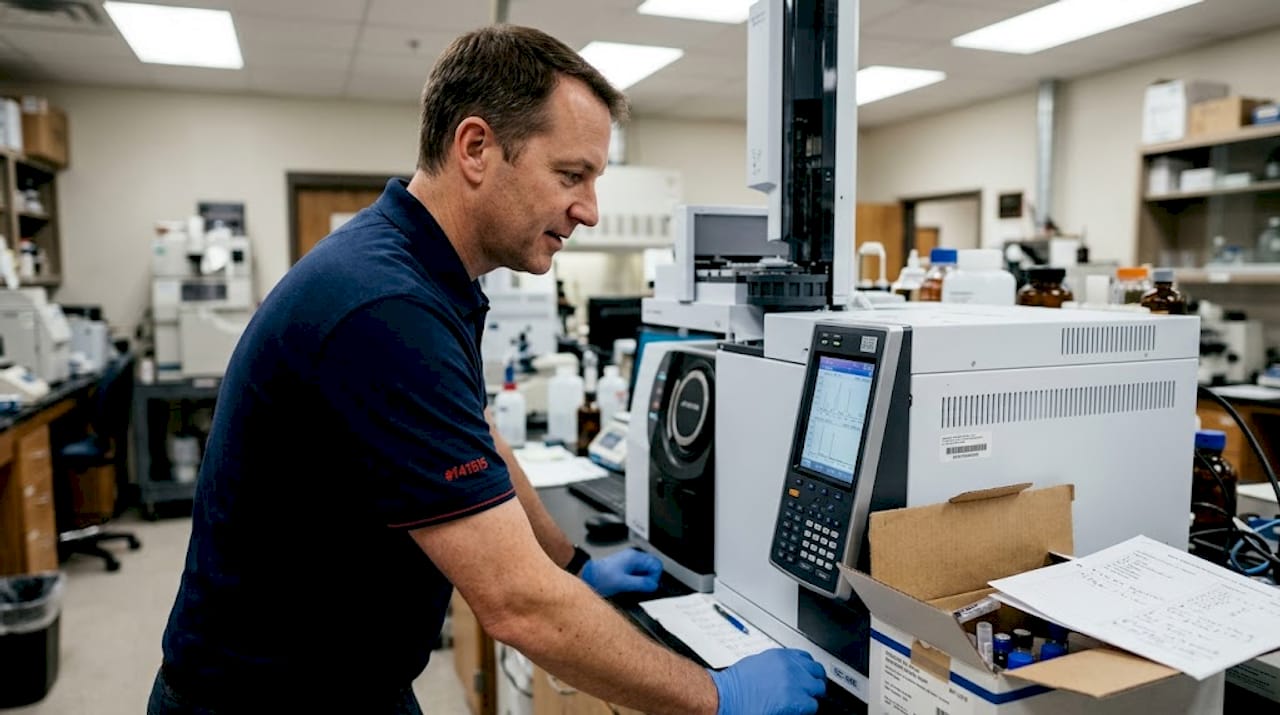
All confirmatory results must be supported by validated protocols, including established LOD, LOQ (limit of quantification), and precision metrics. Without these, no result is court-admissible regardless of how sophisticated the instrument.
Indiana State Police Drug Unit methods include Color/Spot Testing, UV Spectrophotometry, TLC, FTIR, GC-MS, GC-IR, Polarimetry, and Mixed Melting Point testing, reflecting how real forensic programs layer methods across all three SWGDRUG categories.
Specialized and emerging methods: Expanding the forensic toolkit
Beyond the established confirmatory techniques, forensic labs are integrating newer tools to address operational pressure and evolving drug landscapes. The fentanyl analog crisis and the surge of novel psychoactive substances (NPS) have pushed standard SOPs to their limits.
Key emerging and specialized methods include:
- Rapid automated MS platforms: Robotic sample preparation paired with fast MS acquisition slashes per-sample processing time in high-volume labs.
- Dermal and non-invasive sampling: Skin patch tests and sweat-based collection methods expand detection windows beyond urine’s typical 3-day horizon.
- Multi-analyte test panels: Single-run detection of 20+ substances using multiplexed LC-MS/MS workflows, reducing cost per test significantly.
- High-resolution mass spectrometry (HRMS): Provides exact mass measurements critical for identifying unknowns and novel compounds without reference standards.
| Method | Speed | Cost | Best use case | Limitation |
|---|---|---|---|---|
| Rapid GC-MS | Fast | Moderate | High-volume confirmatory | Requires pure extracts |
| HRMS | Moderate | High | NPS/unknown ID | Complex data analysis |
| Dermal sampling | Fast | Low | Extended detection | Cross-reactivity risk |
| Multi-analyte LC-MS/MS | Moderate | Moderate | Broad panel screening | Setup complexity |
Rapid GC-MS workflows have demonstrated sub-10-minute analysis times with strong real-case performance, making them viable for labs under caseload pressure. However, emerging methods have real limitations. Isomers often can’t be distinguished by IR alone. Clandestine samples with complex matrices require isolation before analysis. Field color tests have documented error rates, with some studies citing a 34% false positive rate, a reminder that speed without accuracy isn’t progress.
Labs considering rapid testing strategies should evaluate whether newer tools integrate smoothly with existing QA systems and documentation workflows before adoption.
Practical method selection: Building a robust testing protocol
Knowing individual methods is only half the job. The real skill is assembling them into a protocol that is legally defensible, operationally efficient, and scientifically sound.
Step-by-step protocol construction:
- Assess the sample: Seized material or biological matrix? Solid, liquid, or trace? Each answer changes your starting point.
- Apply a presumptive screen: Color test for seized drugs, immunoassay for biological specimens. Document everything.
- Select your Category A confirmatory method: GC-MS for most seized drugs; LC-MS/MS for biological matrices and labile compounds.
- Add an orthogonal method: FTIR or NMR for structure confirmation, especially with unknowns or suspected isomers.
- Document all controls, instrument calibrations, and chain-of-custody records: No shortcuts here.
The Washington State Patrol Toxicology scope illustrates real-world protocol layering well. Their lab uses headspace GC for volatiles, LC-MS/MS for cannabinoids and opioids, and GC-MS with NPD for broader drug screens, with LOQs as low as 0.01 g/100mL for ethanol and 0.50 ng/mL for fentanyl. That’s precision built on a foundation of method diversity.
Pro Tip: Use NIST and SWGDRUG spectral libraries for every confirmatory identification. Library matching is not optional in court-ready work. It standardizes your results against a globally recognized reference.
| Protocol step | Method type | SWGDRUG category | Key output |
|---|---|---|---|
| Initial triage | Color test / immunoassay | C / B | Preliminary indication |
| Confirmation | GC-MS or LC-MS/MS | A | Definitive identification |
| Structural elucidation | FTIR or NMR | A | Isomer/unknown resolution |
| Documentation | Controls, calibration records | All | Chain of custody |
For labs learning how to interpret drug test results or improve quality control workflows, a structured protocol approach is the foundation that makes everything else reliable.
Expert perspective: Why flexibility and continual method validation are key
Here’s the uncomfortable truth most training programs don’t emphasize: passing your initial method validation doesn’t mean your protocol stays valid. Drug chemistry evolves fast. Clandestine labs pivot formulations to outpace detection. Novel synthetic cannabinoids and fentanyl analogs emerge faster than many labs can update their reference libraries.
We’ve seen it happen. A lab builds a solid protocol around a known drug set, earns its accreditation, and then two years later finds its methods flagging unknowns it can’t confidently identify. Static SOPs become outdated, not from negligence but from inertia.
The leading forensic programs we observe share one trait: they treat method validation as an ongoing process, not a one-time compliance checkbox. They integrate new compound libraries quarterly, run inter-lab comparison studies, and actively engage with SWGDRUG updates. They also track drug test legal impact from case precedents to inform how their methodology must evolve.
Flexibility, continuous learning, and validated adaptability are what separate good forensic labs from great ones.
Upgrade your forensic testing with reliable rapid tools
Armed with a clear understanding of forensic testing methods, you can strengthen your lab’s results with proven rapid test products built for professional workflows. Our catalog supports the full screening tier of your protocol, from initial triage to documented chain-of-custody collection.
The 12-panel rapid test cup delivers CLIA waived, FDA-cleared immunoassay screening for high-volume environments. For broader panel coverage, the 22-panel drug test includes adulterant checks critical for specimen integrity. Need to standardize your collection process? Our urine specimen collection procedures guide your team through best practices that hold up under scrutiny. Every product is designed for labs that can’t afford shortcuts.
Frequently asked questions
What is the minimum number of methods required for compliant forensic drug testing?
SWGDRUG-compliant analysis requires at least one Category A method, such as GC-MS or IR, combined with at least one additional method from Category B or C.
How do presumptive tests differ from confirmatory tests in forensic drug analysis?
Presumptive tests like color tests and immunoassays rapidly screen samples but carry false positive risk, while confirmatory methods like GC-MS provide definitive molecular identification required for court.
Why is method validation crucial for forensic drug testing?
Validation establishes LOD, LOQ, and RSD parameters that prove your results are accurate and repeatable, which is required for court admissibility under most evidentiary standards.
How are emerging forensic methods improving drug test workflows?
Rapid GC-MS now completes cocaine analysis in under 10 minutes with 50% better detection sensitivity, while non-invasive sampling methods extend detection windows and reduce specimen collection burden.