Blog
Dip Cards vs. Cups: Key Differences for Drug Testing


TL;DR:
- Dip cards require manual handling of urine, increasing contamination risk and potential for error. Drug test cups combine collection and testing into a sealed unit, reducing steps, contamination, and retesting. Cups are preferred in high-volume or legal settings, while dip cards suit low-volume, decentralized, or home testing environments.
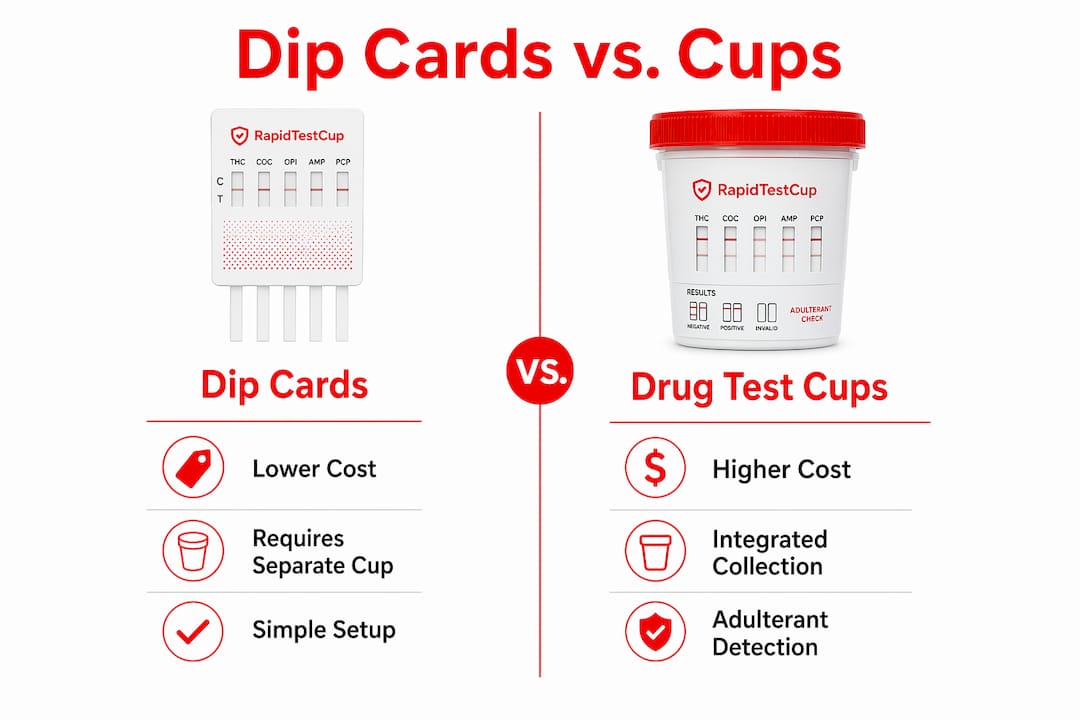
The difference between dip cards and cups comes down to how each device handles the urine specimen. Dip cards require you to collect urine in a separate container and manually dip the test strip into it. Drug test cups combine specimen collection and testing into a single sealed unit. Both formats use similar immunoassay technology, but their workflow designs produce real differences in cost, contamination risk, and suitability for different testing environments. Knowing which format fits your setting is not a minor detail. It directly affects accuracy, staff workload, and compliance.
What is the difference between dip cards and cups in specimen collection?
The core procedural gap between dip cards and cups is the number of handling steps involved. Dip cards require separate urine collection and manual dipping of the test strip, which means the specimen is exposed to the environment before testing begins. Every additional handling step creates an opportunity for contamination or user error.
Drug test cups work differently. The person being tested collects the specimen directly into the cup, and the integrated test strips read the sample without any transfer. Cups integrate collection and testing with built-in safeguards, which cuts the number of steps where something can go wrong.
Temperature verification is another point of difference. Most drug test cups include a built-in temperature strip on the outside of the cup. This lets staff confirm specimen validity immediately after collection. With dip cards, temperature verification requires a separate thermometer or temperature strip, which adds another step and another item to manage.
- Dip card process: Collect urine in a separate cup, remove the dip card from packaging, submerge the strip end in urine for the specified time, lay flat, and read results.
- Cup process: Hand the sealed cup to the donor, receive the sealed specimen, read the integrated results window without opening the cup.
- Key difference: Cups keep the specimen sealed from collection to result. Dip cards expose the specimen during the dipping step.
Pro Tip: When using dip cards, always use a clean, disposable collection cup and dip the card for the exact time listed in the instructions. Even a few extra seconds of exposure can affect result accuracy.
What are the cost differences between dip cards and cups?
Cost is the most common reason professionals choose dip cards over cups. Dip cards cost approximately 40–60% less per unit than drug test cups. That gap is significant for programs running dozens or hundreds of tests per month.
The per-unit price is only part of the picture. Dip cards require a separate collection container, which adds a small cost per test. Staff also spend more time per test because of the extra handling steps. In a high-volume clinic, that added time per test compounds quickly across a full day of testing.
Cups carry a higher upfront cost, but they reduce retesting needs and speed workflow in busy environments. Fewer invalid results mean fewer repeat tests, which saves both time and supplies. For professional settings running frequent tests, the total cost per valid result often ends up comparable between the two formats.
| Cost factor | Dip cards | Drug test cups |
|---|---|---|
| Per-unit price | Lower (40–60% less) | Higher |
| Additional supplies needed | Separate collection cup | None |
| Staff time per test | More (extra handling steps) | Less (one-step process) |
| Invalid/retest rate | Higher risk | Lower risk |
| Best value context | Low-volume or at-home use | High-volume professional use |
Pro Tip: If you run fewer than 20 tests per month, dip cards almost always deliver better value. If you run more than that in a compliance-sensitive setting, the reduced error rate from cups typically justifies the higher unit cost.
Which settings are better suited for dip cards or cups?
The right format depends heavily on where and how often you test. Drug test cups are preferred for clinical and workplace settings because of their integrated temperature strips and adulterant detection features. These safeguards matter in environments where specimen validity is challenged or where legal defensibility is required.
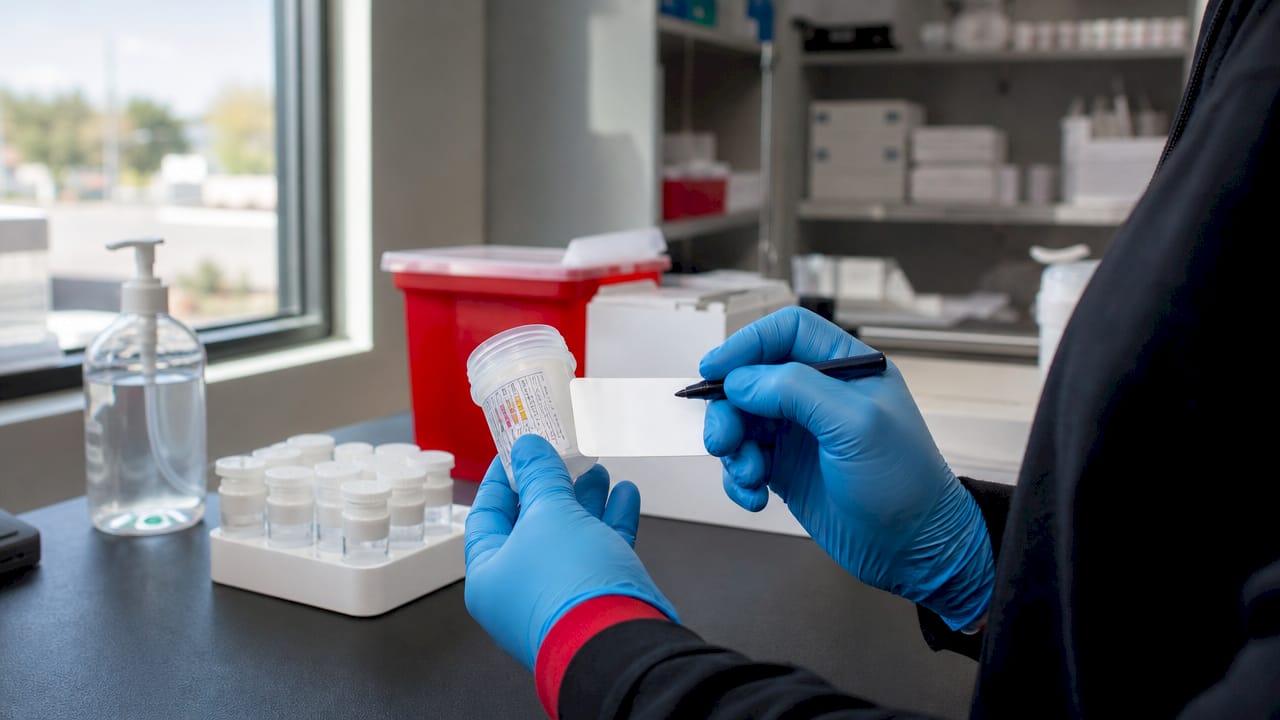
CLIA-waived dip cards are well suited for decentralized or resource-limited settings where a full-time lab technician is not available. Nurses, medical assistants, or administrative staff can run a dip card test with minimal training. This makes dip cards practical for rural clinics, small treatment programs, and home testing scenarios.
Settings where cups perform best
- High-volume workplace drug testing programs
- Clinical labs and substance abuse treatment centers
- Law enforcement and forensic applications
- Any setting where chain-of-custody documentation is required
- Environments where specimen tampering is a concern
Settings where dip cards perform best
- Low-volume outpatient clinics and small practices
- Home monitoring programs for patients in recovery
- Schools and community organizations with limited budgets
- Decentralized healthcare sites without dedicated lab staff
- Situations where selecting the right test kit matters more than speed
Multi-panel dip cards simplify staff training in decentralized clinics with no full-time lab technicians. A single card can screen for 10 or more substances at once, and reading results requires no equipment beyond the card itself. That simplicity is a genuine operational advantage in the right context.
What are the limitations and risks of each testing method?
No rapid drug test format is without limitations. Understanding where each method is most likely to fail helps you build better protocols around it.
Risks with dip cards
- Contamination during handling. The specimen is open during the dipping step. Any contact with surfaces, skin, or other substances can alter results.
- Improper dipping technique. Submerging the card too deep, too briefly, or at the wrong angle can produce invalid or inaccurate readings. Manual dipping increases error risk from mishandling.
- No built-in adulteration check. Standard dip cards do not detect common adulterants like bleach, nitrites, or oxidizing agents. A tampered specimen may produce a false negative with no indication of tampering.
- Temperature verification requires extra steps. Without a built-in temperature strip, confirming specimen validity takes additional time and supplies.
- Disposal complexity. After testing, both the open collection cup and the used dip card are biohazard waste. That is two items to dispose of per test instead of one.
Risks with cups
Cups are not without their own limitations. The sealed design makes them harder to use incorrectly, but the higher unit cost means budget-constrained programs may cut corners by buying fewer tests. Some cup formats also require the donor to fill the cup to a minimum line, which can be a challenge in certain clinical populations. Results from both formats are presumptive, not confirmatory. Any positive result from a dip card or a cup should be confirmed with gas chromatography-mass spectrometry (GC-MS) or liquid chromatography-mass spectrometry (LC-MS) before any consequential decision is made. Rapid immunoassay tests, regardless of format, are screening tools. They are the first step in a testing process, not the final word.
Key Takeaways
Dip cards and drug test cups use the same immunoassay chemistry but differ in workflow, contamination risk, and cost, making each format better suited to specific testing environments.
| Point | Details |
|---|---|
| Core design difference | Cups integrate collection and testing; dip cards require a separate collection step. |
| Cost advantage | Dip cards cost 40–60% less per unit, favoring low-volume or budget-limited settings. |
| Contamination risk | Dip cards carry higher contamination risk due to open specimen handling during dipping. |
| Best use for cups | High-volume, compliance-sensitive, or forensic settings where adulterant detection matters. |
| Confirmatory testing | Both formats produce presumptive results only; GC-MS or LC-MS confirmation is required before consequential action. |
Why the format decision matters more than most buyers realize
I have seen programs make the format decision based entirely on unit price, and it almost always creates problems down the line. A clinic running 50 tests a week that switches to dip cards to save money often ends up spending more time managing invalid results, retraining staff, and defending results that get challenged. The savings evaporate fast.
That said, I think cups get oversold for low-volume settings. If you are running 10 tests a month in a small outpatient practice, the added cost of cups is hard to justify. A well-trained staff member using dip cards correctly produces reliable results. The key word is “correctly.” The tips for clinic drug testing that actually move the needle are almost always about protocol consistency, not format choice.
The trend I find most interesting is the growing use of multi-panel dip cards in home monitoring programs for patients in recovery. Families and case managers want a simple, affordable way to check in between clinic visits. A 12-panel dip card fits that need well. It is not a forensic-grade test, and it should not be treated as one. But as a monitoring tool in a supportive context, it works.
My honest recommendation: match the format to the setting, not to the price sheet. If your environment demands chain-of-custody documentation, adulterant detection, or high-volume throughput, buy cups. If you need a fast, affordable screening tool for a low-stakes or low-volume context, dip cards are the right call.
— Justin
Rapidtestcup’s drug testing products for every setting
Rapidtestcup carries both drug test cups and dip cards across a wide range of panel configurations, all CLIA-waived and built for professional use.
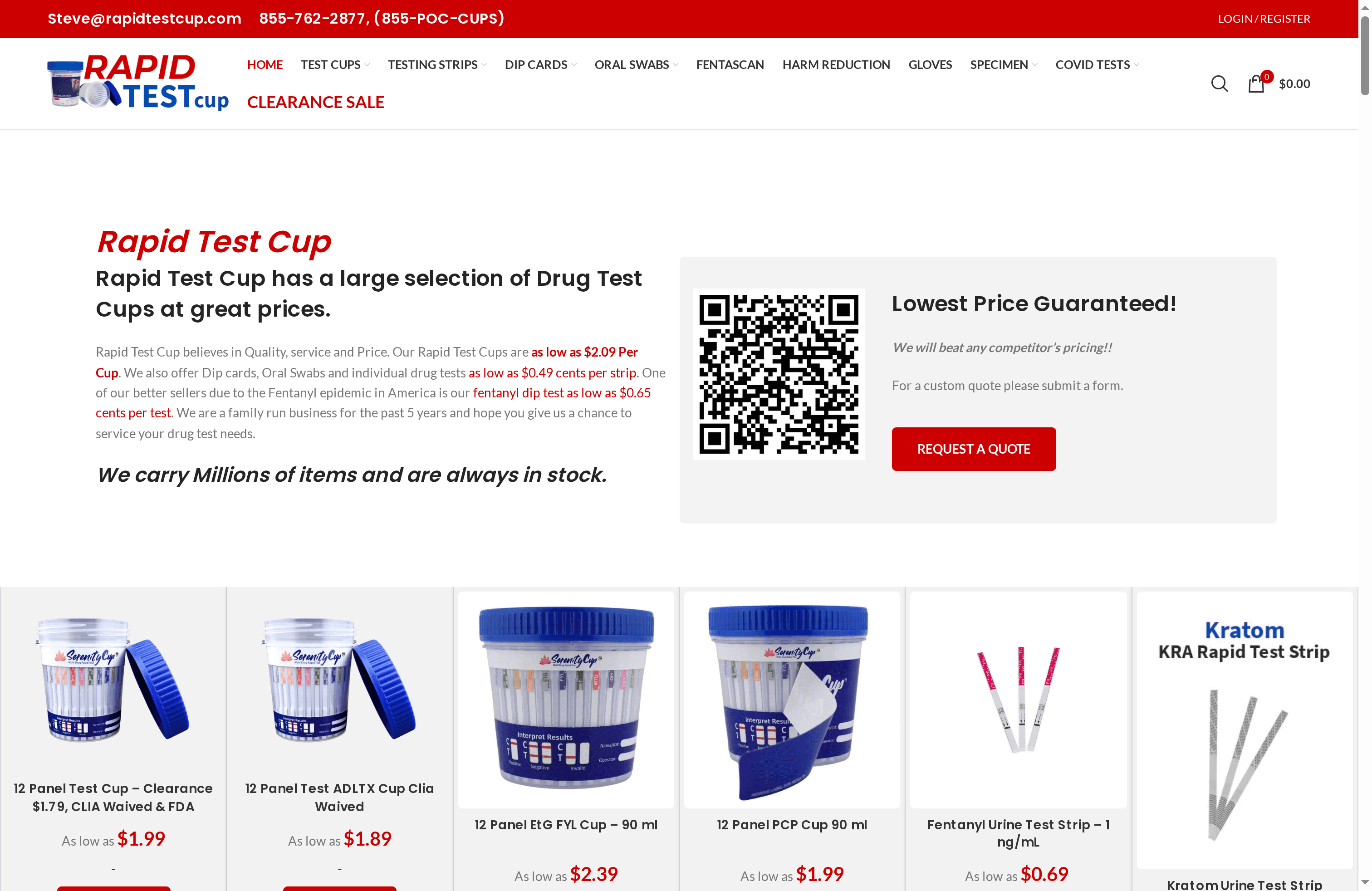
Whether you need a 12-panel cup with adulterant detection for a workplace program or a straightforward 12-panel dip card for a small clinic, Rapidtestcup stocks both formats with bulk pricing and fast shipping. The catalog also includes multi-panel options covering fentanyl, K2, and ETG for programs with specialized detection needs. For labs and clinical facilities looking for a broader selection, the top drug testing products for labs page covers the full range of compliant options available.
FAQ
What is a dip card drug test?
A dip card drug test is a rapid immunoassay strip test that screens urine for one or more substances. The card is dipped into a separately collected urine sample, and results appear as colored lines within minutes.
Are dip cards as accurate as drug test cups?
Both formats use the same immunoassay technology and produce comparable accuracy when used correctly. Cups carry a lower contamination risk because the specimen stays sealed, which reduces the chance of invalid results.
Can dip cards detect adulterants in urine samples?
Standard dip cards do not include built-in adulterant detection. Drug test cups with integrated adulterant panels check for common specimen tampering agents such as nitrites, bleach, and oxidants.
Do dip cards require special training to use?
CLIA-waived dip cards require minimal training and can be administered by nurses or administrative staff without specialized lab credentials. Clear instructions are printed on each card.
When should a positive rapid test result be confirmed?
Any positive result from a rapid drug test, whether from a dip card or a cup, should be confirmed with laboratory-based GC-MS or LC-MS testing before any employment, legal, or clinical decision is made.