Blog
What Is the MRO Process? A Step-by-Step Guide


TL;DR:
- The MRO is a licensed physician who performs a confidential review of non-negative drug test results to ensure accuracy and legality. They verify medical explanations, review documentation, and report final results to employers, protecting employees from wrongful action. The process is regulated by federal rules and can take several days to up to two weeks, depending on response times.
The MRO process is the regulated medical review of non-negative drug test results by a licensed physician called a Medical Review Officer. Before any confirmed lab result reaches your employer, it passes through this independent review. That single step is what separates a presumptive lab finding from a verified, legally defensible determination.
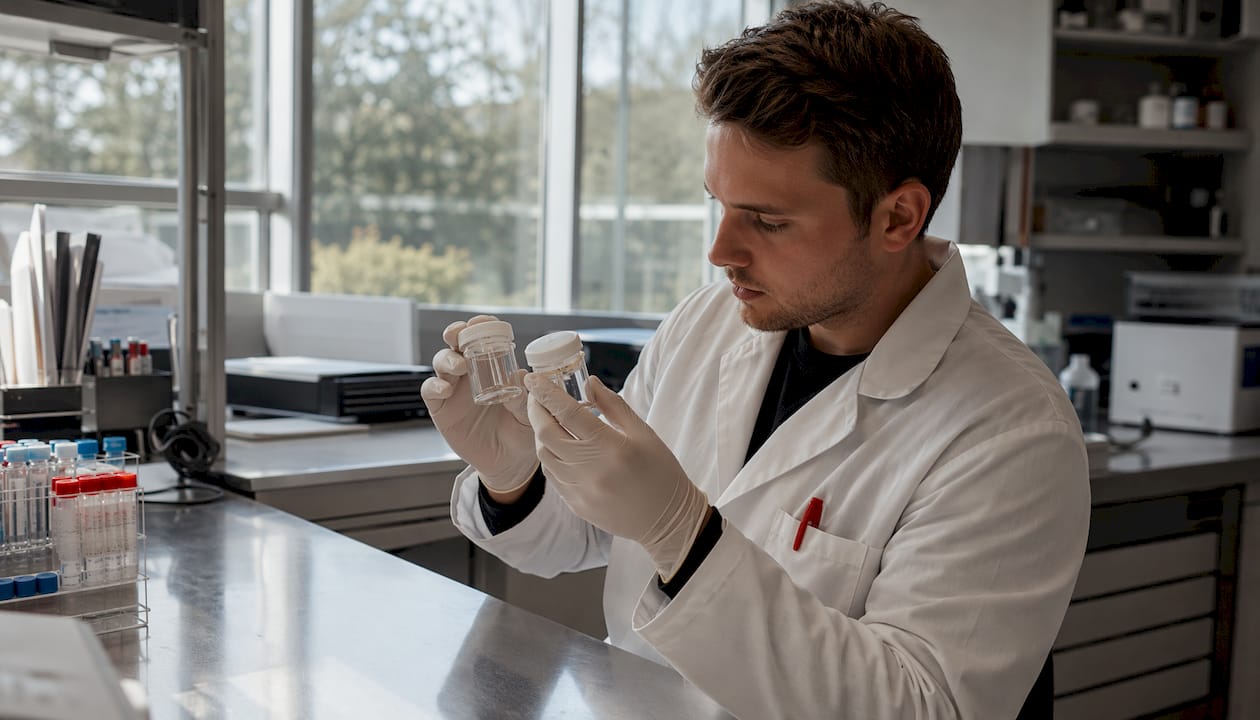
A quick note on terminology: “MRO” also appears in supply-chain contexts, where it stands for Maintenance, Repair, and Operations. This article covers the drug-testing definition exclusively, as governed by 49 CFR Part 40 and the U.S. Department of Transportation (DOT).
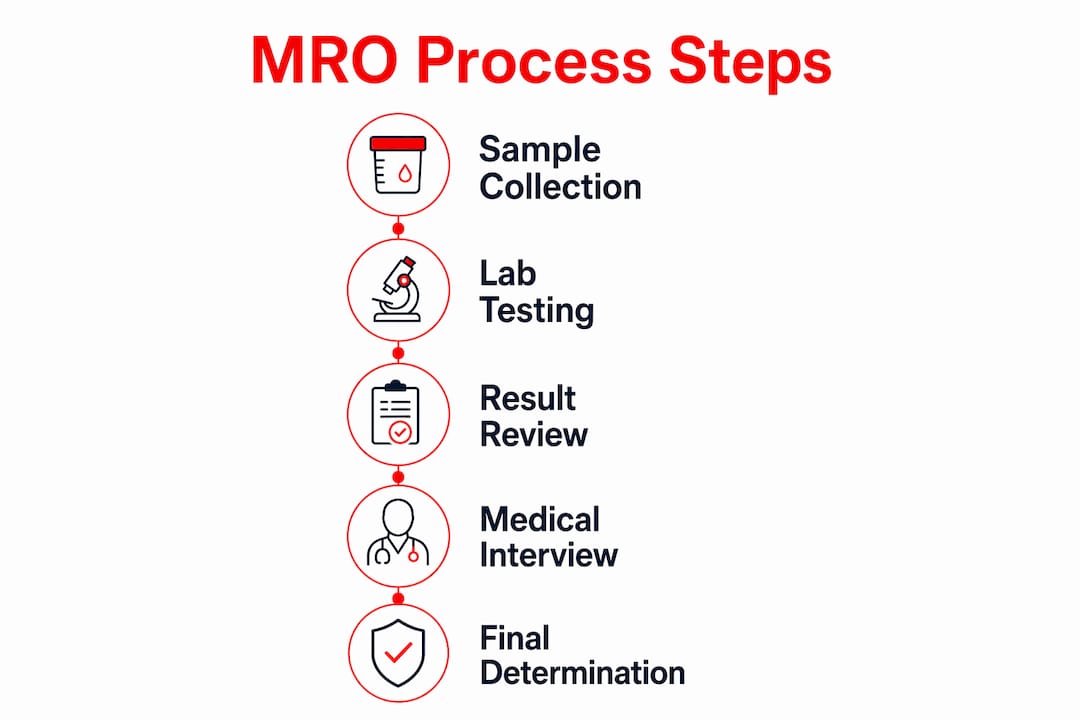
The core MRO process steps, in order:
- The laboratory confirms a non-negative result (positive, adulterated, substituted, or invalid).
- The lab transmits the result and Copy 2 of the Custody and Control Form (CCF) to the MRO.
- The MRO reviews the CCF for fatal flaws and chain-of-custody integrity.
- The MRO contacts the donor for a private, confidential medical interview.
- The donor presents any legitimate medical explanation (prescriptions, medical conditions).
- The MRO verifies documentation with the prescribing physician or pharmacy if needed.
- The MRO issues a final determination: verified positive, negative, cancelled, or other.
- The MRO reports the verified result to the Designated Employer Representative (DER).
The MRO step exists because a lab-confirmed positive is presumptive, not final. It protects accuracy, shields employees from wrongful action, and gives employers a result they can actually rely on. Certification bodies such as the Medical Review Officer Certification Council (MROCC) set the training standards MROs must meet before they can perform this role.
Table of Contents
- What does an MRO actually do?
- How does the MRO process work, step by step?
- What happens during the confidential medical interview?
- What are the possible MRO determinations?
- How does the MRO report results, and what stays private?
- How long does the MRO process take?
- What should you do if an MRO contacts you?
- How are MROs certified, and when do DOT rules apply?
- Key Takeaways
- Why the MRO step is more important than most people realize
- Workplace pre-screening supplies that support your testing program
- Useful sources for further reading
What does an MRO actually do?
An MRO’s responsibilities fall into three categories: quality assurance, medical determination, and confidential reporting.
Quality assurance means the MRO reviews every piece of documentation before touching the result itself. That includes checking the CCF for completeness, verifying chain-of-custody signatures, and confirming the laboratory is certified. If something is wrong with the paperwork, the MRO can cancel the test before the employer ever hears about it.
Medical determination is the core function. When a lab confirms a non-negative result, the MRO evaluates whether a legitimate medical explanation exists. A donor taking a prescribed opioid for a documented injury, for example, may have a fully valid reason for that result. The MRO is the only person in the process authorized to make that call.
Confidential reporting means the MRO communicates the verified result to the DER and no one else, sharing only what Part 40 permits: the verified result and the identified substance, not the donor’s private medical details.
Critically, the MRO represents neither the employer nor the donor. That independence is the point. As DOT guidance makes clear, MROs represent the integrity of the test itself.
- Quality assurance of chain-of-custody and CCF documentation
- Medical evaluation of non-negative results, including prescription verification
- Confidential reporting to the DER under 49 CFR Part 40 Subpart P
- Authority to cancel tests with fatal CCF or collection flaws
Pro Tip: Keep all prescriptions and medical records in your own possession until the MRO contacts you. Presenting them at the collection site does nothing to help your case and can create confusion. The medical interview is the only appropriate venue for that documentation.
How does the MRO process work, step by step?
Understanding the document flow is just as important as knowing the steps. Here is the full sequence.
- Lab confirmation. The certified laboratory runs an initial immunoassay screen, then confirms any non-negative with a second method (typically GC-MS or LC-MS/MS). Only confirmed results go to the MRO.
- Transmission to MRO. The lab sends the result electronically or by fax, along with Copy 2 of the CCF. The MRO cannot act on a result that has not been formally assigned to them.
- CCF and fatal-flaw review. The MRO checks for fatal flaws in the CCF, such as a missing collector signature or no specimen ID number. Fatal flaws require automatic cancellation; some lesser errors can be corrected by a collector memorandum.
- Initial contact attempts. The MRO attempts to reach the donor directly. Under DOT rules, at least three contact attempts must be made within the first 24 hours.
- DER notification if contact fails. If the MRO cannot reach the donor after those attempts, the DER is notified and given a defined window to help establish contact. The MRO may ultimately proceed without donor input if contact is never made.
- Private medical interview. Once contact is made, the MRO conducts a confidential interview. The donor presents any legitimate medical explanation. No employer representative is present.
- Prescription and documentation verification. If the donor claims a prescription, the MRO may contact the prescribing physician or pharmacy directly to verify dosage, timing, and consistency with the lab concentration. See the drug screening workflow guide for how this fits into a broader compliance program.
- Final determination. Based on the interview and any verified documentation, the MRO issues a determination (see Section 5 for all possible outcomes).
- Report to DER. The verified result goes to the DER. The overall process, from lab confirmation to final report, can run several days to up to two weeks when verification steps and split-specimen requests are included.
A few triggers worth noting: a missing CCF halts the review entirely until the flaw is resolved or the test is cancelled. A donor’s failure to respond to contact attempts does not automatically produce a positive result, but it does set the DER notification clock running.
What happens during the confidential medical interview?
The medical interview is not an interrogation. Its purpose is narrow: give the donor a fair opportunity to explain a non-negative result before any employer action is taken.
The MRO will ask whether the donor has a valid prescription for the substance detected, whether any over-the-counter medications or medical procedures could account for the finding, and whether the donor has any medical condition relevant to the result. The MRO then compares whatever the donor provides against the laboratory concentration and timing data.
What to bring and how to prepare:
- Current prescriptions for any controlled substances you take regularly
- Pharmacy printouts showing fill dates, dosage, and prescribing physician
- Contact information for your prescribing physician or specialist
- Records of any recent medical procedures (e.g., surgery involving anesthesia)
- Documentation of any OTC medications taken in the days before the test
Do not bring these to the collection site. Prescriptions belong in the medical interview, not at the collection window. Handing them to a collector accomplishes nothing under Part 40 and may create unnecessary confusion about the chain of custody.
The MRO may also contact your prescriber directly to verify dosage and timing. That verification compares what you were prescribed against what the lab actually detected, so a prescription alone is not always sufficient if the concentration is inconsistent with therapeutic use.
Pro Tip: Before the MRO calls, contact your pharmacy and ask for a printed medication history covering the past 90 days. Most pharmacies can produce this same-day. Having it ready cuts verification time significantly and demonstrates good faith.
What are the possible MRO determinations?
| Determination | What it means | Typical next step |
|---|---|---|
| Negative | No prohibited substance detected, or medical explanation verified | Employer notified; no further action |
| Dilute negative | Specimen valid but below normal creatinine/specific gravity | Employer may require immediate recollection |
| Verified positive | Prohibited substance confirmed, no valid medical explanation | DER notified; employer takes action per policy |
| Dilute positive | Positive result on a dilute specimen | Treated as verified positive |
| Substituted | Specimen does not meet human urine criteria | Reported as refusal to test |
| Adulterated | Specimen contains a foreign substance | Reported as refusal to test |
| Invalid | Lab cannot complete testing; result is unreliable | MRO may order an observed recollection |
| Cancelled | Fatal CCF flaw or collection error; result void | Recollection required; no adverse action |
| Refusal to test | Donor refused collection, adulterated, or substituted | Treated as positive under DOT rules |
Split-specimen rights
If the MRO reports a verified positive, adulterated, or substituted result, the donor has the right to request a retest of the split specimen (Bottle B). That request must go through the MRO and must be made within 72 hours of the donor being notified of the verified result. The MRO then directs the laboratory holding the split to send it to a second SAMHSA-certified lab for reanalysis. If the split fails to reconfirm, the MRO cancels the original result.
FAQ: What is a split-specimen test?
When a urine specimen is collected, it is divided into two bottles: Bottle A (the primary) and Bottle B (the split). If Bottle A returns a verified positive, the donor can request that Bottle B be tested at a separate certified laboratory within 72 hours of notification. This is a federally protected right under 49 CFR Part 40 for DOT-regulated tests.
How does the MRO report results, and what stays private?
Once the MRO issues a final determination, the verified result goes to the DER, typically by secure fax or electronic transmission. The report contains the verified result, the specific substance or reason (e.g., “verified positive for amphetamines”), and the MRO’s contact information. That is it.
What the employer does NOT receive:
- The donor’s prescription details or medical history
- The reason a result was changed from positive to negative
- Any information about medical conditions disclosed during the interview
- Documentation the donor provided to support their explanation
Part 40 Subpart P restricts disclosure to what is necessary for the employer to take action under their drug-testing policy. The MRO cannot share medical details with the employer without the donor’s written authorization, except when legally compelled (e.g., a court order or regulatory audit). For HR teams managing results, the guide to handling positive drug tests covers what employers are permitted to do after receiving a verified result.
Record retention under Part 40 requires MROs to keep records of verified results and related documentation for defined periods. Employers must also maintain their own records per DOT requirements.
How long does the MRO process take?
Timing varies depending on how quickly the donor responds and whether prescription verification or a split-specimen request is involved.
- Lab turnaround: Typically 1–3 business days for a confirmed result to reach the MRO
- Initial MRO review (CCF check): Usually same day or next business day after receipt
- Contact attempts: At least 3 attempts within the first 24 hours under DOT rules
- DER involvement window: Begins after failed MRO contact; DER has a defined period to assist before the MRO may proceed without donor input
- Medical interview and prescription verification: 1–5 business days depending on prescriber availability
- Split-specimen reanalysis: Adds several additional business days if requested
- Total time to verified result: Several days to up to two weeks in complex cases
The 10-day rule explained. Under DOT guidance, the MRO process for certain non-contact situations can remain open for up to 10 days before the MRO proceeds to verify the result without donor input. This is not a universal deadline for all cases; it applies specifically to situations where the donor cannot be reached and the DER’s assistance window has also closed.
Do MROs only call if you fail? No. The MRO contacts donors whenever a non-negative result requires verification, including cases that ultimately resolve as negative. Receiving an MRO call does not mean the result will be reported as positive.
For a broader look at how testing timelines fit into a compliant HR program, the workplace drug testing HR guide covers DER responsibilities and notification windows in detail.
What should you do if an MRO contacts you?
Speed and preparation matter here. The contact window is short, and missing calls can trigger DER involvement.
Immediate actions (within the first 24 hours):
- Answer the call or return it as quickly as possible using the number provided.
- Confirm the caller’s identity: ask for their name, the MRO practice name, and a callback number you can verify independently.
- Confirm the test in question (employer name, approximate test date).
- Schedule the private medical interview at the earliest available time.
- Gather all relevant prescriptions, pharmacy records, and physician contact information before the interview.
Do:
- Cooperate fully with the MRO’s verification requests
- Contact your pharmacy for a printed medication history covering the past 90 days
- Provide your prescriber’s direct contact information if asked
- Ask the MRO about the timeline for their determination
Do not:
- Drop off prescriptions or medical records at the collection site
- Discuss the result with your employer before the MRO issues a final determination
- Post about the test or result on social media
- Attempt to contact the laboratory directly about your result
Pro Tip: Most retail pharmacies (CVS, Walgreens, Rite Aid) can print a 90-day medication history at the pharmacy counter in under 10 minutes. Bring a photo ID. Having that document in hand before the MRO calls puts you in the best possible position.
How are MROs certified, and when do DOT rules apply?
An MRO must hold a current, unrestricted medical license (M.D. or D.O.) in the United States. Beyond that, they must complete an MRO training program and pass a qualifying examination. The two primary certification bodies are the Medical Review Officer Certification Council (MROCC) and the American Association of Medical Review Officers (AAMRO). Both require periodic recertification to keep credentials current.
Typical MRO credential requirements:
- Active, unrestricted U.S. medical license (M.D. or D.O.)
- Completion of an approved MRO training course (MROCC or AAMRO)
- Passing score on a certification examination
- Continuing education for recertification
DOT vs. non-DOT testing. The FMCSA and DOT mandate MRO review for all safety-sensitive transportation employees under 49 CFR Part 40. That covers truck drivers, airline pilots, railroad workers, transit operators, and pipeline workers, among others. For non-DOT workplace testing (private employers not subject to federal transportation rules), MRO review is not federally required, though many employers use it voluntarily. Non-DOT programs may have different timelines, fewer mandatory steps, and more flexibility in how results are communicated.
For DOT-regulated cases, the primary authority is 49 CFR Part 40 and DOT’s Office of Drug and Alcohol Policy and Compliance (ODAPC). Consulting those sources directly is the only reliable way to confirm current requirements for your specific industry.
Key Takeaways
The MRO process is a federally regulated medical review that converts a lab-confirmed non-negative result into a verified, legally defensible determination before any employer action can occur.
| Point | Details |
|---|---|
| MRO role and independence | A licensed physician who reviews non-negative results under 49 CFR Part 40, representing neither employer nor donor. |
| Contact and timing | MROs make multiple contact attempts within the first day; total review can take several days to up to two weeks. |
| Donor documentation | Keep prescriptions and medical records until the MRO contacts you; never present them at the collection site. |
| Split-specimen rights | Donors have a limited time window from notification to request a Bottle B retest at a second certified laboratory. |
| Rapidtestcup supplies | Rapidtestcup offers CLIA waived, FDA-approved multi-panel test cups and specimen collection supplies for workplace pre-screening before MRO review. |
Why the MRO step is more important than most people realize
The conventional framing treats the MRO as a formality, a bureaucratic checkpoint between the lab and the employer. That framing misses the point entirely.
The MRO is the only person in the entire drug-testing chain with both the medical authority and the regulatory mandate to say “this result does not mean what it looks like.” A lab cannot make that call. An HR manager cannot make that call. Without the MRO, a donor taking a legitimately prescribed medication for a documented condition could face termination based on a result that is technically accurate but medically meaningless in context.
What people also underestimate is the MRO’s quality-audit function. Fatal CCF flaws, chain-of-custody gaps, and collection errors can all invalidate a result before it ever reaches the employer. That protects employers too, because acting on a procedurally defective result creates legal exposure. The MRO’s willingness to cancel a test is not a loophole; it is the system working correctly.
The practical lesson: if you are a donor, cooperate quickly and bring documentation. If you are in HR, understand that the verified result you receive is the product of a multi-step medical and legal review, not just a lab printout. Treat it accordingly.
Workplace pre-screening supplies that support your testing program
Running an internal pre-screening program before sending specimens to a certified lab is a practical way to manage costs and flag likely non-negatives early. Rapidtestcup carries CLIA waived, FDA-approved drug testing products for labs, including multi-panel test cups, urine dip cards, and specimen collection supplies built for professional use.
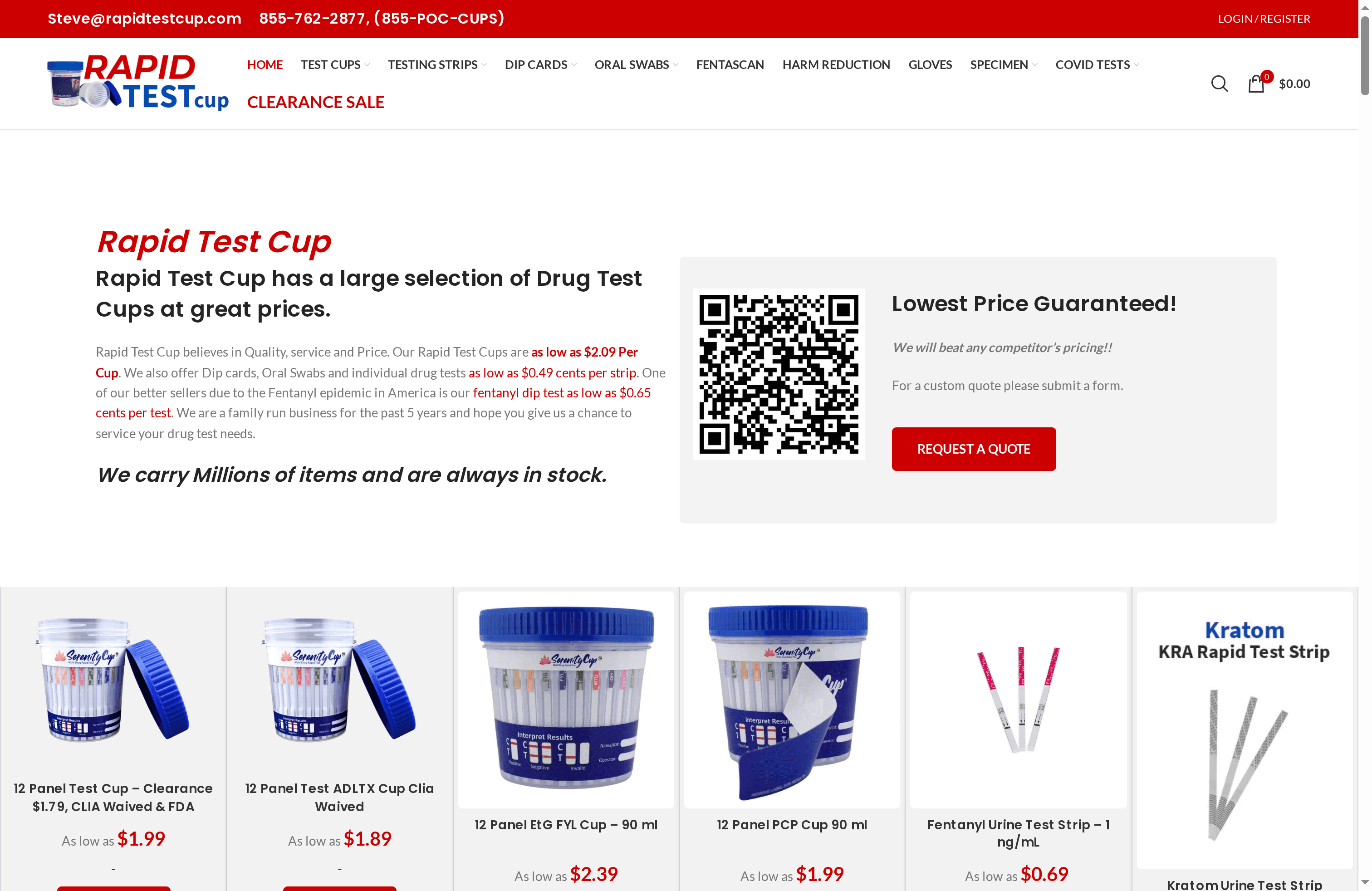
One important distinction: Rapidtestcup’s screening products are preliminary tools. They do not replace the certified laboratory confirmation or the MRO review required under 49 CFR Part 40 for DOT-regulated testing. Pre-screening can help employers identify specimens worth sending for confirmation, but the MRO process remains the required final step for any result that will be used for employment decisions. Browse the full catalog at rapidtestcup.com or request a bulk quote for your program.
Useful sources for further reading
- 49 CFR Part 40 (DOT) — The primary federal regulation governing all DOT-mandated drug and alcohol testing, including MRO procedures, CCF requirements, split-specimen rules, and confidentiality standards. Start here for any compliance question.
- DOT Office of Drug and Alcohol Policy and Compliance (ODAPC) — DOT’s central resource for MRO guidance, Q&A documents, and regulatory updates. Includes the official MRO page with contact-attempt rules and verification procedures.
- FMCSA Medical Review Officer page — FMCSA’s plain-language summary of MRO responsibilities and the verification process for commercial motor vehicle operators. Useful for trucking and transportation employers.
- SAMHSA Workplace Drug Testing Resources — Covers laboratory certification standards, specimen handling, and the federal workplace drug-testing program. Relevant for understanding the lab side of the MRO workflow.
- MROCC (Medical Review Officer Certification Council) — The primary certification body for MROs. Check here to verify an MRO’s credentials or to find a certified MRO for your program.
This article is general educational information about the MRO drug-testing review process. It is not legal or medical advice. For DOT-regulated programs, consult 49 CFR Part 40 directly or work with a qualified MRO and compliance professional for your specific situation.