Blog
Buyers: What SAMHSA Requires for Urine Specific Gravity Testing


In drug testing, a urine specific gravity test measures how concentrated a urine sample is, and its main job is catching diluted or substituted specimens before they slip through as clean results. Specific gravity never works alone: SAMHSA requires it alongside creatinine and pH as part of specimen validity testing, and that pairing is what actually flags a sample as dilute, substituted, or invalid.
TL;DR:
- Refractometers are the most reliable technology for measuring urine specific gravity, with about 81.9% agreement with laboratory standards.
- Dipstick tests are faster and more convenient but only match refractometer readings around 64.7%, risking false flags in high-volume or critical testing.
- Specific gravity alone cannot reliably detect adulterants like oxidizing agents or synthetic urine, which often mimic normal ranges in the test parameters.
- Proper sample collection, including temperature checks and physical inspection, is crucial to ensure the accuracy and defensibility of specific gravity results.
- When testing for dilution, pairing specific gravity with creatinine and pH forms the standard specimen validity check, with confirmatory lab testing needed for suspicious or borderline samples.
Table of Contents
- How Is Specific Gravity Used in Urine Drug Testing?
- What Are the Best Methods for Measuring Urine Specific Gravity?
- How Do You Interpret Specific Gravity Results?
- Where Does Specific Gravity Testing Fall Short?
- What Collection and QC Steps Should Buyers Require?
- Which Rapidtestcup Products Support Specimen Validity Testing?
- The Real Tradeoff Between SG Screening and Lab Confirmation
- Ready to Upgrade Your Specimen Validity Testing?
- Sources
- FAQ
How Is Specific Gravity Used in Urine Drug Testing?
Specific gravity gets measured because urine that has been diluted, whether by chugging water before a test or spiking a cup at the sink, reads lighter than normal urine. A properly hydrated adult produces urine with a specific gravity that reflects real kidney concentration, and anything that flattens that number toward pure water’s baseline of 1.000 raises a flag.
SAMHSA’s Medical Review Officer Guidance Manual sets the rule: every federal specimen gets tested for creatinine and pH at minimum, with specific gravity testing added whenever creatinine falls below the threshold that suggests dilution. That creates a two-step check rather than a single number doing all the work.
Where the sample goes next depends on who is looking at it:
- Instrumented Initial Testing Facilities (IITFs) can only report negative or negative-dilute results.
- Only HHS-certified laboratories are authorized to report positive, adulterated, substituted, or invalid findings.
- Borderline specific gravity or creatinine readings at an IITF get routed to a certified lab for confirmation rather than resolved on-site.
That routing structure exists because specific gravity by itself is a screening signal, not a verdict. A single low reading could mean dilution, a high-water-intake day, or a lab hiccup. Multi-parameter specimen validity testing that combines creatinine, pH, and specific gravity remains the standard because dilution is still the most common tampering method labs encounter, and no single number catches it reliably on its own.
What Are the Best Methods for Measuring Urine Specific Gravity?
Three technologies dominate specimen validity testing, and they don’t perform equally.
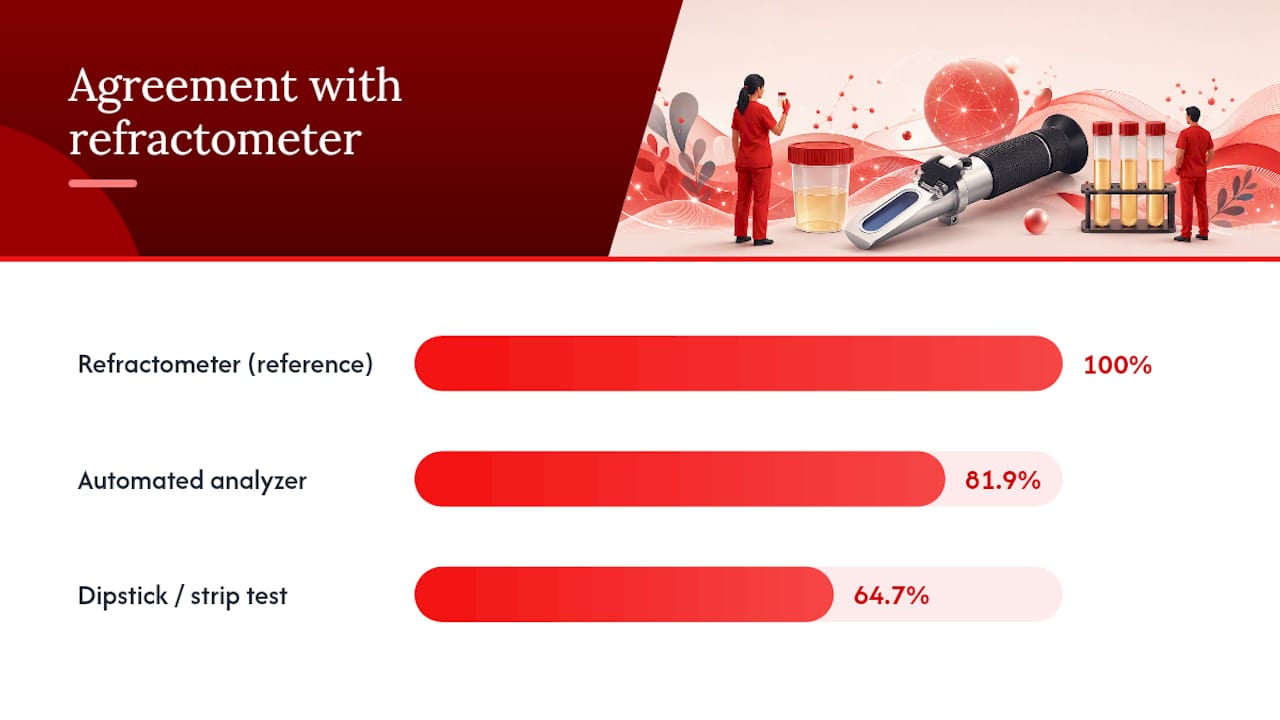
Refractometers remain the reference method most laboratories trust. They measure how light bends passing through urine, which correlates tightly with dissolved solute concentration, and they need periodic calibration against distilled water and known standards to stay accurate.
Dipstick and strip tests offer speed at the collection site. A technician reads a color change against a chart in under a minute, no equipment required. The tradeoff shows up in the numbers: dipstick methods agree with refractometer readings only about 64.7% of the time, and a separate comparison found dipstick results land outside reference intervals more often than instrumented methods do, which means more borderline samples get flagged for follow-up than the specimen actually warrants.
Automated chemical analyzers close that gap. They show roughly 81.9% agreement with refractometers, making them the better fit for high-volume labs that need consistent, reproducible output across thousands of samples a month.
For buyers deciding what to stock:
- Screening-only sites can lean on dipstick convenience if false flags are acceptable and confirmatory testing backs them up.
- High-volume labs or forensic programs should prioritize refractometers or automated chemical analyzers for accuracy.
- Always check calibration requirements and throughput specs before ordering in bulk.
Pro Tip: If your collection site handles more than a few dozen specimens a day, the extra few seconds automated readers take is nothing compared to the cost of re-collecting samples that got wrongly flagged by a strip test.
How Do You Interpret Specific Gravity Results?
Reference ranges give SG test buyers a working baseline, but the numbers only matter in how they trigger next steps.
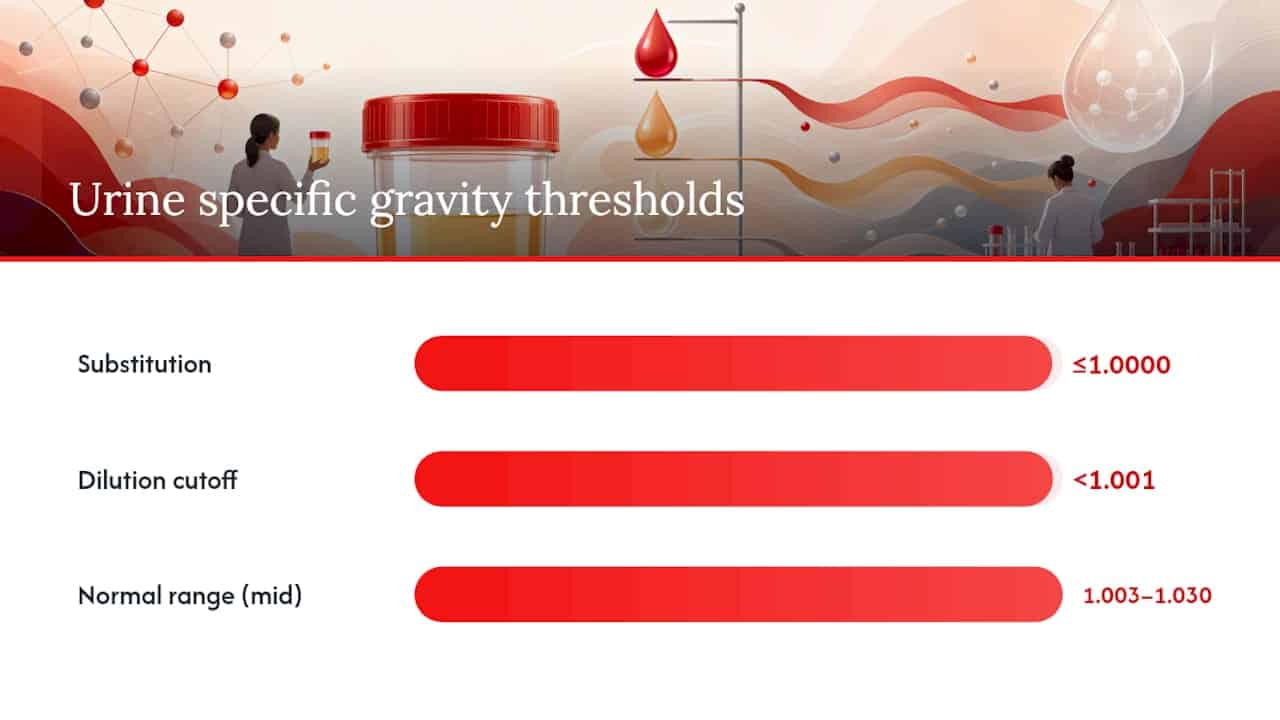
Normal urine specific gravity typically falls between 1.003 and 1.030, depending on hydration. Values that drift toward the low end, generally below 1.001 alongside low creatinine, point toward dilution. A reading that lands right at or below 1.0000, the specific gravity of distilled water, suggests the sample may be substituted entirely rather than just diluted.
The practical decision sequence looks like this:
- Collection site records temperature, volume, and initial specific gravity reading on the chain-of-custody form.
- If specific gravity and creatinine both fall in the dilute range, the result gets flagged as dilute rather than negative outright.
- Values consistent with substitution get forwarded to an HHS-certified laboratory, since IITFs cannot make that call themselves.
- The Medical Review Officer reviews the lab’s confirmed classification and decides whether a second collection is required.
- Every step, including the specific gravity value and its cross-reference to creatinine, gets documented on the custody form for defensibility later.
Employers should know that DOT-regulated dilute results typically allow only one retest, not repeated do-overs, which is why accurate first-pass readings matter so much. Getting the SVT documentation right the first time avoids disputes down the line.
Where Does Specific Gravity Testing Fall Short?
Specific gravity catches simple dilution well. It struggles against anyone who has done research on how to beat a drug test.
Oxidizing adulterants like iodate compounds are a documented threat. One study found an iodate-based adulterant reduced THC-COOH concentrations by about 65%, while other adulterants cut opiate analyte concentrations by 6% to 27%. None of that shows up as an abnormal specific gravity reading, because the adulterant works chemically on the drug metabolites themselves, not on the water content of the sample.
Synthetic urine is the other blind spot. Manufactured products can mimic normal specific gravity, creatinine, and pH almost perfectly.
Research on synthetic urine and advanced adulterants shows that products formulated to match normal SVT ranges can pass creatinine, pH, and specific gravity checks while containing no biological trace of the donor at all.
Detecting that kind of substitution requires looking past the standard three parameters. A few things worth flagging for buyers assembling a testing program:
- Creatine supplementation can artificially raise creatinine without changing specific gravity much, creating a mismatched profile worth a second look.
- Deliberate slow dilution over hours can keep both creatinine and specific gravity just inside normal ranges.
- Biomarker panels that detect endogenous compounds like amino acids and carnitines catch synthetic urine that standard SVT panels miss entirely.
- Oxidant screens paired with adulterant detection strips catch the iodate and nitrite-type adulterants that specific gravity alone cannot see.
What Collection and QC Steps Should Buyers Require?
Specific gravity testing only works as well as the collection process feeding it. A perfect refractometer reading on a compromised sample tells you nothing useful.
- Check temperature within 4 minutes of collection, confirming it falls in the 90 to 100°F range accepted under federal guidelines.
- Require minimum specimen volume and visual inspection for color and clarity before any SG reading gets logged.
- Escalate to direct observation collection when a donor has a prior dilute or substituted result, or when site staff have reasonable suspicion.
- Calibrate refractometers and automated analyzers on a documented schedule, not just when readings look off.
- Run a blind sample program at roughly 3% of total submissions, split across negative, positive, and adulterated or substituted samples to catch drift in the testing process itself.
- Request documentation from suppliers on refractometer accuracy specs, CLIA waiver and FDA status for test cups or strips, and adulterant pad coverage before placing a bulk order.
Pro Tip: Ask any supplier for their adulterant panel’s actual sensitivity range in writing, not just a marketing claim. A checklist for preventing sample adulteration is only as good as the product backing it.
Which Rapidtestcup Products Support Specimen Validity Testing?
Buying the right equipment starts with matching product features to the SVT parameters your program actually needs to check. Rapidtestcup stocks several categories built around that need:
- Multi-panel test cups with built-in adulterant detection pads that screen oxidants alongside standard drug panels.
- Standalone adulterant test strips for sites that want a fast secondary check without a full cup.
- Specimen collection supplies suited for refractometer-based labs running higher-volume SVT programs.
- Dip card options for collection sites weighing cup versus dip card workflows.
Rapidtestcup also publishes step-by-step forensic guides for adulterant detection aimed at collectors and lab staff who need procedural clarity, not just product specs. Bulk discounts, quick shipping, and a catalog of CLIA-waived and FDA-approved options are available across these categories.
The Real Tradeoff Between SG Screening and Lab Confirmation
Specific gravity testing is cheap, fast, and catches the majority of dilution attempts, which covers most of what any collection program will actually encounter. The gap shows up with sophisticated adulterants and synthetic urine, where a normal-looking SG reading can hide a manipulated sample entirely.
My honest read: most employers and clinics don’t need biomarker panels or automated lab-grade SVT for routine screening. They need it when stakes are high, post-accident testing, safety-sensitive roles, or a donor with a prior flagged result, where the cost of a false negative outweighs the cost of a more thorough check. Match your testing investment to your actual risk profile, not to whatever the newest adulterant headline says.
— Justin
Ready to Upgrade Your Specimen Validity Testing?
Generic drug test cups only tell you whether a substance shows up. Rapidtestcup’s multi-panel cups build adulterant detection directly into the collection step, so specific gravity, pH, and oxidant screening happen at the same moment as the drug panel itself, no separate strip, no second collection.
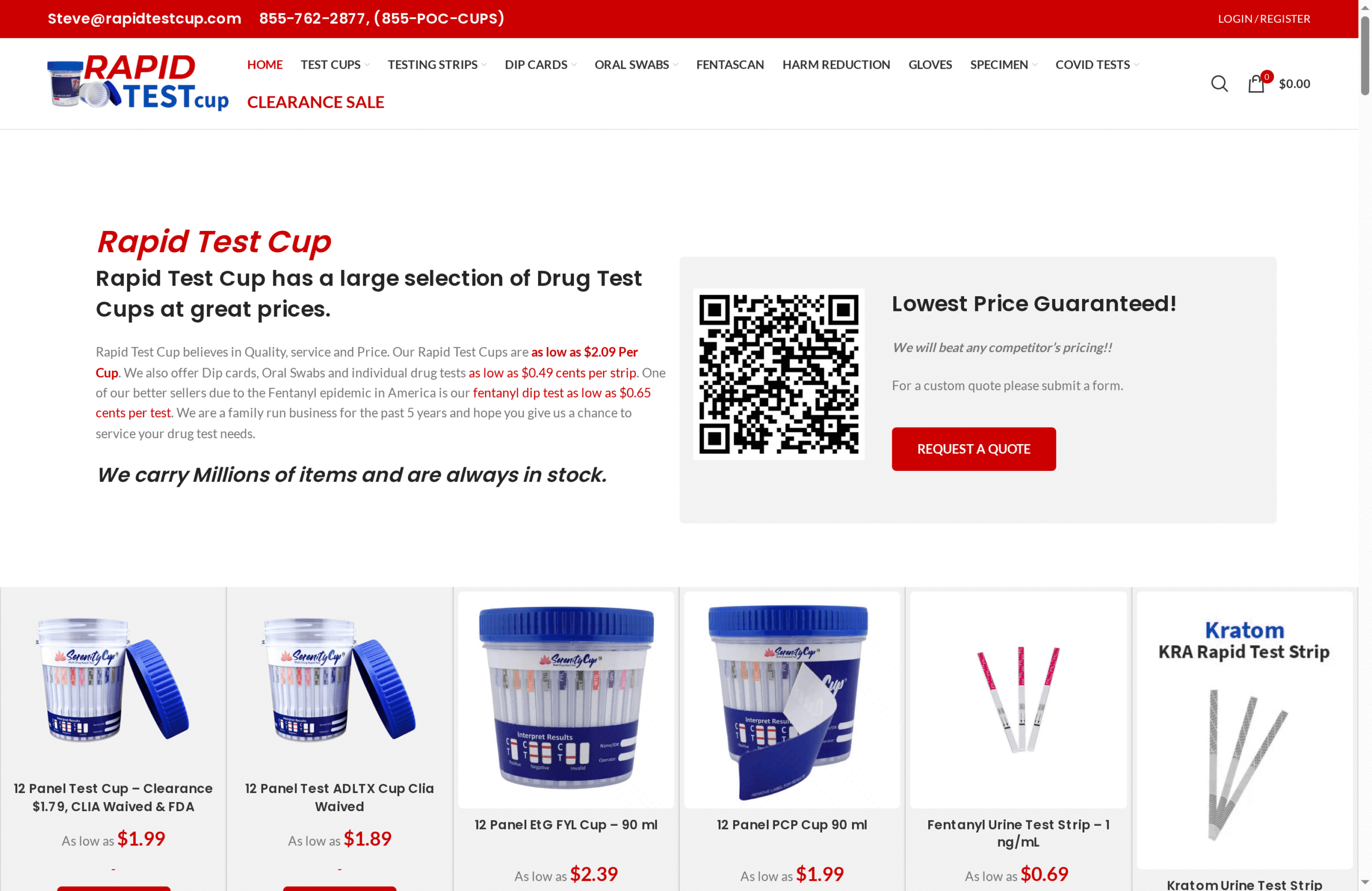
That matters most for buyers running high-volume programs where every extra step at collection costs staff time. Rapidtestcup’s 18-panel test cup with adulterant checks covers a wide drug panel plus adulterant screening in one unit, and bulk-order pricing brings the per-unit cost down for labs and clinics ordering in volume. If your team needs adulterant strips instead of a full cup, or wants a forensic guide to train new collectors, those resources sit in the same shop catalog. Browse the product lineup or request a custom quote for your order volume to get pricing matched to your program size.
Sources
- Medical Review Officer Guidance Manual for Federal Workplace Drug Testing Programs (SAMHSA, 2024)
- Method-comparison study on SG and pH methods (PMC)
- Journal of Analytical Toxicology — Update on urine adulterants and synthetic urine (2022)
- Advances in testing for sample manipulation in clinical and forensic toxicology (2023)
FAQ
What Is a Normal Urine Specific Gravity Range?
Normal urine specific gravity typically falls between 1.003 and 1.030, with the exact reading shifting based on hydration at the time of collection. Values consistently below that range, especially paired with low creatinine, point toward dilution rather than normal variation.
Does Low Specific Gravity Automatically Mean a Failed Drug Test?
No. A low specific gravity urine test result triggers a dilute classification, not an automatic failure, and SAMHSA guidance treats dilute specimens differently from positive ones. Employers under DOT rules generally get one retest for a dilute result rather than an indefinite series of do-overs.
Can a Specific Gravity Test Catch Synthetic Urine?
Not reliably on its own. Some synthetic urine products are formulated to match normal specific gravity, creatinine, and pH, which is why biomarker panels detecting endogenous compounds are recommended when substitution is suspected.
Which Measurement Method Is Most Accurate for Specific Gravity?
Refractometers are the reference standard most labs trust, and automated chemical analyzers come close with about 81.9% agreement to refractometer readings. Dipstick strips are faster and more convenient at the point of collection, but agree with refractometer results only around 64.7% of the time, making them less reliable for high-stakes decisions.
What Products Should Buyers Look For to Support Specific Gravity Testing?
Buyers should look for test cups with integrated adulterant detection pads, standalone adulterant strips, and refractometer-compatible supplies for higher-volume labs. Rapidtestcup’s shop catalog includes multi-panel cups built around this exact combination of drug and adulterant screening.