Blog
Collection Site Procedures: A Regulation-Aligned Field Guide


To run a compliant U.S. drug and specimen collection site, every operation must follow a single regulation-aligned checklist covering site security, identity verification, split-specimen handling, Federal Custody and Control Form (CCF) chain-of-custody, and shipping within 24 hours. These are not optional best practices — they are the operational floor set by 49 CFR Part 40 Subpart D, DOT’s 10-step security protocol, and the SAMHSA/HHS specimen collection handbooks for both urine and oral fluid.
Immediate must-dos for any collection site:
- Verify donor photo ID before any collection begins and document it on Step 1 of the Federal CCF or eCCF
- Maintain constant physical control of the specimen and the CCF from the moment collection starts until the package is sealed
- Perform split A/B specimen collections for all federal-program testing (urine and oral fluid)
- Secure the restricted-access collection area: lock water sources, add bluing agent to toilets, and remove unnecessary items from the collection space
- Check urine specimen temperature within four minutes of voiding; flag any out-of-range result immediately
- Apply tamper-evident seals over specimen container caps in the donor’s presence, then have the donor initial the seals
- Ship specimens to the laboratory within 24 hours, or place them in secure refrigerated storage when shipment will be delayed (weekends, holidays)
- Document every handling step from collection through laboratory receipt with signed, dated records
Governing references to keep at the site:
- 49 CFR Part 40 Subpart D: forms, equipment, and collection-site requirements for DOT-regulated programs
- DOT’s 10 Steps to Collection Site Security and Integrity: the operational security checklist
- SAMHSA/HHS Urine Specimen Collection Handbook (2024) and Oral Fluid Collection Site Manual (2024): procedural detail for both matrices
- Federal Register OFMG (Mandatory Guidelines for Federal Workplace Drug Testing Programs using Oral Fluid): split-specimen and device-volume requirements
Key Takeaways
Compliant collection site procedures require site security, verified identity, accurate CCF documentation, split-specimen handling, temperature checks, and 24-hour shipping, all mapped to 49 CFR Part 40, DOT’s 10 steps, and SAMHSA/HHS handbooks.
| Point | Details |
|---|---|
| Site security is the foundation | Secure water sources, add bluing agent, restrict access, and control supplies before the first donor arrives. |
| CCF accuracy prevents rejections | Complete Step 1 before collection; verify seal numbers match the CCF; document donor refusals in the remarks field. |
| Split specimens are required for federal collections | Both A and B specimens must meet minimum volume requirements; oral fluid requires at least 1 mL undiluted per specimen when no diluent is used. |
| Temperature checks are time-critical | Check urine specimen temperature within four minutes of voiding; an out-of-range result triggers a directly observed re-collection. |
| Ship within 24 hours or refrigerate | Specimens not shipped same-day must be stored at 2°C–8°C in a locked refrigerator until shipment. |
| Rapidtestcup supplies match compliance specs | CLIA-waived, FDA-cleared cups with integrated adulterant detection support both DOT and non-federal program requirements. |
Table of Contents
- Which U.S. regulations govern collection site procedures?
- How do you set up a secure collection site that meets DOT’s 10 steps?
- What supplies and equipment does every collection site need?
- Step-by-step collection procedures for urine and oral fluid
- How to complete the Federal CCF and maintain chain of custody
- How do you detect and respond to specimen tampering or adulteration?
- What are the storage and transport requirements for collected specimens?
- What training and QA practices keep collectors competent and audits clean?
- Common operational errors and how to fix them fast
- A compact SOP checklist you can adapt for any site type
- How this guide maps to primary sources
- What experienced operators know that the written rules don’t tell you
- Sourcing compliant supplies for your collection site
- Sources
Which U.S. regulations govern collection site procedures?
Every collection site SOP must trace back to a specific regulatory source. Knowing which document controls which decision prevents the most common compliance gap: writing a policy that sounds thorough but doesn’t actually satisfy the governing rule.
The core regulatory framework
49 CFR Part 40 Subpart D is the legal foundation for all DOT-regulated collections. It prescribes the forms, equipment, and procedural requirements that apply to transportation-sector employers and their service agents. Subpart D requires site policies that prevent unauthorized personnel from entering collection areas and specifies how supplies must be controlled throughout the process. If your site serves any DOT-regulated employer (aviation, trucking, rail, transit, pipeline, maritime), Part 40 is non-negotiable.
DOT’s 10 Steps to Collection Site Security and Integrity translates Part 40 into a practical operational checklist. The 10 steps cover photo ID verification, removal of outer garments and pocket contents, constant control of the specimen and Federal CCF, and restriction of unauthorized access throughout the collection event. These steps apply at every DOT collection, whether at a permanent clinic or a mobile site.
SAMHSA/HHS Specimen Collection Handbooks provide the procedural depth that Part 40 references but doesn’t fully spell out. The 2024 Urine Specimen Collection Handbook and the 2024 Oral Fluid Collection Site Manual are the operational manuals collectors should have on hand. They cover everything from toilet bluing to split-specimen timing to shipping deadlines.
The Federal Register OFMG (Mandatory Guidelines for Federal Workplace Drug Testing Programs using Oral Fluid) sets the legal standard for oral fluid collections in federal agency programs. It specifies minimum specimen volumes, device requirements, and split-specimen methods that go beyond what Part 40 alone addresses.
Scope: when each source applies
Regulatory quick-reference by requirement type:
- Split specimens: Required for all federal collections (both urine and oral fluid); strongly recommended for non-federal programs
- Photo ID verification: Required under DOT’s 10 steps for all DOT collections; best practice for all programs
- Federal CCF / eCCF: Mandatory for DOT and federal agency collections; non-federal programs may use equivalent chain-of-custody forms
- Oral fluid device volume: OFMG requires at least 1 mL undiluted oral fluid per A and B specimen when no diluent is used
- Shipping timeline: 24-hour rule applies under SAMHSA handbooks; non-federal programs should adopt the same standard
Non-federal employers who run their own drug testing programs should treat Part 40 and the SAMHSA handbooks as the benchmark. Courts and arbitrators consistently look to these federal standards when evaluating whether a collection was conducted properly.
How do you set up a secure collection site that meets DOT’s 10 steps?
Site layout is where compliance either holds or breaks down. A collector who follows every procedural step but works in a poorly controlled space can still produce a legally vulnerable specimen.
Defining the restricted-access area
The collection area must be physically separated from general foot traffic. For permanent sites, this means a dedicated room with a lockable door that only authorized collection staff can access during an active collection. For temporary or mobile sites, the restricted zone must be established before the first donor arrives: clear the space, post signage, and confirm that no unauthorized person can enter or observe the process.
DOT’s 10 steps require the collector to maintain direct control of the specimen and the Federal CCF at all times. That means the collector stays in the collection area, not at a desk down the hall, while a specimen is being processed.
Operationalizing the 10 steps at your site
- Step 1 — Identify the donor: Check government-issued photo ID before anything else. If the donor has no photo ID, a supervisor or employer representative may vouch for identity in writing. Document the ID type and number on the CCF.
- Step 2 — Prepare the collection area: Remove or secure any items the donor could use to adulterate a specimen (cleaning products, soap dispensers with unusual contents, extra containers).
- Step 3 — Instruct the donor to remove outer garments (coats, jackets, hats) and empty pockets. Store these items outside the collection area or in a secure location the donor cannot access during voiding.
- Step 4 — Secure water sources: Turn off accessible faucets or tape them. Add bluing agent to toilet water so the donor cannot use it to dilute or substitute a specimen.
- Step 5 — Control collection supplies: Keep specimen containers, seals, and CCFs under the collector’s direct control. Never leave them unattended in a space the donor can access.
- Step 6 — Instruct the donor on collection: Explain the process clearly, including the minimum volume required and that the collector will remain outside the restroom (for standard collections) or present (for directly observed collections).
- Step 7 — Receive the specimen promptly: The donor delivers the specimen directly to the collector. Check temperature immediately.
- Step 8 — Process the specimen: Check volume, inspect for unusual color or odor, apply tamper-evident seals, and complete the CCF in the donor’s presence.
- Step 9 — Complete documentation: Both the collector and donor sign the CCF. The donor receives their copy.
- Step 10 — Secure the specimen for shipping: Place sealed specimens in a secure, locked storage area until they are shipped.
Staffing and access control
Only the collector and, when required, a directly observed collection witness may be present in the collection area during an active collection. Supervisors, other employees, and observers from the employer have no right of entry. Log every entry to the collection area during operating hours, including the time, name, and purpose.
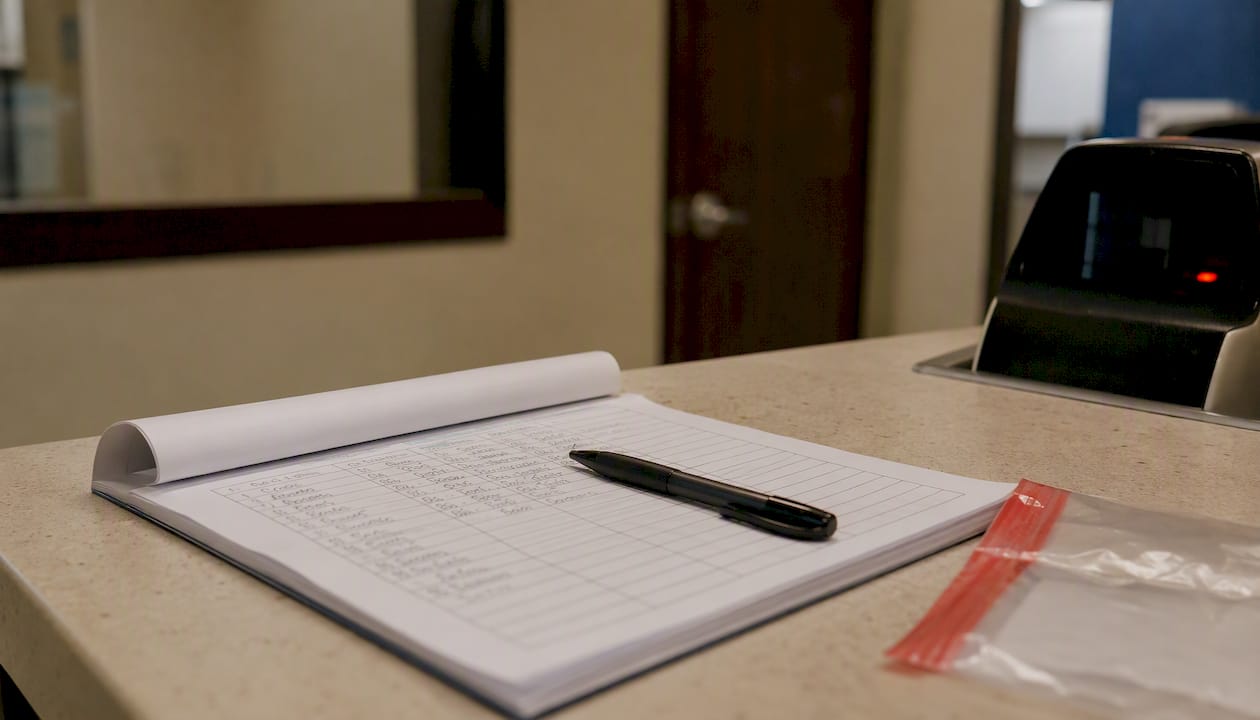
Pro Tip: Install a simple sign-in log at the collection area entrance and require every person who enters, including the collector, to sign in and out with a timestamp. This single habit produces the access-control documentation that auditors look for and that most sites fail to maintain consistently.
What supplies and equipment does every collection site need?
Procurement gaps cause compliance failures. A site that runs out of tamper-evident seals mid-shift or lacks the correct CCF version cannot complete a legally defensible collection.
Required supply inventory
- Federal Custody and Control Forms (paper CCF): Current version, pre-printed with the site’s name and address, or blank forms completed at the time of collection. Keep a minimum 30-day supply on hand.
- eCCF system access: If using electronic CCFs, the system must be approved for use in federal collections. Maintain a paper CCF backup for system outages.
- Specimen containers: Leakproof, single-use containers with a minimum 45 mL capacity for urine (to allow for split A/B volumes). Containers must be free of any pre-applied labels that could be confused with official seals.
- Tamper-evident seals: Pre-printed with the specimen ID number or space to write it. Both A and B tubes require separate seals. Never reuse a seal.
- Oral fluid collection devices: Devices must include a volume indicator that confirms at least 1 mL of undiluted oral fluid per specimen when no diluent is used, per the OFMG requirements. Verify device validation data (volume tolerance ±10%, diluent tolerance ±2.5% where applicable) against NLCP/DTM validation criteria before purchasing.
- Bluing agent: For toilet water in urine collection restrooms. Keep a dedicated supply separate from cleaning products.
- PPE: Nitrile gloves (minimum) for every collection. Face protection as required by site health policy.
- Secure storage: A lockable cabinet or refrigerator for specimens awaiting shipment. Refrigerated storage must maintain 2°C–8°C for specimens held beyond same-day shipping.
- Shipping supplies: Tamper-evident outer packaging, biohazard bags, absorbent material, and pre-addressed laboratory shipping labels.
- Temperature strips: For checking urine specimen temperature within the required window.
Minimum specifications for key items
| Supply Item | Minimum Specification |
|---|---|
| Urine specimen container | Leakproof, single-use, ≥45 mL capacity |
| Oral fluid device | Volume indicator confirming ≥1 mL undiluted per specimen |
| Tamper-evident seal | Pre-numbered or writable specimen ID; void-on-removal design |
| Refrigerated storage | 2°C–8°C, lockable, access-logged |
| Bluing agent | Non-toxic, water-soluble, sufficient to visibly color toilet water |
The SAMHSA 2024 urine handbook specifies that specimens not shipped the same day must be stored in secure refrigerated conditions. Room-temperature storage is only acceptable for specimens that will ship within the same business day.
Step-by-step collection procedures for urine and oral fluid
These procedures apply to federal-program collections. Non-federal sites should follow the same sequence for maximum legal defensibility. The SAMHSA 2014 handbook and the 2024 updates both support this operational sequence.
Urine collection procedure
- Begin without delay. Once the donor arrives, start the collection process. Do not leave the donor unattended in the collection area before the specimen is obtained.
- Verify photo ID. Check government-issued photo ID. Document the ID type on Step 1 of the Federal CCF. If no photo ID is available, follow the employer-representative vouching process and document it.
- Complete Step 1 of the CCF. Fill in the employer name, MRO name and address, collection site name and address, donor SSN or employee ID, reason for test, and drug test panel before collection begins.
- Instruct the donor. Direct the donor to remove outer garments, empty pockets, and leave personal items outside the collection area. Do not allow the donor to bring a bag, purse, or container into the restroom.
- Secure water sources. Turn off or tape accessible faucets. Add bluing agent to the toilet. Do not allow the donor to flush until the collector has received and inspected the specimen.
- Provide the specimen container. Hand the donor an unwrapped, sealed specimen container. Instruct the donor to provide at least 45 mL of urine (the standard collection volume; the minimum for a split specimen is 30 mL total, with at least 15 mL in the primary specimen).
- Receive the specimen promptly. The donor delivers the container directly to the collector. Check the temperature strip within four minutes of voiding. The acceptable range is 90°F–100°F (32°C–38°C). An out-of-range temperature requires immediate flagging on the CCF and typically triggers a directly observed re-collection.
- Inspect the specimen. Check for unusual color, cloudiness, or odor. Note any observations on the CCF.
- Pour and label for split A/B. Pour at least 15 mL into the B specimen bottle and retain at least 30 mL in the A bottle (or use a pre-split collection cup). Apply tamper-evident seals over both caps in the donor’s presence.
- Have the donor initial the seals. The donor writes their initials across the seal on both bottles. This step is non-negotiable for chain-of-custody integrity.
- Complete the CCF. Both collector and donor sign and date the form. Provide the donor’s copy (Copy 5).
- Store or ship. Place sealed specimens in secure storage or prepare for same-day shipment.
Oral fluid collection procedure
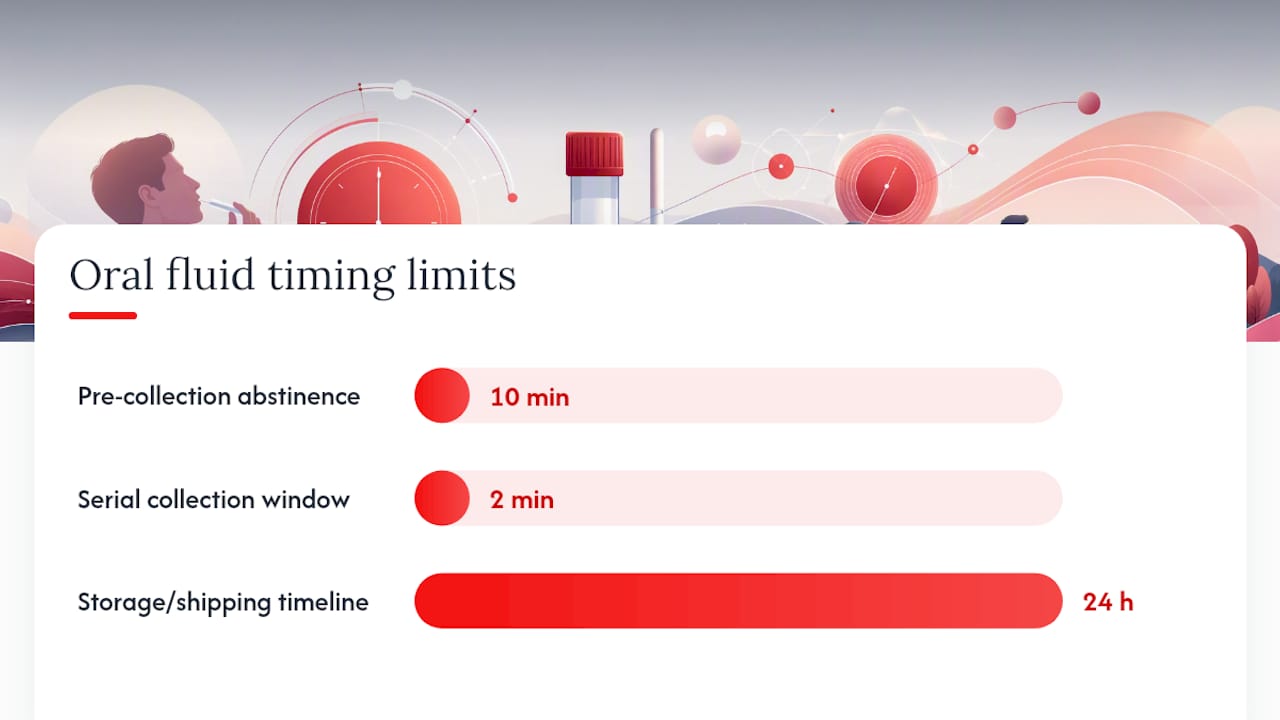
The SAMHSA oral fluid manual prescribes three split-specimen options: simultaneous collection (two devices at once), serial collection (second device used within two minutes of the first), or subdividing a single specimen into A and B containers. Each A and B specimen must contain at least 1 mL of undiluted oral fluid when the device does not use a diluent, per the OFMG.
Numbered procedure:
- Verify photo ID and complete Step 1 of the CCF before any collection begins.
- Instruct the donor not to eat, drink, smoke, or chew gum for 10 minutes before collection. The collector must directly observe this 10-minute wait period.
- Unwrap the oral fluid device in the donor’s presence. Confirm the device’s volume indicator is in the pre-collection position.
- Instruct the donor on proper device placement and collection technique per the device manufacturer’s instructions.
- Observe the collection directly. The collector must maintain line-of-sight throughout.
- Confirm the volume indicator shows the required volume (≥1 mL per specimen). If the indicator does not confirm adequate volume, the collection is incomplete.
- For serial collection: begin the second device within two minutes of completing the first. Document the start and end times of both collections on the CCF.
- Seal both A and B specimens with tamper-evident seals in the donor’s presence. Have the donor initial both seals.
- Complete and sign the CCF. Provide the donor’s copy.
- Store or ship per the 24-hour timeline.
Pro Tip: For serial oral fluid collections, set a visible timer the moment the first device is removed. Two minutes passes faster than it sounds, and a missed window invalidates the split-specimen procedure.
For a broader look at validated specimen collection tools and device options by matrix type, review the clinical and forensic device categories before placing your next supply order.
How to complete the Federal CCF and maintain chain of custody
The Federal CCF is the legal record of every collection. A single incomplete field can cause a laboratory to reject the specimen, and a rejected specimen is functionally the same as no test at all. Understanding why specimen collection procedure matters starts with the CCF.
Field-by-field CCF completion
Step 1 (completed before collection):
- Employer name, address, and phone
- MRO name, address, and phone
- Collection site name, address, and phone
- Donor ID (SSN or employee ID number)
- Reason for test (pre-employment, random, post-accident, reasonable suspicion, return-to-duty, follow-up)
- Drug test panel (federal 5-panel or program-specific)
- Specimen ID number (pre-printed on the CCF and matching the tamper-evident seals)
Steps 2–4 (completed during and after collection):
- Collector initials and date on the tamper-evident seal affixed to the specimen
- Collector signature, printed name, and date on Step 4
- Donor signature on Step 5 (donor certifies the specimen is theirs and the information is correct)
eCCF notes: Electronic CCFs must be used on a system approved for federal collections. Barcode scanning links the electronic record to the physical specimen. When using eCCF, print a paper copy for the donor and retain the electronic record per program retention requirements. If the eCCF system goes down mid-collection, switch to a paper CCF immediately and document the system failure.
Common errors that cause specimen rejection
- Specimen ID number on the seal does not match the number on the CCF
- Step 1 incomplete (missing MRO address, reason for test, or donor ID)
- Collector signature missing or undated
- Donor signature missing (donor refused to sign: document the refusal in the remarks field; do not leave it blank)
- Tamper-evident seal broken or missing on arrival at the laboratory
- A and B specimen labels transposed
Numbered correction protocol for real-time errors:
- If you catch an error before the donor leaves, correct it on the CCF, have both the collector and donor initial the correction, and document the reason.
- If the donor has left and you discover an error, contact the MRO immediately. Do not alter the CCF after the donor has departed without MRO guidance.
- If a seal is broken before the specimen leaves the site, discard the specimen, document the incident, and re-collect if the donor is still present.
- If the laboratory reports a CCF discrepancy, the MRO will contact the collector for a memorandum of correction. Respond within the MRO’s stated deadline.
How do you detect and respond to specimen tampering or adulteration?
Collector vigilance at the point of collection catches more tampering than laboratory validity tests alone. Recognizing the signs early, before the specimen is sealed, gives you options. Once it’s sealed and shipped, your options narrow considerably. For a detailed look at adulterant detection methods and field indicators, the operational guidance below maps directly to the escalation steps.
Observable signs of tampering
- Temperature out of range: Urine below 90°F or above 100°F within four minutes of voiding. The most reliable real-time indicator of substitution or dilution.
- Unusual color or clarity: Bright blue or green (bluing agent contamination from an unsecured toilet), cloudy with particulates, or completely clear.
- Unusual odor: Chemical smell, bleach, or other foreign substance.
- Low volume: Donor unable to provide the minimum required volume after adequate time and hydration opportunity.
- Oral fluid device volume indicator discrepancy: Indicator does not reach the required mark despite the donor’s reported collection effort.
- Foreign materials: Visible particles, foam, or layering in the specimen.
Immediate response steps
- Do not accuse the donor. State the observation factually: “The temperature reading is outside the required range.”
- Flag the observation on the CCF in the remarks field. Document the specific reading, time, and what you observed.
- For an out-of-range temperature: require a second collection under direct observation. Discard the original specimen only after the MRO or program administrator confirms the protocol.
- For suspected adulteration (unusual color, odor, or foreign material): seal and ship the specimen as-is with the observation documented. The laboratory will conduct specimen validity testing.
- Secure both A and B specimens separately. Do not allow the donor to handle the sealed specimens after the observation is made.
- Contact the MRO and, for DOT collections, the employer’s designated employer representative (DER) to report the observation.
When to escalate to alternate matrices
Clinical evidence supports escalating to blood or hair testing when urine tampering is suspected, because those matrices are substantially harder to adulterate. Most non-federal urine collections are unobserved, which increases tampering risk. The operational rationale for ordering an alternate matrix should be documented as: “Urine specimen presented with [specific observation]; alternate matrix ordered per program policy to ensure specimen integrity.” This phrasing is legally defensible and ties the decision to an objective finding rather than a subjective judgment about the donor.
What are the storage and transport requirements for collected specimens?
Timing and packaging are where chain of custody most often breaks down between the collection site and the laboratory. The rules are specific, and the consequences of a missed shipment window are not trivial.
Shipping timelines
The SAMHSA 2024 urine handbook and the oral fluid manual both require specimens to be shipped to the laboratory within 24 hours of collection. When shipment will be delayed (weekend collections, holiday closures, carrier pickup failures), specimens must be placed in secure refrigerated storage at 2°C–8°C. Room-temperature storage beyond same-day shipping is not acceptable.
Packaging requirements
- Place each sealed specimen bottle in a biohazard bag with absorbent material sufficient to absorb the entire specimen volume if the container breaks.
- Seal the biohazard bag and place it inside a rigid outer shipping container.
- Apply a tamper-evident outer seal to the shipping container. Document the seal number on the chain-of-custody record.
- Attach the laboratory’s pre-addressed shipping label. Include the CCF copies designated for the laboratory inside the outer container.
Temperature control during transport
Specimens exposed to extreme heat (above 38°C / 100°F) during transport may be compromised. For specimen temperature monitoring during storage and transit, use temperature indicator cards inside the shipping container. If a specimen arrives at the laboratory with evidence of heat exposure, the laboratory will note it on the chain-of-custody record and may report the specimen as invalid.
| Specimen Type | Shipping Deadline | Temporary Storage Condition |
|---|---|---|
| Urine (primary and split) | Within 24 hours of collection | 2°C–8°C, locked refrigerator |
| Oral fluid (A and B) | Within 24 hours of collection | 2°C–8°C, locked refrigerator |
| Any specimen (same-day shipment) | Same business day | Room temperature, locked cabinet |
If a carrier fails to pick up a scheduled shipment, do not leave specimens at room temperature overnight. Transfer them to refrigerated storage immediately and document the carrier failure, the transfer time, and the storage location.
What training and QA practices keep collectors competent and audits clean?
Training is not a one-time event. Collector competence degrades without regular reinforcement, and a single procedural error by an undertrained collector can invalidate a specimen that took significant organizational effort to obtain. DOT training modules and SAMHSA guidance both treat collector proficiency as an ongoing requirement, not a credential earned once.
Minimum competency elements
Every collector must demonstrate proficiency in:
- Identity verification and CCF Step 1 completion before collection begins
- Securing the collection area (water sources, bluing, access control)
- Urine temperature check within four minutes and correct response to out-of-range results
- Split A/B specimen handling, sealing, and donor-witnessed initialing
- Oral fluid device operation, volume confirmation, and serial collection timing
- Direct-observation collection protocols (when and how to conduct them)
- Documenting tampering observations and escalating to the MRO
Training cadence and mock-collection proficiency
New collectors must complete initial training before conducting any collection independently. Mock-collection proficiency should be validated with multiple consecutive error-free scenarios, observed and attested to by a qualified trainer. Treat proficiency as ongoing: schedule mock collections at least annually, and after any procedural change or rejected-specimen incident.
Numbered QA audit cycle:
- Monthly: spot-check five randomly selected CCFs for completeness and seal-number matching.
- Quarterly: conduct a full inventory count of CCFs, specimen containers, seals, and bluing agent. Compare against collection volume records to identify unexplained discrepancies.
- Quarterly: review all rejected-specimen reports from the laboratory. Identify the error type, trace it to the collector and collection date, and document the corrective action.
- Annually: conduct a full mock-collection drill for all active collectors. Document the trainer’s attestation and file it with the collector’s training record.
- After any DOT or NLCP audit: review findings against current SOPs and update within 30 days.
Recordkeeping for audits
Maintain collector training records, mock-collection attestations, CCF copies (all five parts), rejected-specimen logs, and QA audit reports for a minimum of two years, or longer if your program’s policy or a specific DOT agency rule requires it. Store records in a locked, access-controlled location. For NLCP inspections, auditors will ask to see training records and chain-of-custody documentation simultaneously.
Common operational errors and how to fix them fast
Most specimen rejections trace back to a short list of recurring mistakes. Knowing them in advance is the fastest way to reduce your rejection rate.
Top operational pitfalls
- Mismatched specimen ID numbers: The number on the tamper-evident seal does not match the number on the CCF. Caused by applying the wrong seal or completing the CCF from a different batch. Fix: always pull the seal from the same CCF packet and verify the number before applying.
- Incomplete CCF fields: Missing MRO address, reason for test, or donor ID. Fix: use a pre-printed CCF with the site’s standing information already filled in, so collectors only need to complete donor-specific fields.
- Broken or missing seals on arrival: Caused by improper application or rough handling during shipping. Fix: apply seals flat, with no air bubbles, and use rigid outer packaging.
- Unsecured water sources: Bluing agent not added, or faucets left accessible. Fix: make water-source security a pre-collection checklist item that the collector signs off on before the donor enters the restroom.
- Delayed shipping: Specimens left at room temperature over a weekend. Fix: establish a written protocol for Friday and pre-holiday collections that routes specimens to refrigerated storage before the site closes.
- Donor refusal to sign the CCF: Leaving the signature field blank instead of documenting the refusal. Fix: write “Donor refused to sign” in the remarks field, have the collector sign and date the notation, and report to the MRO.
Handling donor refusals and incomplete collections
A donor who refuses to provide a specimen after being given adequate time and opportunity is treated as a refusal to test under DOT rules, which carries the same consequences as a positive result. Document the refusal on the CCF, note the time, and contact the DER immediately. Do not attempt to pressure the donor or extend the collection beyond the program’s stated time limit.
If a donor cannot provide the minimum volume after three hours (for urine), the collector must discontinue the collection, document the situation, and refer the donor to a physician for evaluation of a possible medical explanation. This is a “shy bladder” protocol, and it must be followed precisely to avoid a procedural challenge.
A compact SOP checklist you can adapt for any site type
This checklist is designed to be copied directly into a local SOP and customized for permanent clinics, mobile sites, or employer onsite collections. Preserve every field that has a regulatory basis; the customization notes below identify which elements are site-type-specific.
Core SOP checklist
Site setup (before first donor):
- [ ] Restricted-access area established and secured
- [ ] Water sources secured; bluing agent added to toilet
- [ ] Supply inventory confirmed: CCFs, specimen containers, seals, PPE, bluing agent, shipping materials
- [ ] eCCF system tested (or paper CCF backup confirmed available)
- [ ] Refrigerated storage confirmed operational and locked
Per-collection steps:
- [ ] Donor photo ID verified and documented on CCF Step 1
- [ ] CCF Step 1 completed in full before collection begins
- [ ] Donor instructed to remove outer garments and empty pockets
- [ ] Donor instructed on collection procedure; 10-minute wait observed (oral fluid)
- [ ] Specimen received and temperature checked within four minutes (urine)
- [ ] Specimen inspected for color, clarity, and odor
- [ ] Split A/B specimens prepared and sealed in donor’s presence
- [ ] Donor initials applied to both tamper-evident seals
- [ ] CCF completed and signed by both collector and donor
- [ ] Donor copy (Copy 5) provided to donor
Post-collection:
- [ ] Specimen placed in secure storage or prepared for same-day shipment
- [ ] Shipping package assembled with biohazard bag, absorbent material, and tamper-evident outer seal
- [ ] Shipment dispatched within 24 hours or specimen transferred to refrigerated storage
- [ ] Collection log updated with donor ID, collection time, and disposition
Customization notes by site type
Permanent clinic: Pre-print CCFs with the site’s standing information. Maintain a dedicated, locked collection room. Assign a primary and backup collector for every shift.
Mobile site: Carry a full supply kit with a minimum two-day buffer of all consumables. Establish a written protocol for transferring specimens to refrigerated storage at the end of each mobile session. Confirm carrier pickup availability before each deployment.
Employer onsite: Coordinate with the employer’s DER before each collection event. Confirm the collection space meets restricted-access requirements before donors arrive. Never conduct collections in an open office or shared space.
eCCF integration: Document the eCCF system name and approval status in the SOP. Include a paper CCF backup procedure with a named responsible person for system-failure events.
How this guide maps to primary sources
Every recommendation in this guide traces to one of the following authoritative documents. When local policy conflicts with a federal source, the federal source controls for DOT-regulated programs. For non-federal programs, the federal standards remain the recognized benchmark.
Primary references
- 49 CFR Part 40 Subpart D: The legal authority for collection-site requirements, forms, equipment, and procedures in DOT-regulated programs. Use this when a policy question involves a DOT-regulated employer or employee.
- DOT’s 10 Steps to Collection Site Security and Integrity: The operational security checklist. Use this for site layout decisions, access control, and daily pre-collection setup.
- SAMHSA Urine Specimen Collection Handbook (2024): Procedural authority for urine collections, including temperature, volume, bluing, and storage. Use this when writing or auditing urine collection SOPs.
- SAMHSA Oral Fluid Collection Site Manual (2024): Procedural authority for oral fluid collections, split-specimen options, and device requirements. Use this for oral fluid SOP development.
- Federal Register OFMG: Legal standard for oral fluid device volume requirements and split-specimen methods in federal agency programs.
- SAMHSA Specimen Collection Handbook (2014): Historical operational reference for chain-of-custody practices and supply handling that remain current in practice.
Using regulatory vs. advisory materials
When a SAMHSA handbook and a Part 40 provision appear to conflict, Part 40 controls for DOT-regulated collections. SAMHSA handbooks are authoritative guidance for federal agency programs under HHS but are advisory for DOT programs where Part 40 is silent. Document which source your SOP follows and why.
Maintaining an updates log
Assign one person at your site to monitor the Federal Register and DOT ODAPC website for changes to Part 40 or the OFMG. When a change is published, update the SOP within 30 days, document the change in a version log (date, section changed, source of change), and brief all active collectors before the new procedure takes effect.
What experienced operators know that the written rules don’t tell you
The written regulations describe what must happen. They don’t tell you what to do when throughput pressure pushes collectors to cut corners, or when a hesitant donor turns a routine collection into a 45-minute standoff.
The most consistent operational tradeoff is speed versus control. High-volume sites, particularly employer onsite events with 50 or more donors in a single day, create pressure to move donors through quickly. That pressure is where procedural errors concentrate. The collector who skips the temperature check to save 90 seconds, or who hands the donor the CCF to fill in themselves, is not being efficient. They are creating a specimen that may not survive a legal challenge.
The fix is not slowing down. It’s building the checklist into muscle memory so each step takes seconds, not minutes. Collectors who have run 500 collections make the process look fast because they never skip a step, not because they’ve found a shortcut.
On donor coaching: when a donor is anxious or reluctant, the most effective approach is to explain each step before you do it, in plain language, without clinical jargon. “I’m going to check the temperature on this strip right now, and then we’ll seal it together” is more effective than silence or a procedural recitation. Donors who understand what’s happening are less likely to refuse, less likely to attempt tampering, and less likely to file a complaint afterward.
One practical inventory cue that works: tape a laminated minimum-stock card to the inside of your supply cabinet. When any item drops below the listed minimum, the next person who opens the cabinet places the reorder. No spreadsheet required, no end-of-week surprise.
Sourcing compliant supplies for your collection site
Compliant collection site procedures depend on compliant supplies. A collection cup that lacks a validated volume indicator, or a tamper-evident seal that doesn’t void on removal, creates a chain-of-custody gap that no procedural care can fix.
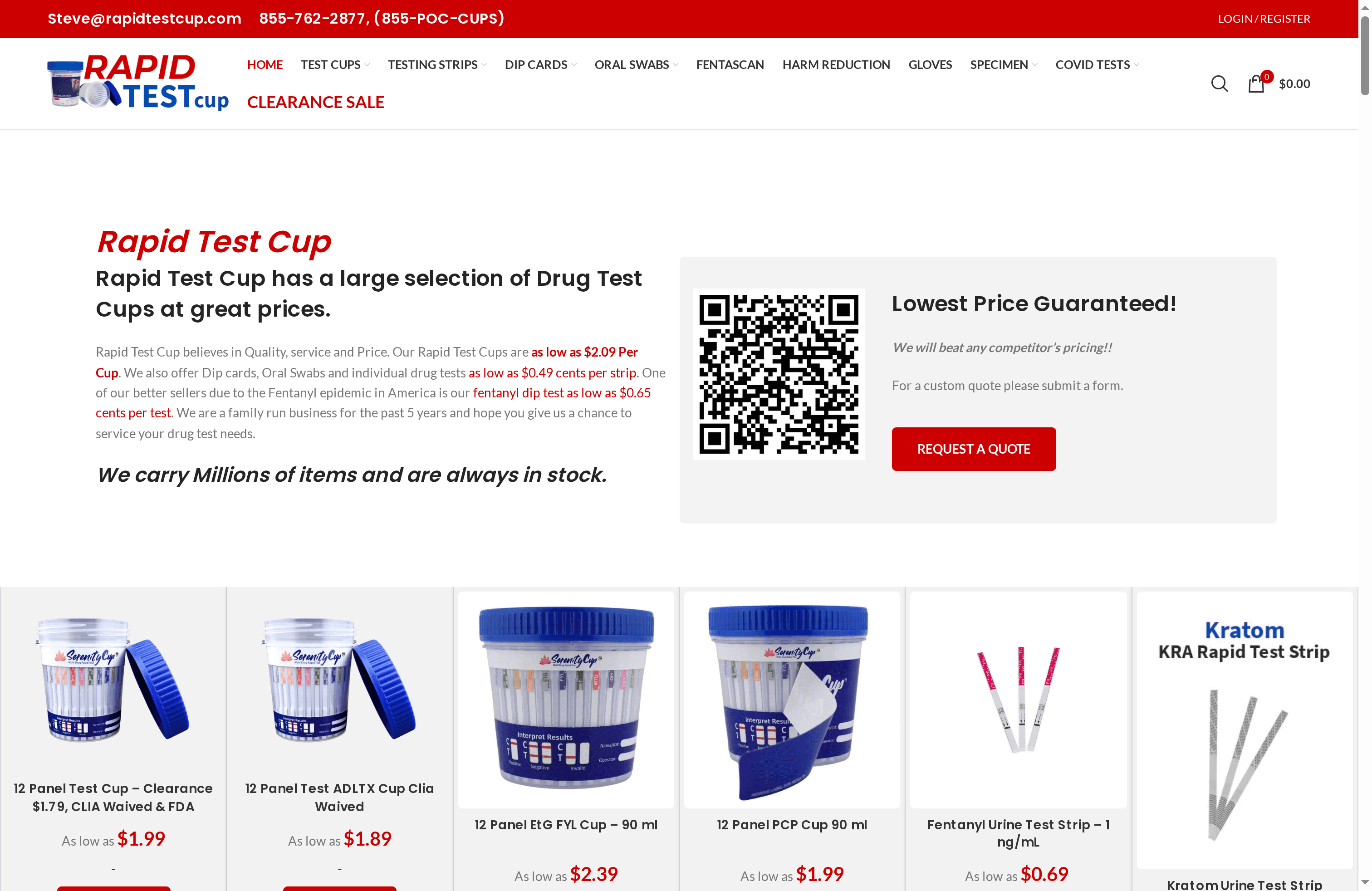
Rapidtestcup carries CLIA-waived, FDA-cleared collection cups, oral fluid devices, and adulterant-detection kits built for professional and forensic use. The 12-panel ADLTX cup includes integrated adulterant detection, which means collectors get a tampering indicator built into the collection step rather than as a separate add-on. For programs that need broader screening, the 22-panel cup with adulterants covers fentanyl, Zaza, and xylazine alongside the standard panel. Bulk pricing is available across the catalog, and the drug testing products for labs category page organizes options by professional use case. Before ordering, confirm the lot documentation and device validation data match your program’s NLCP or DOT requirements. Contact Rapidtestcup directly for custom quotes on high-volume orders.
Sources
Every site manager should maintain a local folder, physical or digital, with the following documents accessible for audits, staff training, and SOP updates.
Official documents to save:
- Federal Register: Mandatory Guidelines for Federal Workplace Drug Testing Programs using Oral Fluid (OFMG)
- DOT’s 10 Steps to Collection Site Security and Integrity (English)
- Oral fluid collection site manual 2024 – SAMHSA
- 49 CFR Part 40 Subpart D – Collection Sites, Forms, Equipment and Supplies
- Specimen Collection Handbook – SAMHSA (2014)
- Urine Specimen Collection Handbook – 2024 – SAMHSA
Local documents to maintain:
For clinical testing programs that also handle immigration or other regulated lab workflows, the complete guide to immigration lab tests provides a useful parallel reference for facility readiness and chain-of-custody documentation practices across regulated testing contexts.
This article is general information, not a substitute for advice from a qualified lawyer. Consult a qualified legal professional about your own circumstances before acting on anything here.