Blog
Avoid NyQuil False Positives on Drug Tests: Wait 48–72 Hours, Ask for GC/MS

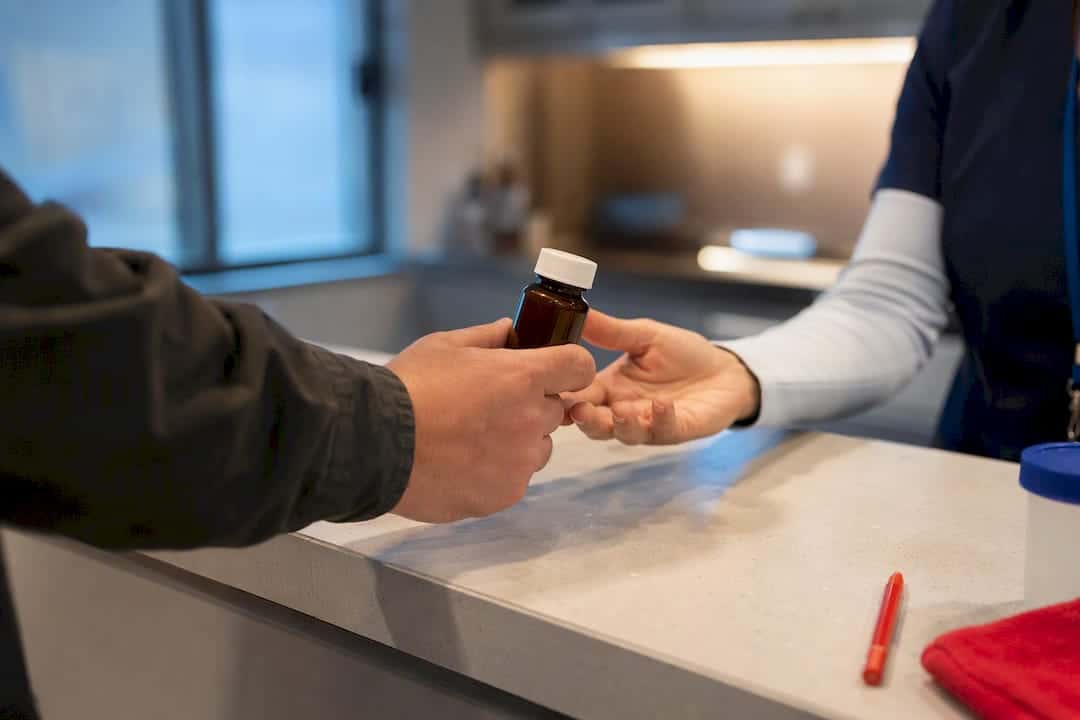
NyQuil itself is not what drug tests are built to catch, but a couple of its ingredients can, in rare cases, trip a preliminary immunoassay screen. If that happens, the result is presumptive, not proof. Confirmatory GC/MS testing is what separates medication interference from an actual illicit substance, so document what you took and ask for that follow-up test rather than assuming the worst.
TL;DR:
- NyQuil ingredients like dextromethorphan and pseudoephedrine can cause false positives on some immunoassay drug tests, but confirmation testing can differentiate actual drug use from interference.
- Most NyQuil components clear from the system within two to three days, so stopping nonessential medication at least 48 hours before screening reduces false positive risk.
- Disclose all recent medications upfront and request confirmatory GC/MS testing after a positive screen to prevent wrongful disciplinary actions.
- Proper collection, chain-of-custody, and confirmatory testing are essential for accurate, legally defensible drug test results.
- A false positive caused by NyQuil typically aligns with recent use and specific ingredients but can only be definitively ruled out with lab confirmation.
Table of Contents
- Which NyQuil Ingredients Can Trigger a False Positive
- Screening vs. Confirmatory Testing: What a Positive Result Actually Means
- How Long NyQuil Stays Detectable in Your System
- What to Do If Your Screen Comes Back Positive
- Steps to Lower Your Risk Before a Urine Test
- Why Lab-Grade Confirmation and Proper Collection Matter
- Telling NyQuil Interference Apart from Actual Drug Use
- How to Talk to an Employer or Testing Administrator About NyQuil Use
- Workplace Policy and Legal Considerations Around False Positives
- A Calmer Way to Think About This
- Reliable Testing Products for Employers and Clinics
- Sources
Which NyQuil Ingredients Can Trigger a False Positive
The active ingredients vary by formula, but most versions of NyQuil contain dextromethorphan (DXM), doxylamine, and acetaminophen. Some Severe or Sinus variants swap in pseudoephedrine, while others use phenylephrine instead.
The problem starts at the molecular level. Immunoassay screens work by using antibodies that bind to a target drug’s chemical shape. When another compound happens to share enough of that shape, the antibody binds anyway and the machine flags it as positive, even though the drug it was designed to detect isn’t actually there.
- Dextromethorphan has been reported to cross-react on screens designed for PCP or opiates, though this isn’t the norm for every test kit or every dose.
- Pseudoephedrine formulations carry a documented history of triggering amphetamine-class cross-reactions on some immunoassays.
- Phenylephrine formulations are considered far less likely to cause that same interference.
- Acetaminophen and doxylamine are not typical drivers of cross-reactivity on standard panels.
If you’re worried about a specific screening category, flip the box over. Checking whether your NyQuil contains pseudoephedrine versus phenylephrine takes ten seconds and tells you more about your actual risk than anything else on this page.
Screening vs. Confirmatory Testing: What a Positive Result Actually Means
A screen and a confirmation are not the same test, and treating them as interchangeable is where most of the anxiety around this topic comes from.
- The screen (immunoassay). This is the fast, cheap, antibody-based test most drug panels run first. It’s sensitive but not specific, meaning it’s good at flagging anything that looks close to a target drug, cross-reactivity included.
- The confirmation (GC/MS or LC-MS/MS). Gas chromatography-mass spectrometry separates and identifies compounds by their actual molecular structure, not by antibody guesswork. This is the step that tells a lab whether dextromethorphan or an actual opiate caused the flag.
- The chain of custody. Labs that follow proper collection protocol log every step from specimen to result, which is what makes a confirmatory finding legally defensible in a workplace or clinical dispute.
Most accredited labs and employers already run confirmation automatically on any nonnegative screen, but it’s worth confirming that policy applies to your specific test before you sign anything.
Pro Tip: Ask the collector directly, “Will this specimen automatically go to GC/MS confirmation if the screen comes back nonnegative?” If the answer is no, request it in writing before you leave the collection site.
How Long NyQuil Stays Detectable in Your System
Detection windows depend on which ingredient you’re asking about, and they’re shorter than most people assume. For a typical adult dose, NyQuil’s components clear within roughly two to three days, though individual ingredients behave differently.
- Dextromethorphan: parent compound has a short elimination half-life, generally clearing within 12 to 18 hours, though genetic variation in CYP2D6 metabolism can stretch detectable metabolites out to three or four days in slow metabolizers.
- Doxylamine: tends to linger longer, often 2 to 3 days.
- Acetaminophen: mostly cleared within 24 hours.
- Decongestants (pseudoephedrine or phenylephrine): variable, depending on dose and kidney function.
Age, liver function, hydration, and how often you’ve been dosing all shift these numbers. A person who took one nighttime dose clears differently than someone who’s been dosing every twelve hours for a week straight. As a conservative benchmark, stopping nonessential NyQuil 48 to 72 hours before a scheduled urine screen covers most people, though slow metabolizers may want more buffer.
What to Do If Your Screen Comes Back Positive
Don’t panic, and don’t assume the worst before the confirmation results are in. A presumptive positive is a starting point for questions, not a final answer.
- Disclose everything before or during collection. Tell the collector about every over-the-counter and prescription medication you’ve taken in the past week, and get it written on the intake form.
- Request confirmatory testing explicitly. Ask that GC/MS or LC-MS/MS be run on the same specimen, and ask about split-sample testing if the lab offers it.
- Keep your paper trail. Save medication boxes, pharmacy receipts, and any prescriber notes that back up your explanation.
- Follow employer procedure, but push back on timing. If this is a workplace test, cooperate with the process, but insist that confirmatory results come back before any disciplinary decision is finalized. Identifying a false positive usually comes down to exactly this kind of documentation.
Steps to Lower Your Risk Before a Urine Test
A little planning goes further than panic ever will.
- If you can, stop nonessential NyQuil 48 to 72 hours before a scheduled test, but never discontinue a prescribed medication without talking to your doctor first.
- Choose a phenylephrine formulation over pseudoephedrine if amphetamine cross-reactivity is a specific concern.
- Give the testing facility a heads-up in advance, along with a written list of what you’ve taken in the prior week.
- Skip the internet advice about diluting your sample. Labs check for that, and an invalid or diluted result often creates more trouble than an honest disclosure ever would.
Pro Tip: Write down the exact time of your last dose before you go in. “Last night around 10 PM” is a lot more convincing to a reviewing physician than “sometime this week.”
Why Lab-Grade Confirmation and Proper Collection Matter
A cheap screening test with no confirmation backup is a liability, not a safeguard, for anyone relying on results that carry real consequences.
- Adulterant checks (creatinine, specific gravity, pH) catch tampered or invalid specimens before they ever reach the screening stage.
- GC/MS confirmation is what actually distinguishes a true positive from cross-reactivity, and it’s the step Cleveland Clinic points to when medication history conflicts with a screening result.
- Multi-panel cups with built-in adulterant strips and documented chain-of-custody collection reduce the odds of a disputed result ever reaching an employer’s desk.
- At-home rapid screens are useful for personal peace of mind or informal monitoring, but anything with legal or employment stakes belongs at a certified lab running full confirmatory protocol.
Clinics, treatment programs, and employers that build both steps into their process from the start spend far less time untangling disputes later.
Telling NyQuil Interference Apart from Actual Drug Use
A false positive from NyQuil and a true positive for an illicit substance can look identical on the initial screen printout. That’s exactly why the screen alone can’t be the final word.
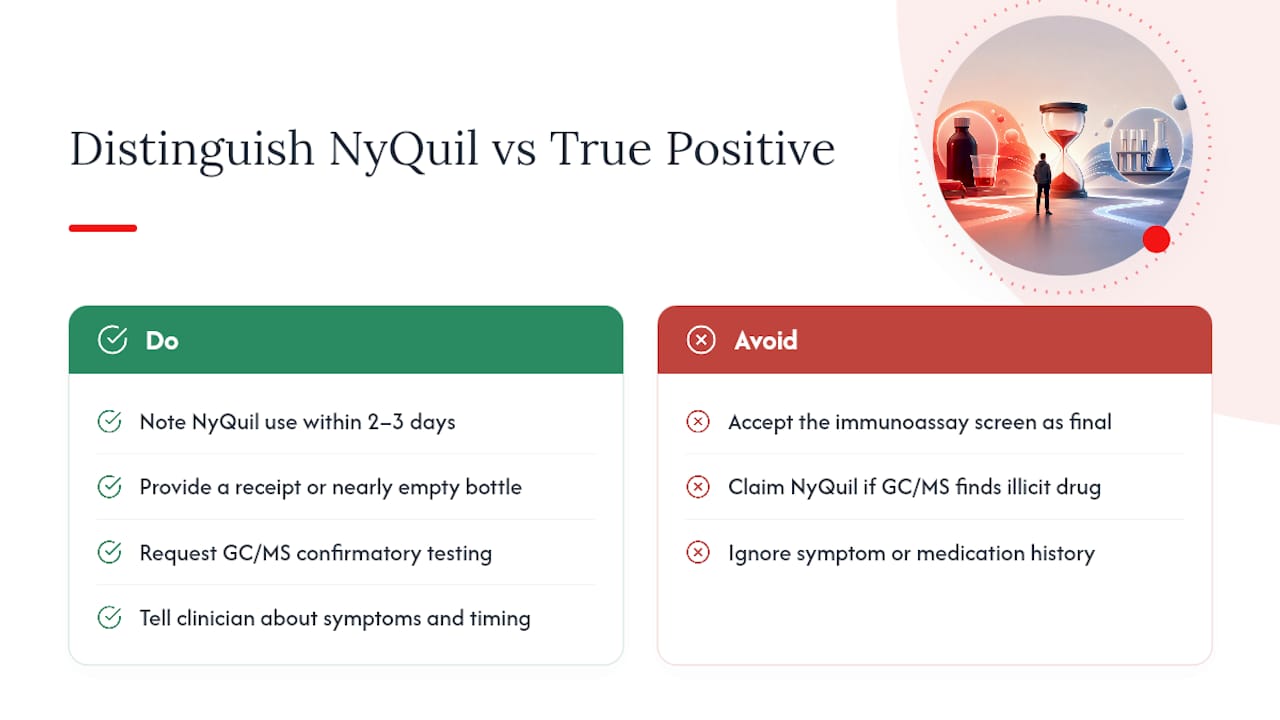
There are a few practical clues that point toward medication interference rather than actual drug use, though none of them are definitive on their own. Timing is one: if you took a dose of NyQuil within the past two to three days and the screen flags a category like PCP, opiates, or amphetamines, cross-reactivity is a reasonable first explanation, especially if you have no other exposure to those substances. A pattern of nighttime dosing tied to cold or flu symptoms, backed by a receipt or a nearly empty bottle, adds weight to that explanation.
What genuinely distinguishes the two isn’t anything visible on the screen; it’s the confirmatory result. GC/MS testing identifies the exact molecular structure of whatever triggered the flag. If dextromethorphan shows up on confirmation and nothing else does, that’s medication interference, full stop. If an actual illicit compound like phencyclidine or a genuine opiate metabolite shows up instead, the NyQuil explanation doesn’t hold, and no amount of “I only took cold medicine” changes that lab result.
This is also where symptom context matters clinically. A doctor or medical review officer evaluating a nonnegative screen will typically ask about recent illness, symptoms consistent with cold or flu, and medication timing, then weigh that history against the confirmatory finding rather than the screen alone.
How to Talk to an Employer or Testing Administrator About NyQuil Use
Silence is the worst strategy here. The moment you know you’ve taken NyQuil recently and a test is scheduled, say so, ideally before the specimen is even collected.
Most collection sites have a section on their intake form for current medications. Fill it out completely, listing NyQuil by name along with the approximate time and dose of your last use. Don’t downplay it and don’t over-explain either. A simple, factual statement (medication name, approximate dose, approximate time) gives the medical review officer exactly what they need to flag your case for extra scrutiny if the screen comes back nonnegative.
If you’re dealing with a workplace administrator rather than a lab directly, the same principle applies. Most medical review officers are trained specifically to call employees when a screen is presumptive positive and ask about recent medications before anything moves forward. If that call happens, answer directly, name the product, and offer to provide packaging or a receipt if asked. Employers generally aren’t looking to punish someone for taking cold medicine. They’re looking for a nonnegative result that either gets confirmed as illicit drug use or ruled out through documentation and confirmatory testing.
What you want to avoid is silence followed by a scramble. Waiting until after a positive result to mention NyQuil use looks worse than disclosing it upfront, even though the underlying facts haven’t changed.
Workplace Policy and Legal Considerations Around False Positives
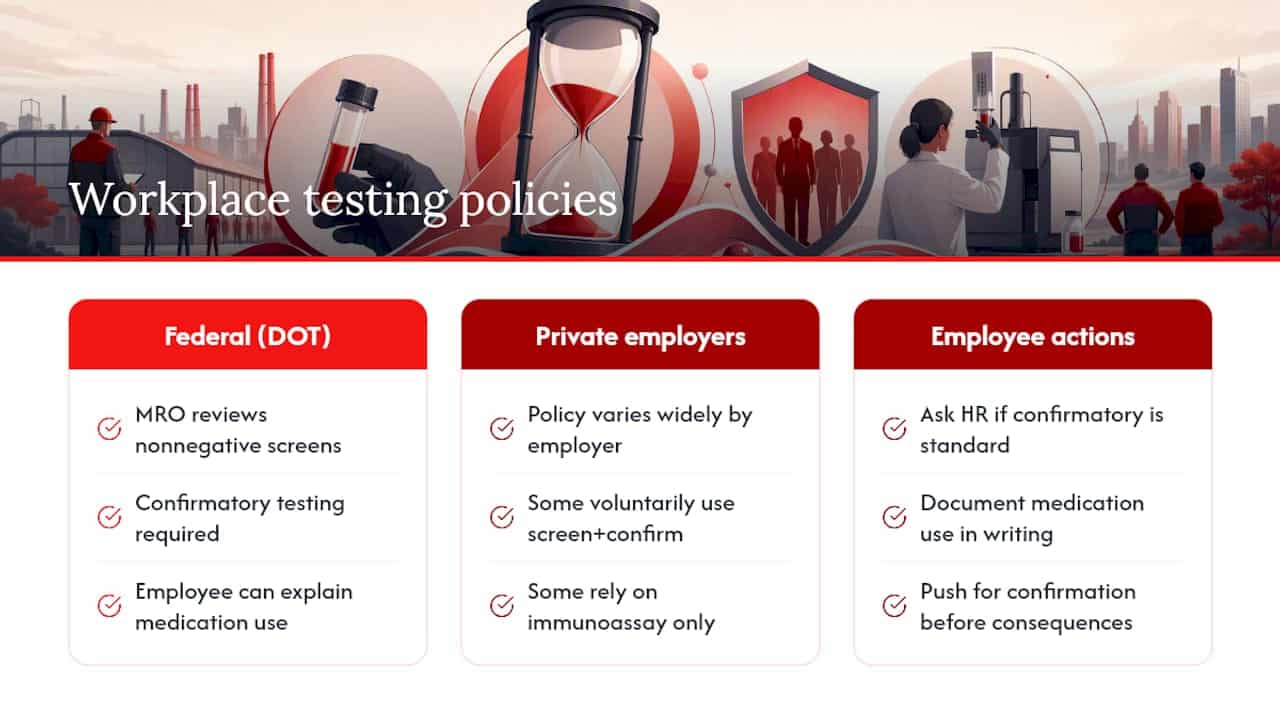
Workplace drug testing policy in the United States generally follows federal guidelines for regulated industries (transportation, federal contractors) and employer-specific policy for everyone else, which means your actual protections vary quite a bit depending on your job and your employer’s written procedure.
Federally mandated testing programs, the kind covered by Department of Transportation rules, require a medical review officer to review any nonnegative screen and give the employee a chance to explain medication use before a result is reported as positive. That review step exists specifically to catch situations like NyQuil interference before it ever becomes a personnel action.
Private employers not bound by those federal rules set their own policy, and it varies widely. Some follow the same two-step screen-then-confirm model voluntarily because it protects them from wrongful termination claims. Others rely on a single immunoassay result, which is a real gap in protection for employees and one reason documentation matters so much on your end. If your employer’s policy isn’t clear, ask HR directly whether confirmatory testing is standard practice before any action is taken on a nonnegative screen.
Legally, an employer disciplining someone based solely on an unconfirmed immunoassay screen is on shaky ground in many jurisdictions, though laws differ by state and by industry. This isn’t a substitute for legal advice specific to your situation, but it’s a reason to push, calmly and in writing, for confirmation before accepting any consequence tied to a presumptive result.
A Calmer Way to Think About This
Most of the fear around NyQuil and drug testing comes from treating a screen like a verdict. It isn’t one. The entire two-step system, screen first, confirm second, exists precisely because cross-reactivity is a known, expected quirk of immunoassay chemistry, not a sign that something has gone wrong with you or the test.
What actually protects you is boring and unglamorous: write down what you took and when, ask for GC/MS confirmation, keep your receipts. And if you’re on a prescribed medication for a real medical reason, never stop taking it just to avoid a screening result. Talk to your doctor first, always.
— Justin
Reliable Testing Products for Employers and Clinics
Getting a clean, defensible result starts with the collection kit, not just the lab that processes it afterward. Rapidtestcup carries 12-panel cups built with integrated adulterant strips, so specimen validity gets checked at the point of collection instead of discovered after the fact.
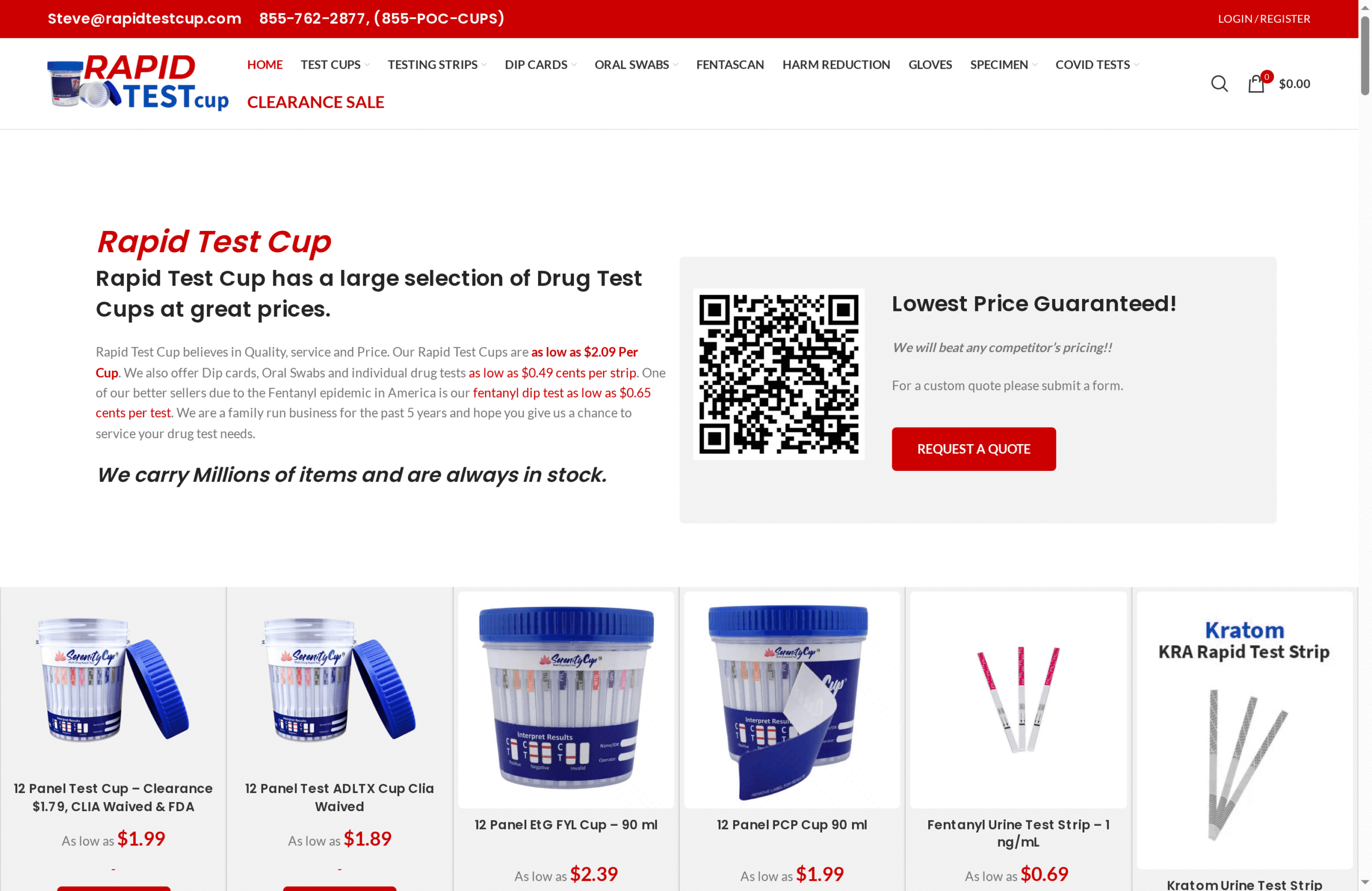
For clinics and employers who want broader coverage, the 18-panel cup with adulterant testing adds fentanyl and alcohol biomarker detection alongside the standard panel, which matters when a single screen needs to cover more ground before a sample ever leaves the building. Both options are CLIA waived, priced for bulk ordering, and designed to hold up if a result ever needs to go to confirmatory testing later. If you’re setting up a screening program or just want a kit that won’t leave you guessing, browse the full panel selection and get a quote for your volume.
Sources
This article is general information, not a substitute for advice from a qualified doctor. Consult a qualified healthcare professional about your own circumstances before acting on anything here.