Blog
Few Hours to 2–3 Days: Oral Swab Detection Windows and Caveats


Most drugs typically show up on an oral swab during a window lasting from a few hours up to several days, with the exact length depending on the drug class, dose, and frequency of use. Oral fluid testing, as reviewed by researchers studying oral fluid drug testing, catches the parent drug itself rather than its metabolites, which is why it reflects recent use so closely. Some suppliers sell swabs built around that principle.
TL;DR:
- Detection windows for drugs in oral fluid generally span a few hours to two or three days, longer for chronic or heavy users.
- Screening devices use higher cutoffs, meaning trace amounts may go undetected and false negatives can occur from poor collection or low doses.
- Alcohol typically remains detectable in oral swabs for up to 24 hours, while stimulants and opioids can be found for 24 to 48 hours.
- Oral swabs primarily detect the parent drug, which clears faster from the body than metabolites identified in urine or longer-term in hair.
- Confirmatory lab testing is essential for accurate results, especially when screening outcomes have legal or employment consequences.
Table of Contents
- Estimated detection windows by drug class
- Why oral swabs catch a narrower window than urine or hair
- Factors that lengthen or shorten the detection window
- Collection, cutoffs, and confirmation testing explained
- Reading a positive or negative result correctly
- How Rapidtestcup supports accurate oral-swab testing
- A few honest cautions before you rely on any timeline
- Oral-swab kits worth comparing before you buy
- Sources
- FAQ
Estimated detection windows by drug class
The ranges below come from clinical summaries and federal guidance, not a single fixed cutoff. Two things drive the spread: whether a test measures a screening threshold or a lab’s lower confirmatory limit, and whether the person is an occasional or a frequent user.
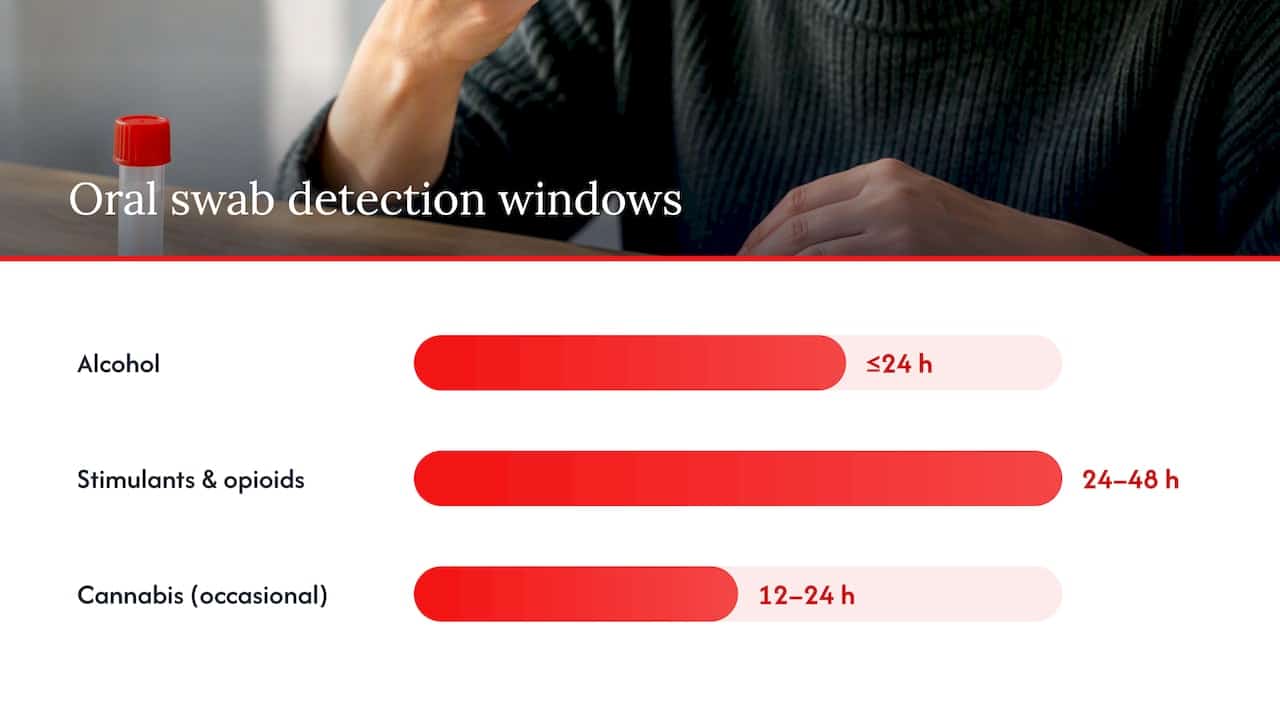
According to a clinical overview of oral drug testing, alcohol is typically detectable for up to 24 hours, and stimulants and several opioids often show up for 24 to 48 hours. Cannabis usually registers for about 12 to 24 hours in occasional users, but chronic users can test positive longer because the metabolite THCA lingers, a distinction covered in the AAA Foundation’s review of oral fluid detection windows.
A few things to keep in mind about these numbers:
- Screening devices use a cutoff concentration, so a result below that line reads negative even if trace drug is still present.
- Lab confirmation with a lower limit of quantification can detect a drug longer after use than an on-site screen.
- Chronic, heavy use tends to push the upper end of every range further out than a single occasional dose would.
Why oral swabs catch a narrower window than urine or hair
Oral fluid picks up the parent drug almost as soon as it enters the bloodstream, through direct deposition in the mouth and passive diffusion from blood vessels near the salivary glands. That is a fast, but short-lived, signal.
- Oral fluid mainly reflects the parent compound, which clears from the body faster than the metabolites urine testing relies on.
- Urine detects metabolites that the body produces after processing a drug, so it can stay positive well after the parent drug is gone.
- Hair incorporates compounds into the growing shaft over weeks, which is why it reflects a much longer history of use.
That difference matters for interpretation: an oral swab answers “did this person likely use recently?” while urine or hair answer a broader question about past use. A comparison of urine and saliva testing breaks down when each matrix fits the situation.
Factors that lengthen or shorten the detection window
No single number applies to everyone, because the window shifts with the person, the drug, and the test itself.
- Frequency and dose: someone who uses heavily and often will test positive longer than someone who took a single occasional dose.
- Metabolism, body composition, and hydration: these change how quickly a drug clears an individual’s bloodstream.
- Route of administration: smoked or inhaled drugs often produce a faster spike and a shorter tail than drugs taken orally.
- Device and collection factors: the swab’s buffer dilution, the sample volume collected, and the screening cutoff all shift what counts as positive.
- Saliva flow: dry mouth can slow collection or reduce the sample below the volume a device needs to run properly.
A single beer and a night of heavy drinking will not clear on the same timeline, and a person who smokes cannabis daily will carry a longer detectable trace than someone who used it once at a party.
Pro Tip: If you need to know how a specific product’s cutoffs and detection windows compare, check the panel specifications before assuming a generic timeline applies.
Collection, cutoffs, and confirmation testing explained
Standard protocol asks the person being tested to avoid food, drink, and mouthwash for a period before collection, since residue in the mouth can interfere with the sample. Collectors typically hold an absorbent pad against the cheek or under the tongue for a set contact time until a volume indicator confirms enough saliva was captured.
- Point-of-care screening devices deliver a presumptive result in minutes, but they run on a higher cutoff than a lab test.
- Some collection devices use a diluent buffer, which lowers the measured concentration compared with straight expectorated saliva.
- A positive screen should be confirmed with a laboratory method before it carries real weight in a workplace or legal context.
Modern LC-MS/MS methods can quantify some opioids, including fentanyl, down to roughly 0.1 nanograms per milliliter, according to validation research on oral fluid opioid testing, far below what a typical screening device can detect. Federal guidelines on workplace drug testing programs lay out how cutoffs and collection procedures are set for oral fluid testing programs, including the tradeoffs between screening for THC versus its metabolite THCA.
Reading a positive or negative result correctly
A positive oral swab means a drug was present above the test’s cutoff at the time of collection. It does not mean the person is impaired right now, since detection and impairment follow different timelines entirely.
- False negatives can come from dry mouth, a dose too low to clear the cutoff, or a poorly collected sample.
- False positives are less common but can stem from cross-reactivity with another substance or contamination during collection.
- A questionable or high-stakes result should go to lab confirmation with LC-MS/MS rather than rest on a single screening device.
Pro Tip: When a result carries real consequences, such as employment or legal proceedings, request confirmatory testing before treating a screening result as final.
Anyone facing a disputed or consequential result should also talk to a workplace administrator, medical provider, or attorney, since forensic and clinical contexts apply different standards to the same raw data.
How Rapidtestcup supports accurate oral-swab testing
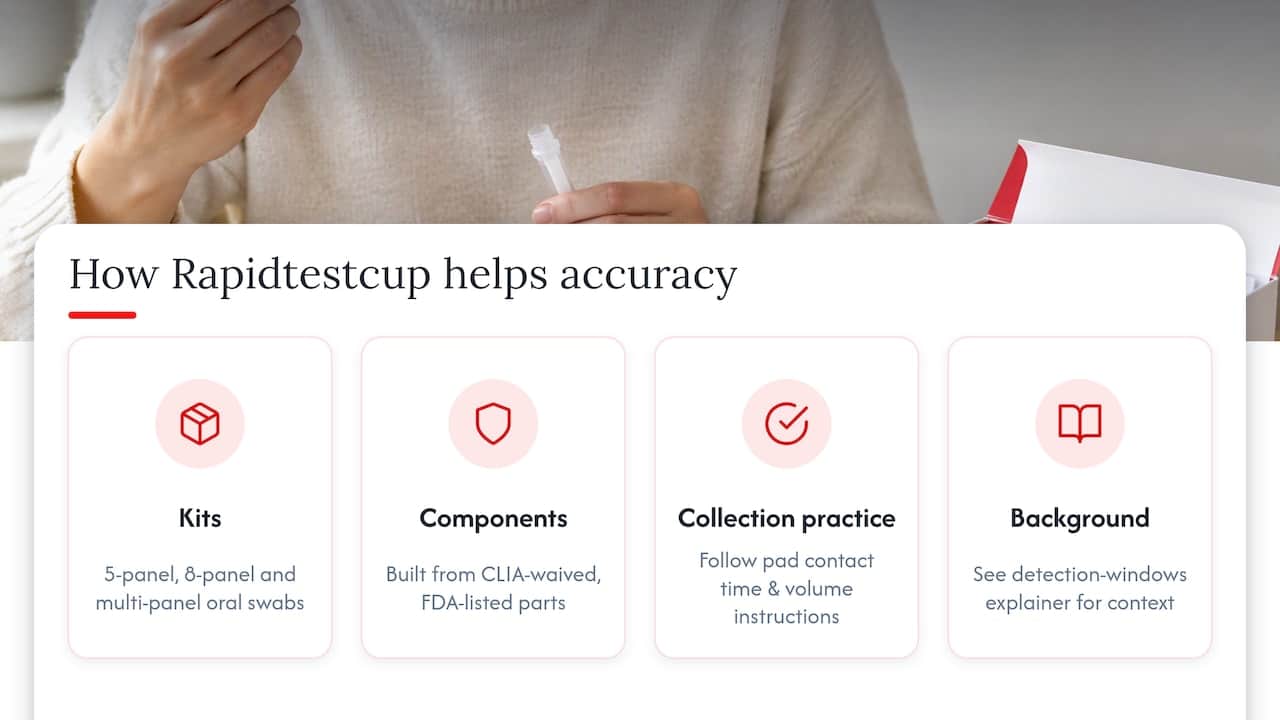
Rapidtestcup carries 5-panel and 8-panel oral swab kits, along with broader multi-panel options, built around CLIA-waived and FDA-listed components. Choosing a panel that actually covers the substances in question, and following the pad contact time and volume instructions on the package insert, cuts down on the collection errors that produce an inconclusive or misleading result. Readers can also review a broader explainer on detection windows for background on how specimen type changes what gets detected.
A few honest cautions before you rely on any timeline
These ranges are a starting point, not a guarantee for any individual case. Detection windows shift with dose, body chemistry, and the device used, so when a result has real consequences, confirmatory lab testing and professional guidance matter more than any chart.
— Justin
Oral-swab kits worth comparing before you buy
Choosing the right kit comes down to matching panel coverage to the substances you actually need to screen for, then checking whether the device includes a buffer that might dilute the sample. Rapidtestcup’s oral swab lineup covers a range of panel sizes at prices the company positions as the lowest available, backed by same-day shipping and bulk discounts for clinics, employers, and treatment programs.
- Compare the 5-panel oral swab against broader multi-panel kits before deciding how much coverage you need.
- Check whether a kit’s cutoffs match your intended use, whether that is workplace screening or personal peace of mind.
- Visit the full shop to see current inventory, pricing, and bulk order options.
Sources
- Drug Testing in Oral Fluid (review) – PMC
- Detection windows for drugs in oral fluid: cannabinoids, stimulants, and opioids – AAA Foundation
- Mandatory Guidelines for Federal Workplace Drug Testing Programs (Federal Register / OFMG)
- Oral drug test — Cleveland Clinic
- PubMed record on LC–MS/MS validation for opioids (fentanyl) – PubMed
FAQ
How far back can a mouth swab test detect drug use?
Most oral swabs detect drug use within the past few hours to about two or three days, depending on the drug and how often someone uses. Occasional users tend to clear faster than chronic, heavy users, as outlined in research on oral fluid detection windows.
When will alcohol be out of my system for a mouth swab?
Alcohol is typically detectable on an oral swab for up to about 24 hours after drinking, according to a clinical summary of oral drug testing. The exact time depends on how much was consumed and individual metabolism.
How long can drugs stay detectable on a mouth swab overall?
Detection generally ranges from several hours to a few days across drug classes, with cannabis, stimulants, opioids, and benzodiazepines each following a somewhat different curve. Chronic use tends to extend the window compared with a single occasional dose, per oral fluid testing literature.
Can food, drink, or mouthwash affect oral swab accuracy?
Yes, recent food, drink, or mouthwash can leave residue in the mouth that interferes with collection or the test’s chemistry. Standard protocol asks people to avoid these for a period before the swab is collected to keep the sample and its detection window reliable.
What causes a false negative on an oral swab test?
Dry mouth, an insufficient sample volume, or a dose too low to clear the device’s cutoff can all produce a false negative. Poor collection technique is another common cause, which is why a questionable result often warrants lab confirmation with LC-MS/MS.