Blog
Employers: FMCSA 8 hour, 32 hour Rules for Post Accident Drug Testing


Post accident drug testing is permissible when an employer has an objectively reasonable basis for it and applies the policy consistently, according to OSHA’s own interpretation of 29 C.F.R. §1904.35(b)(1)(iv). Employers covered by DOT rules face mandatory triggers under FMCSA §382.303, including an 8-hour window for alcohol testing and a 32-hour window for drug testing, with documentation required whenever those windows are missed. The sections below walk through specimen types, chain of custody, and how to build a policy that holds up.
TL;DR:
- Post-accident drug testing must be based on an objective reason and applied uniformly to avoid OSHA retaliation claims; blanket testing of all injury reporters is risky.
- Under DOT rules, fatalities always require testing, while injuries needing treatment or tow-aways only require testing if the driver is cited; timing windows of 8 and 32 hours must be strictly followed.
- Employers should use prescribed specimen types and proper chain-of-custody procedures, including federal forms and laboratory confirmation, to ensure result validity.
- On-site screening tools like multi-panel cups and dip cards are useful for rapid safety decisions but cannot replace lab-confirmed results for disciplinary actions.
- When handling refusals, document all causes precisely, involve legal counsel when necessary, and wait for MRO confirmation before imposing discipline.
Table of Contents
- When federal rules require post-accident testing
- OSHA’s limits and how state laws affect testing
- Choosing the right specimen and testing window
- Building a defensible chain of custody
- Writing a policy that actually holds up
- Handling refusals and disciplinary decisions correctly
- Choosing the right on-site screening supplies
- A practical view on safety versus employee rights
- Where to find compliant screening supplies
- Sources
- FAQ
When federal rules require post-accident testing
FMCSA §382.303 sets out the specific crash scenarios that trigger mandatory testing for regulated drivers, and the rule does not leave much room for employer discretion once one of those scenarios occurs. A fatality always triggers testing. An injury requiring immediate medical treatment away from the scene triggers testing when the driver also receives a citation. A tow-away triggers testing under the same citation condition.
Timing matters as much as the trigger itself. Alcohol tests must be attempted within 8 hours of the accident, and drug tests within 32 hours, per FMCSA’s post-accident testing guidance. When either window is missed, the employer must document why the test could not be completed rather than simply letting it drop.
- A fatality involving a commercial motor vehicle requires testing regardless of citation.
- A bodily injury with immediate medical treatment away from the scene requires testing only when the driver is cited.
- Tow-away damage requires testing only when the driver is cited.
- Law enforcement blood or breath tests can substitute for the employer’s own test when properly documented.
Testing requirements differ somewhat across DOT modal agencies, so an employer running mixed fleets or multimodal operations should confirm which rule set applies to each role.
OSHA’s limits and how state laws affect testing
OSHA does not ban post-accident testing, but its guidance sets a real ceiling on how employers can use it. Under 29 C.F.R. §1904.35(b)(1)(iv), a testing policy needs an objectively reasonable basis and has to be applied the same way every time, or it risks looking like retaliation against an employee who reported an injury.
- Testing tied to root-cause analysis, where drug use could plausibly have contributed to the incident, is generally defensible.
- Blanket testing of every employee who reports any injury, regardless of circumstances, is the pattern OSHA has flagged as retaliatory.
- The evaluation should focus on whether all employees whose conduct could have contributed are tested, not only the one who reported the injury.
State law adds another layer. Consent requirements, privacy protections, and workers’ compensation interactions vary by state, and a policy that is fine under federal rules can still run into trouble locally.
Pro Tip: Before finalizing a testing policy, have counsel confirm your state’s consent and privacy rules against your draft language, not just the federal baseline.
Choosing the right specimen and testing window

Alcohol impairment fades quickly, which is why DOT builds its 8-hour target directly into the post-accident rule. A breath test taken a day later tells you very little about impairment at the time of the crash.
Urine and oral fluid specimens serve different purposes and carry different detection windows, and SAMHSA’s guidance treats them under separate mandatory guideline sets, the Urine Mandatory Guidelines and the Oral Fluid Mandatory Guidelines.
- Urine testing remains the standard for regulated federal programs and can be processed at instrumented initial testing facilities for the initial screen.
- Oral fluid testing in regulated programs requires HHS-certified laboratories for every stage, since IITFs are limited to urine.
- Point-of-collection screens are useful for an immediate safety call but are not a substitute for laboratory and MRO-confirmed results before disciplinary action.
Building a defensible chain of custody
A test result only holds up if the paperwork behind it does. SAMHSA’s urine collection site manual spells out exactly what a compliant federal collection looks like, and skipping steps is the most common way employers undermine their own case.
- Use the Federal Custody and Control Form for every regulated collection, filled out completely and legibly.
- Have the collector check specimen temperature within four minutes and record it on the Federal CCF.
- Trigger a directly observed recollection when temperature is out of range, and treat a donor leaving before that recollection as a refusal.
- Send the specimen only to an HHS-certified laboratory, since uncertified labs or incorrect forms can jeopardize the entire result.
- Route every result through a Medical Review Officer before it reaches the employer, since the MRO reviews medical explanations that can account for a positive screen.
Writing a policy that actually holds up
A defensible post-accident testing policy starts with objective triggers written down in advance, not decided case by case after an incident. It should name who gets tested, protect employee privacy in how results are communicated, and spell out how it interacts with collective bargaining agreements or workers’ compensation claims.
- State the exact incident triggers (injury severity, property damage threshold, citation status) rather than leaving them to supervisor judgment.
- Build in a documentation template that captures the incident facts before memory fades.
- Address how testing interacts with any union contract or workers’ comp filing before a real case forces the question.
Operationally, the window between an accident and a completed test is where most mistakes happen. Call the collection site ahead of time so it is ready, document the facts of the incident immediately, and preserve any physical evidence that might matter later. Consistent enforcement across every qualifying incident, paired with supervisor training and clean recordkeeping, is what keeps a policy out of OSHA’s retaliation crosshairs. A drug screening workflow guide can help formalize these steps into a repeatable process.
Pro Tip: Run a tabletop review of your policy against a hypothetical accident once a year. Gaps show up faster on paper than they do in a real emergency.
Handling refusals and disciplinary decisions correctly
A refusal under 49 CFR Part 40 includes more than an outright “no”: leaving before a required observed collection or failing to provide a sufficient specimen without a valid medical reason both count. Document precisely why a test was missed or incomplete, whether the cause was a missed timing window or a legitimate medical issue, and keep those records with the rest of the incident file.
- Loop in legal counsel and any applicable union before disciplinary action, not after.
- Wait for MRO-confirmed results before treating a screen as conclusive.
- Never let discipline for a positive test double as punishment for the act of reporting an injury.
Choosing the right on-site screening supplies
Multi-panel test cups work well for an immediate screening decision right after an incident, while dip cards and oral swabs suit lower-volume or mobile collection needs. Both are meant to answer an initial safety question quickly, not to replace a lab and MRO-confirmed result for disciplinary action.
- Confirm CLIA waived and FDA status matches your intended use, whether that is workplace screening or a forensic chain-of-custody collection.
- Choose cups or cards with built-in adulterant checks so tampering is flagged at collection.
- Keep packaging and documentation consistent with chain-of-custody needs if the result might later support discipline.
- Stock enough supply on hand that a shift supervisor is never scrambling after an incident.
A practical view on safety versus employee rights
The employers who get this right treat testing as one input into an incident investigation, not a verdict. Document the facts before memory fades, wait for MRO confirmation before disciplining anyone, and apply the same trigger criteria every single time. When a case looks unusual, involve occupational health or counsel before acting rather than after.
— Justin
Where to find compliant screening supplies
A variety of multi-panel cups, dip cards, and oral swabs suitable for on-site screening programs are available, including options that are CLIA waived and FDA-approved, with some providers offering same-day shipping on in-stock items.
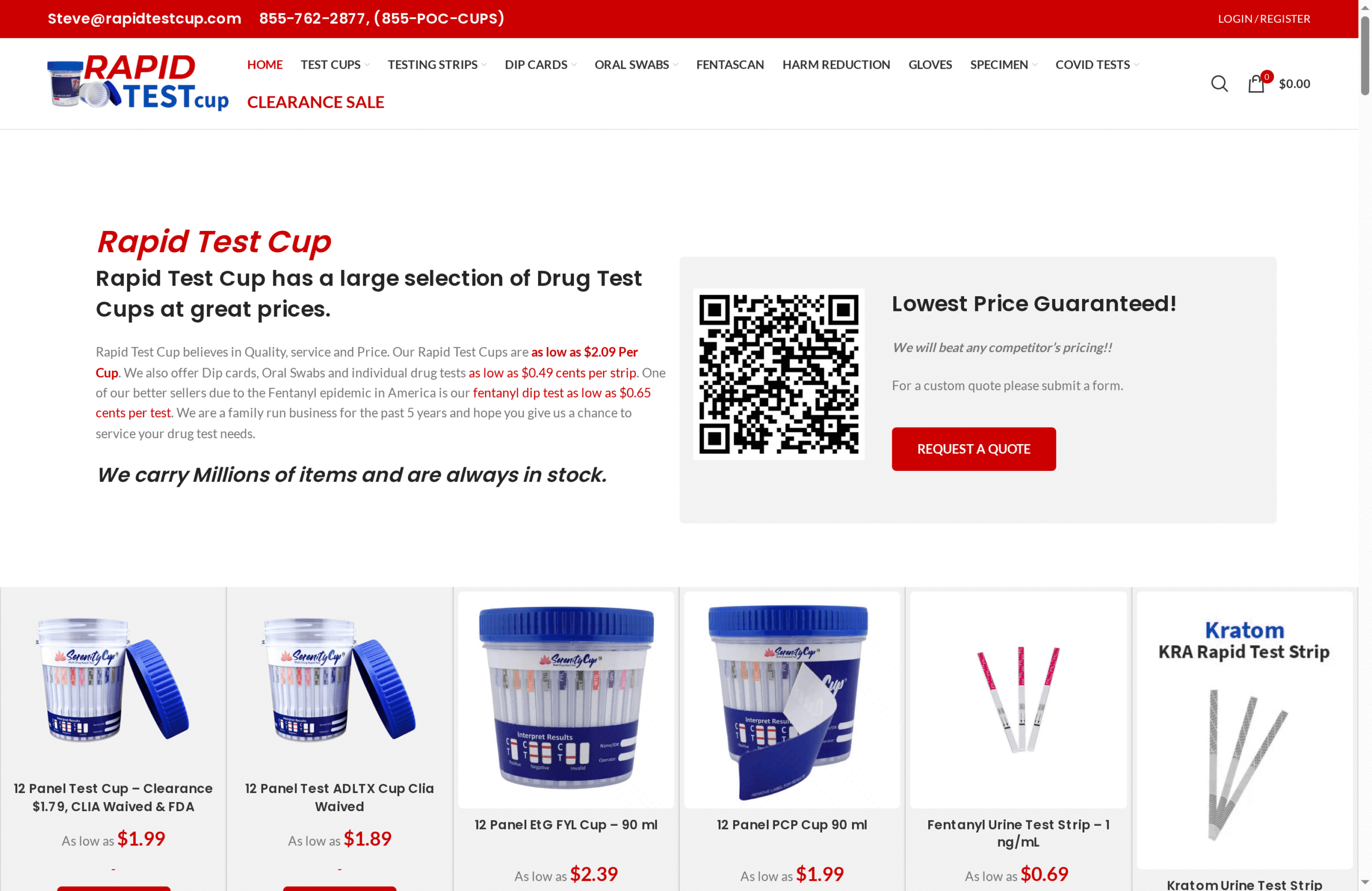
- Browse the full shop landing page for cups, dip cards, strips, and swabs in one place.
- The 18-panel cup with adulterant checks covers broad screening plus tamper detection in one collection.
- Urine specimen cups support labs and clinics that need plain, chain-of-custody-ready collection containers.
Check current stock and place an order through the shop before your next scheduled policy review.
Sources
- Clarification of OSHA’s Position on Workplace Safety Incentive Programs and Post-Incident Drug Testing Under 29 C.F.R. §1904.35(b)(1)(iv)
- When does testing occur and what tests are required? – FMCSA
- SAMHSA — Drug testing resources for workplace programs
FAQ
Do they drug test you after an accident?
Employers can require post-accident drug testing when there is an objectively reasonable basis for it, and DOT-regulated employers must test in specific crash scenarios under FMCSA §382.303. Outside DOT-covered roles, whether testing happens depends on the employer’s own policy and applicable state law.
What are the OSHA post-accident drug testing requirements?
OSHA does not prohibit post-accident testing outright but requires it to have an objectively reasonable basis and be applied consistently across employees, under 29 C.F.R. §1904.35(b)(1)(iv). Testing used mainly to discourage injury reporting can be treated as unlawful retaliation.
How soon must a post-accident drug test be done?
For DOT-regulated drivers, alcohol testing must be attempted within 8 hours of the accident and drug testing within 32 hours, according to FMCSA’s testing guidance. When either window is missed, the employer must document the reason instead of simply skipping the test.
What conditions require post-accident drug testing?
Under FMCSA rules, a fatality always triggers testing, while an injury requiring immediate treatment away from the scene or a tow-away triggers testing only when the driver receives a citation, per FMCSA’s post-accident rule. Non-DOT employers set their own trigger conditions, which should stay objective and be applied the same way every time to satisfy OSHA’s reasonable-basis standard.