Blog
How to Identify False Positives on a Drug Test


A presumptive positive on a urine drug screen requires one immediate response: hold any adverse action, preserve the specimen under chain-of-custody, and order confirmatory testing by gas chromatography–mass spectrometry (GC-MS) or liquid chromatography–tandem mass spectrometry (LC-MS/MS) before making any clinical or employment decision.
Immediate triage checklist:
- Isolate and seal the specimen; note the collection time, temperature (must read 90°F–100°F within four minutes of collection), and collector ID
- Document the donor’s current medications, supplements, and recent food intake
- Record the lot number and assay name of the screening device used
- Flag the result as presumptive; do not report it as confirmed positive
- Initiate chain-of-custody paperwork before the specimen leaves the collection site
Pro Tip: In safety-sensitive roles (DOT-regulated, forensic, or medicolegal settings), build automatic reflex to confirmatory testing into your standard operating procedure. Do not wait for a supervisor to authorize it — delay risks specimen degradation and legal exposure.
Key Takeaways
Identifying a false positive on a drug test requires holding adverse action, preserving the specimen under chain-of-custody, and confirming every presumptive positive with GC-MS or LC-MS/MS before any clinical or employment decision is made.
| Point | Details |
|---|---|
| Hold action immediately | Never discipline, terminate, or diagnose based on a screening result alone; wait for GC-MS or LC-MS/MS confirmation. |
| Immunoassay false-positive rate | Screening tests report false positives in approximately 5%–10% of tests in some settings; confirmation reduces this to near zero. |
| Document cross-reactants | Collect a medication and food history at every collection; pseudoephedrine, poppy seeds, and sertraline are among the most common triggers. |
| Specimen integrity is mandatory | Check temperature, creatinine, SG, pH, and oxidant/nitrite on every specimen before reporting any result. |
| Rapidtestcup for triage | CLIA-waived multi-panel cups with built-in adulterant detection support the collection and integrity-check steps of the protocol. |
Table of Contents
- How immunoassay screening produces false positives
- Common cross-reactants that trigger false positives
- Confirmatory testing with GC-MS and LC-MS/MS
- Step-by-step checklist to rule out a false positive
- How to detect specimen tampering, dilution, and adulteration
- How to interpret results in clinical, workplace, and forensic contexts
- Program-level best practices to reduce false positives
- Quick-reference appendix for field teams
- The real cost of acting on a screen alone
- Rapidtestcup supplies the devices your protocol depends on
- Sources
How immunoassay screening produces false positives
Immunoassay screening tests — including enzyme immunoassay (EIA), EMIT, and point-of-care urine dip cards — are qualitative, antibody-based screens designed to maximize sensitivity. That design choice is intentional: the goal is to catch every true positive, even at the cost of flagging some negatives. The trade-off is cross-reactivity.
Antibodies in these assays bind to a target drug class, but they also bind structurally similar molecules. A pseudoephedrine molecule, for instance, looks enough like an amphetamine to trigger the amphetamine antibody. The CDC notes that manufacturers periodically reformulate assays, which shifts cross-reactivity profiles — a cross-reactant list from five years ago may not reflect your current device.
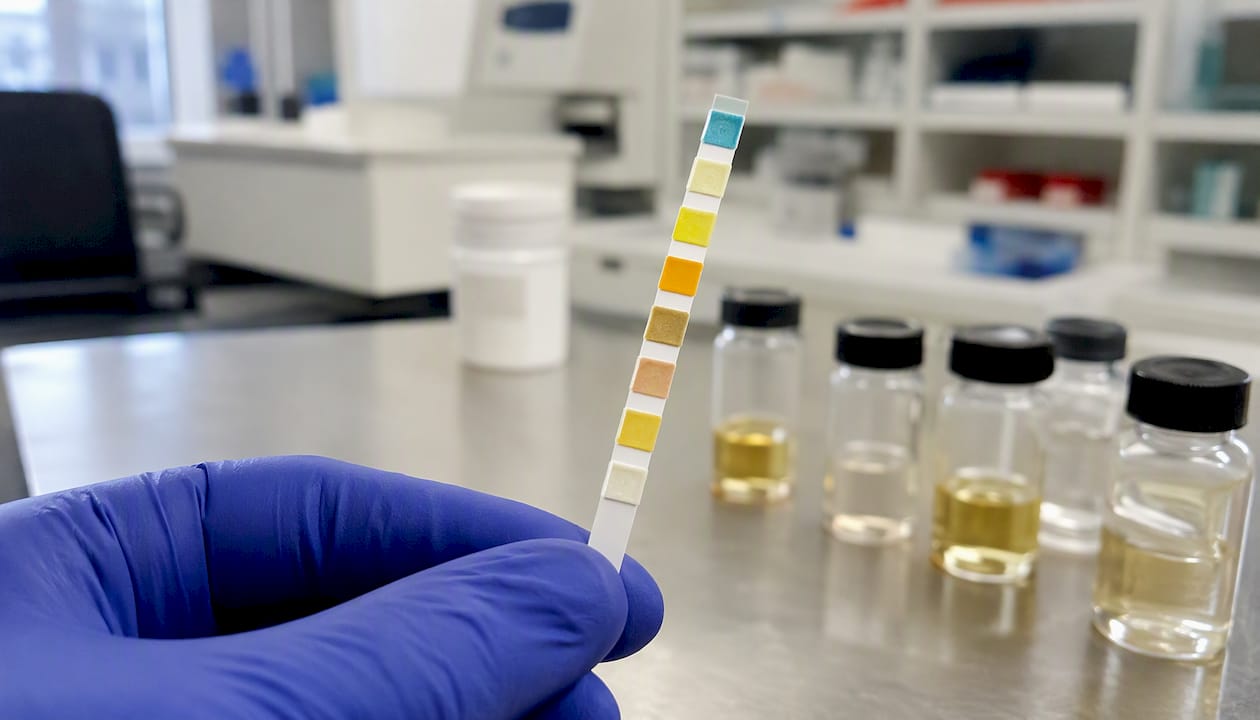
Cutoff concentrations add another layer of complexity. Workplace programs under DHHS/HHS guidelines use higher cutoffs specifically to reduce incidental-exposure positives. Clinical settings often use lower cutoffs, which increases sensitivity but also raises the false-positive rate.
Screening vs. confirmatory methods at a glance:
- EIA/EMIT/dip cards: qualitative, high-throughput, rapid; cross-reactivity possible; false-positive rates reported at approximately 5%–10% in some settings
- GC-MS: identifies specific molecular structures and metabolites; near-zero false-positive rate
- LC-MS/MS: highest specificity; preferred for complex matrices and low-concentration analytes
Common cross-reactants that trigger false positives
The SAMHSA clinical drug testing guide and the Merck Manual both document a consistent set of substances that generate false-positive immunoassay screens. The analyte class matters: some are high-probability triggers, others are assay-dependent.
Commonly reported cross-reactants by analyte:
- Amphetamines: pseudoephedrine, phenylephrine, certain beta-blockers (labetalol), bupropion, ranitidine
- Opiates: poppy seeds (morphine/codeine), dextromethorphan, rifampin, quinolones
- Cannabinoids: ibuprofen (historically linked in older assays), efavirenz, certain baby wash products (Johnson’s Baby Wash in some early reports)
- Benzodiazepines: sertraline, oxaprozin
- PCP: dextromethorphan, diphenhydramine, tramadol, venlafaxine
- Methadone: quetiapine, diphenhydramine, doxylamine
| Analyte | Typical cross-reactants | Practical note |
|---|---|---|
| Amphetamines | Pseudoephedrine, bupropion, labetalol | High workplace relevance; confirm before any disciplinary action |
| Opiates | Poppy seeds, quinolones, rifampin | DHHS raised cutoff to reduce poppy-seed positives |
| Cannabinoids | Efavirenz, ibuprofen (older assays) | Assay-dependent; verify with current manufacturer data |
| Benzodiazepines | Sertraline, oxaprozin | Clinical settings see this more than workplace programs |
| PCP | Dextromethorphan, tramadol | OTC cold medicines are a common trigger |
Pro Tip: When a donor presents a current prescription for any substance on this list, flag the result for automatic GC-MS confirmation before reporting. Document the medication disclosure in the chain-of-custody record.
Confirmatory testing with GC-MS and LC-MS/MS
Order GC-MS or LC-MS/MS whenever a presumptive positive will drive a consequential decision. These methods identify specific molecular structures rather than drug classes, which is why they reduce false positives to near zero and serve as the forensic gold standard.
When confirmation is mandatory or strongly recommended:
- DOT-regulated and other federal workplace programs (mandatory under SAMHSA guidelines)
- Employment disciplinary or termination decisions
- Forensic, criminal justice, and medicolegal proceedings
- Substance-abuse treatment monitoring where a positive changes a treatment plan
- Any result the donor disputes
What a confirmatory report typically includes:
- Specific compound identified (drug and/or metabolite)
- Quantitative concentration when applicable
- Limit of detection and limit of quantitation for the method
- Confirmation that the result exceeds the confirmatory cutoff
Turnaround for confirmatory testing at a certified laboratory typically runs 24–72 hours for routine specimens. Expedited forensic submissions can return results faster, though cost increases. Toxicology services that offer GC-MS and LC-MS/MS confirmation can handle outsourced specimens when an in-house confirmatory lab is unavailable.
Cocaine metabolite (benzoylecgonine) is worth singling out: the Merck Manual notes it rarely produces false positives on confirmatory testing, making a confirmed positive for cocaine highly reliable. Cannabinoids and amphetamines carry higher immunoassay false-positive rates, which is exactly why confirmation matters most for those analytes.
Step-by-step checklist to rule out a false positive
Follow this ordered protocol before taking any action on a presumptive positive result.
- Secure the specimen. Seal, label, and store it per chain-of-custody requirements. Refrigerate if confirmatory testing will be delayed beyond 24 hours.
- Record collection details. Note collection time, observed vs. unobserved, temperature strip reading, and collector name.
- Measure specimen integrity. Check creatinine, specific gravity (SG), and pH using the cup’s built-in adulterant panel or a separate strip.
- Run adulterant tests. Test for oxidants, nitrites, and bleach if not already included in the collection device.
- Review donor history. Collect a written medication and food history from the donor. Note any OTC drugs, supplements, or unusual foods consumed in the prior 72 hours.
- Repeat the screen if indicated. If the initial result is borderline or the device lot is in question, rescreen a split aliquot before ordering confirmation.
- Order GC-MS or LC-MS/MS. Ship the specimen to a SAMHSA-certified or accredited confirmatory laboratory with full chain-of-custody documentation.
- Hold punitive actions. No termination, suspension, or clinical diagnosis until the confirmatory result is in hand.
- Document all communications. Record every notification to the donor, employer, or program officer in writing, with timestamps.
- Escalate inconclusive confirmatory results. If the confirmatory result is borderline or the metabolite pattern is ambiguous, consult a Medical Review Officer (MRO) or medical toxicologist before final disposition.
For split-sample requests: federal workplace programs give donors the right to request testing of the split specimen (Bottle B) at a second SAMHSA-certified lab. Document this right in your donor notification letter.
Pro Tip: Use a standardized notification template that states: “Your screening result is presumptive positive. No action will be taken until confirmatory testing is complete. You have the right to disclose any medications or supplements that may affect this result.” That language protects both the donor and the program.
How to detect specimen tampering, dilution, and adulteration
Evaluate temperature, color, creatinine, SG, pH, and oxidant/nitrite results together. A PMC clinical review confirms that multi-modal specimen integrity checks detect most common tampering strategies.
Common adulterants and how they present:
- Bleach/hypochlorite: oxidant strip positive; may destroy immunoassay signal (false negative)
- Hydrogen peroxide: oxidant strip positive; may bleach color from specimen
- Nitrite additives (e.g., Klear): nitrite strip positive above 500 mcg/mL; creatinine may appear normal
- Excessive water ingestion (dilution): creatinine below 20 mg/dL and SG below 1.003
- Synthetic urine or substitution: temperature outside 90°F–100°F; creatinine and SG may appear normal but specimen lacks expected biological markers
Key thresholds labs use to flag or reject specimens:
- Temperature: outside 90°F–100°F within four minutes = substitution flag
- Creatinine: below 2 mg/dL = substituted; 2–20 mg/dL = dilute
- Specific gravity: below 1.001 = substituted; 1.001–1.003 = dilute
- pH: below 3 or above 11 = adulterated
- Nitrite: above 500 mcg/mL = adulterated (SAMHSA threshold)
Pro Tip: Observed collection is the single most effective control against substitution. For forensic and safety-sensitive programs, document the basis for observed vs. unobserved collection in your policy and apply it consistently.
How to interpret results in clinical, workplace, and forensic contexts
Treat every screening result as presumptive. SAMHSA and NIDA guidance is explicit: a single screen cannot diagnose a substance use disorder or justify punitive action without confirmatory testing and clinical context. The Drugs.com clinical summary reinforces that prescription drugs like sertraline and efavirenz have produced confirmed false positives that LC-MS/MS later excluded.
A positive result on an immunoassay screening test is presumptive only. SAMHSA and NIDA both state that screening results must be confirmed by a definitive method before any clinical diagnosis or adverse employment action is taken. No single test result, in isolation, is sufficient to conclude drug use.
Practical interpretation guidance:
- Workplace programs: apply DHHS cutoffs; involve an MRO for all positives before reporting to the employer
- Clinical programs: lower cutoffs increase sensitivity; weigh results against clinical presentation and medication history
- Forensic/legal: chain-of-custody documentation is as important as the result itself; any gap can invalidate the specimen in court
- When to seek legal counsel: any result that will be used in a criminal proceeding, child custody case, or federal employment action
For accurate result interpretation in both clinical and workplace settings, the MRO or toxicologist review step is not optional when consequences are significant.
Program-level best practices to reduce false positives
Standardized collection protocols, validated CLIA-waived devices, mandatory confirmation for positives, and current cross-reactant medication lists together form the operational foundation for a low-false-positive program.
Operational controls that reduce false-positive risk:
- Use CLIA-waived, FDA-cleared screening devices and document the assay name and lot number for every test
- Require a medication and food disclosure form at every collection; update it at each visit
- Set written cutoff policies that match your program’s purpose (workplace vs. clinical vs. forensic)
- Train collectors on observed collection procedures and chain-of-custody documentation
- Choose device vendors that publish assay cross-reactivity data and notify customers of reformulations
- Maintain a vendor change log so assay updates don’t silently shift your program’s performance
- Pair on-site screening with a contracted confirmatory laboratory for all positive results
For clinics, the 10 practical strategies guide covers collection protocol design and confirmatory workflow implementation in detail.
Pro Tip: Schedule an annual assay revalidation review. Pull your vendor’s current cross-reactivity documentation, compare it against your medication disclosure forms, and update your SOP if the list has changed. Assay reformulations happen quietly and can invalidate assumptions your program has relied on for years.
Quick-reference appendix for field teams
Specimen integrity quick checks:
- Temperature: 90°F–100°F within four minutes (substitution flag if outside range)
- Creatinine: below 2 mg/dL = substituted; 2–20 mg/dL = dilute; above 20 mg/dL = acceptable
- Specific gravity: below 1.001 = substituted; 1.001–1.003 = dilute; 1.003–1.030 = acceptable
- pH: acceptable range 4.5–8.5; outside = adulterated
- Oxidant/nitrite: any positive = adulterated; reject and document
Notification and turnaround timeline:
- Notify donor of presumptive result within 24 hours of collection
- Ship specimen to confirmatory lab same day or next business day
- Confirmatory result expected in 24–72 hours (routine); expedited available
- Notify employer or program officer only after confirmed result is received
The real cost of acting on a screen alone
The investigative protocol described here is not bureaucratic caution. It reflects a straightforward reality: immunoassay screens are built to be sensitive, not specific, and that design produces false positives at a rate that makes unconfirmed action genuinely dangerous. A donor terminated for a poppy-seed opiate result, or a patient flagged for a sertraline-driven benzodiazepine screen, has been harmed by a process failure, not by drug use.
What I find consistently underestimated in workplace and clinical programs is the documentation step. Labs and employers invest in good devices and confirmatory labs, then fail to maintain the chain-of-custody records that make those results defensible. A confirmed positive with a broken chain of custody is nearly as problematic as an unconfirmed screen. The checklist in this article is only as strong as the paperwork behind it.
The UIC Drug Information Group makes the point clearly: cutoff selection and assay choice are program design decisions, not just procurement decisions. Programs that treat device purchasing as a commodity exercise and skip the cross-reactivity review are building false-positive risk into their workflow from day one.
Rapidtestcup supplies the devices your protocol depends on
Accurate triage starts with the right screening device. Rapidtestcup supplies CLIA-waived, FDA-cleared drug testing products for labs — including multi-panel cups with built-in adulterant detection, dip cards, and specimen collection supplies that fit the protocols described above.
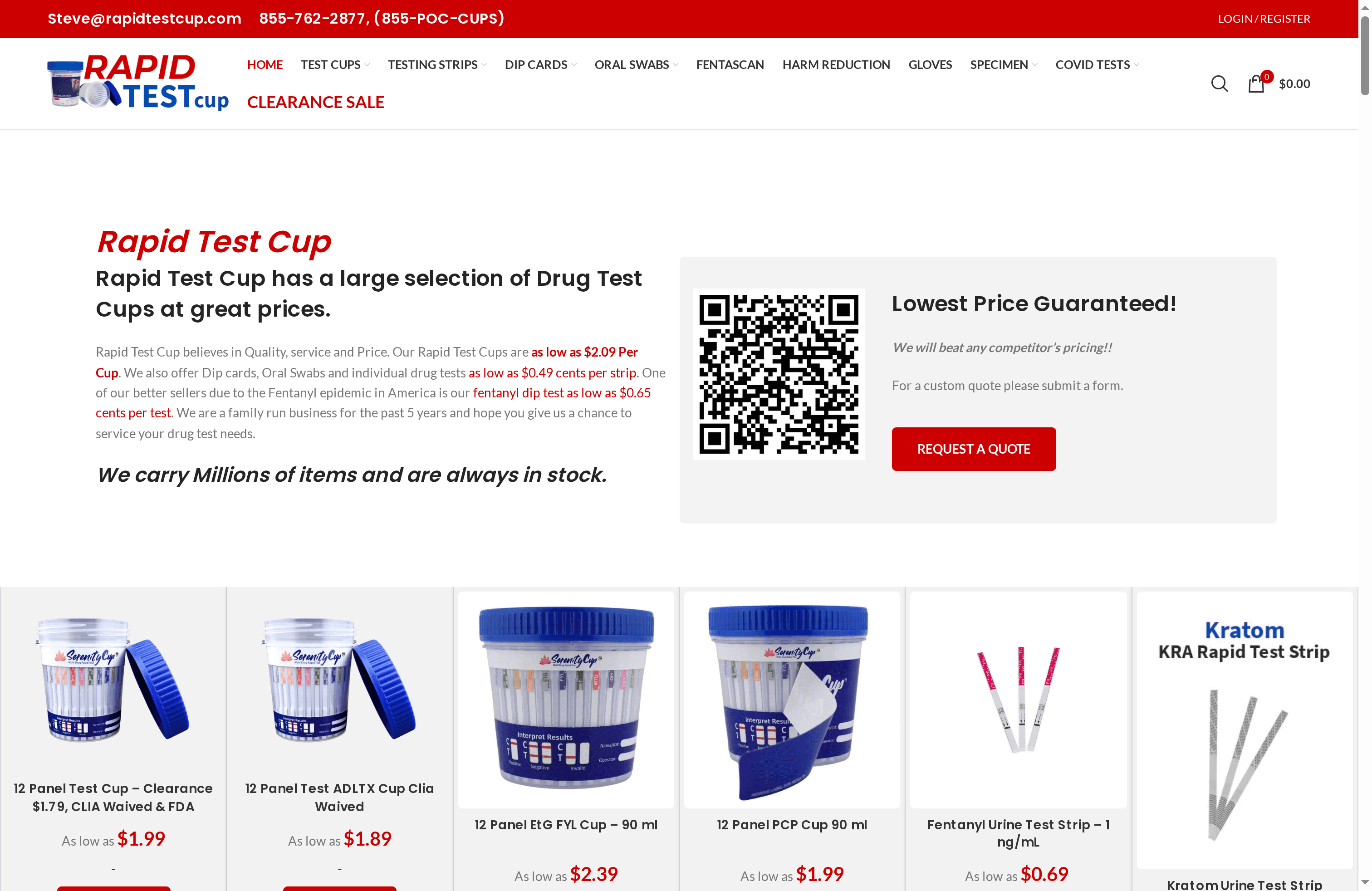
The 12 Panel ADLTX Cup integrates oxidant, nitrite, creatinine, SG, and pH checks directly into the collection cup, so your collector gets specimen integrity data and a drug screen in one step. For programs that need broader analyte coverage, the 22-panel cup with adulterant detection covers fentanyl, kratom, xylazine, and Zaza alongside standard panels. Every positive result from an on-site screen should be paired with GC-MS or LC-MS/MS confirmation at a certified lab. Browse the full catalog or request a bulk quote at Rapidtestcup.
Sources
The sources below cover the policy, laboratory method, and clinical interpretation dimensions of drug test false positives.
- Clinical Drug Testing – StatPearls – NCBI Bookshelf
- Clinical Drug Testing in Primary Care – SAMHSA
- False-positive and false-negative drug test results and test tampering – PMC
- Urine Drug Testing – CDC
- What drugs are likely to interfere with urine drug screens? – UIC Drug Information Group
This article is general information, not a substitute for advice from a qualified doctor. Consult a qualified healthcare professional about your own circumstances before acting on anything here.